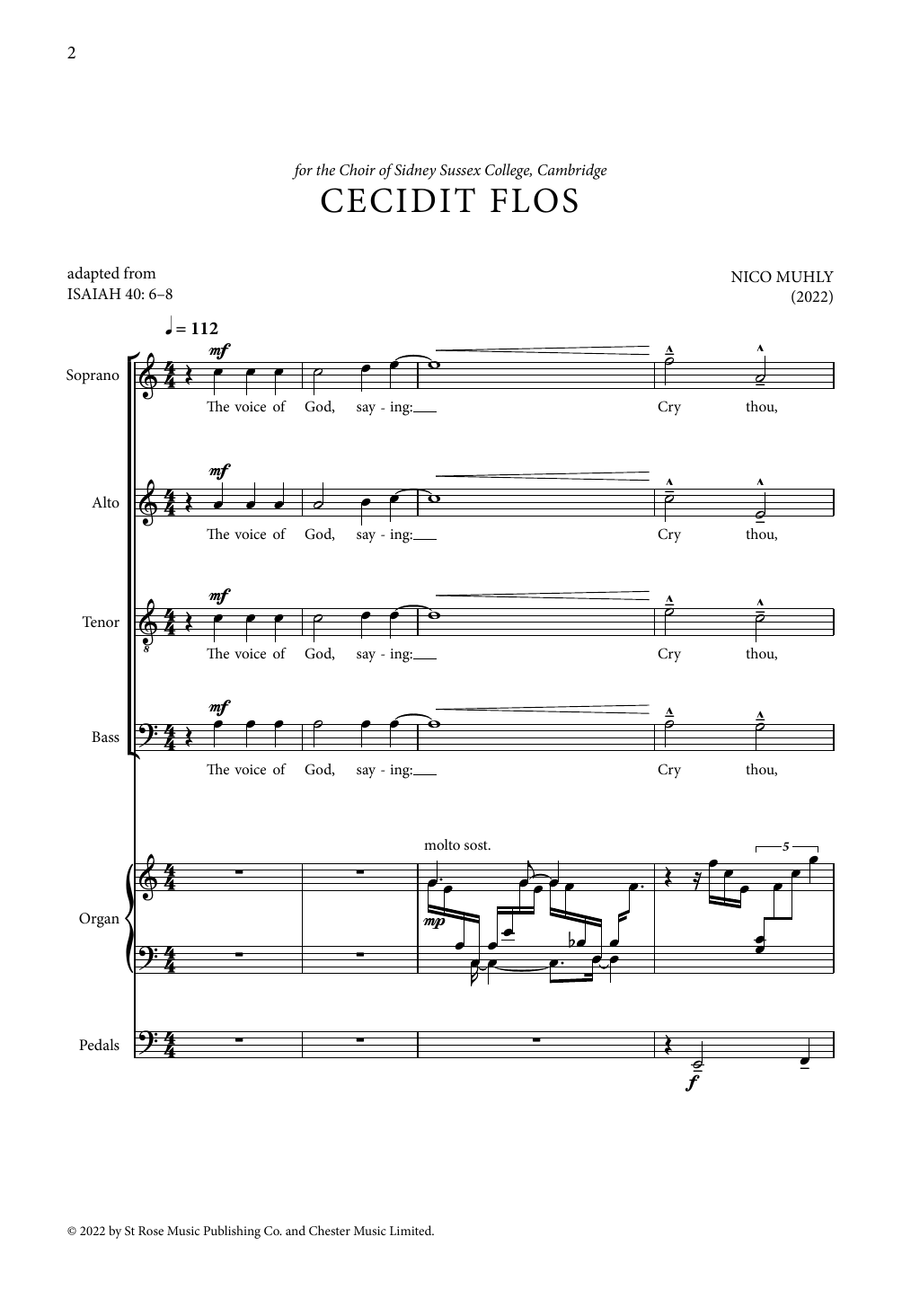
Cecidit Flos Sheet Music Preview

Cecidit Flos: SATB Choral Octavo

By Nico Muhly

Item: 35-DS01538585

Digital Download
$2.95
Description

Cecidit Flos: SATB Choral Octavo isn't in MakeMusic Cloud just yet...but it could be. Let us know you'd like to see it, and you'll help shape what comes next. In the meantime, start a free trial and dive into thousands of interactive titles your students can play along with today.

Sample Audio
No sample audio found.
Sample Video
Additional Details
Publisher: Hal Leonard
Page Count: 5
SKU: 35-DS01538585

More about this title

About the Composer: Nico Muhly

Nico Muhly is an American composer known for bridging classical forms with contemporary sensibility. His choral writing draws from his deep engagement with both early music and modern composition techniques, creating works that feel both rooted in tradition and urgently present.

Why we love this

Muhly's gift for blending accessible harmonic language with genuine compositional sophistication shines here. The piece respects your singers' musicality while remaining genuinely engaging to perform, hitting that rare sweet spot where the writing serves both the text and the ensemble.

What to expect

Muhly creates a contemplative sonic space with gentle harmonic movement and carefully placed moments of brightness. The Latin text gives the work a formal dignity that the music honors without becoming stiff or overly reverent.

Who it's for

Choirs with solid fundamental technique who want to expand their contemporary classical repertoire. This works for groups comfortable with modern harmonic language but seeking pieces with melodic substance and emotional directness.

How to get the most out of it

  • Pay attention to the text declamation in early rehearsals; Muhly's word-setting often reveals harmonic movement that singers miss if they're not tracking the Latin carefully.
  • Balance the ensemble voices as a sonic unit rather than four separate lines. The piece rewards singers who listen across the texture and adjust their weight accordingly.
  • Resist over-expressive interpretation in initial readings. This music benefits from clarity first; expressive nuance emerges once the harmonic architecture is secure.

How to use it

Consider pairing this with other sacred Latin texts from different eras to create a program exploring how composers approach liturgical language across centuries. Its moderate length and accessible voicing make it effective as a concert opener or as part of a thematic set.

Skills your students will build

  • Singing in contemporary harmonic language with secondary and extended chord functions
  • Balancing individual line work with ensemble cohesion
  • Clear Latin diction and text-based interpretation
  • Harmonic listening and intonation in complex choral textures

You May Also Like