
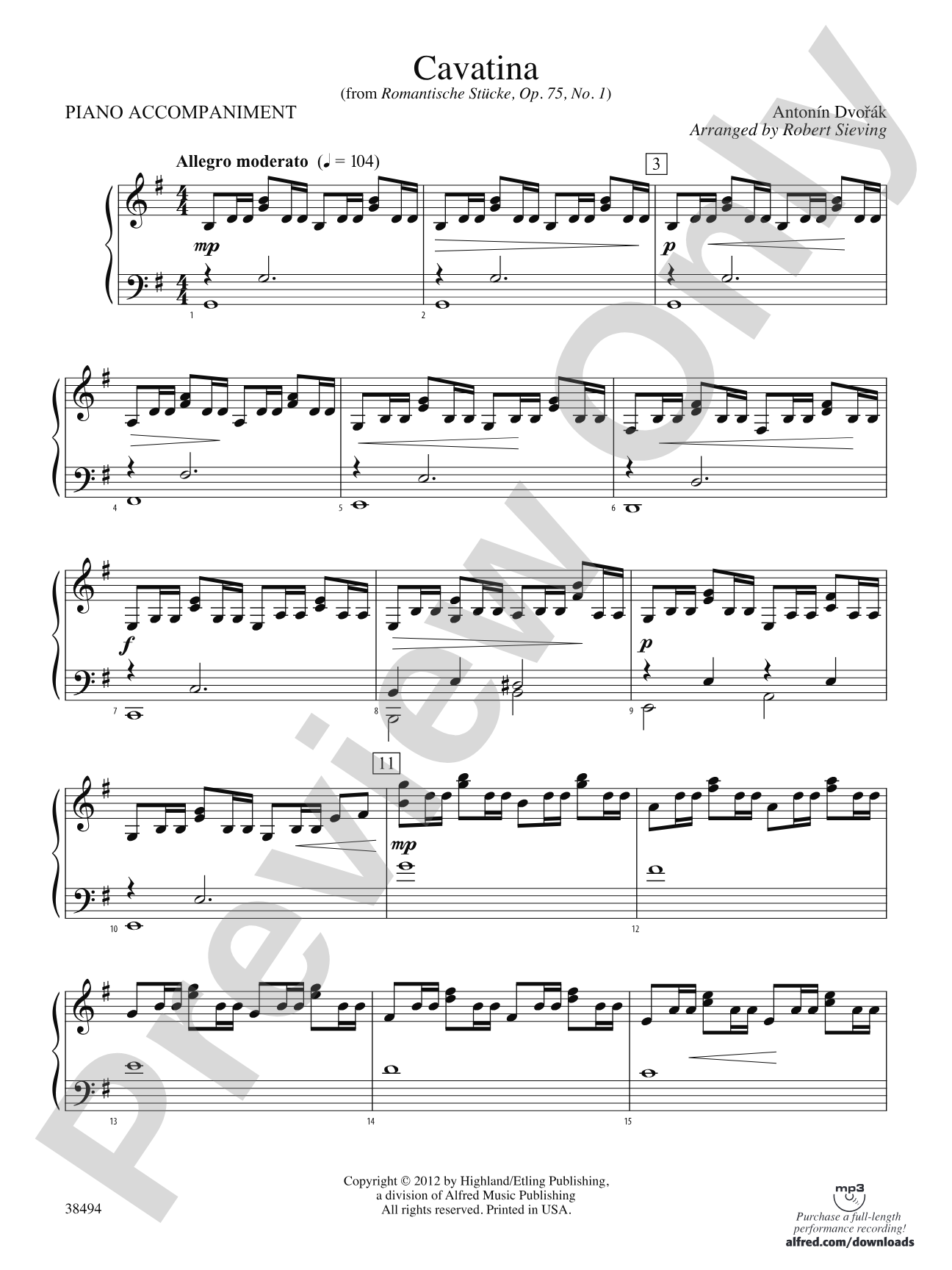

Cavatina: Piano Accompaniment
From Romantische Stucke, Op. 75, No. 1
By Antonín Dvorák / arr. Robert Sieving
Grade: 2.5
Item: 00-PC-0015542_K
$5.99
Pickup currently not available
Description
This beautiful Romantic work by Dvorák has been expanded from the violin and piano setting and is perfect for strings! The violin I and II, viola, and bass parts are all playable in first position; cello goes to third position. As the title suggests, expressive legato playing within the ensemble gives students the opportunity to develop their bow control. The piano part requires a clean and crisp approach.


Don't just read it, hear it, play along with it, and watch your students grow with it. In MakeMusic Cloud, Cavatina: Piano Accompaniment comes alive with professional accompaniment, adjustable tempo, and built-in practice tools that turn solo practice into real progress.
Open in the Player
Jump straight in and assign it today.
Start Your Free Trial
Open this title and explore the full library in minutes.
Sample Audio
1
Audio File
--:--
0:00
0:00
Sample Video
No sample videos found.
Additional Details
Series:
Highland/Etling String Orchestra
Publisher:
Alfred Music
Page Count:
66
SKU:
00-PC-0015542_K
More about this title
About the Composer: Antonin Dvorák
Antonin Dvorák (1841-1904) stands as one of the 19th century's most gifted melodists, bringing the rhythmic vitality and harmonic richness of Czech music into the international concert repertoire. His gift for writing singing, vocally conceived melodies shaped every genre he touched, from orchestral works to chamber music to art songs. For string educators, Dvorák remains invaluable because his music rewards careful attention to phrasing and tone production while remaining technically accessible to young players.
Dvorak's string writing emphasizes beauty of sound over virtuosity. He understood how to distribute a melody across the ensemble so that every voice contributes to the whole, making his works ideal for teaching ensemble balance and awareness. His harmonies are rich but never opaque, allowing students to hear their individual lines while experiencing the sophistication of Romantic harmony.
Why we love this
This arrangement opens the expressive world of Dvorák to developing string orchestras without compromising the emotional weight of the original. Robert Sieving's thoughtful voicing keeps all string parts accessible while preserving the lyrical character that makes Cavatina so compelling in concert. A piece this musically rich at Grade 2.5 offers students something genuinely worth playing, not just a warm-up exercise.
What to expect
Cavatina unfolds with the unhurried beauty of a great operatic aria adapted for instruments. The melody flows generously across the ensemble while warm harmonic support beneath creates an atmosphere of intimate lyricism. This is music that invites players to listen to one another and respond to each phrase with warmth and intention.
Who it's for
String orchestra directors seeking repertoire that combines beauty with technical appropriateness for developing ensembles. This arrangement works equally well for a concert performance or festival competition, offering students a piece worthy of careful, musical preparation without excessive technical demands.
How to get the most out of it
- Shape each phrase with the bow, allowing gentle crescendos and decrescendos to follow the natural contours of the melody rather than playing with uniform dynamics throughout.
- Establish a warm, singing tone as your ensemble standard from the first rehearsal; this piece demands sustained, connected sound from every player.
- Balance the emotional weight between first and second violins so the harmonic foundation feels solid without overshadowing the primary melodic line.
- Coordinate vibrato across the ensemble during sustained notes and long passages to create a unified, shimmering sound rather than a wavering one.
How to use it
Program this as a contrasting work alongside more rhythmically driven pieces to showcase your orchestra's expressive range. The modest page count (66 pages for full score and parts) makes it realistic for a balanced concert where you want to emphasize Romantic lyricism without consuming excessive rehearsal time on a single work.
Skills your students will build
- Sustained legato bow control across phrase lengths
- Dynamic shaping and musical phrasing within Romantic style
- Ensemble listening and balance between melodic and harmonic voices
- Vibrato application and coordination
- Reading positions on individual string instruments (first position across most parts; third position cello)