
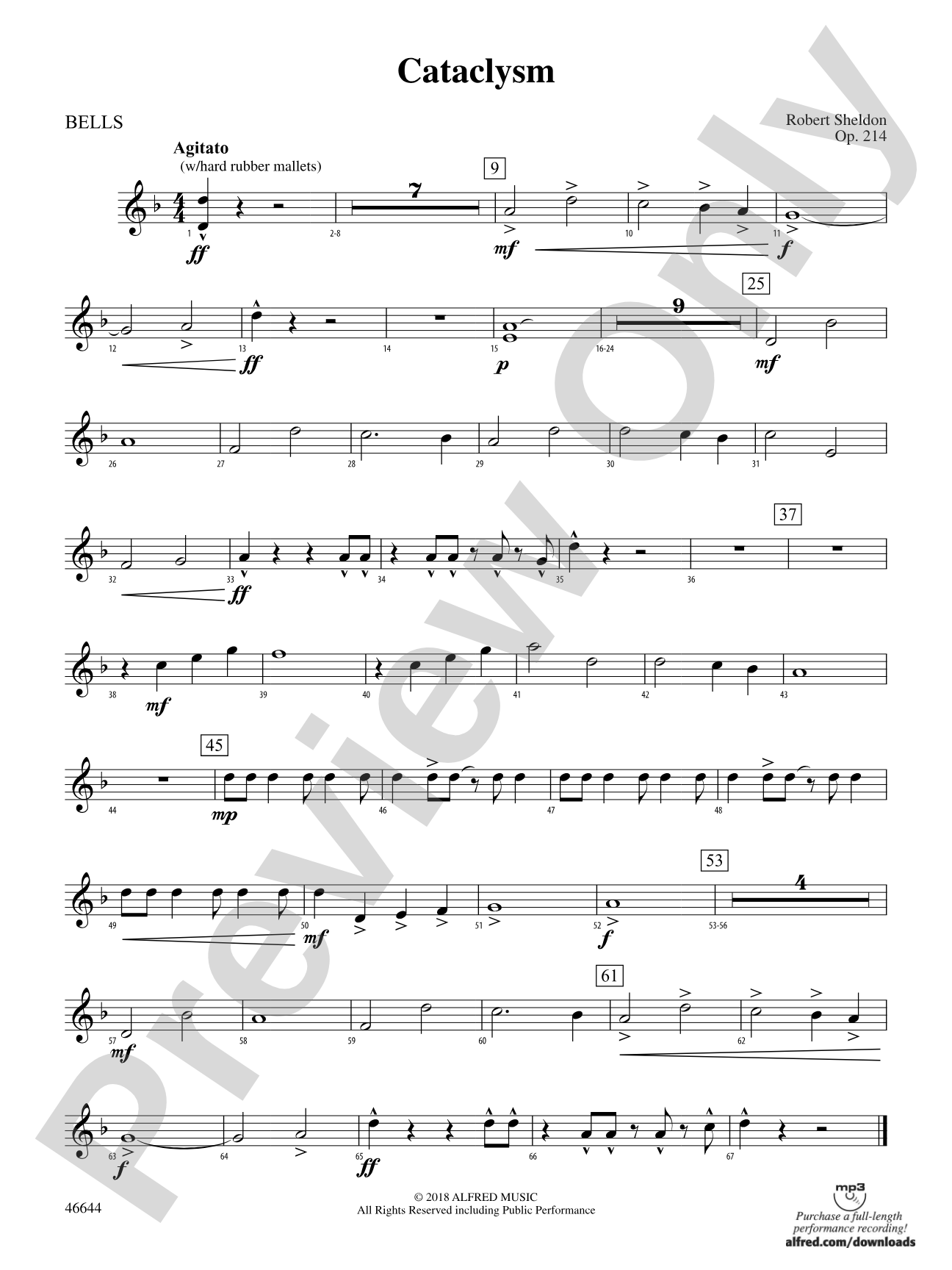

Cataclysm: Bells
By Robert Sheldon
Grade: 1.5 (Easy)
Item: 00-PC-0018074_B
$3.00
Pickup currently not available
Description
Much of our literature and many movies portray cataclysmic events. This exciting piece for young band serves to provide a musical backdrop to these stories and to add a sense of hope that we will survive! Correlates to Book 2, level 2. This title is available in MakeMusic Cloud.


Don't just read it, hear it, play along with it, and watch your students grow with it. In MakeMusic Cloud, Cataclysm: Bells comes alive with professional accompaniment, adjustable tempo, and built-in practice tools that turn solo practice into real progress.
Open in the Player
Jump straight in and assign it today.
Start Your Free Trial
Open this title and explore the full library in minutes.
Sample Audio
1
Audio File
--:--
0:00
0:00
Sample Video
Additional Details
Series:
Sound Innovations for Concert Band
Publisher:
Alfred Music
Page Count:
142
SKU:
00-PC-0018074_B
More about this title
About the Composer: Robert Sheldon

Robert Sheldon stands among the most frequently performed composers for wind band in the world. His works have earned him recognition from the American School Band Director's Association, Phi Beta Mu, and ASCAP, and his music appears regularly on concert and festival programs across the United States and internationally. Beyond composition, Sheldon serves as lead author of Sound Innovations for Concert Band and maintains an active schedule as a guest conductor for honor bands and clinician at universities and state music education conferences.
Sheldon's conducting and teaching have taken him to venues including Carnegie Hall, Orchestra Hall, Boston's Symphony Hall, the Sydney Opera House, and the Kennedy Center. He has worked with ensembles throughout the United States, Japan, Canada, Italy, Germany, Australia, and China. In 2020, he received an honorary doctorate from VanderCook College of Music in recognition of his contributions to music education and composition.
Why we love this
Sheldon captures the dramatic arc of catastrophe and resilience without overwhelming a young ensemble. The piece balances accessibility with genuine emotional weight, allowing students at a 1.5 grade level to experience serious musical storytelling while developing foundational concert band skills. This is exactly the kind of repertoire that builds confidence in young players and creates memorable concert moments.
What to expect
Cataclysm unfolds like a film score, moving from foreboding quiet into turbulent energy before resolving into affirmation. The music captures both the chaos and danger of natural disaster and the resilience of survival, creating an emotionally satisfying arc that resonates with students and audiences alike.
Who it's for
Band directors working with early intermediate ensembles who want to program meaningful concert or festival repertoire that connects to students' existing knowledge of storytelling and cinema. This works particularly well for ensembles at the beginning of their concert band experience who are ready for something more expressive than purely technical material.
How to get the most out of it
- Shape the opening to establish atmosphere before intensity builds. Young bands often rush into the dramatic material, so take time to establish the quieter sections with presence and control.
- Balance the inner voices during moments of textural complexity. With young players, the tendency is for upper voices to dominate; reinforce that lower voices and counter-lines carry essential material.
- Vary dynamics intentionally to highlight the journey from crisis to hope. Mark your score with specific dynamic targets for rehearsal so the band understands the emotional architecture, not just the notes.
- Invest in clean cutoffs and clear conducting patterns. The piece's dramatic moments demand sharp ensemble response; students will rise to your clarity and precision.
How to use it
Program this as a centerpiece for a concert built around the theme of nature, resilience, or storytelling in music. The 1.5 difficulty level makes it ideal for mid-year festivals or spring concerts when young bands have developed solid fundamentals but don't yet command advanced repertoire. Its dramatic appeal also works well as a finale or major work in programs that mix lighter and more serious selections.
Skills your students will build
- Shaping long phrases across multiple measures
- Responding to tempo and dynamic changes that advance narrative
- Balancing independent melodic and harmonic lines within a young ensemble
- Sustaining focus during exposed ensemble moments
- Interpreting the emotional intention behind notation rather than playing mechanically