

Castleton Carol: SAB Choral Octavo
Arr., with additional words and music, by Ben Cohn
Item: 00-PO-0006664
$2.05
Minimum order quantity: 20 copies
Pickup currently not available
Description
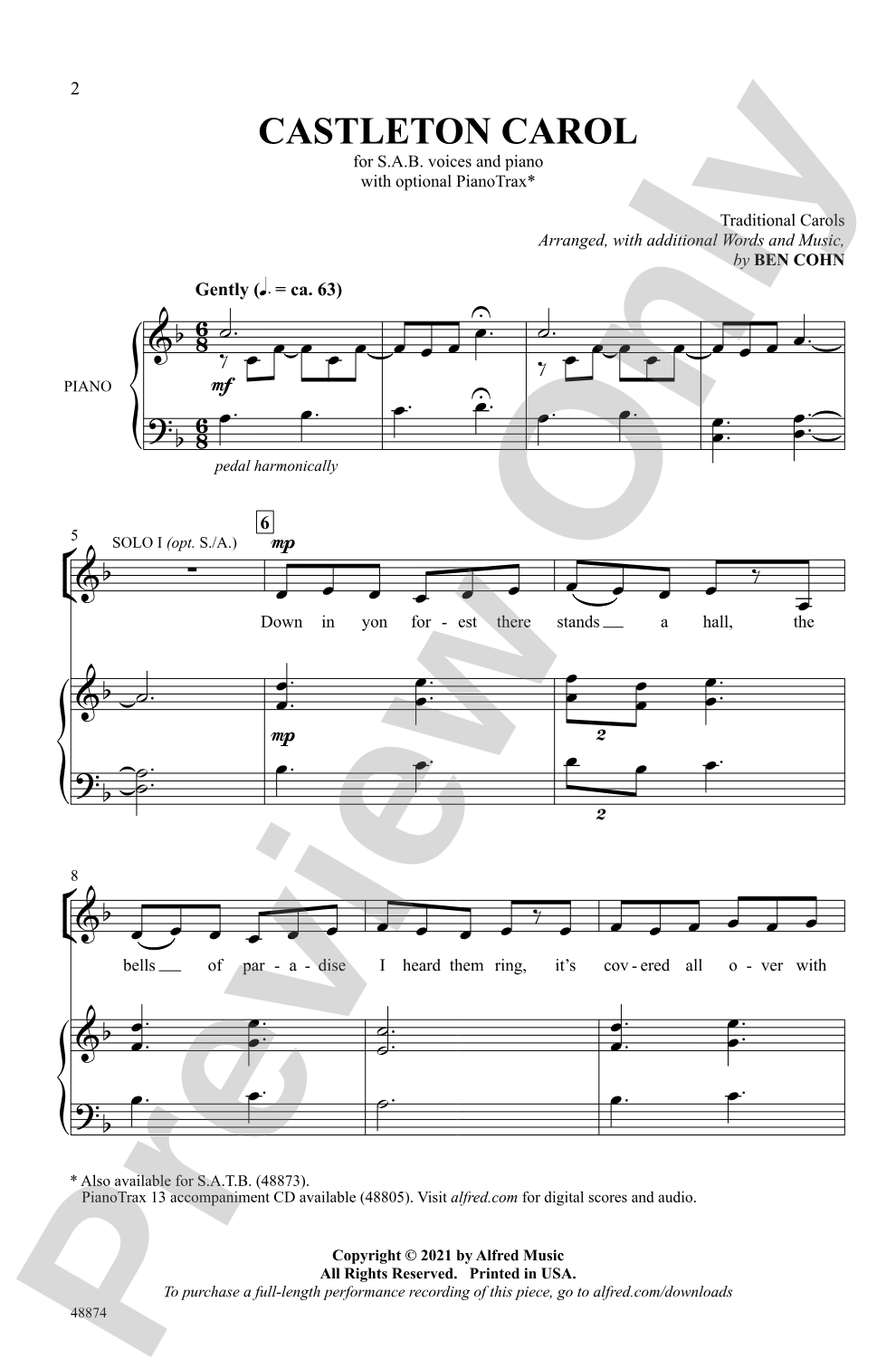
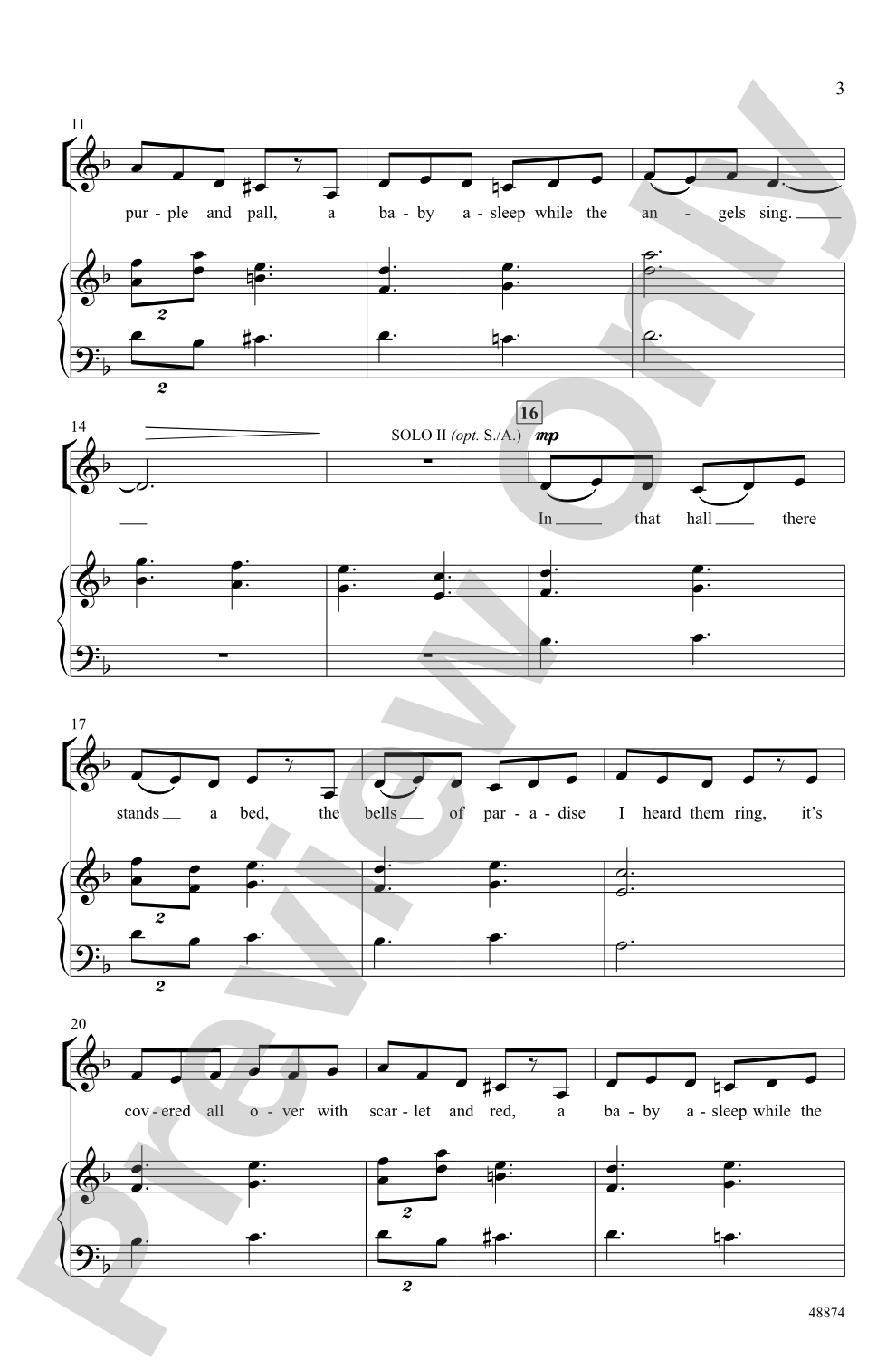
A Renaissance-era carol brought up to date in a fresh contemporary setting. Veteran Broadway music director and conductor Ben Cohn brings a modern musical theatre sound to this traditional English song. A serenely sparse piano part (during two opening alto solos) gradually grows to a full and glorious accompaniment as more voices join. Listen closely for the juxtaposed stillness/motion and minor/major that symbolize the cold of winter versus the warmth of the season. The entire piece garners edge-of-your-seat wonder, but the greatest chills will come when brief strains from four additional carols trickle in. Simply stunning.


Castleton Carol: SAB Choral Octavo isn't in MakeMusic Cloud just yet...but it could be. Let us know you'd like to see it, and you'll help shape what comes next. In the meantime, start a free trial and dive into thousands of interactive titles your students can play along with today.
Request This Title
Tell us you want it.
Start Your Free Trial
Explore everything that's ready to play right now.
Sample Audio
1
Audio File
--:--
0:00
0:00
Sample Video
Additional Details
Series:
Alfred Choral Designs
Publisher:
Alfred Music
Page Count:
12
SKU:
00-PO-0006664
More about this title
About the Composer: Ben Cohn

Ben Cohn is a composer, pianist, and vocal coach based in New York City with dual degrees in music education from Ithaca College and musical theatre writing from NYU. His work spans Broadway pit orchestras (including Wicked, Avenue Q, and Wonderful Town), Off-Broadway productions, and collaborative development of new musical theatre projects. He maintains an active teaching presence at NYU's CAP 21 and Musical Theatre Writing Program while providing arranging, transcription, and coaching services for theatre professionals and recording artists.
Cohn's background uniquely positions him to bridge classical choral writing with contemporary theatrical sensibility. His experience as a working musician and educator informs his approach to composition and arrangement, creating pieces that challenge singers while remaining accessible to ensembles across skill levels.
Why we love this
Cohn's treatment transforms a Renaissance carol into something genuinely theatrical without sacrificing its spiritual weight. The layered voicing and dynamic accompaniment arch create natural drama that keeps singers engaged through the entire 12 pages, while the interpolated carol fragments near the close deliver an unexpected emotional payoff that audiences will absolutely feel.
What to expect
The piece begins in quiet contemplation, winter's stillness palpable in the spare opening. As more voices join and the accompaniment fills in, warmth gradually seeps through, reaching a moment of genuine luminosity before the subtle arrival of familiar carols reminds listeners of what they've known all along. There's a theatrical intelligence here that respects both the carol's tradition and the listener's sophistication.
Who it's for
SAB choirs seeking a concert carol that transcends typical holiday repertoire. This works especially well for ensembles with secure alto and soprano lines and pianists comfortable with contemporary harmonic language and rhythmic independence.
How to get the most out of it
- Shape the opening alto solos with intimate legit tone; the sparse piano accompaniment means every breath and vowel choice matters here.
- As voices enter and the accompaniment expands, resist the urge to push immediately to full volume. The chart's power comes from the gradual swell.
- Balance the minor and major tonal shifts intentionally. These are not happy accidents but the piece's central emotional architecture.
- When the other carol fragments appear, bring them in with clarity and presence without overwhelming the primary melody line.
How to use it
Program this as a centerpiece for a holiday concert that includes both traditional and contemporary carols. Its 12-page length and emotional arc make it ideal for placement mid-program, where it can serve as a moment of reflection between faster or lighter works. The piece also pairs beautifully with other Cohn arrangements or works exploring minor/major juxtaposition.
Skills your students will build
- Balancing lyrical legit tone with theatrical diction across sustained passages
- Blending three distinct voice parts while maintaining individual line clarity
- Responding to dynamic and harmonic shifts that convey emotional intent
- Entrances and releases coordinated with complex piano accompaniment
- Interpreting tonal color as a storytelling device (minor/major contrast)