
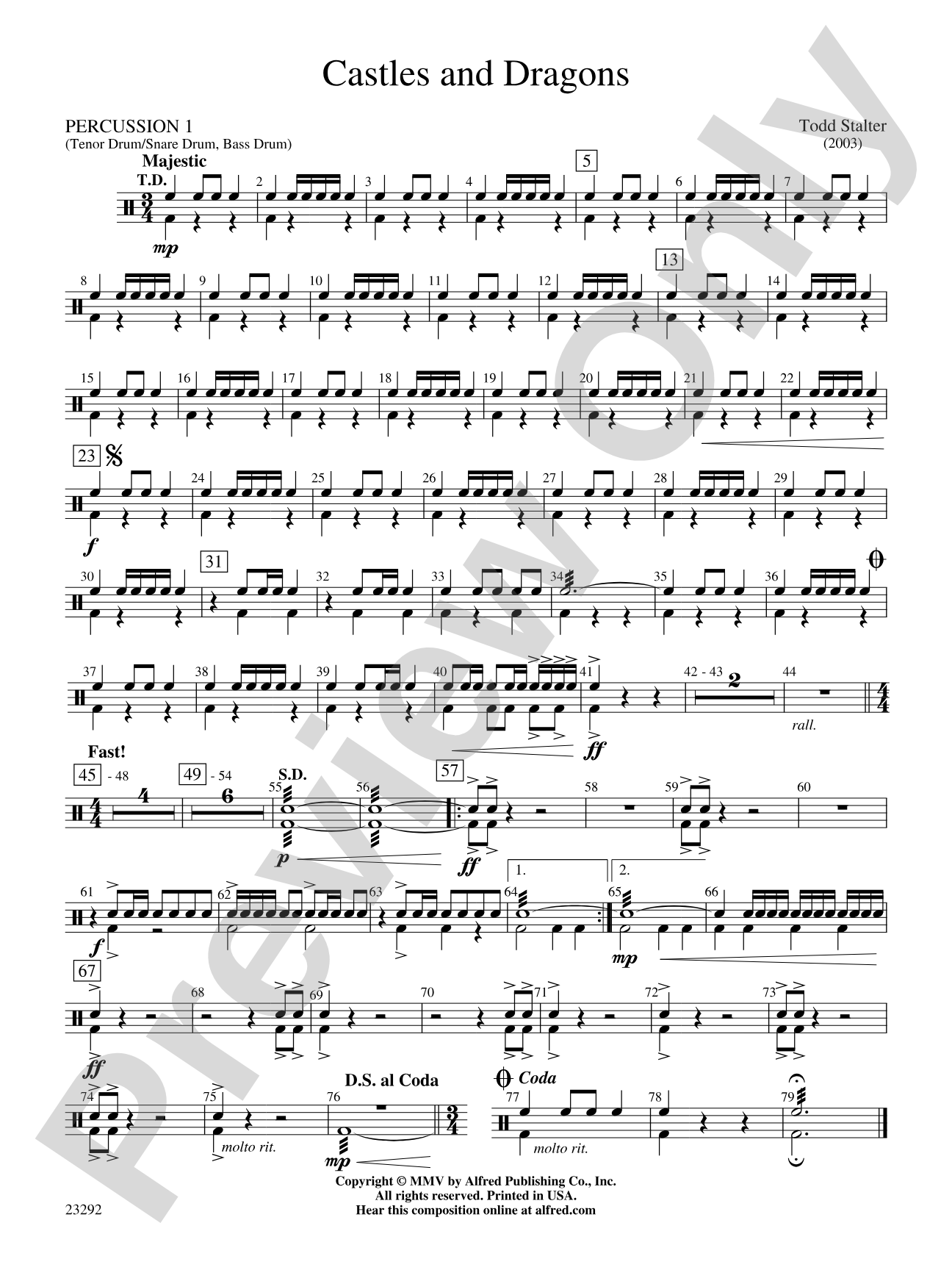

Castles and Dragons: 1st Percussion
By Todd Stalter
Grade: 1.5 (Easy)
Item: 00-PC-0000642_PC1
$3.00
Pickup currently not available
Description
Your students are going to love this one! On their journey towards the castle, the knights must slay a dragon that is threatening the local village. The battle ensues, the dragon is defeated, and the knights return once again to their noble procession home. Perfect for introducing your students to program music. (3:30) This title is available in MakeMusic Cloud.


Don't just read it, hear it, play along with it, and watch your students grow with it. In MakeMusic Cloud, Castles and Dragons: 1st Percussion comes alive with professional accompaniment, adjustable tempo, and built-in practice tools that turn solo practice into real progress.
Open in the Player
Jump straight in and assign it today.
Start Your Free Trial
Open this title and explore the full library in minutes.
Sample Audio
1
Audio File
--:--
0:00
0:00
Sample Video
Additional Details
Series:
Alfred Debut Series
Publisher:
Alfred Music
Page Count:
122
SKU:
00-PC-0000642_PC1
More about this title
About the Composer: Todd Stalter

Todd Stalter built his reputation over 34 years as Director of Bands at Eureka High School in Eureka, Illinois, where his ensembles earned consistent Superior ratings at IHSA contests and his marching band captured 16 Class 1A state championships. Beyond the high school podium, he has guest conducted All-State Bands in Georgia and Delaware, adjudicated at the state level across multiple states, and presented clinics on composition and music education at major conferences including the Illinois Music Educators Conference and the Delaware Music Educators Association.
As a composer, Stalter's concert band and string orchestra works have achieved national reach, with many pieces appearing on state festival and contest lists throughout the United States and in the GIA publication "Teaching Music Through Performance in Band." He holds a Bachelor of Music Education (cum laude) and Master of Music in Trumpet Performance from Illinois State University, where he studied trumpet with soloists and conducting with recognized masters in the field.
Why we love this
Stalter understands exactly what Grade 1.5 bands need: immediate musical storytelling without overwhelming technical demands. The narrative arc is clear enough that young musicians feel invested in the program music concept, yet the orchestration keeps every section engaged and visible rather than buried beneath thicker voicing.
What to expect
The opening establishes a noble, purposeful march as the knights journey forward. When the dragon emerges, the band snaps into energetic rhythmic figures and dramatic gestures that feel genuinely threatening without becoming chaotic. The resolution brings a sense of earned triumph, with the procession returning home transformed by the adventure.
Who it's for
Grade 1.5 bands ready to explore program music without navigating complex meters or exposed passages. This works equally well for bands building confidence mid-year or for ensembles preparing for contest and festival play.
How to get the most out of it
- Shape the opening procession with careful dynamic control. Even though it sits at an easy level, the nobility of the knights' journey depends on confident phrasing rather than accidental swells.
- Isolate the dragon battle section in rehearsal so brass and percussion can lock the rhythmic energy without rushing. This is where the drama lives.
- Let the return procession breathe slightly differently from the opening. The knights have changed; the music should reflect that subtle shift in character.
How to use it
Program this as a spring concert centerpiece when your band is ready to demonstrate both technical growth and musicality to an audience. The narrative makes it engaging for family members unfamiliar with concert band repertoire, and the manageable length (3:30) fits well alongside other Grade 1-2 selections without dominating a concert.
Skills your students will build
- Understanding program music through instrumental storytelling
- Maintaining consistent pulse during contrasting sections (processional, battle, return)
- Dynamic control and phrasing in marching-style passages
- Rhythmic precision in ensemble brass and percussion
- Responding to conductor gesture during dramatic shifts in character