
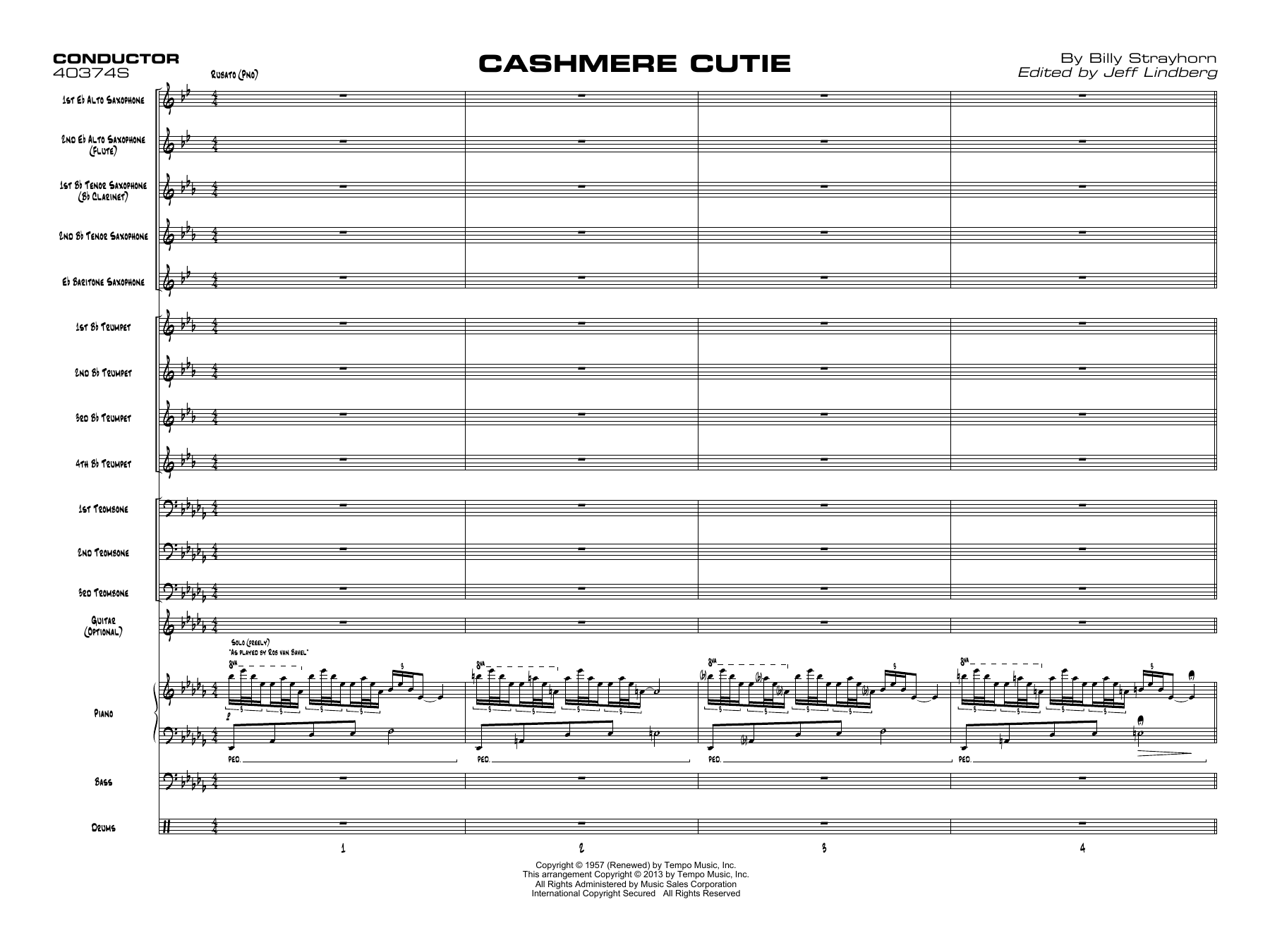

Cashmere Cutie: Jazz Ensemble Conductor Score & Parts
By Billy Strayhorn / Edited by Jeff Lindberg
Item: 35-PK00473177
$70.00
Pickup currently not available
Buy Extra Parts (Digital PDF Download)
| Product | Price | Quantity |
|---|---|---|
| Cashmere Cutie - Full Score | $12.00 | |
| Cashmere Cutie - Alternate Piano Introduction | $6.00 | |
| Cashmere Cutie - 1st Eb Alto Saxophone | $6.00 | |
| Cashmere Cutie - 2nd Eb Alto Saxophone | $6.00 | |
| Cashmere Cutie - 1st Bb Tenor Saxophone | $6.00 | |
| Cashmere Cutie - 2nd Bb Tenor Saxophone | $6.00 | |
| Cashmere Cutie - Eb Baritone Saxophone | $6.00 | |
| Cashmere Cutie - 1st Bb Trumpet | $6.00 | |
| Cashmere Cutie - 2nd Bb Trumpet | $6.00 | |
| Cashmere Cutie - 3rd Bb Trumpet | $6.00 | |
| Cashmere Cutie - 4th Bb Trumpet | $6.00 | |
| Cashmere Cutie - 1st Trombone | $6.00 | |
| Cashmere Cutie - 2nd Trombone | $6.00 | |
| Cashmere Cutie - 3rd Trombone | $6.00 | |
| Cashmere Cutie - Guitar | $6.00 | |
| Cashmere Cutie - Piano | $6.00 | |
| Cashmere Cutie - Bass | $6.00 | |
| Cashmere Cutie - Drums | $6.00 |
Parts Added to Cart!
Description
Strayhorn's Cashmere Cutie is about texture and composition. A medium swing at 132-138 BPM, this chart is the real deal--composed and arranged by Billy Strayhorn. It's loaded with beautiful sophisticated voicings, yet the music flows easily. Tenor 1 doubles clarinet and alto 2 doubles a two-measure flute line. There is a written-out piano introduction that is complex but it can be improvised in lieu of the written part plus there is an optional alternate easier piano intro part included. 5 saxes, 4 trumpets, 3 trombones, 4 rhythm.


Cashmere Cutie: Jazz Ensemble Conductor Score & Parts isn't in MakeMusic Cloud just yet...but it could be. Let us know you'd like to see it, and you'll help shape what comes next. In the meantime, start a free trial and dive into thousands of interactive titles your students can play along with today.
Request This Title
Tell us you want it.
Start Your Free Trial
Explore everything that's ready to play right now.
Sample Audio
No sample audio found.
Sample Video
No sample videos found.
Additional Details
Publisher:
Hal Leonard
SKU:
35-PK00473177
More about this title
About the Composer: Billy Strayhorn
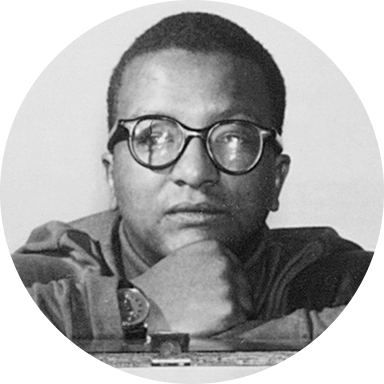
Billy Strayhorn stands among the most prolific and influential jazz composers of the twentieth century, yet spent much of his career working largely behind the scenes. Born in Dayton, Ohio in 1915, Strayhorn began his legendary partnership with Duke Ellington in 1939, a collaboration that would reshape the sound of American jazz. His compositions, from the iconic "Take the 'A' Train" to the harmonically sophisticated "Lush Life" (written when he was just sixteen), have become standards recorded by nearly every major jazz artist from Ella Fitzgerald to John Coltrane.
Strayhorn's influence on the jazz repertoire runs deeper than his name recognition suggests. Historians regard him as one of America's most under-recognized classical composers, a distinction rooted partly in his choice to live openly as a gay Black man during an era that offered him little public recognition despite the ubiquity of his music. His sophisticated harmonic language and gift for memorable melody shaped the sound of mid-century jazz and continue to define the standard repertoire today.
Why we love this
Strayhorn wrote this chart to balance harmonic sophistication with genuine playability. The voicings sound like Ellington's orchestra at its most elegant, yet the part writing avoids unnecessary complexity for complexity's sake. The flexibility built into the arrangement (improvised or written piano intro, optional flute part) respects both the conductor's vision and the ensemble's capabilities, making this a chart that deepens musicians' understanding of how beautiful composition and practical musicianship work together.
What to expect
Cashmere Cutie swings with relaxed sophistication. The voicings are warm and lush without feeling heavy; the melody moves with the ease of a conversation between old friends. This is a chart that rewards attentive listening and draws audiences into the subtle architecture of Strayhorn's compositional craft.
Who it's for
Intermediate to advanced jazz ensembles with solid section balance across saxes, trumpets, and trombones. The optional alternate piano introduction makes this accessible to groups whose pianists are still developing their jazz facility, while the written version challenges those ready to tackle Strayhorn's harmonic language head-on.
How to get the most out of it
- Treat the piano introduction as an opportunity to establish the chart's character: the written version showcases Strayhorn's sophistication, but a skilled pianist can use it as a springboard for personal expression. Either approach works; choose based on your ensemble's strengths and what you want the piece to communicate.
- Balance the tenor 1/clarinet doubling carefully in the ensemble texture. The clarinet adds warmth to specific passages, but it must sit behind rather than cut through the saxes. Rehearse this section with both instruments present to nail the blend.
- Let the swing feel breathe at 132-138 BPM. This is a medium tempo where rhythmic precision matters enormously; even slight rushing or dragging will undermine the piece's elegant flow. Use a steady click in early rehearsals, then remove it once the section internalizes the groove.
- The sophisticated voicings demand careful intonation, especially in the saxophone section. Build rehearsal time specifically for vertical sonority checks; this piece rewards the tuning work you invest.
How to use it
Place this on a concert where it can anchor a set of mid-century standards, or pair it with another Strayhorn composition to highlight his compositional range. The medium tempo and accessible swing style make it an ideal choice for a spring jazz concert, and the writing gives audiences a window into the sophisticated orchestration that defined the Ellington legacy.
Skills your students will build
- Reading and balancing jazz voicings across the ensemble
- Intonation in chordal writing (specifically tuning major sevenths, ninths, and suspended harmonies)
- Medium-tempo swing articulation and phrasing
- Doubling flexibility (managing clarinet and flute doublings without losing saxophone balance)
- Interpreting optional parts and multiple versions of written material