
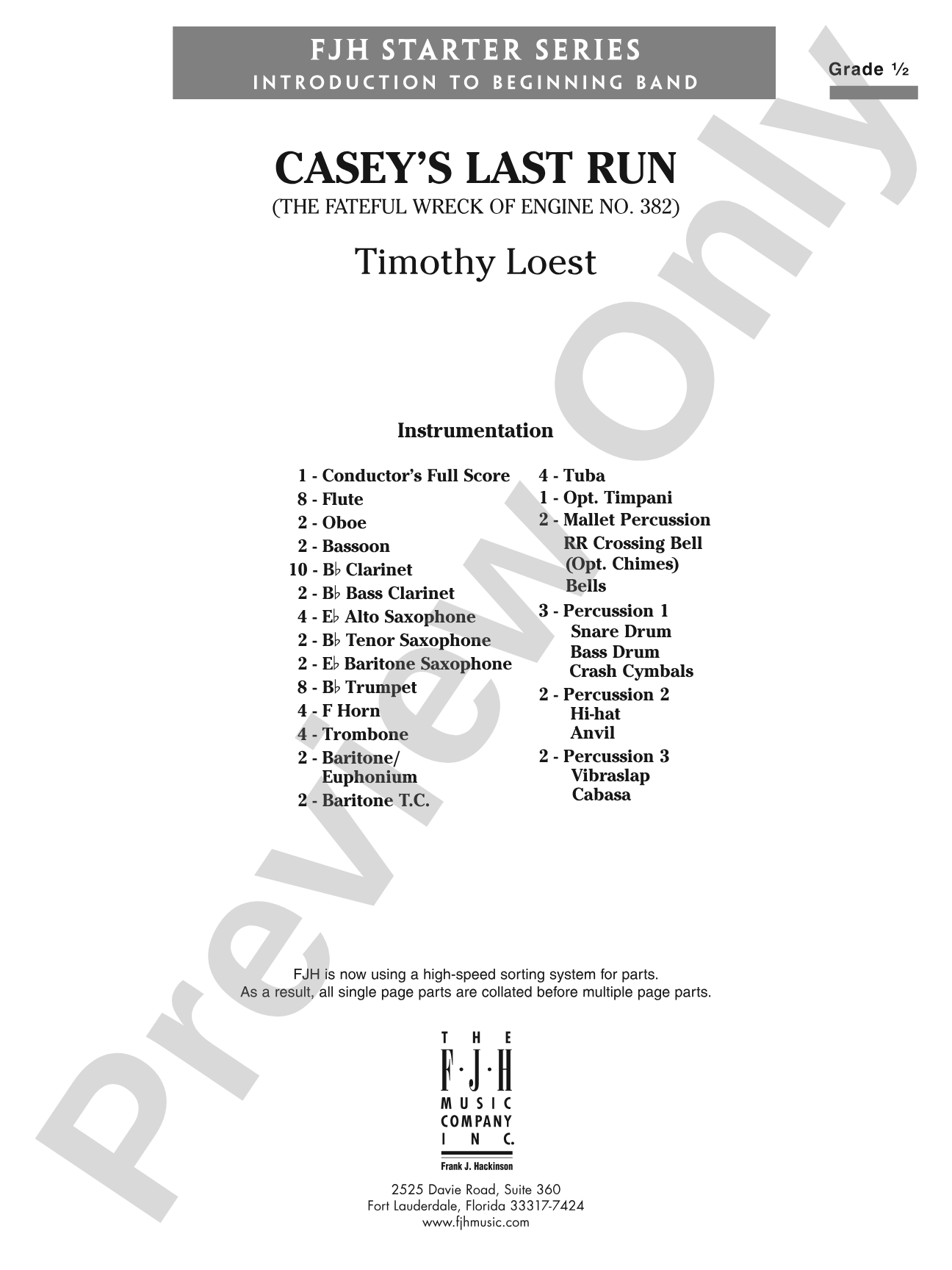
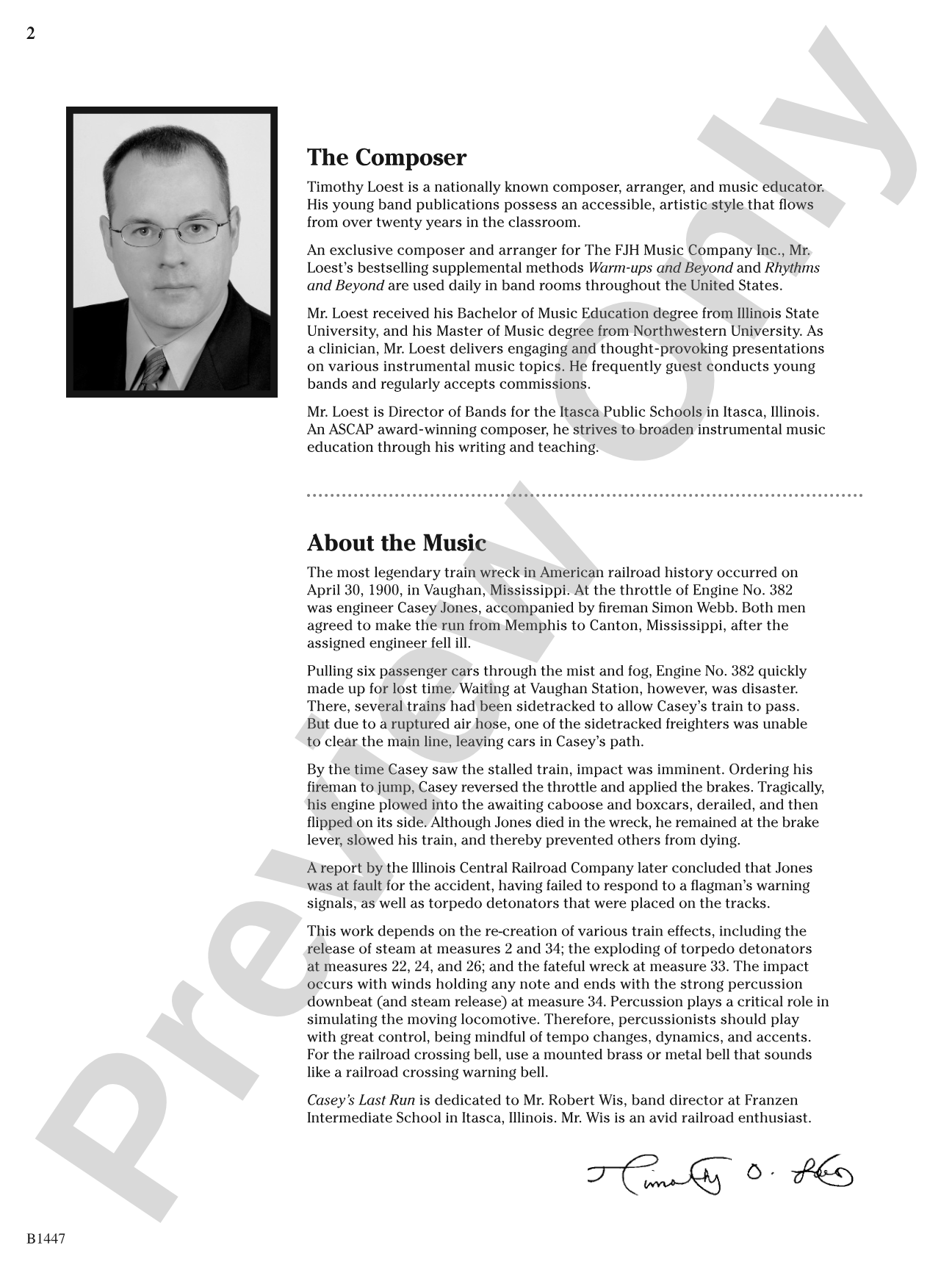
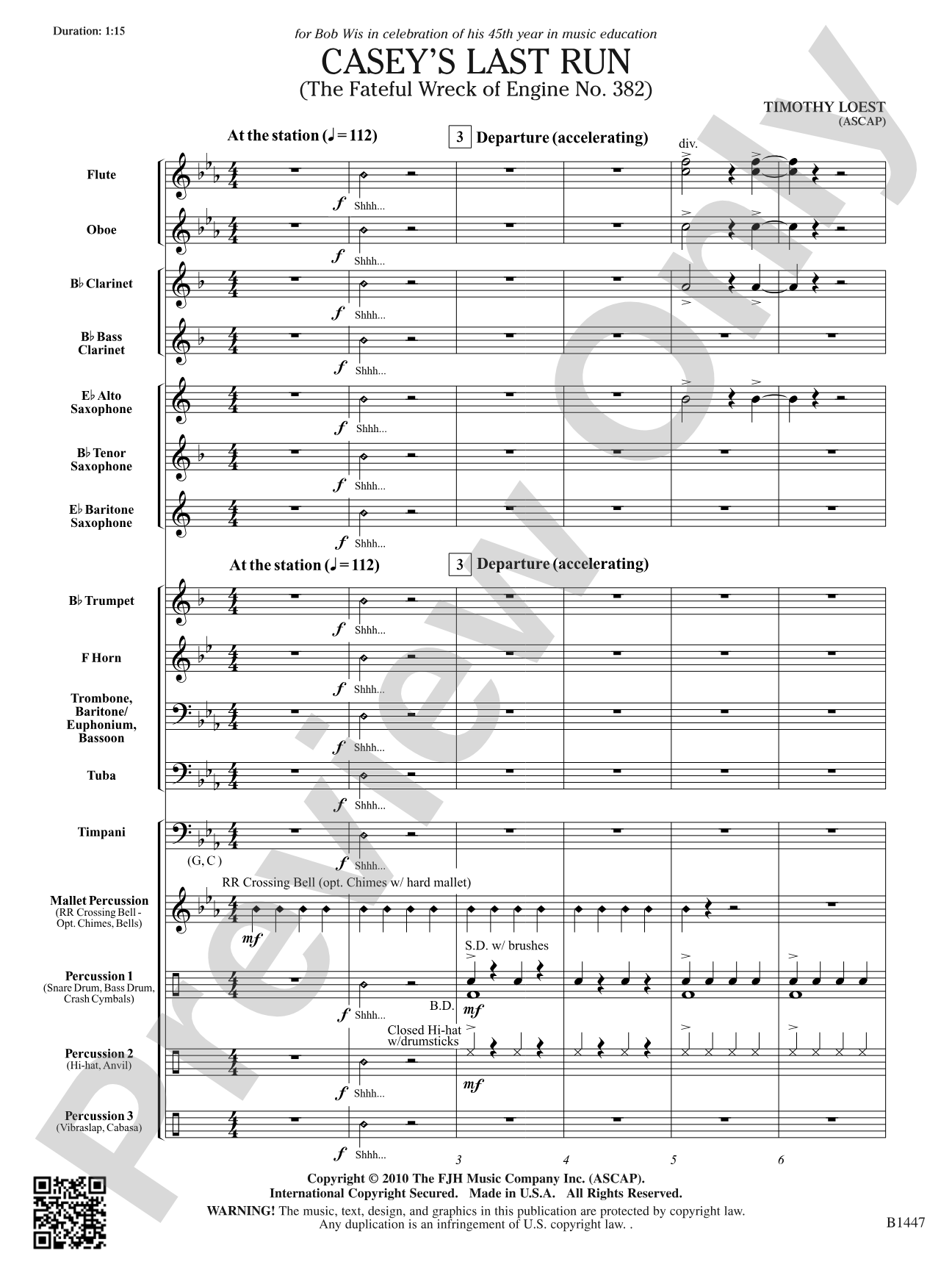
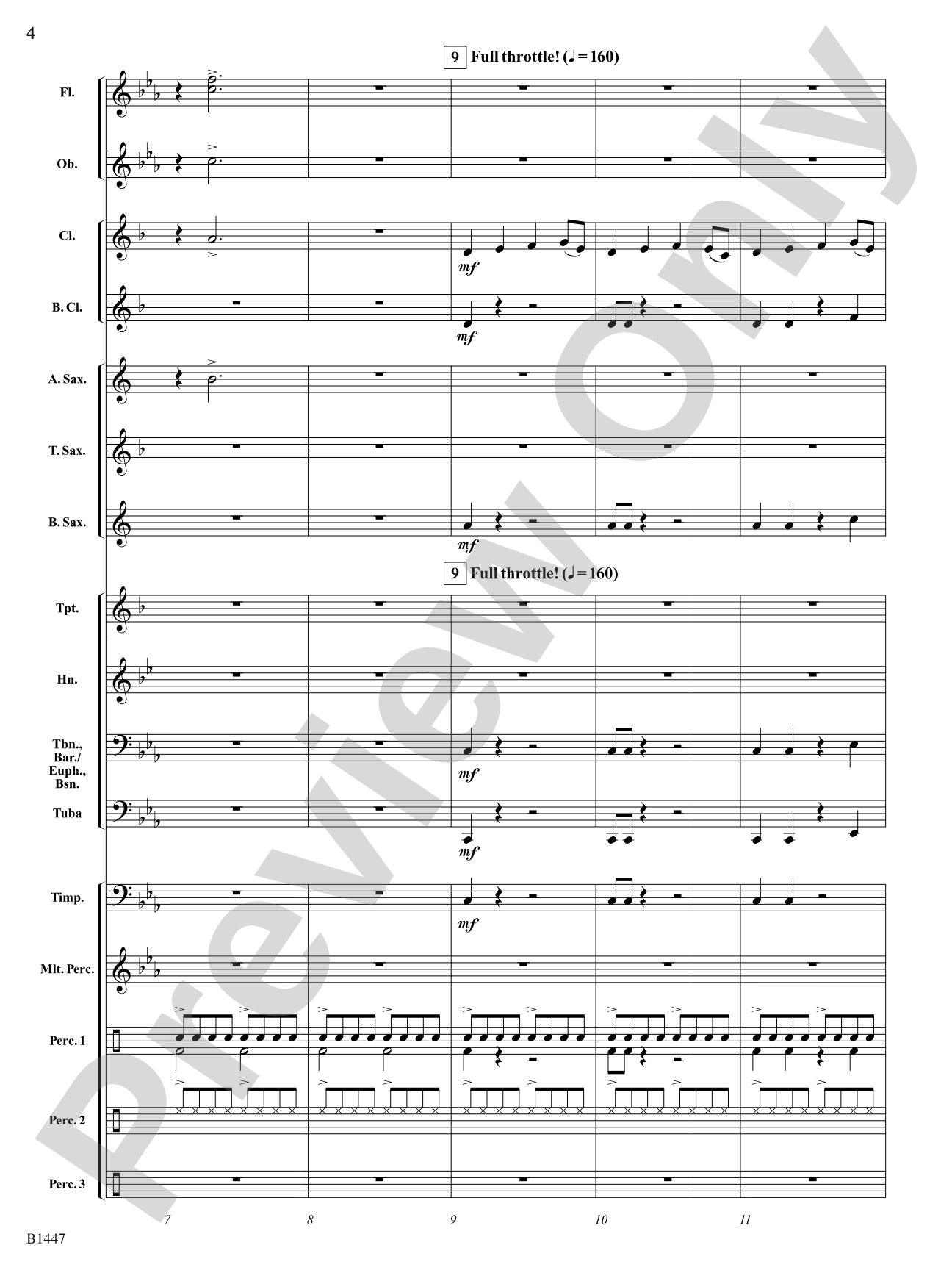

Casey's Last Run: Score
By Timothy Loest
Level:.5
Item: 98-DB1447S
$5.00
Pickup currently not available
Description
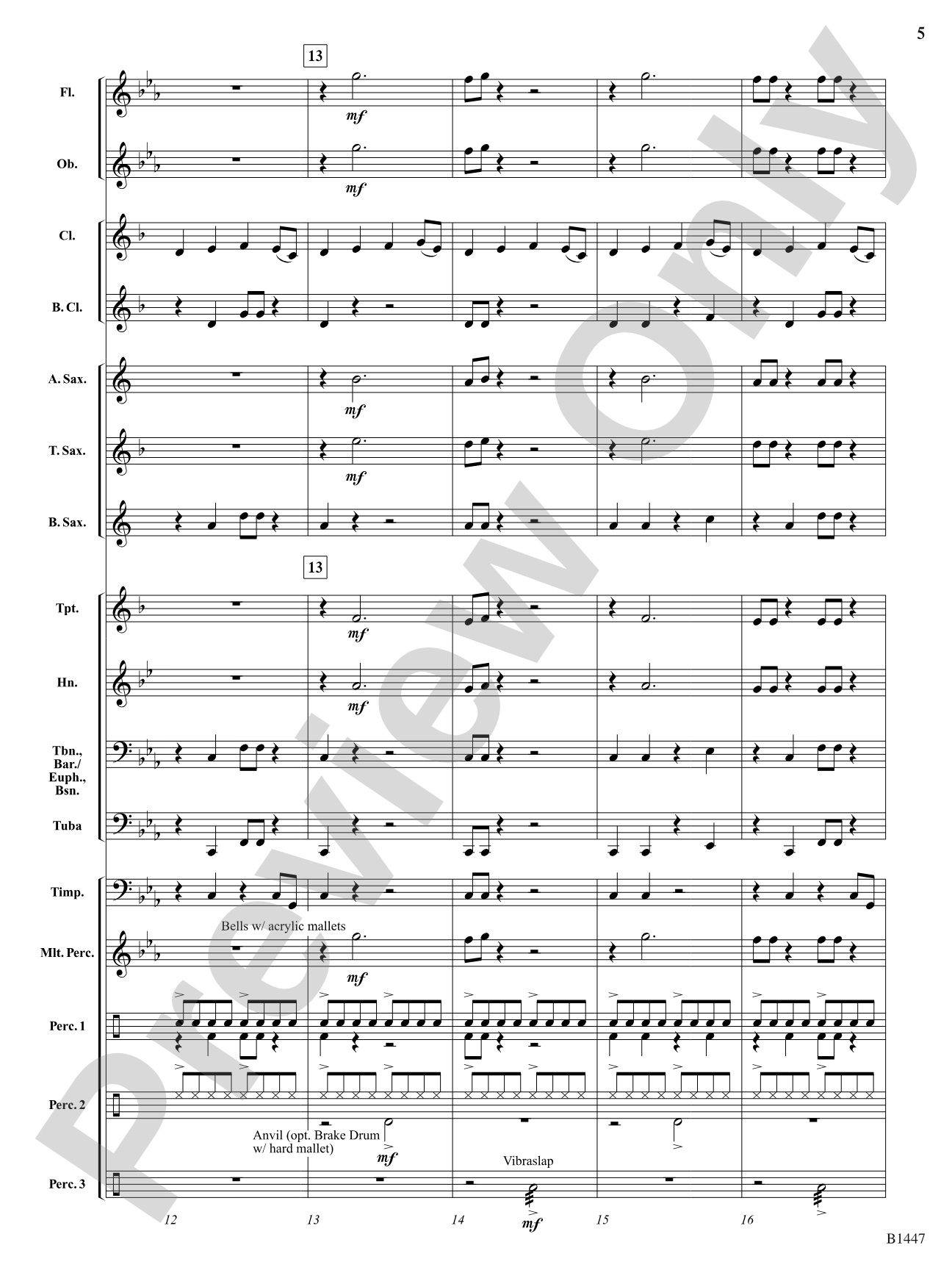
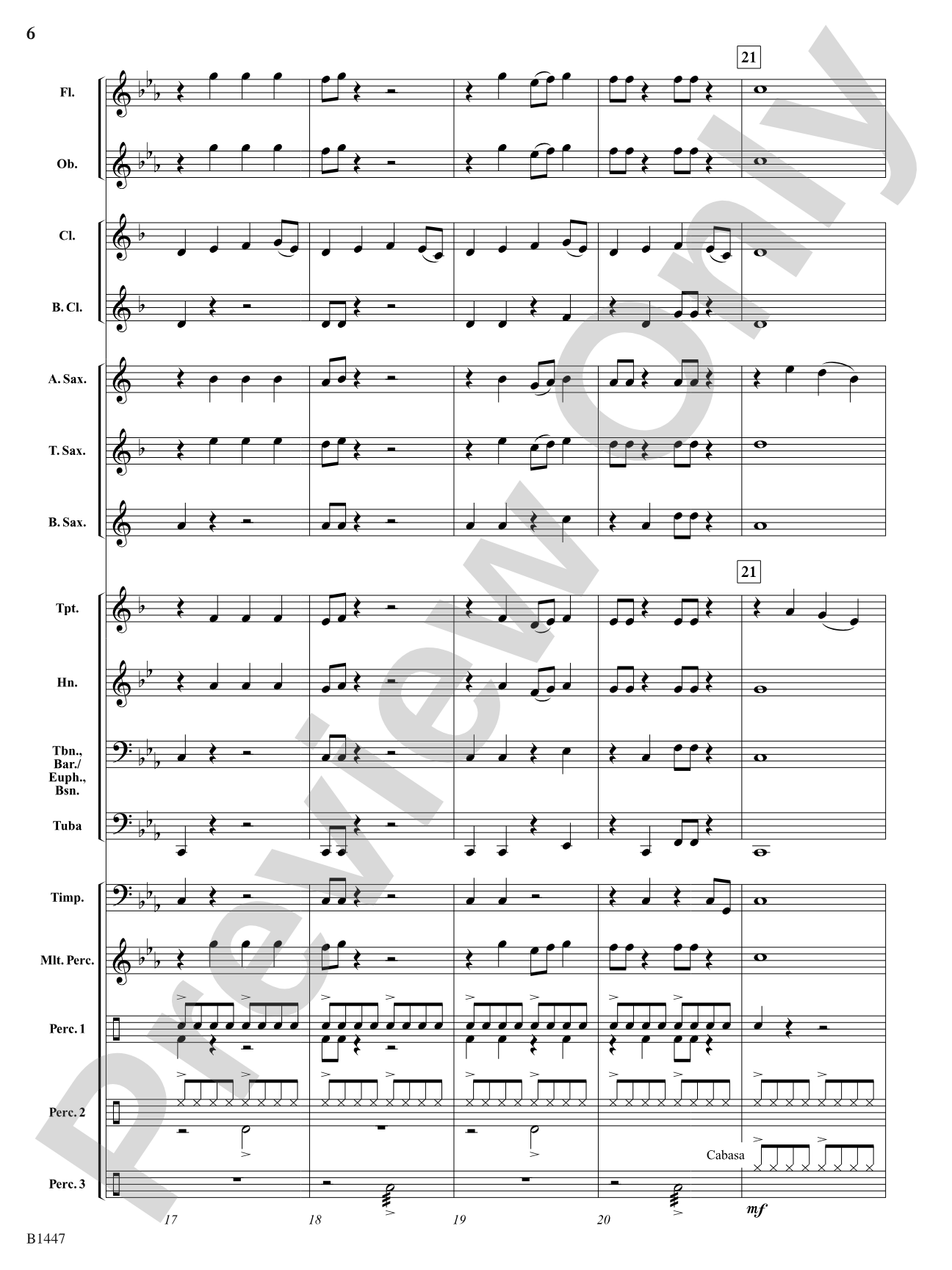
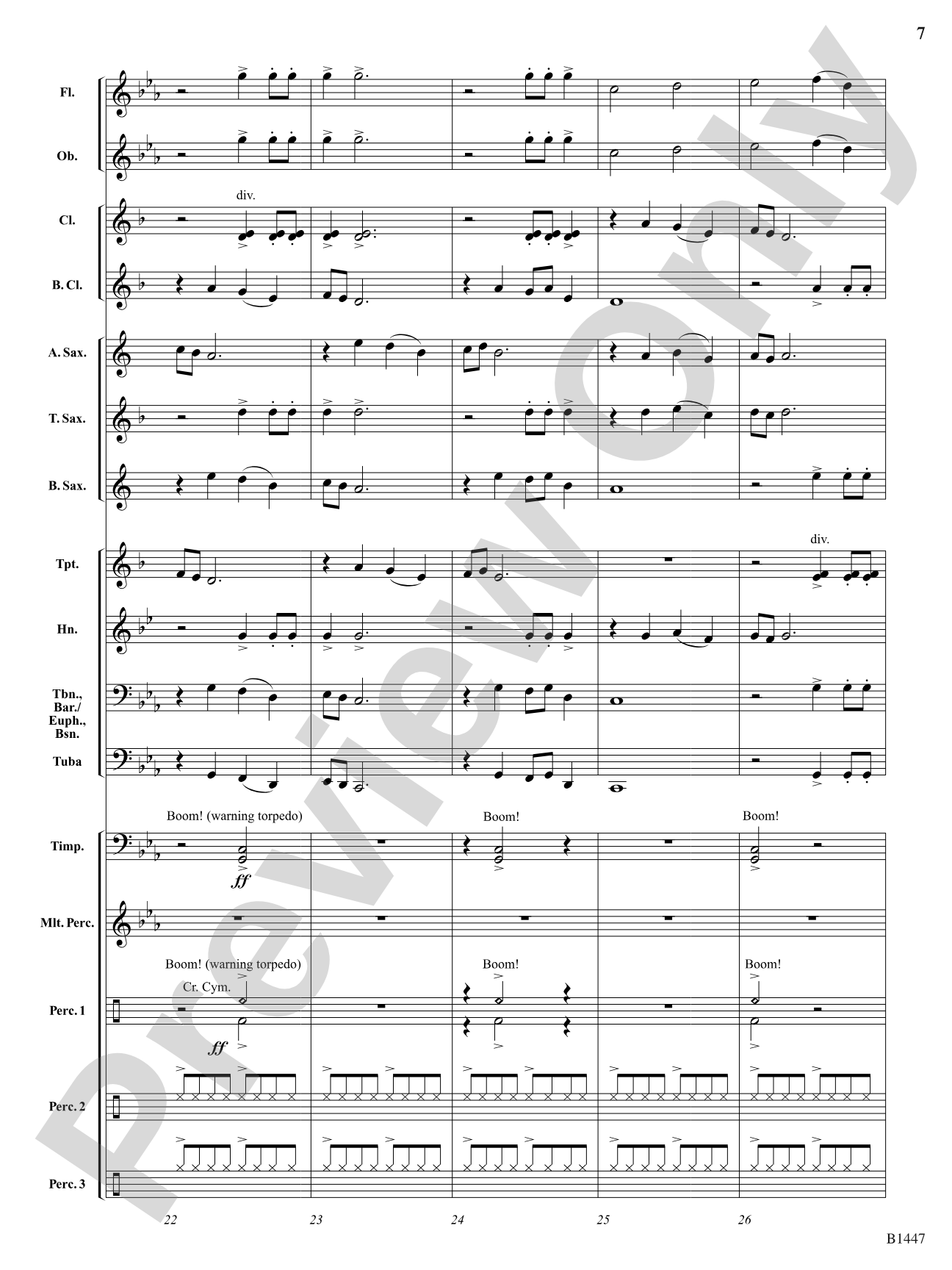
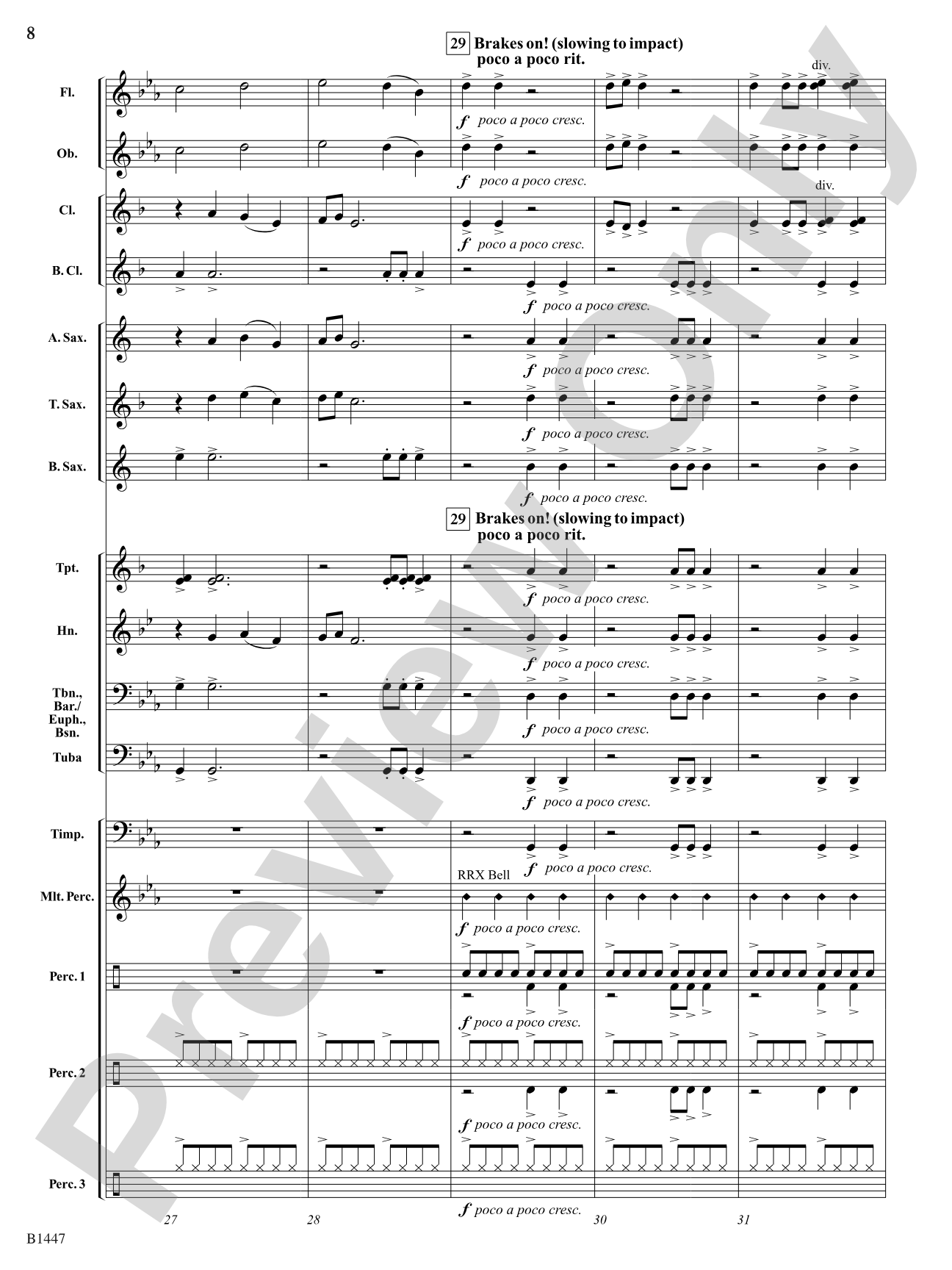
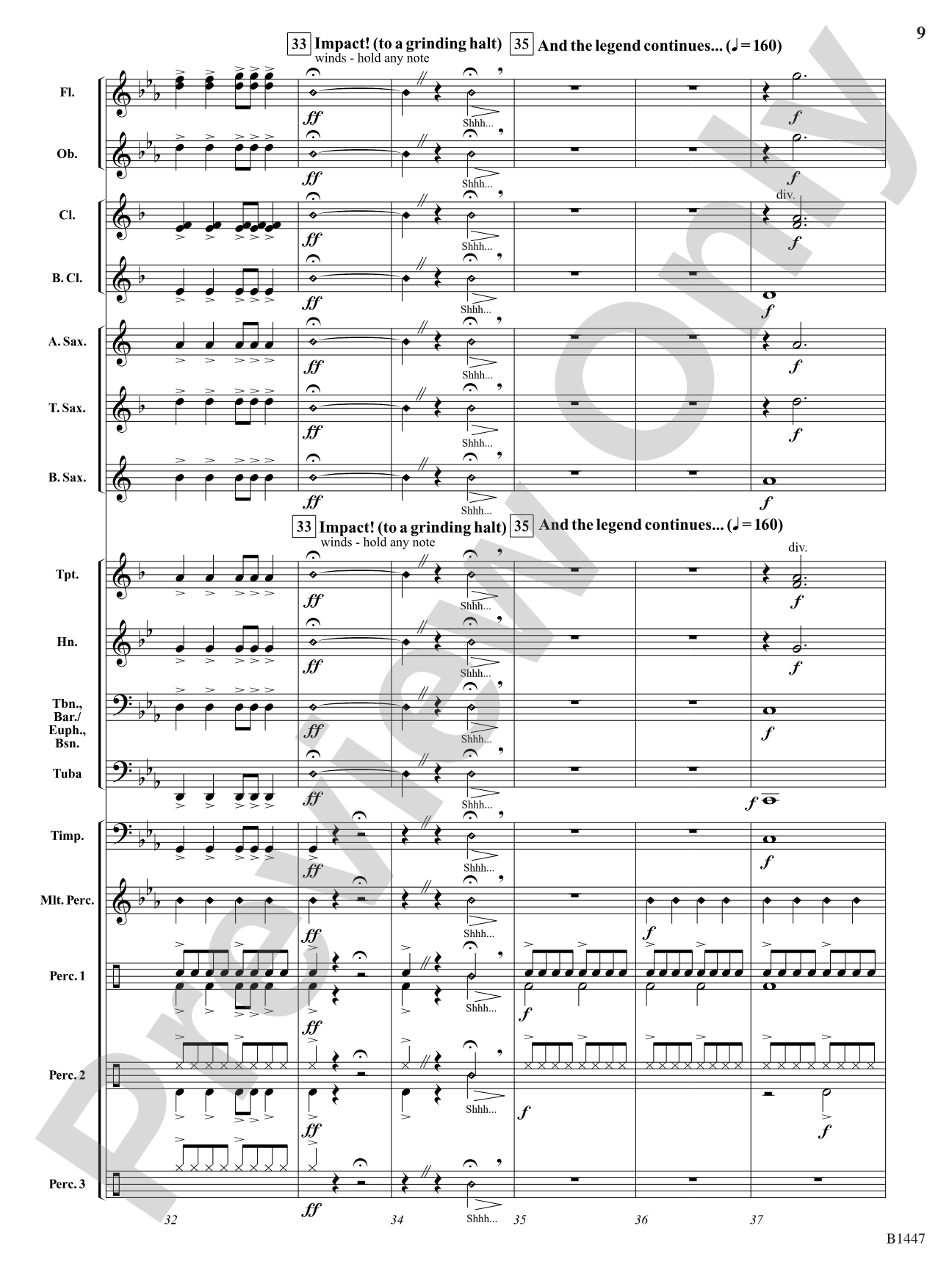
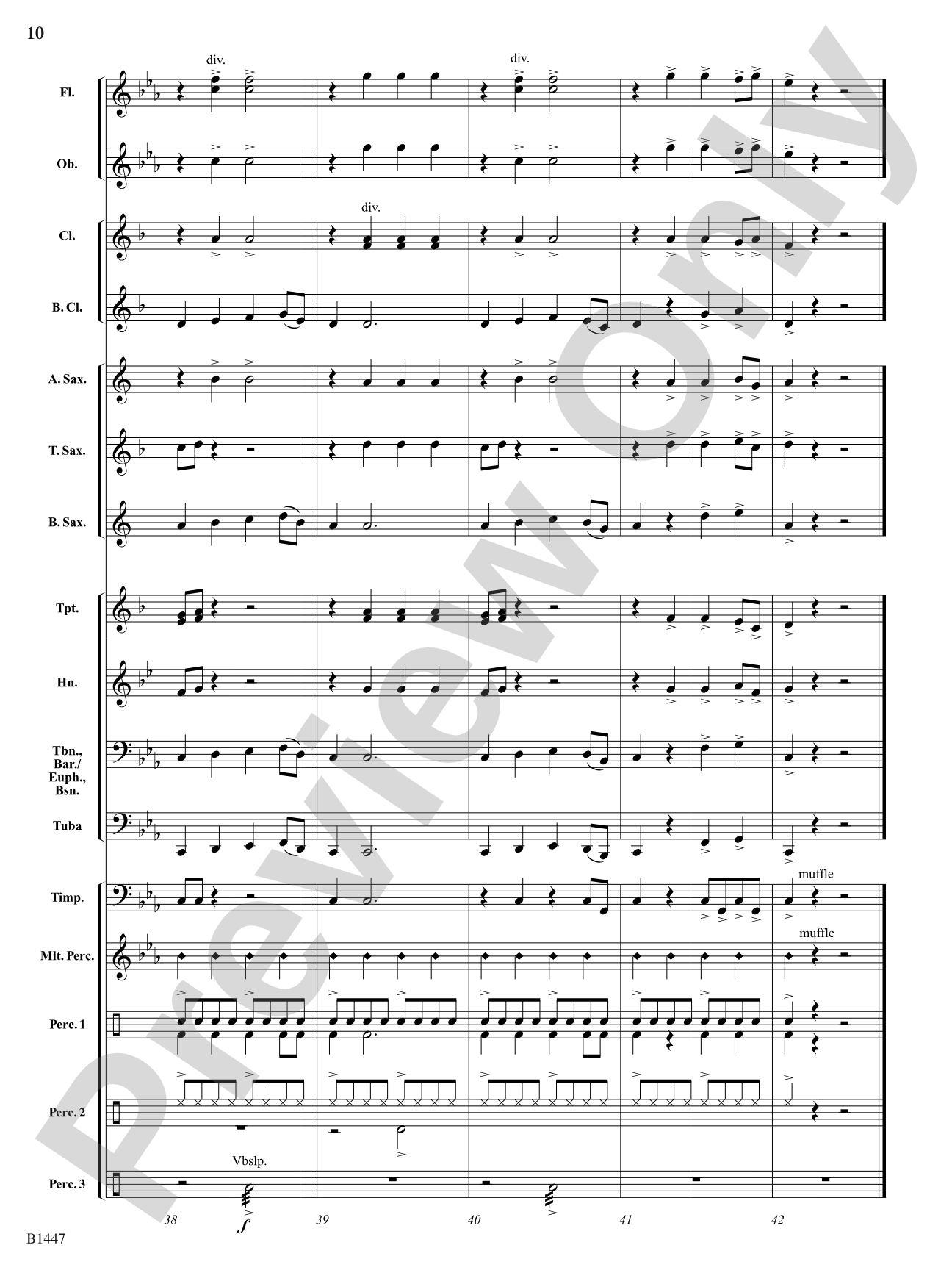
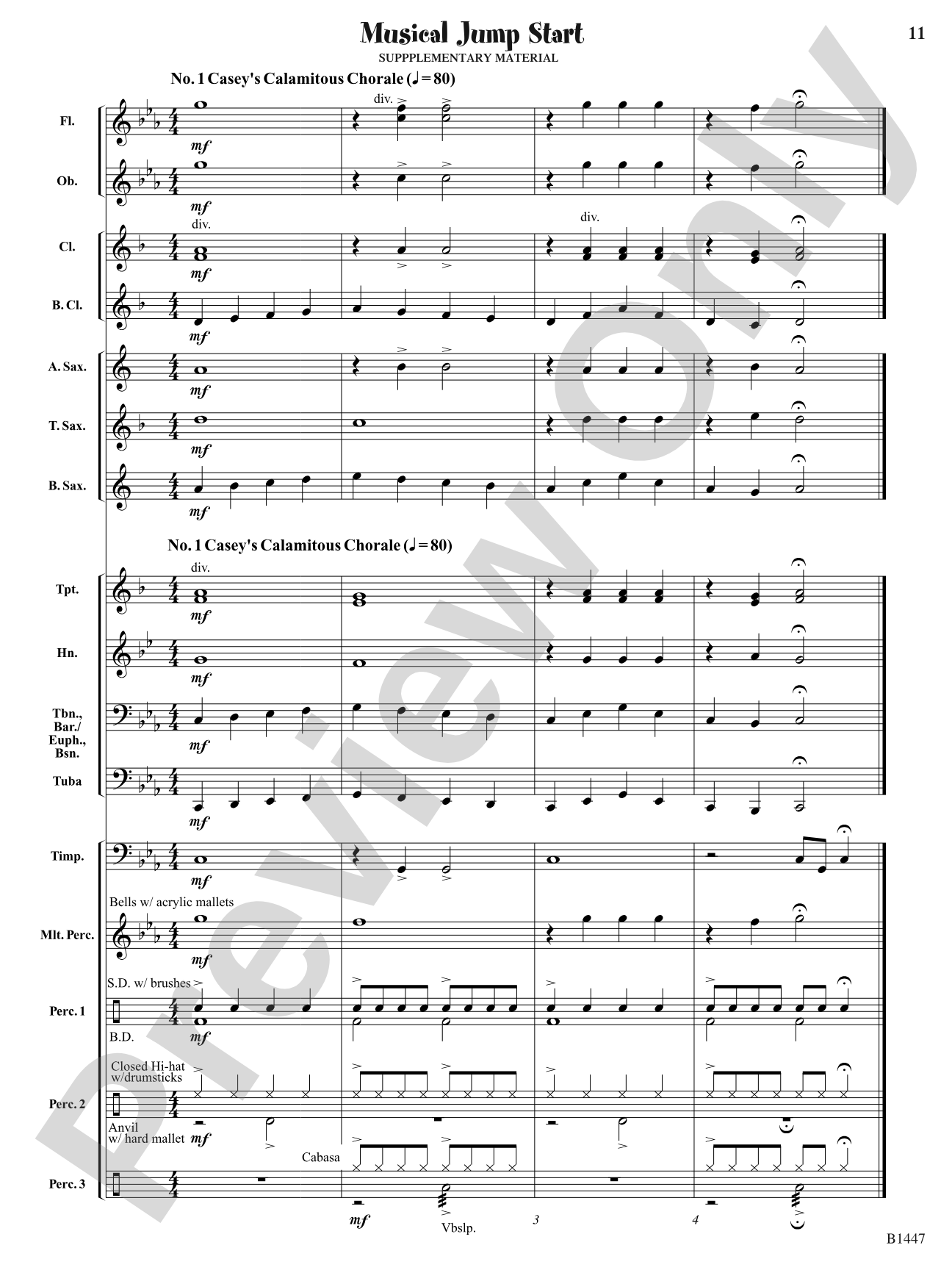
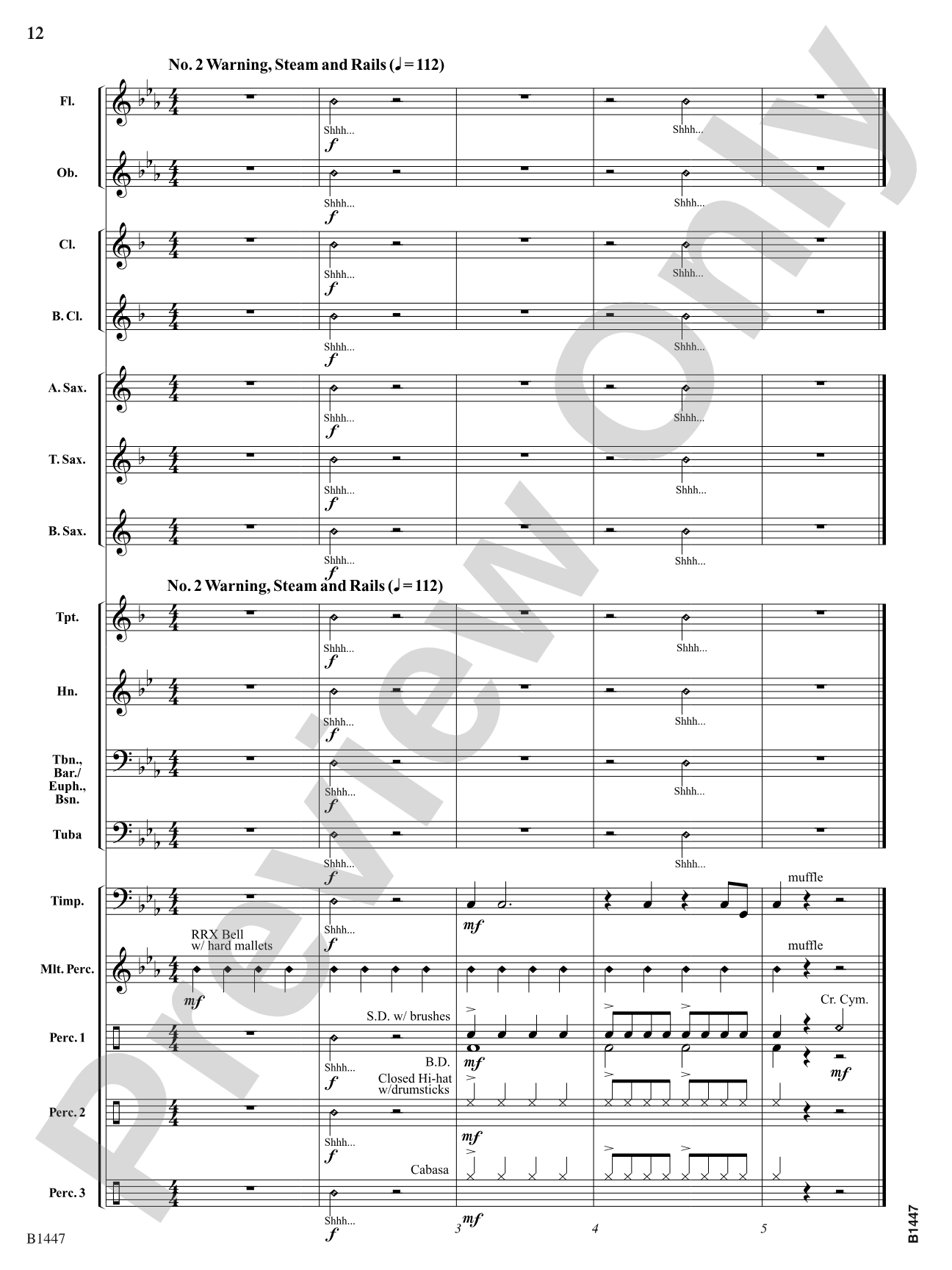
This heart-stopping work depicts the legendary train wreck of Casey Jones and Engine No. 382. Railroad warning bells and the release of steam announce the train's departure. Complex harmonies weave through various textures as the audience feels the clickety-clack of the railroad tracks. The suspense continues until the unavoidable impact in which students play any note. Amazing and substantive, yet with only six notes!


Casey's Last Run: Score isn't in MakeMusic Cloud just yet...but it could be. Let us know you'd like to see it, and you'll help shape what comes next. In the meantime, start a free trial and dive into thousands of interactive titles your students can play along with today.
Request This Title
Tell us you want it.
Start Your Free Trial
Explore everything that's ready to play right now.
Sample Audio
1
Audio File
--:--
0:00
0:00
Sample Video
No sample videos found.
Additional Details
Series:
FJH Starter Series
Publisher:
The FJH Music Company, Inc.
SKU:
98-DB1447S
More about this title
About the Composer: Timothy Loest

Timothy Loest has spent over three decades teaching instrumental music while simultaneously establishing himself as a prolific composer whose works are performed by bands across the country. His compositions balance accessibility with musical substance, a philosophy grounded in his deep understanding of what young musicians can achieve. In 2017, his piece Cloud Gate (Reflections of a City) reached an audience of over 5,000 at Chicago's Millennium Park, and that same year he received the Illinois Grade School Music Association's Cloyd Myers Memorial Award for Excellence in Music Education. His published works appear with major publishers including FJH Music Company, C.L. Barnhouse Company, and Warner Bros. Publications, and his arrangements and compositions have been featured on network television programs ranging from The Tonight Show Starring Jimmy Fallon to Good Morning America.
Loest's contributions to music education extend beyond concert works. He served as an associate for several widely adopted band methods, including Measures of Success: A Comprehensive Musicianship Band Method, Warm-ups and Beyond, and Rhythms and Beyond. In 2022, he founded Fanfare Music Press to publish high-quality band compositions and arrangements. A graduate of Illinois State University and Northwestern University, Loest holds membership in ASCAP and continues to accept commissions for band. He taught at F.E. Peacock Middle School in Itasca, Illinois throughout his career.
Why we love this
Loest captures a thrilling narrative arc within the constraints of extremely limited technical demands. The piece demonstrates that engaging, memorable band music doesn't require advanced reading skills or virtuosic technique; instead, it relies on orchestration, harmonic color, and dramatic storytelling to hold an audience. For programs serving younger or developing ensembles, this work delivers genuine musical substance and theatrical impact without overwhelming players still building foundational skills.
What to expect
The journey unfolds with the sensory immediacy of a moving train. Mechanical rhythms and locomotive sounds give way to mounting tension as harmonic complexity deepens, building inexorably toward a dramatic collision that lets every student participate in the climax regardless of ability level.
Who it's for
This piece works exceptionally well for beginning and developing concert bands that need repertoire with genuine musical appeal but without advanced technical demands. It's ideal for directors seeking to program a work that will engage audiences and young players alike without requiring extensive sectional technique work.
How to get the most out of it
- Shape the opening railroad sounds (warning bells and steam release) with clear dynamic contrast and rhythmic precision so the train's departure feels imminent and vivid.
- Balance the layered textures during the middle section so the 'clickety-clack' forward motion remains audible even as harmonies become more complex.
- Prepare all sections for the climactic moment where any note becomes playable during the crash; some directors find it effective to establish a gestural cue in rehearsal so the impact feels unified rather than chaotic.
How to use it
This programmatic piece works well as an opening number on a concert where you want to capture immediate audience attention, or as a centerpiece that demonstrates your young band's musicianship and unity to families and community members. It also serves effectively in festivals or adjudicated events where judges appreciate clever compositional restraint paired with theatrical storytelling.
Skills your students will build
- Executing coordinated rhythmic figures across sections
- Responding to dynamic and textural contrasts within a structured narrative
- Maintaining steady tempo through repetitive accompaniment patterns
- Contributing to ensemble balance when playing independent harmonic lines
- Interpreting programmatic intent through musical execution