
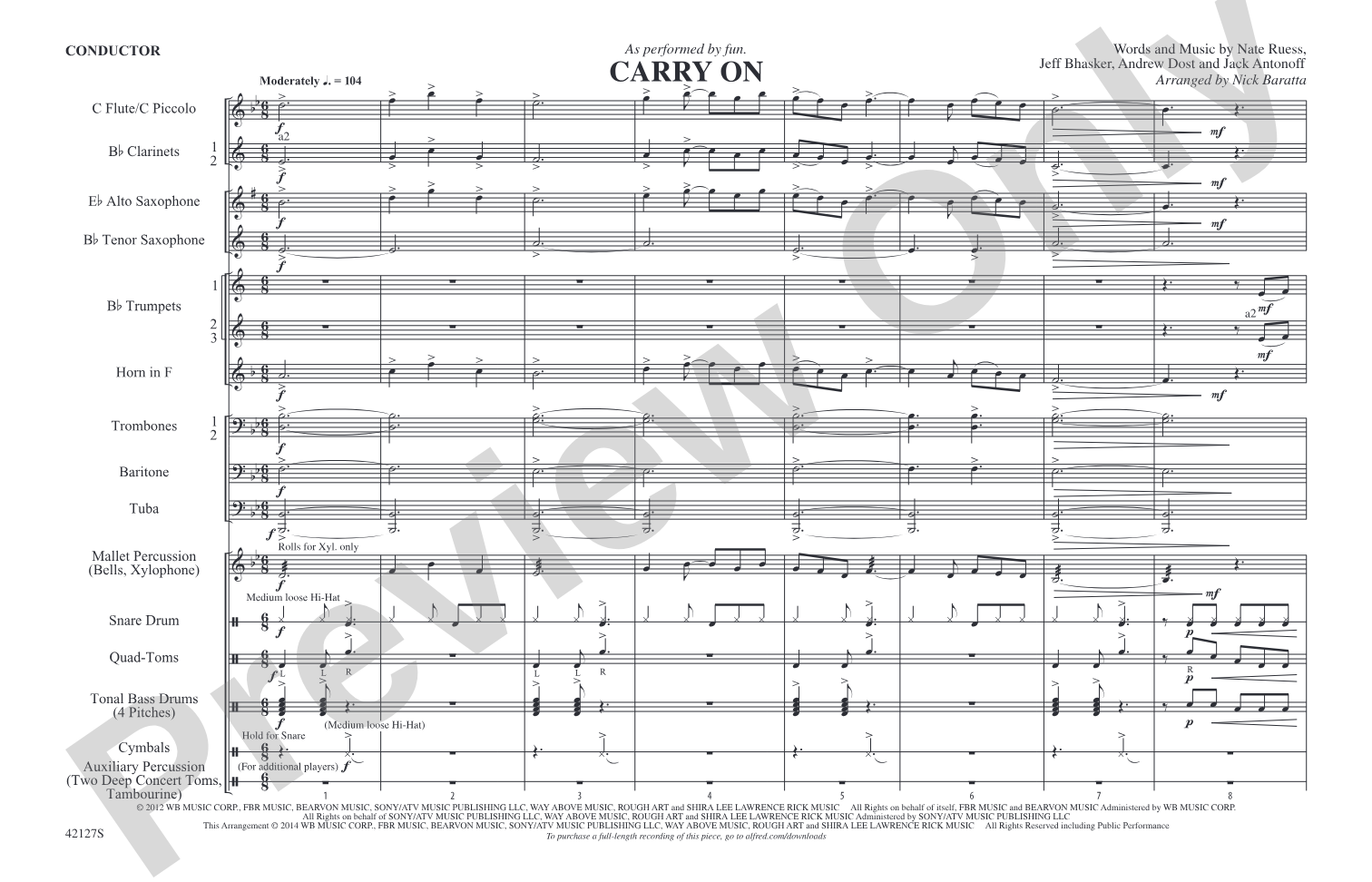
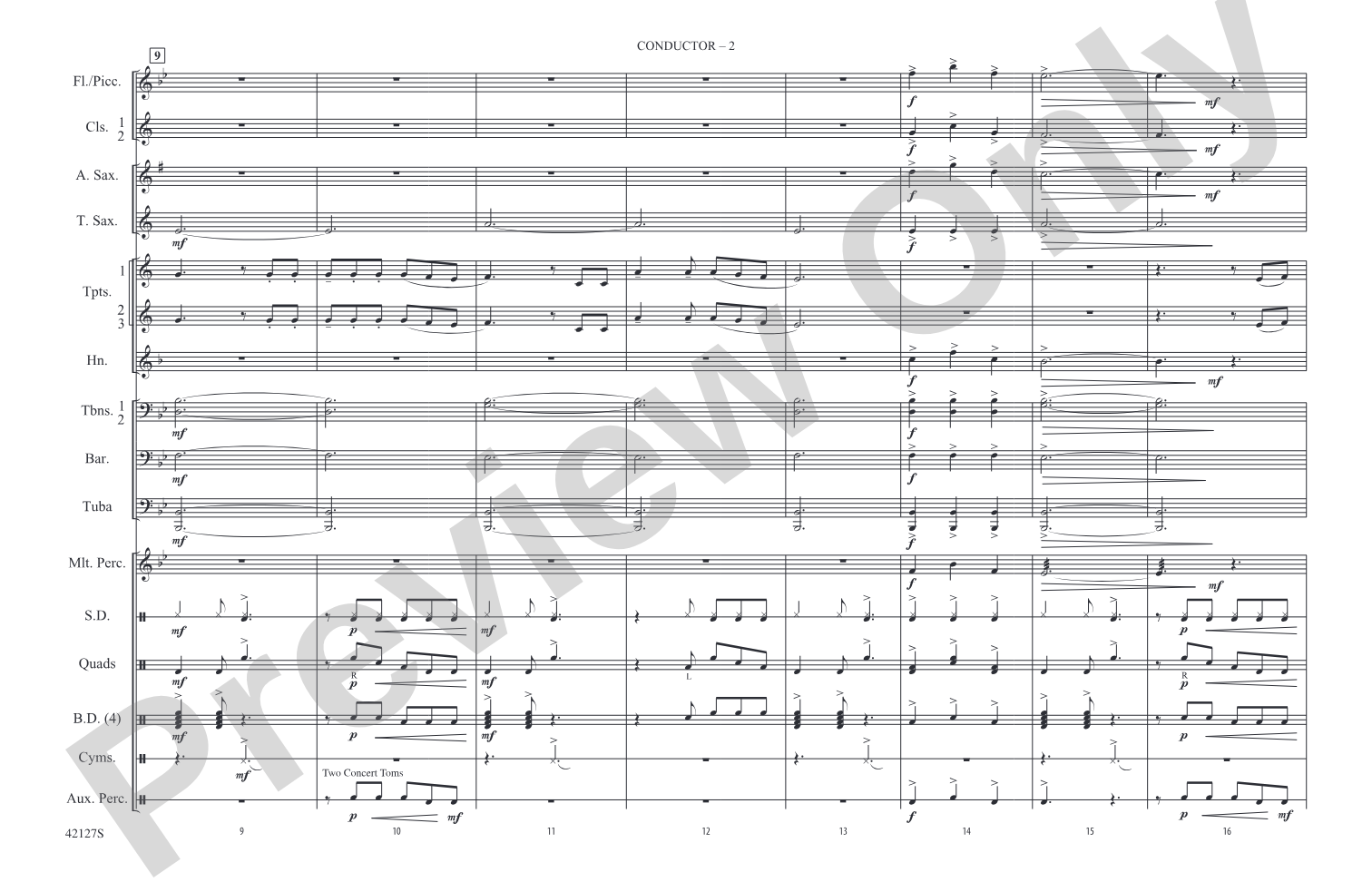
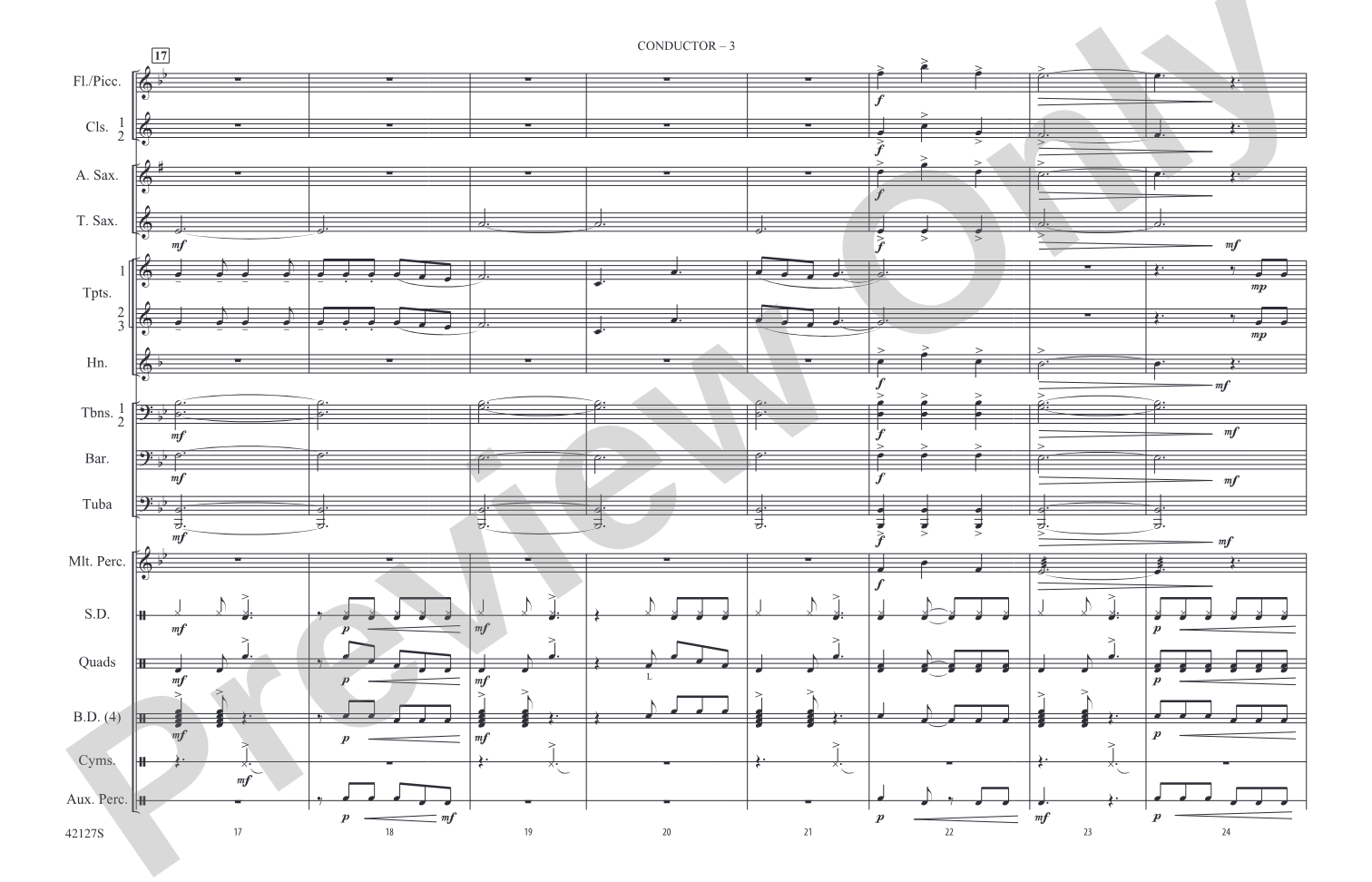
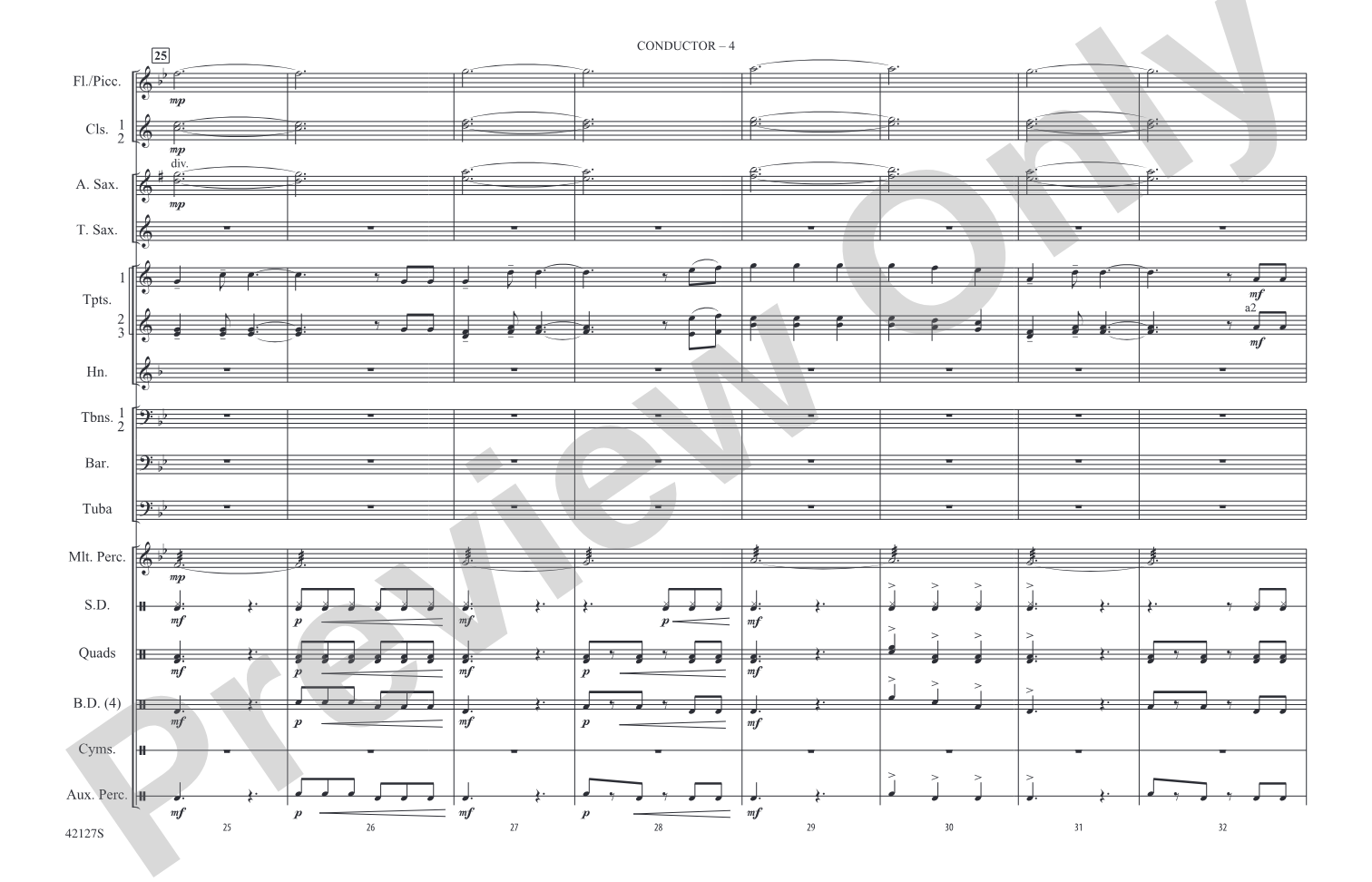
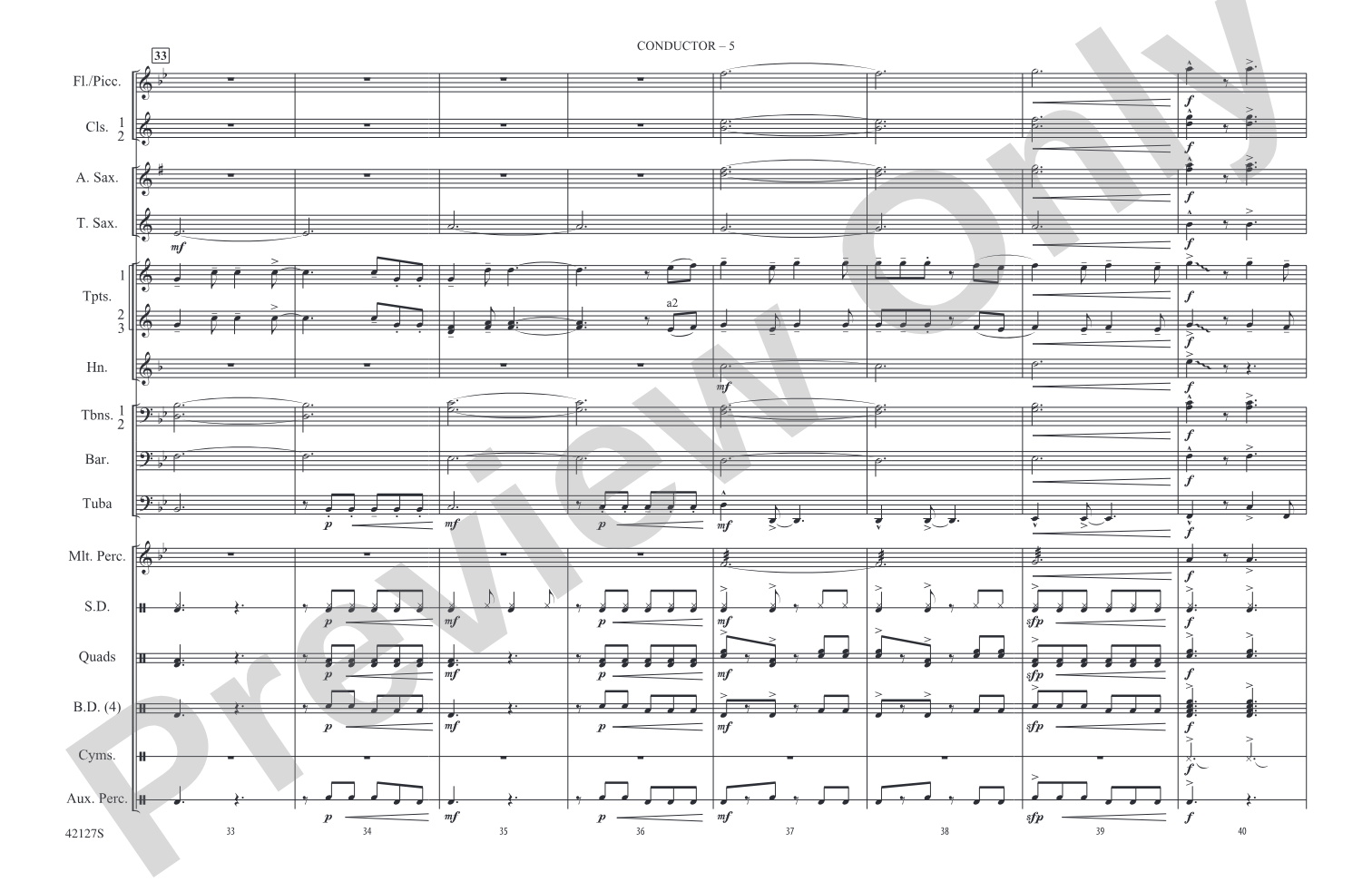
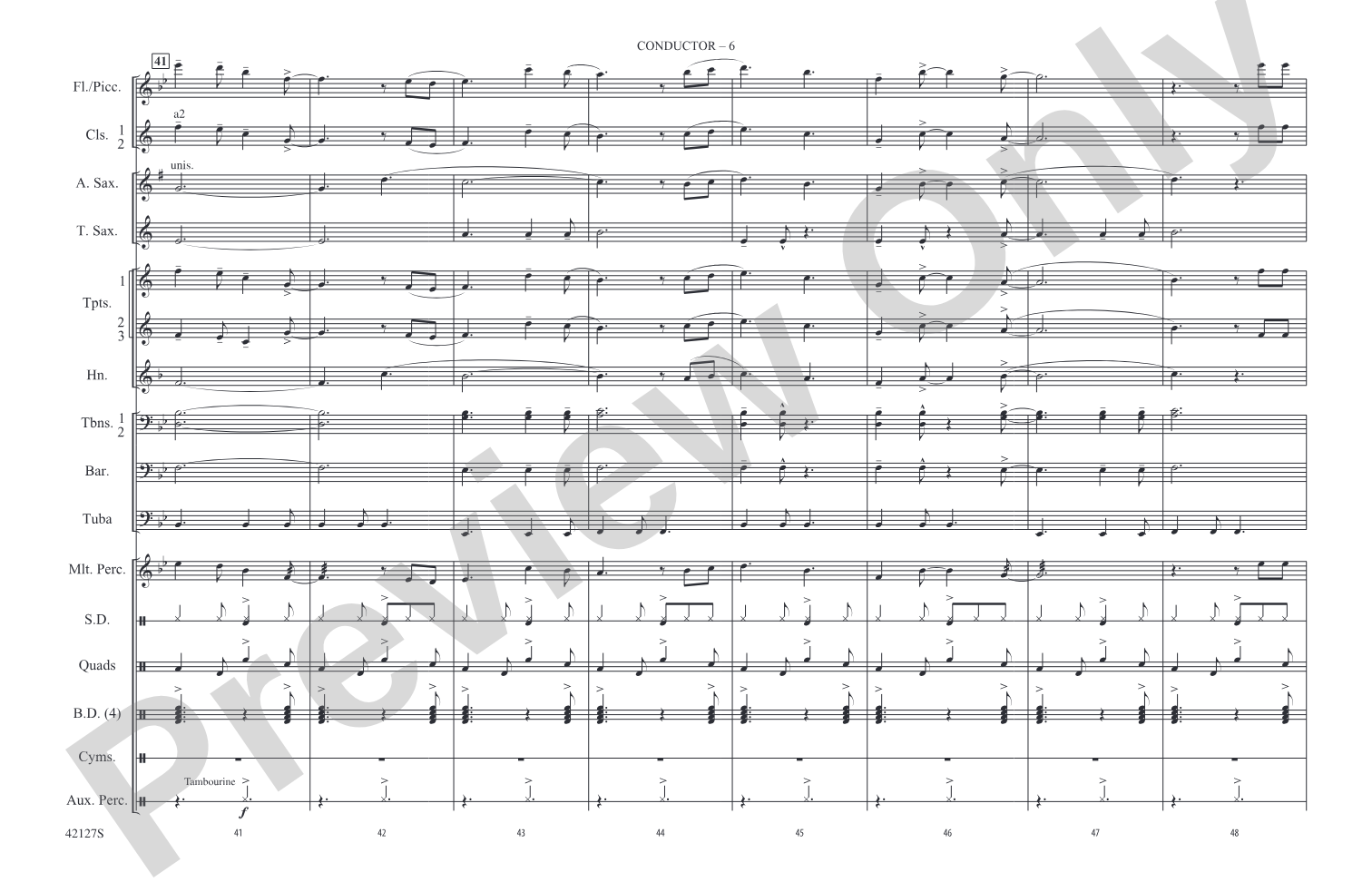
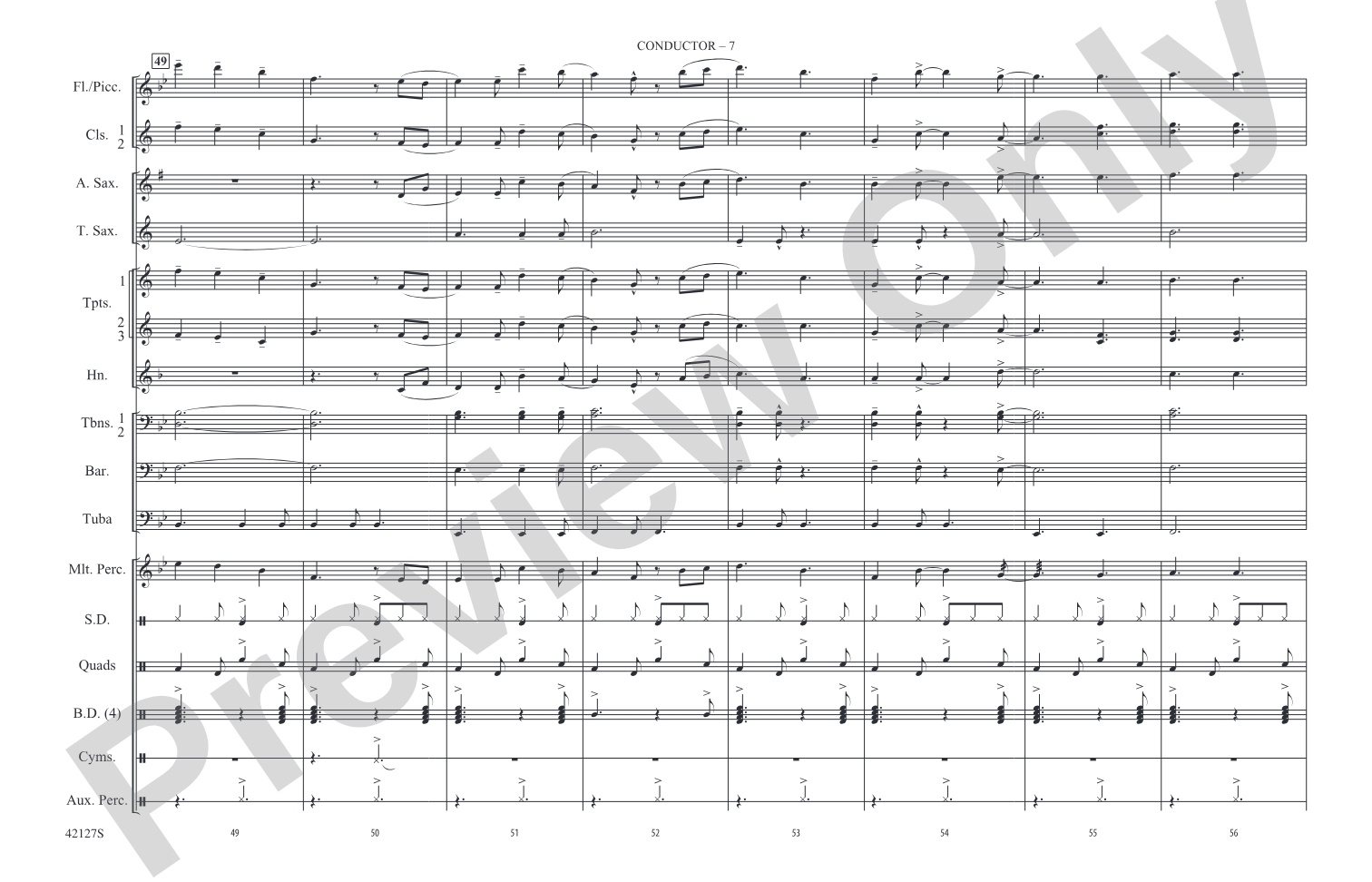
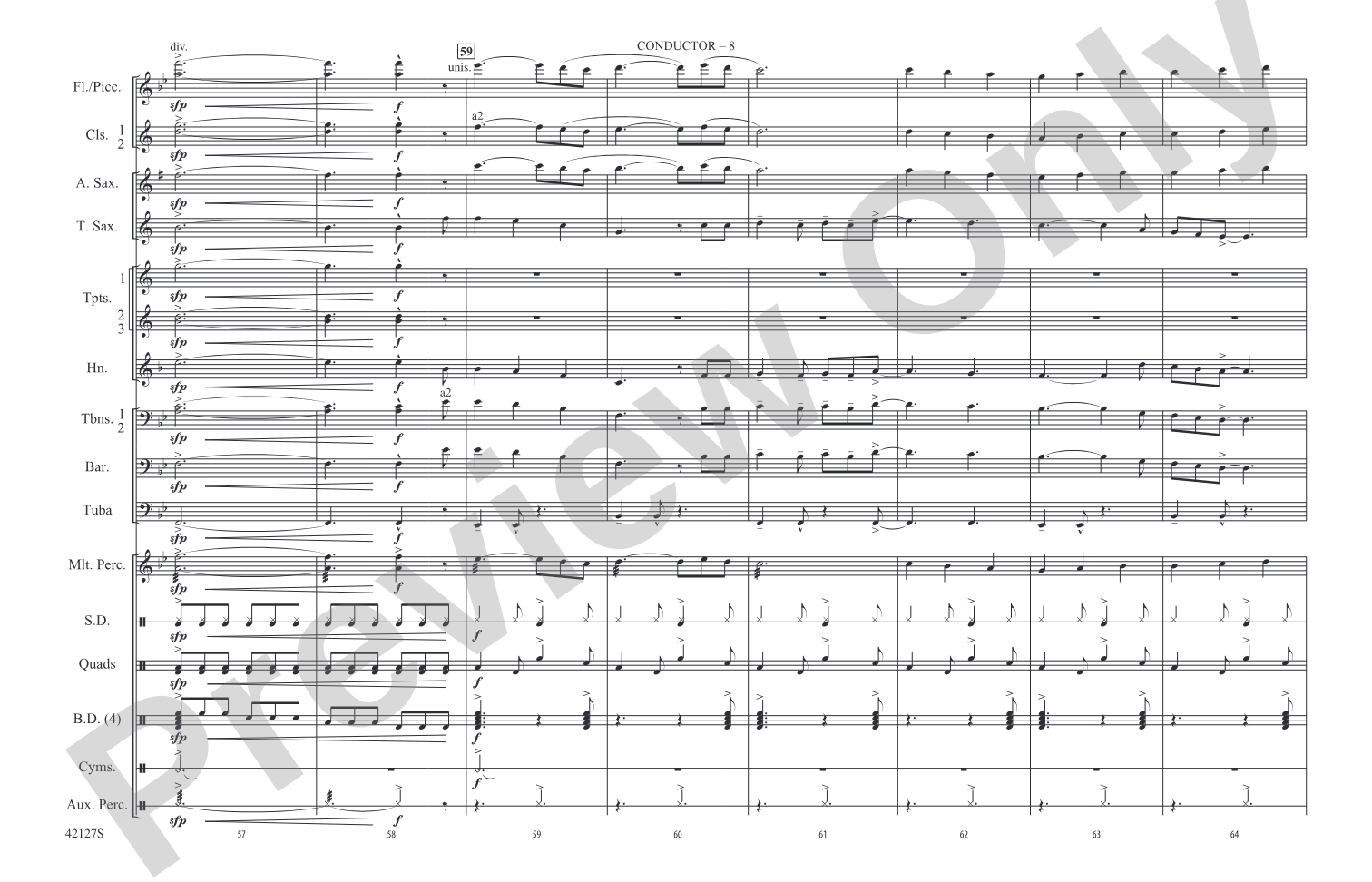
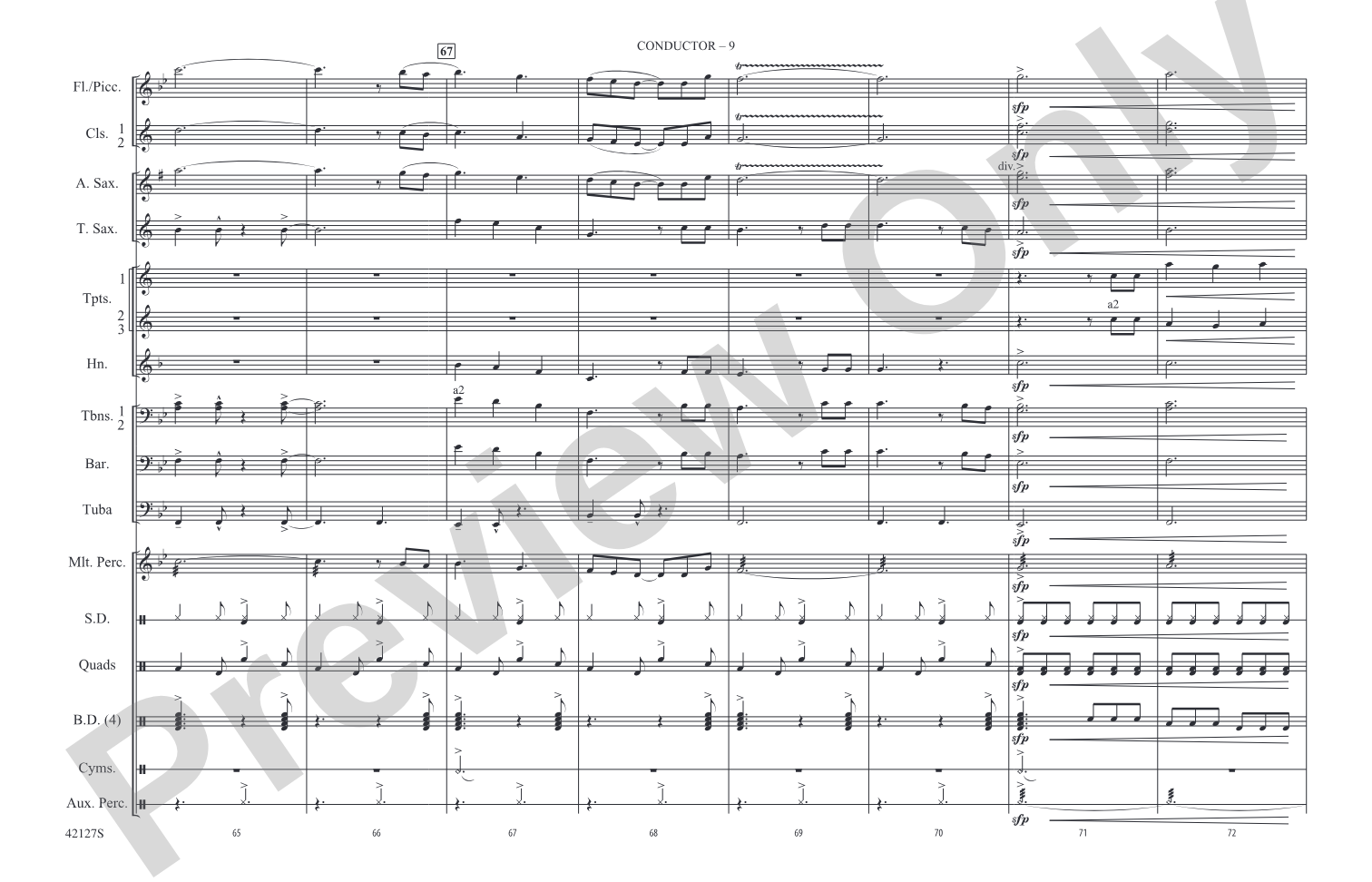
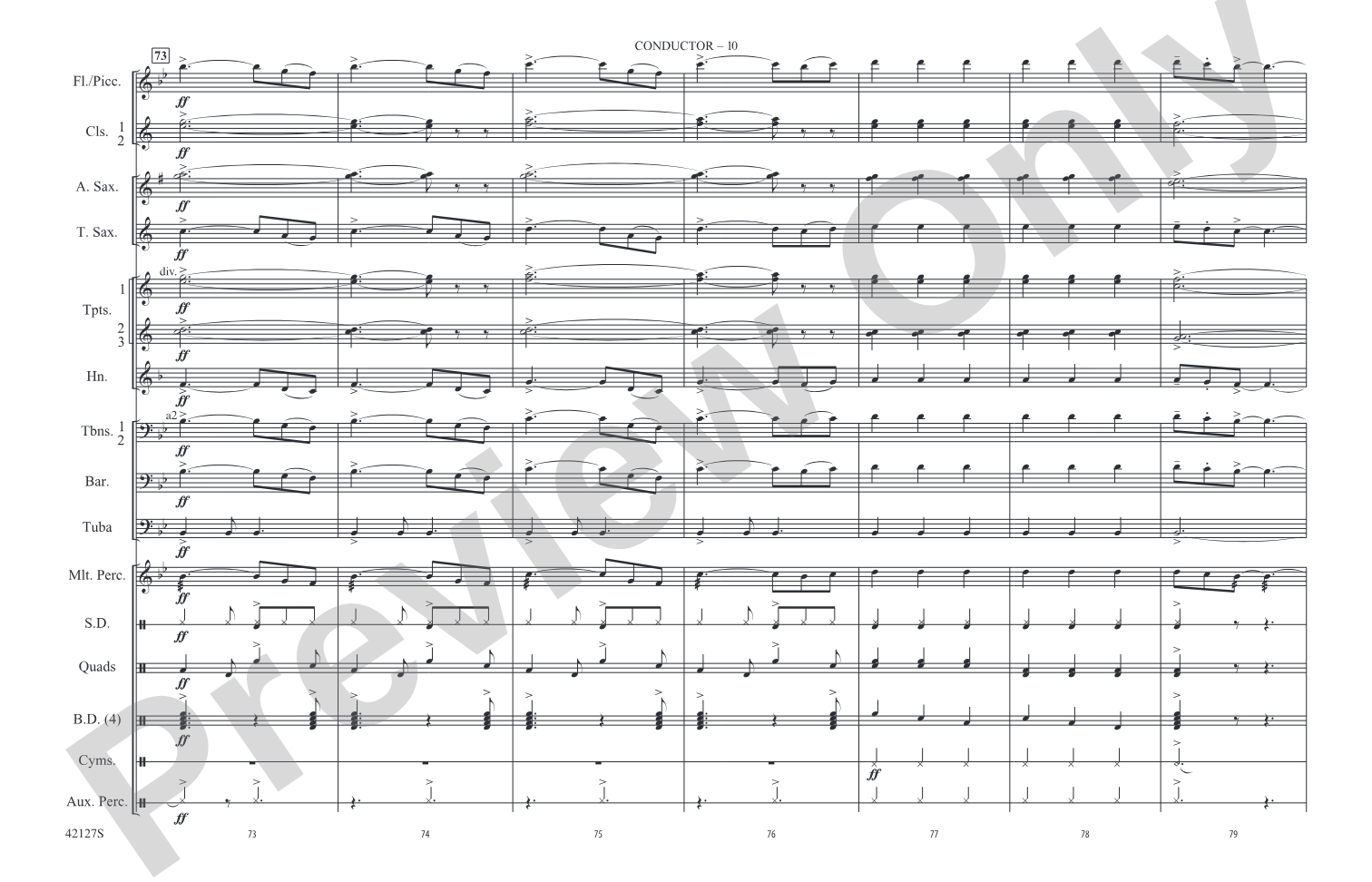
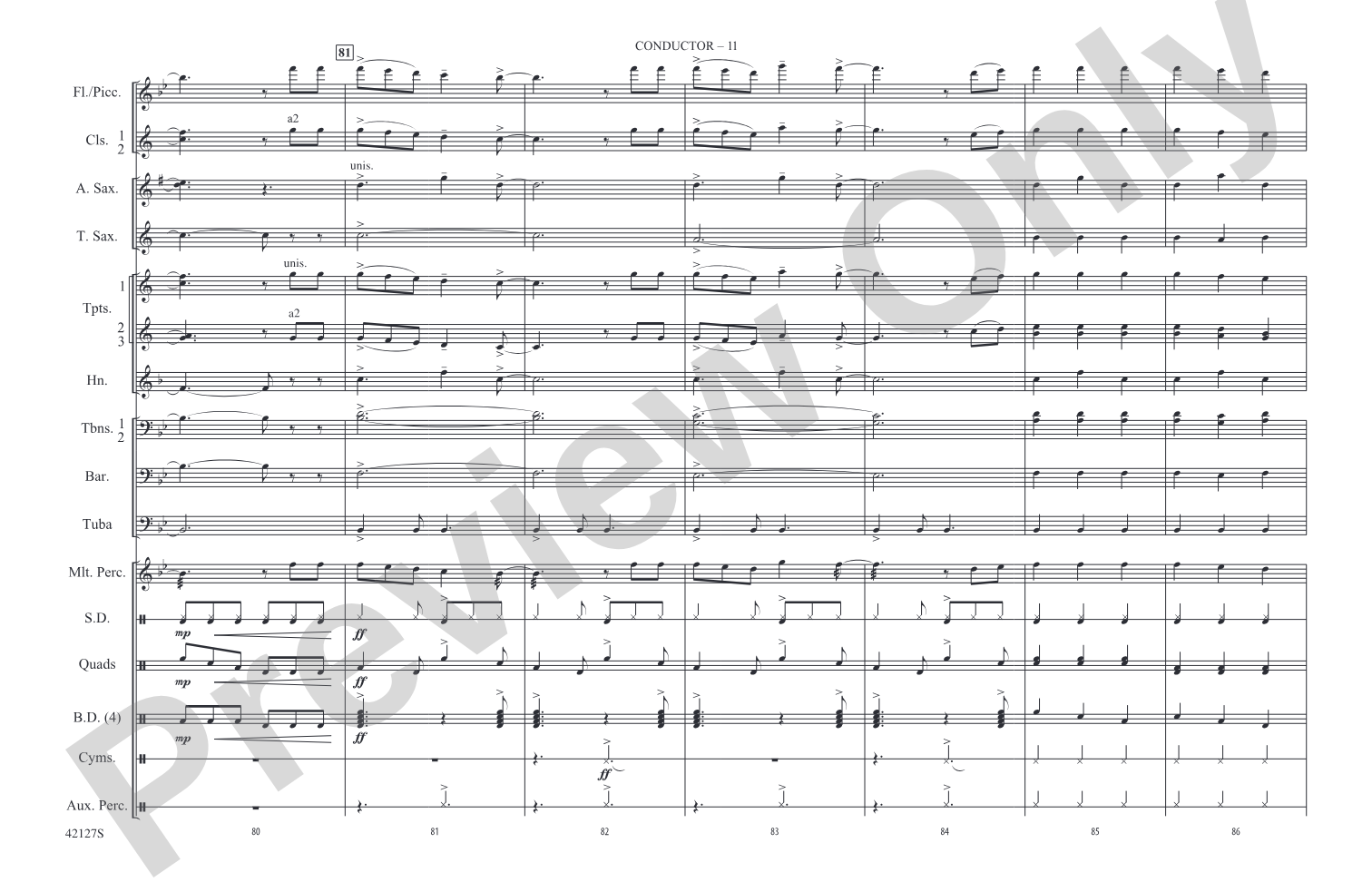
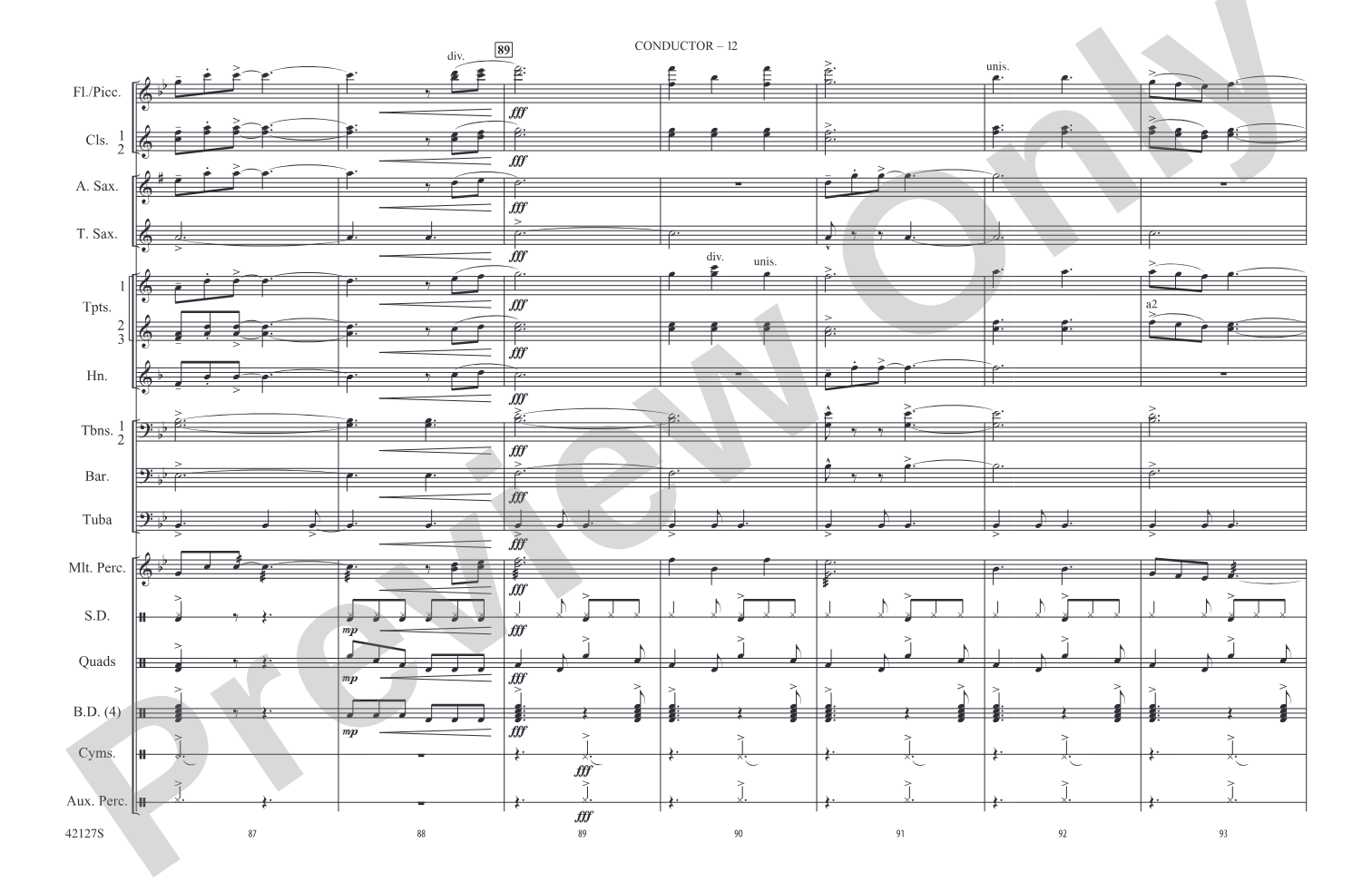

Carry On: Marching Band Conductor Score & Parts
As Performed by fun.
Words and music by Nate Ruess, Jeff Bhasker, Andrew Dost, and Jack Antonoff [fun.] / arr. Nick Baratta
Grade: 3 (Medium)
Item: 00-PK-0006252

$65.00
One moment…
Description
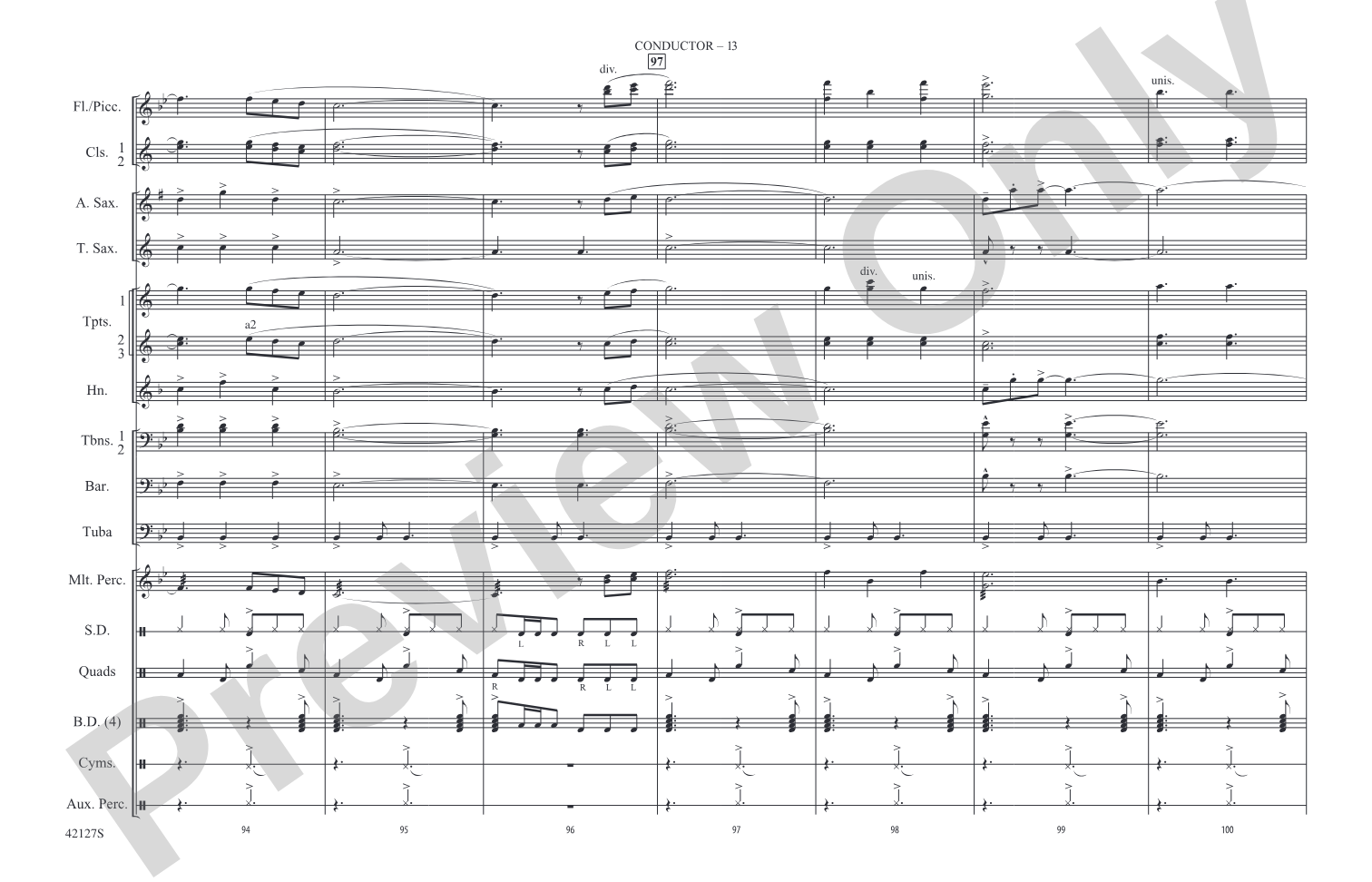
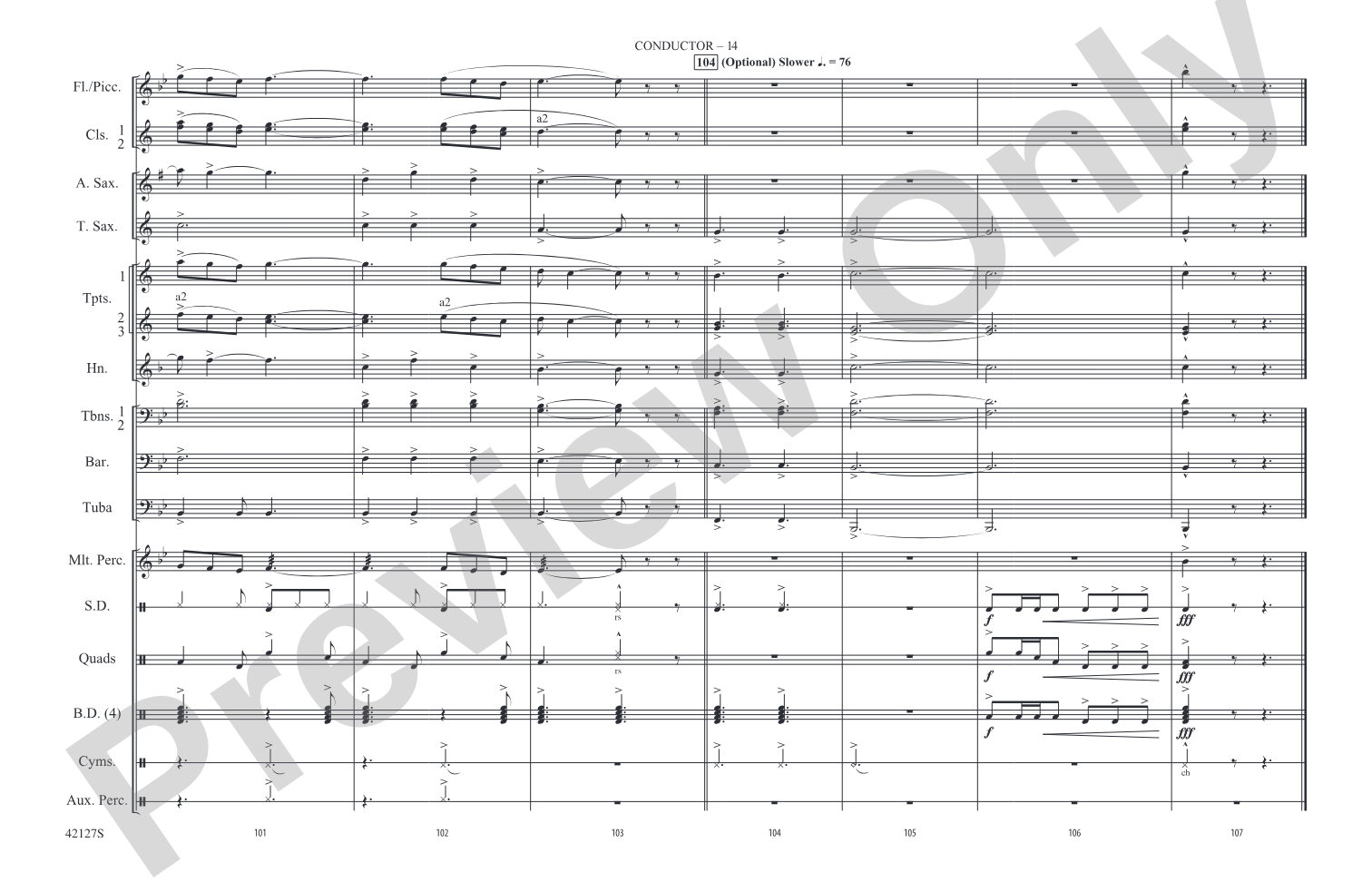
The alternative rock band fun. had a big hit with this bluesy and soulful offering. Nick Baratta has crafted an absolutely stunning chart full of great sounds. This one is definitely gooseflesh material! (2:05)


Don't just read it, hear it, play along with it, and watch your students grow with it. In MakeMusic Cloud, Carry On: Marching Band Conductor Score & Parts comes alive with professional accompaniment, adjustable tempo, and built-in practice tools that turn solo practice into real progress.
Open in the Player
Jump straight in and assign it today.
Start Your Free Trial
Open this title and explore the full library in minutes.
Sample Audio
1
Audio File
--:--
0:00
0:00
Sample Video
No sample videos found.
Additional Details
Series:
Premier Series for Marching Band
Publisher:
Alfred Music
Page Count:
242
SKU:
00-PK-0006252
More about this title
About the Composer: Nate Ruess
Nate Ruess rose to prominence as the lead vocalist and primary songwriter for fun., the indie pop band that dominated the charts in the early 2010s. His gift for crafting emotionally resonant melodies combined with unexpectedly infectious hooks made him a distinctive voice in contemporary pop music. Beyond his work with fun., Ruess has collaborated across genres and continues to write songs that balance accessibility with genuine artistry.
Why we love this
Nick Baratta's arrangement captures everything that made "Carry On" such a compelling hit: the bluesy swagger, the soulful warmth, the moments that grab you by the throat. At Grade 3, this chart respects the integrity of the original while giving marching bands of varying experience levels real material to sink their teeth into. The chart lives in that sweet spot where students feel like they're playing something current and meaningful, not a watered-down version of the real thing.
What to expect
There's an easy confidence to this piece, the kind that comes from knowing exactly what you're doing musically and doing it well. The bluesy undertones and soulful phrasing create moments of genuine emotion alongside the rhythmic momentum that keeps forward drive alive. It's the sound of a band playing a modern song with authenticity, not an academic exercise dressed up in contemporary clothing.
Who it's for
Grade 3 marching bands looking to program contemporary music that audiences recognize and players respect. Directors who want their students to engage with real songwriting and arrangement craft, not simplified note-reading exercises. Ensembles ready to tackle the interpretive demands of a bluesy, soulful chart that requires balance and restraint as much as technical execution.
How to get the most out of it
- Treat the blues-inflected articulations with intentionality; they're not just style markings but core to what makes this chart breathe. Spend rehearsal time isolating sections where the front line and battery work together to lock in that groove.
- Balance ensemble clarity with the soulful quality that defines the piece. Overprecision kills the feel; undershooting the fundamentals makes it muddy. Find the middle where articulation serves expression.
- Let the recorded accompaniment guide your initial rehearsals, but once students internalize the pulse, pull away from it. Marching bands that rely too heavily on the playback miss chances to own the phrasing.
- Pay attention to dynamics and the spaces between phrases. This chart will sound generic if everything sits at a uniform volume. The emotional arc depends on contrast.
How to use it
This works beautifully as a crowd-pleasing closer or a centerpiece in a show that mixes contemporary and classical repertoire. Its 2:05 runtime makes it ideal for pregame performances or concert settings where you need something memorable that doesn't eat rehearsal time. Consider pairing it with other modern pop arrangements to build a program that speaks to your audience's actual listening world.
Skills your students will build
- Blues articulation and phrasing
- Ensemble balance between rhythmic precision and expressive space
- Reading contemporary pop arrangements with multiple stylistic layers
- Dynamics control across full ensemble and individual voices
- Synchronization of front ensemble and battery in groove-based contexts