
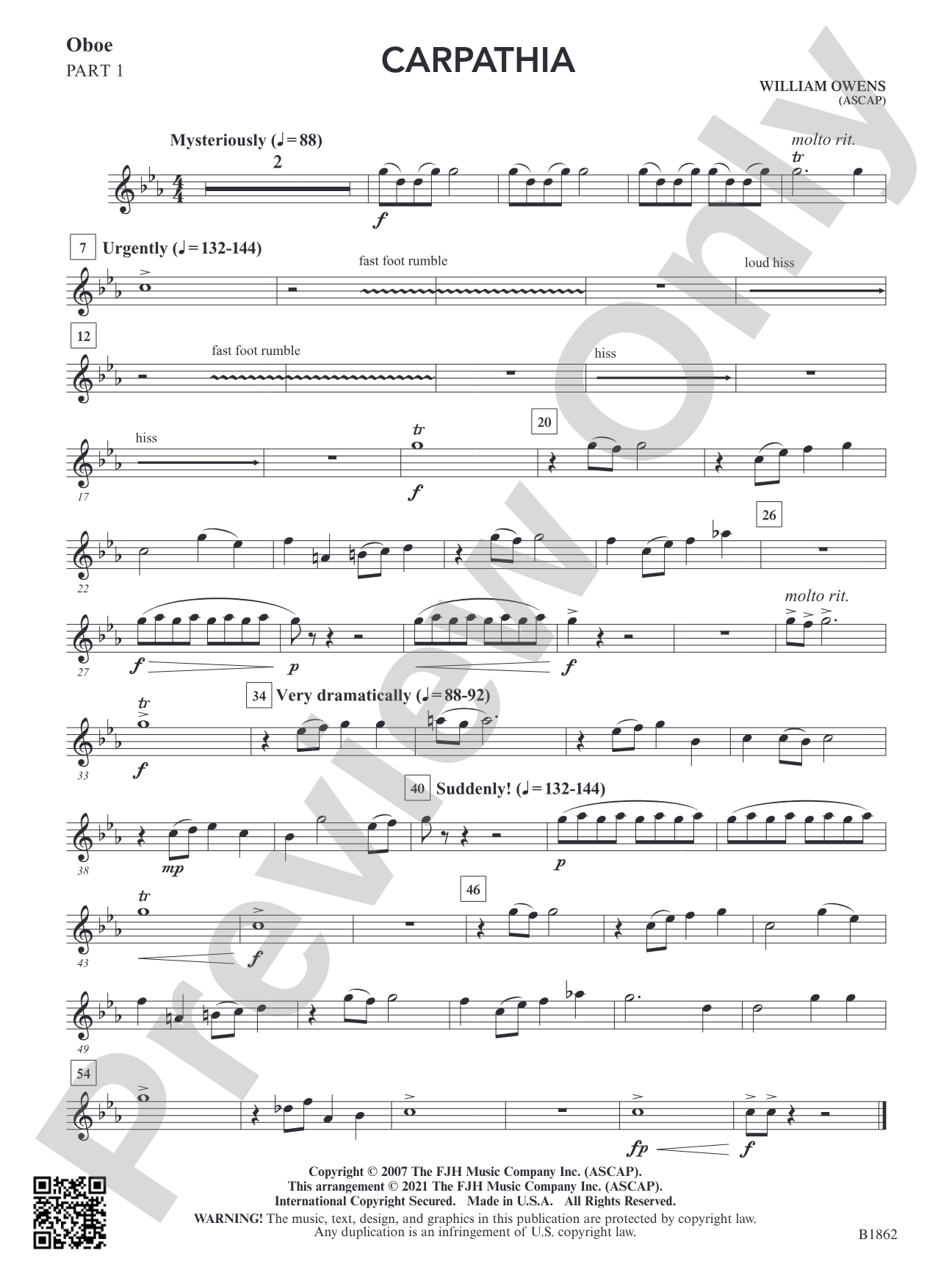

Carpathia: Part 1 - Oboe
By William Owens
Grade: 1.5;2
Item: 98-PC-DB1862_1O
$7.00
Pickup currently not available
Description
This powerful work depicts the frantic voyage of the RMS Carpathia, the first ship to arrive on the scene after receiving a distress call from the Titanic. Determined to save as many lives as possible, the captain managed to squeeze 17 knots out of a supposed 14-knot vessel. The music depicts the vibrations of the ship’s hull along with the hissing of the boiler. As Carpathia arrives on the terrible scene, the music relinquishes its fast pace to a slow, mournful hymn. After a brief moment of tranquility, the music intensifies as the rescue ship embarks on her triumphant yet tragic return voyage to safety. Absolutely stunning! (2:10)


Don't just read it, hear it, play along with it, and watch your students grow with it. In MakeMusic Cloud, Carpathia: Part 1 - Oboe comes alive with professional accompaniment, adjustable tempo, and built-in practice tools that turn solo practice into real progress.
Open in the Player
Jump straight in and assign it today.
Start Your Free Trial
Open this title and explore the full library in minutes.
Sample Audio
1
Audio File
--:--
0:00
0:00
Sample Video
No sample videos found.
Additional Details
Series:
FJH Flex Series
Publisher:
The FJH Music Company, Inc.
SKU:
98-PC-DB1862_1O
More about this title
About the Composer: William Owens
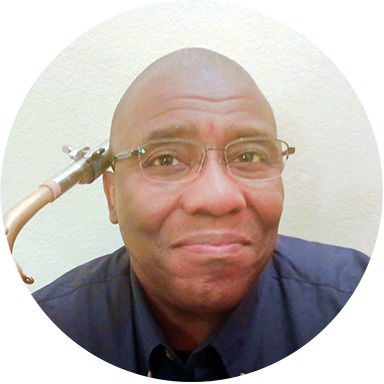
William Owens has spent decades crafting music for young ensembles with an ear for what works in the rehearsal room. A native of Gary, Indiana, he earned his degree from VanderCook College of Music in 1985 and went on to direct bands in Texas for 30 years before retiring in 2014. His prolific output—over 300 compositions for concert band, string orchestra, and small ensembles since 1993—reflects a composer who understands the needs of student musicians and educators alike.
Owens has been recognized throughout North America as a clinician and conductor, and his work appears on required music lists nationally and internationally. He holds memberships in ASCAP, TMEA, and Phi Beta Mu International Bandmasters Fraternity, and has received commissions from major organizations including the American Bandmasters Association. His compositions are frequently analyzed in educational texts and have become cornerstones of the young band repertoire. Now based in Fort Worth, Texas, Owens continues to be celebrated as a Distinguished Alumnus of VanderCook and recipient of the Texas Bandmasters Association's Meritorious Achievement Award.
Why we love this
Owens captures a dramatic historical moment with music that feels genuinely urgent without overwhelming early-level players. The flexible instrumentation means you can program this regardless of your ensemble's configuration, and the narrative arc—frenetic rescue voyage, mournful reflection, triumphant return—gives students a story to dramatize musically rather than just notes to read. The production quality and emotional payoff at 2:10 make this a memorable festival or concert closer that lands with real impact.
What to expect
Urgency and mechanical power drive the opening, with hull vibrations and steam hissing creating a visceral sense of a ship straining beyond its limits. The sudden shift to a mournful hymn feels like a moment of collective grief suspended in time, before the music gathers itself and moves forward into something both triumphant and sorrowful.
Who it's for
This work suits bands and flexible ensembles at the Grade 1.5-2 level who are ready for something with genuine dramatic weight. Directors looking for a festival-quality piece that tells a compelling story without extreme technical demands will find an ideal vehicle here.
How to get the most out of it
- Establish the ship's engine vibration clearly in the opening section; the low-register figures should feel relentless and driving, not metronomic. Lean into the physical sensation of the Carpathia's forced speed.
- Balance the transition to the hymn section so the sudden shift to stillness surprises the audience. This breath and silence are as important as the notes around them.
- In the final return voyage, layer in dynamic buildup gradually. Let the intensity grow measure by measure so the conclusion feels earned rather than forced.
- Use your flexible instrumentation strategically. If you have strong melody players, assign them the hymn theme prominently; this section deserves clarity and warmth.
How to use it
Consider this as a concert closer or centerpiece when you want to program something that demonstrates your ensemble's musicality and emotional range. It works particularly well in programs exploring historical topics or when paired with other narrative-driven works. The length and dramatic arc make it substantial enough to anchor a festival performance or concert without requiring extensive rehearsal time relative to its impact.
Skills your students will build
- Managing sudden dynamic and tempo shifts
- Sustaining tone quality in slower, mournful passages
- Creating rhythmic precision in ostinato figures under changing harmonies
- Balancing flexibility between ensemble sections when instrumentation shifts
- Interpreting narrative and dramatic intention through musical phrasing