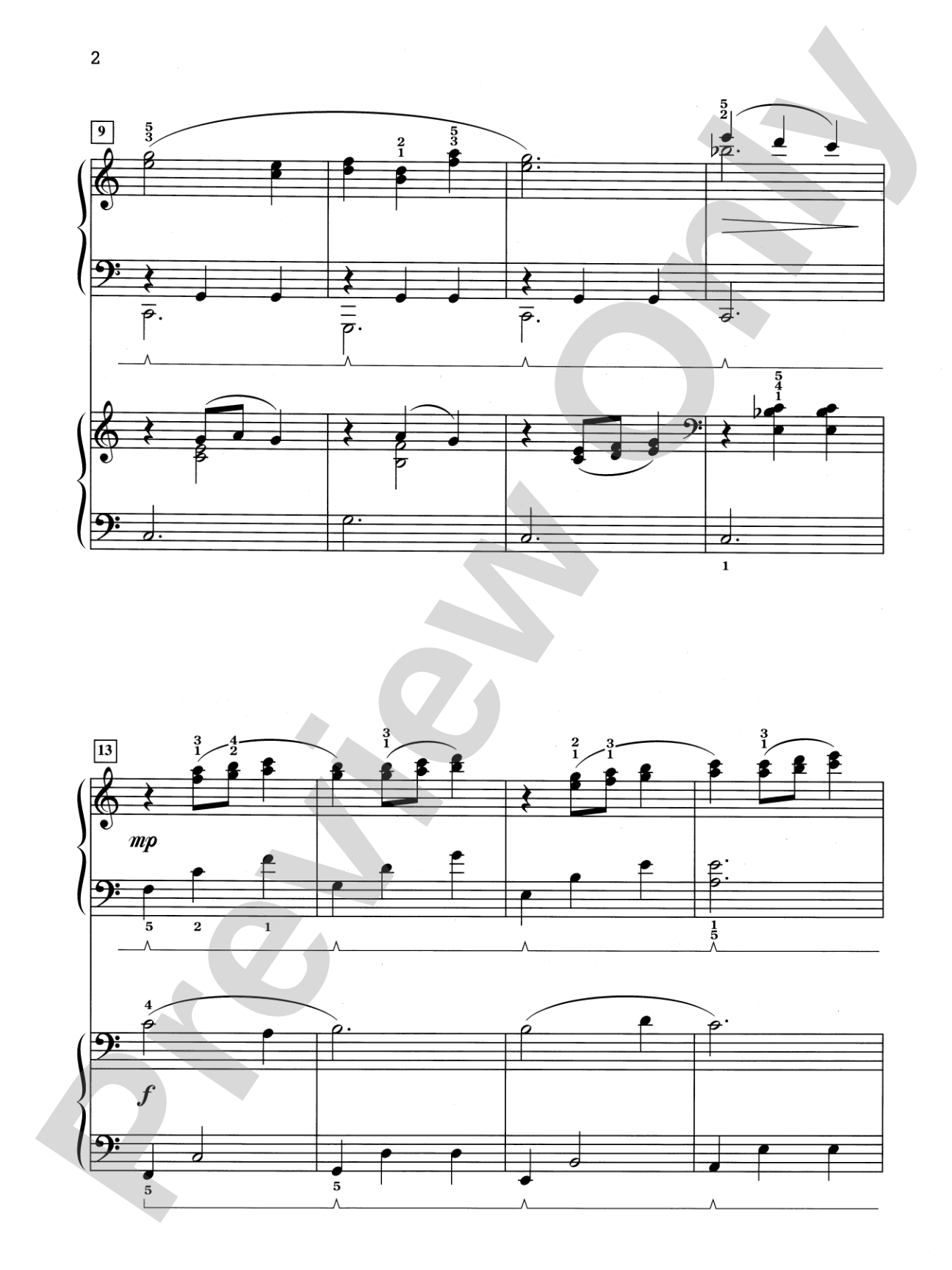
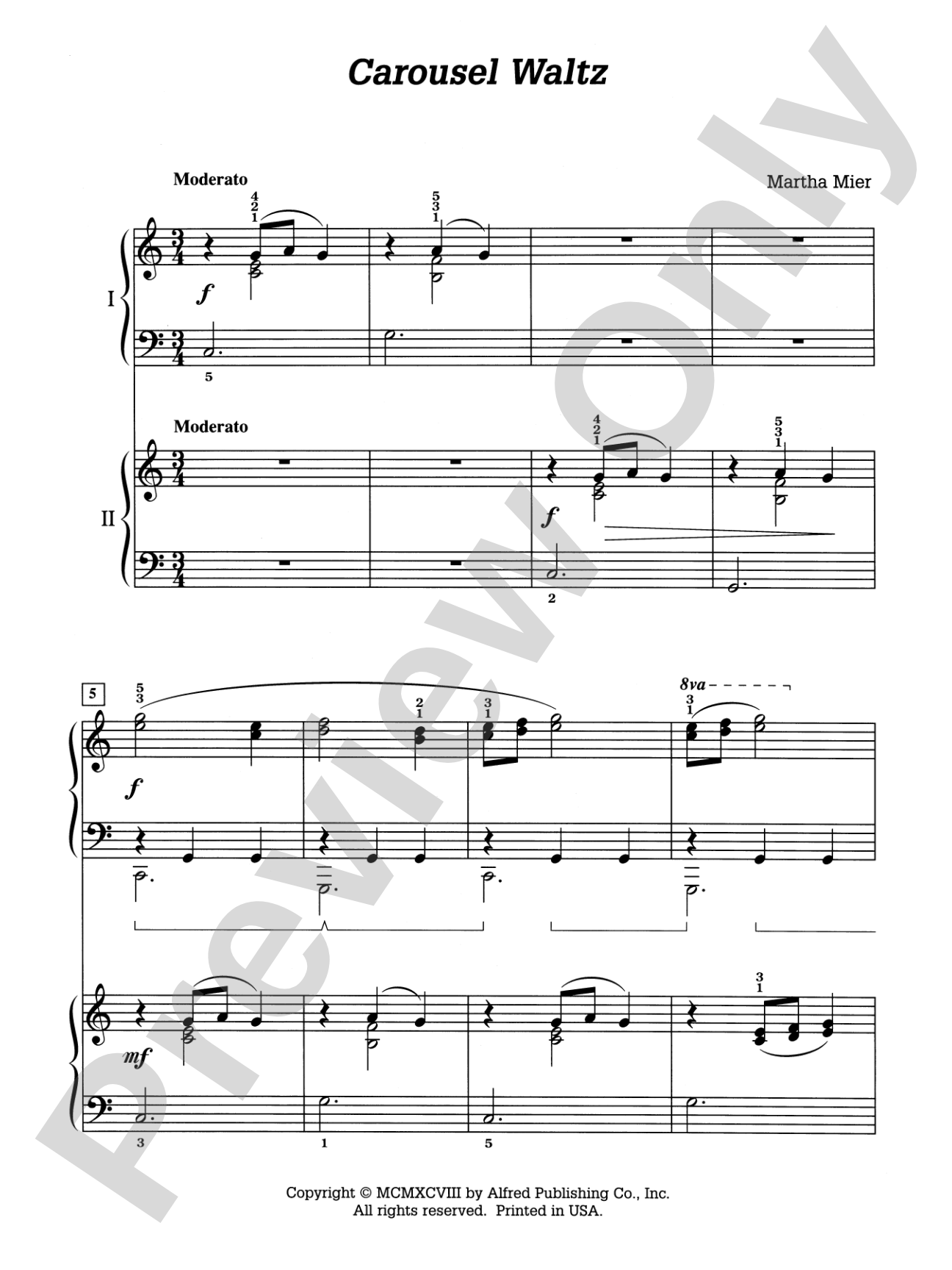
Carousel Waltz - Piano Duo (2 Pianos, 4 Hands) Sheet Music Preview

Carousel Waltz - Piano Duo (2 Pianos, 4 Hands): Piano Duets & Four Hands

By Martha Mier

Level: Intermediate

Item: 00-PB-0000830

Digital Download
$6.99
Description
This C major waltz for intermediate piano ensemble, two pianos, four hands, has a lilting melody played in parallel thirds by Part I, while Part II accompanies in 3/4 meter. Two copies are included for this seven-page piece. A Federation Festivals 2024-2028 selection.

Carousel Waltz - Piano Duo (2 Pianos, 4 Hands): Piano Duets & Four Hands isn't in MakeMusic Cloud just yet...but it could be. Let us know you'd like to see it, and you'll help shape what comes next. In the meantime, start a free trial and dive into thousands of interactive titles your students can play along with today.

Sample Audio
No sample audio found.
Sample Video
Additional Details
Series: The Alfred Ensemble Series
Publisher: Alfred Music
Page Count: 16
SKU: 00-PB-0000830

More about this title

About the Composer: Martha Mier

Martha Mier

Martha Mier has shaped music education for decades as a composer, clinician, and master teacher. Since joining Alfred Music Publishing in 1989, she has authored more than 200 educational piano works that span jazz, rags, blues, romantic impressions, and classical forms. Her pieces appear regularly on National Federation of Music Clubs festival lists and have been performed by students worldwide.

Mier's teaching credentials run deep. She holds a degree from Florida State University, operated a private piano studio in Lake City, Florida for many years, and maintains active membership in the Music Teachers National Association, the Florida State Music Teachers Association, and the National Guild of Piano Teachers. As a certified piano educator through these organizations, she has adjudicated festivals across the United States and Australia, led workshops at major pedagogy conferences, and co-authored Alfred's Premier Piano Course.

Why we love this

Mier writes duo music that genuinely sounds good played by two students at the same level. The parallel thirds in Part I are satisfying to perform, the waltz rhythm sits naturally, and Part II's accompaniment role feels musical rather than subordinate. This piece strikes the balance many teachers search for: accessible to intermediate players but with enough harmonic substance to sound polished in performance.

What to expect

The Carousel Waltz captures the gentle spinning motion and nostalgic charm of its subject. The melodic thirds glide in parallel motion while the accompanying waltz pattern creates a steady, encouraging pulse underneath. C major keeps the piece bright and accessible, allowing both players to focus on ensemble balance rather than technical hurdles.

Who it's for

Intermediate piano students ready to explore ensemble playing with a partner at their own level. This duet works equally well for students preparing for festival competition or for those discovering the joy of collaborative piano music.

How to get the most out of it

  • Balance the melody in Part I so the parallel thirds sing without overpowering Part II's waltz accompaniment; this pairing works best when both parts have independence and presence.
  • Use the natural pulse of the waltz to keep the 3/4 meter dancing. Resist the temptation to rush; let the lilting melody breathe in its own tempo.
  • Coordinate pedal changes between both pianos so the harmonic colors align. Two pianists working against each other's pedaling muddles the clarity this piece needs.

How to use it

Program this as a charming contrasting piece alongside more substantial duet or solo repertoire on a student recital or festival performance. Its straightforward elegance and Federation Festivals selection status make it ideal for spring competitions, where it provides a lighter moment without sacrificing musical substance.

Skills your students will build

  • Ensemble listening and balance between two pianos
  • Maintaining steady 3/4 pulse while tracking a partner's tempo and dynamics
  • Parallel motion voicing and voice independence in thirds
  • Waltz rhythm articulation and character
  • Score reading and coordination in a two-piano format

You May Also Like