Carols from the British Isles: Baritone B.C. Sheet Music Preview

Carols from the British Isles: Baritone B.C.

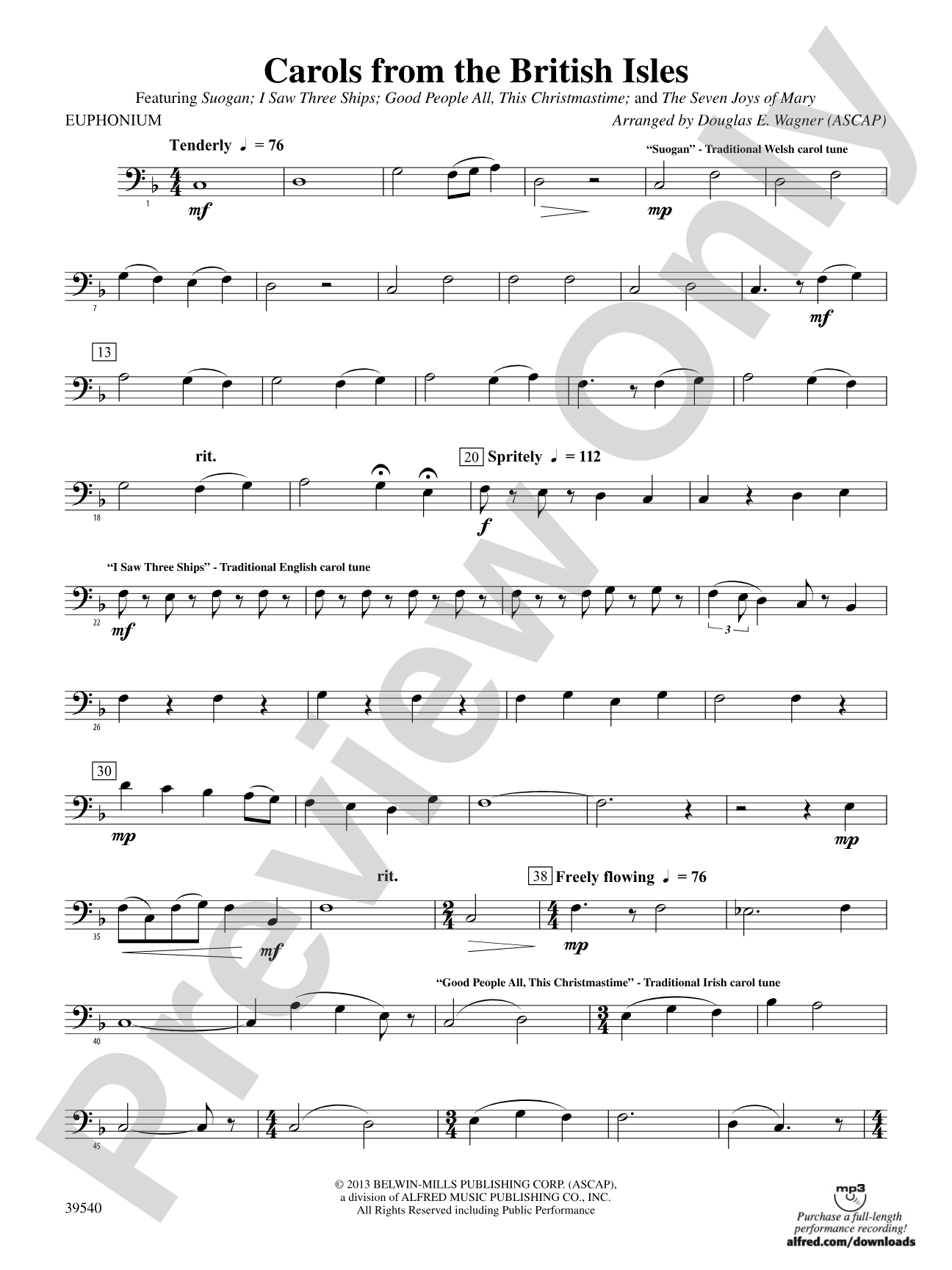
Featuring: Suogan / I Saw Three Ships / Good People All / This Christmastime / The Seven Joys of Mary

Arr. Douglas E. Wagner

Grade: 3 (Medium Easy)

Item: 00-PC-0015854_BBC1

Digital Download
$3.00
Description
Four treasured carol tunes from Wales, England, and Ireland comprise this colorfully scored and emotionally varied medley including "Suogan," "I Saw Three Ships," "Good People All, This Christmastime," and "The Seven Joys of Mary." These cherished carols establish the slow-fast-slow-fast form of the medley. Lush and charming, this is a real holiday treat! (3:30) This title is available in MakeMusic Cloud.

Don't just read it, hear it, play along with it, and watch your students grow with it. In MakeMusic Cloud, Carols from the British Isles: Baritone B.C. comes alive with professional accompaniment, adjustable tempo, and built-in practice tools that turn solo practice into real progress.

Sample Audio
0:00
0:00
Sample Video
Additional Details
Series: Belwin Concert Band
Publisher: Alfred Music
Page Count: 232
SKU: 00-PC-0015854_BBC1

More about this title

About the Arranger: Douglas E. Wagner

Douglas E. Wagner

Douglas E. Wagner brings three decades of high school music direction into his composition and arrangement work. A Butler University graduate with degrees at both undergraduate and graduate levels, Wagner has established himself as one of the most prolific voices in music education, with over 3,500 published titles spanning choir, concert band, orchestra, handbells, organ, piano, and vocal music since 1973.

His work has reached audiences globally through concert halls, television, radio broadcasts, and international performances. With more than seventeen million copies of his music in circulation, Wagner has earned recognition as a composer and arranger whose understanding of ensemble capabilities and educational contexts shapes every score he creates. He resides in Indianapolis with his wife, Sandy.

Why we love this

Wagner's gift for balancing musical substance with rehearsal efficiency shines throughout this medley. The alternating slow-fast structure keeps energy engaged while the colorful orchestration across the full concert band palette rewards careful listening and makes rehearsal time feel purposeful, not obligatory.

What to expect

Warmth and nostalgia blend throughout this medley, with each carol receiving its own emotional character. The interplay of slow introspection and brisk forward motion creates a journey that feels both celebratory and reflective, honoring the source melodies while letting the full concert band palette shine.

Who it's for

Concert band directors seeking seasonal repertoire that works for audiences of all ages while remaining accessible to developing ensembles. Grade 3 bands with adequate woodwind and brass sections will find the scoring supportive and rewarding to prepare.

How to get the most out of it

  • Shape the opening "Suogan" with a warm, sustained tone in the woodwind choir; let the texture breathe before the tempo shift arrives.
  • Anchor the faster sections with a locked rhythm section; clarity in the bass line prevents the medley from losing structural momentum between tempo changes.
  • Balance the prominence of featured lines across different sections. Wagner frequently highlights different instrumental families, so rotate which sections sit in the foreground to match the score's design.
  • Use the three-and-a-half minute runtime as a rehearsal pacing tool. Work the entire medley without stopping to build stamina and reinforce the arc of the arrangement.

How to use it

This works beautifully as a centerpiece for a winter concert or a stand-alone holiday program closer. The medley format lets you program it between more contemporary material or alongside other seasonal fare, and its accessible difficulty means you can feature it prominently without overextending rehearsal resources.

Skills your students will build

  • Responding to tempo changes within a single work
  • Maintaining tonal control across varying dynamic ranges and emotional characters
  • Balancing ensemble blend when the texture shifts between sections
  • Sustaining intonation through sustained, slow melodic passages
  • Reading and executing varied articulation and phrasing across medley sections

You May Also Like