
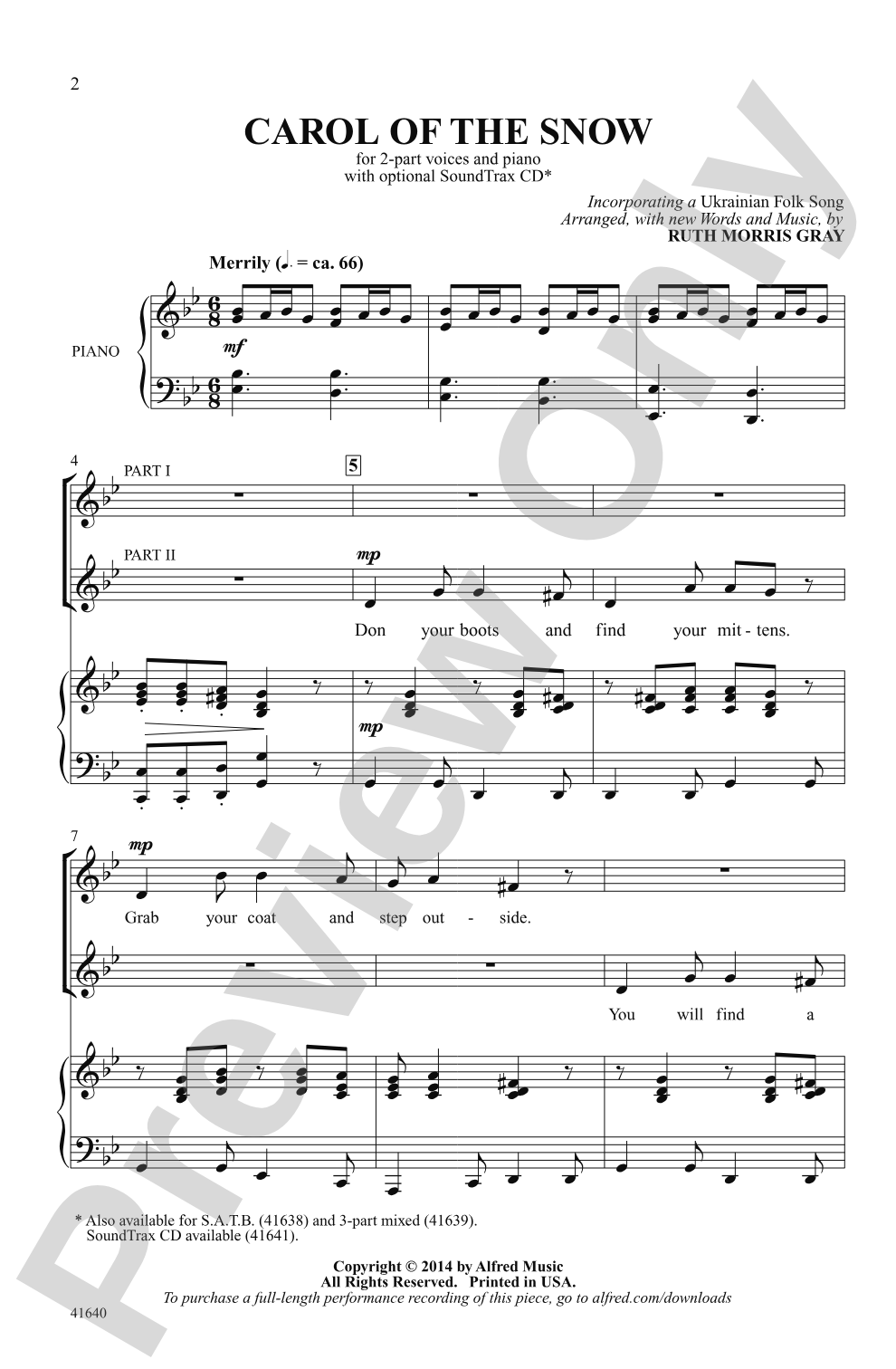

Carol of the Snow: 2-Part Choral Octavo
Incorporating a Ukrainian Folk Song / arr., with new words and music, by Ruth Morris Gray
Item: 00-PO-0001846
$1.85
Minimum order quantity: 20 copies
Pickup currently not available
Related Items
Carol of the Snow: SoundTrax Digital Audio Download |
$27.99
|
View | |
Carol of the Snow: SATB Choral Octavo |
$1.85
|
View | |
Carol of the Snow: 3-Part Mixed Choral Octavo |
$1.85
|
View | |
Carol of the Snow: SATB Choral Octavo |
$1.85
|
View | |
Carol of the Snow: 3-Part Mixed Choral Octavo |
$1.85
|
View | |
Carol of the Snow: 2-Part Choral Octavo |
$1.85
|
View | |
Carol of the Snow: Choral Octavo SoundTrax CD |
$27.99
|
View |
Description
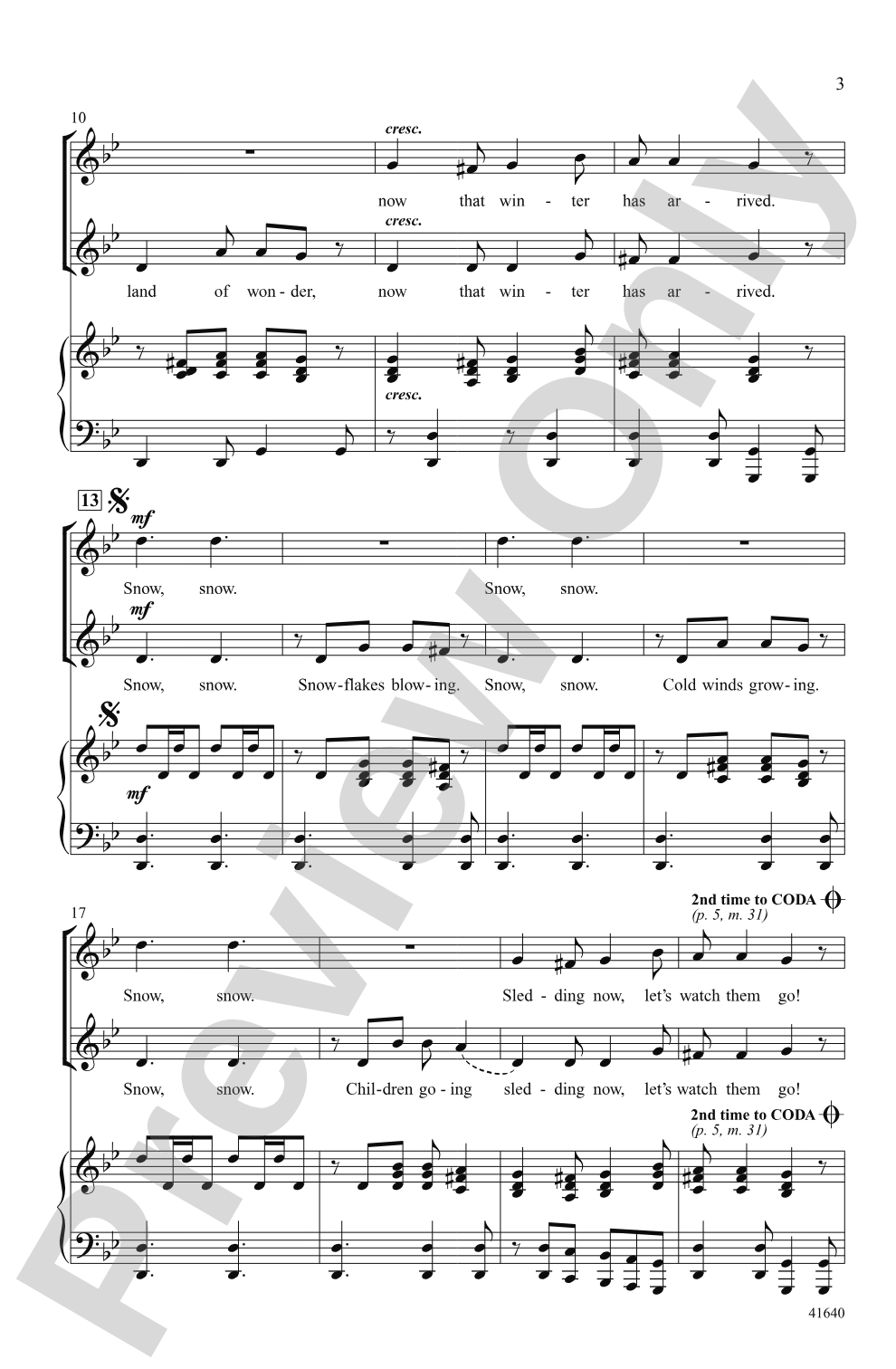
Winter words are a perfect fit for this popular Ukrainian folk tune, as we sing about bundling up, sledding over hills and valleys, and dashing through snow-covered trees. The introduction and a brief interlude hint at what's to come---the familiar melody is not sung until later in the piece!


Carol of the Snow: 2-Part Choral Octavo isn't in MakeMusic Cloud just yet...but it could be. Let us know you'd like to see it, and you'll help shape what comes next. In the meantime, start a free trial and dive into thousands of interactive titles your students can play along with today.
Request This Title
Tell us you want it.
Start Your Free Trial
Explore everything that's ready to play right now.
Sample Audio
1
Audio File
--:--
0:00
0:00
Sample Video
No sample videos found.
Additional Details
Series:
Alfred Choral Designs
Publisher:
Alfred Music
Page Count:
8
SKU:
00-PO-0001846
More about this title
About the Arranger: Ruth Morris Gray

Ruth Morris Gray serves as Director of Choirs at Rosemead High School in California, where she has led the choral program since 2004. She also teaches piano and has composed over 100 choral works performed in schools and festivals across the country. Her studies at Biola University (Bachelor of Music in Piano Performance and Composition) and UC Santa Barbara (Master of Arts in Music Composition) shaped her distinctive voice as both educator and composer.
Beyond the rehearsal room, Ruth is an active performer and collaborative musician. She holds a California Single Subject Music Credential and brings her passion for travel, reading, and outdoor activities to her teaching and creative work alongside her husband, Douglas.
Why we love this
Ruth Morris Gray's arrangement delays the payoff beautifully; the introduction and interlude establish mood and anticipation before the familiar Ukrainian melody finally arrives, making the singers' first statement of the tune land with real impact. The 2-part texture works equally well for mixed middle school choirs or treble-dominated ensembles, and the winter imagery creates natural classroom connections beyond pure music learning. Winter concerts often need pieces that feel fresh rather than overly familiar, and this one delivers both accessibility and a genuine musical arc.
What to expect
The piece captures the peaceful, playful spirit of a snowy day. The postponed entrance of the melody creates a sense of wonder and arrival, while the Ukrainian folk tune itself carries a gentle, almost wistful quality that sits comfortably in the winter season without feeling saccharine or overly sentimental.
Who it's for
This octavo works for middle school choirs (grades 5-8) and high school choral ensembles with developing musicianship. It's also accessible for beginning high school choirs or community groups seeking approachable holiday repertoire with genuine musical substance.
How to get the most out of it
- Shape the introduction and interlude with intentional phrasing even though the main melody hasn't entered yet; these moments set the emotional landscape and build listener expectation.
- Balance the harmonic texture in the 2-part writing so neither voice dominates; the folk melody sings most clearly when both parts support it equally.
- Consider the recorded accompaniment as a rehearsal tool early on to help singers internalize the harmonic framework before adding performance interpretation.
How to use it
Pair this with other secular winter or folk selections to create a cohesive holiday concert set that avoids overreliance on traditional carols. The 2-part texture and moderate difficulty make it an ideal piece for a concert's second half, where audiences appreciate music that sounds polished but doesn't demand technical virtuosity.
Skills your students will build
- Harmonic awareness in 2-part texture
- Phrasing and shaping in folk melody settings
- Patience and ensemble timing through delayed melody entrance
- Expression and dynamic control in introductory material