
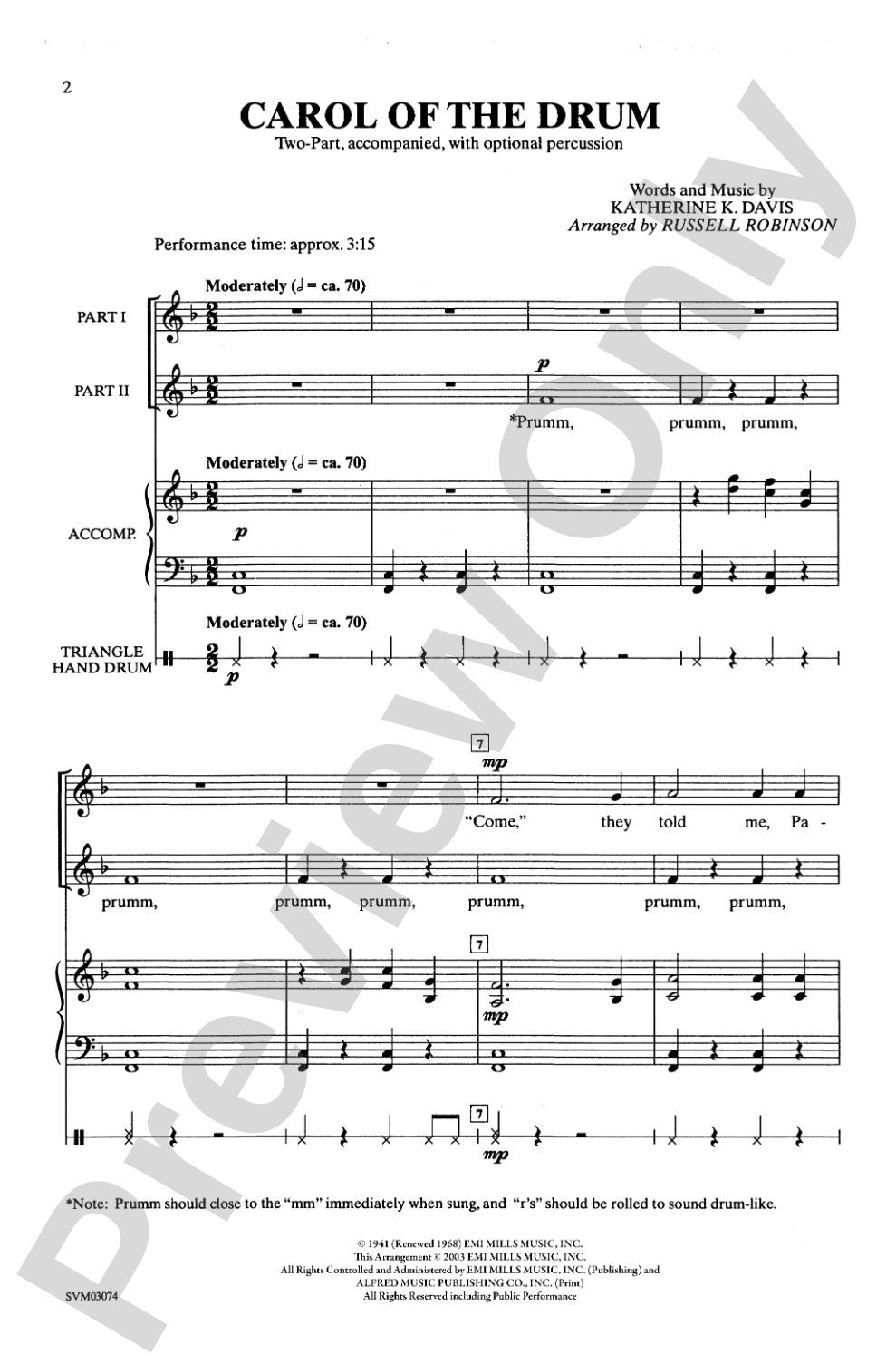

Carol of the Drum: 2-Part Choral Octavo
Words and music by Katherine K. Davis / arr. Russell Robinson
Level: Moderate
Item: 00-PO-0005378
$2.25
Minimum order quantity: 20 copies
Pickup currently not available
Description
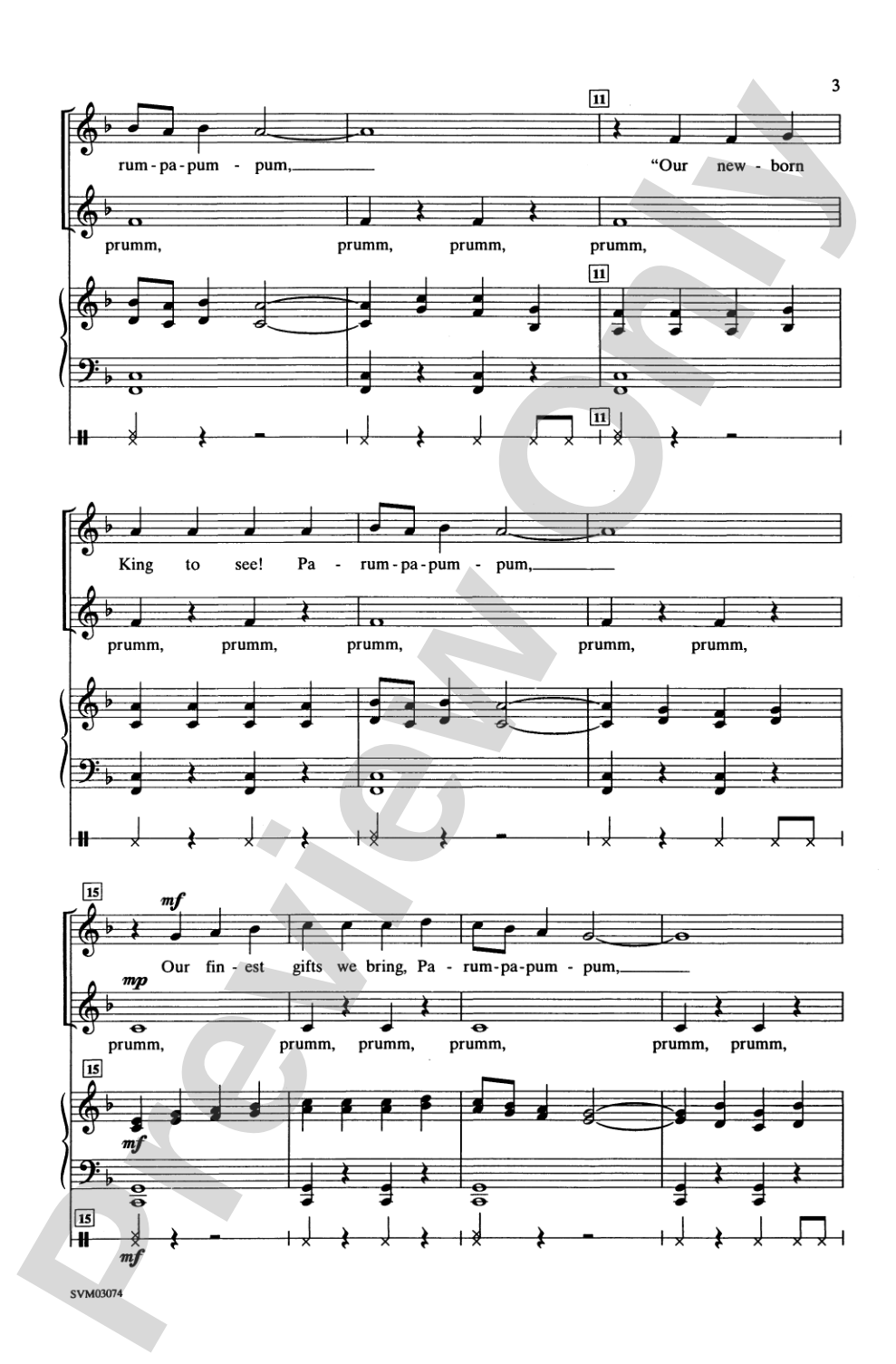
K. K. Davis (Katherine) created a modern-day Christmas classic when she wrote "Carol of the Drum." Russell Robinson has arranged this simply lovely version and added an array of easy-to-play percussion parts that give it a wonderful character. Plan to make this a part of your annual holiday repertoire.


Carol of the Drum: 2-Part Choral Octavo isn't in MakeMusic Cloud just yet...but it could be. Let us know you'd like to see it, and you'll help shape what comes next. In the meantime, start a free trial and dive into thousands of interactive titles your students can play along with today.
Request This Title
Tell us you want it.
Start Your Free Trial
Explore everything that's ready to play right now.
Sample Audio
No sample audio found.
Sample Video
No sample videos found.
Additional Details
Series:
Alfred Archive Edition: Studio PR Catalog
Publisher:
Alfred Music
Page Count:
12
SKU:
00-PO-0005378
Instrumentation:
Opt. Percussion
More about this title
About the Composer: Katherine K. Davis
Katherine K. Davis (1892-1980) was an American composer and educator whose gift for accessible, singable melodies shaped mid-twentieth-century choral literature. Though she wrote across many genres, her sacred and seasonal works became standards in school and church music programs, admired for their warmth and directness.
Davis's "Carol of the Drum" stands as her most recognizable composition, a piece that captures the simplicity and wonder of the nativity story through music that invites singers of all levels to participate fully. Her ability to write music that sounded effortless while serving genuine pedagogical purposes made her a trusted voice in music education.
Why we love this
Robinson's arrangement respects the carol's inherent charm while making it genuinely playable for middle-grade choirs. The optional percussion parts transform a straightforward piece into something theatrically engaging without demanding additional rehearsal complexity, and the 2-part voicing allows directors to include a wider range of singers without sacrificing musical sophistication.
What to expect
The piece radiates quiet reverence and wonder, its melody unfolding with the simplicity of a child's perspective on the nativity. The optional percussion adds gentle color and movement without disrupting the carol's contemplative heart, creating a performance that feels intimate rather than grand.
Who it's for
This arrangement serves middle school and high school choirs, community choirs, and church music programs seeking accessible Christmas music that avoids arrangements that feel oversimplified. Directors leading groups with limited rehearsal time or mixed vocal experience will find the 2-part texture manageable while still musically substantive.
How to get the most out of it
- Balance the two parts by having singers listen across rather than just to their own line; the melody and countermelody work best when both are equally present.
- If you include percussion, let it establish the rhythmic character in rehearsal before full ensemble runs; this grounds the singers and clarifies the piece's gentle pulse.
- Shape the phrasing as though you're telling a quiet story rather than delivering a festive announcement; the carol reads most effectively at moderate tempo with careful dynamic control.
- Assign percussion sparingly if your singers are still building confidence with two-part independence; sometimes the voices alone create the most effective performance.
How to use it
Place this in a Christmas concert alongside more elaborate choral works to give your program breathing room and showcase your singers' ability to communicate simplicity with expression. It also works beautifully as an early-rehearsal piece in the fall, allowing you to establish solid foundational skills before moving into more demanding holiday literature.
Skills your students will build
- Singing in two parts with equal voice independence
- Balancing melody and countermelody
- Shaping longer phrases with dynamic control
- Coordinating vocals with optional percussion parts
- Performing with appropriate stylistic nuance in sacred music