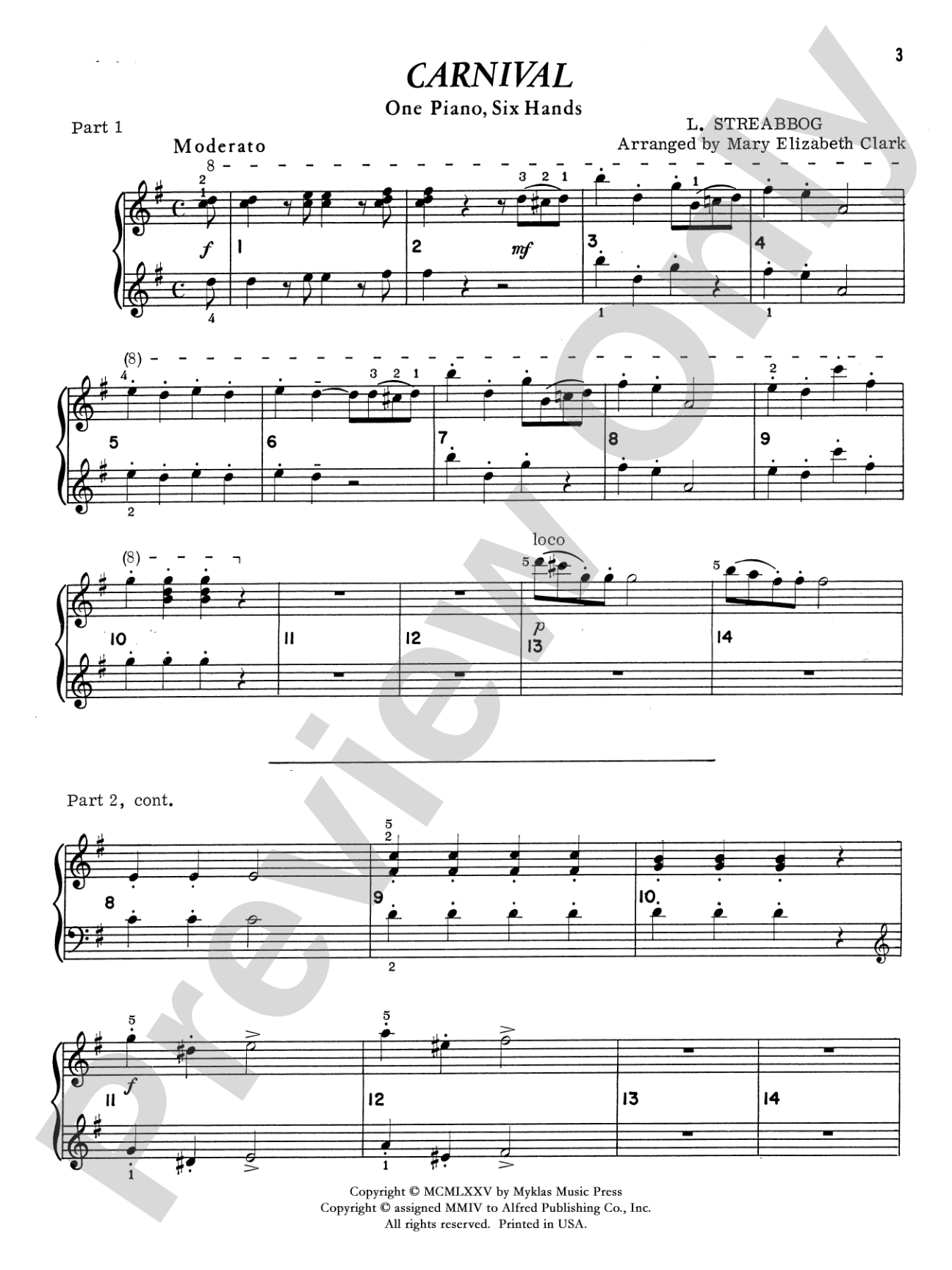
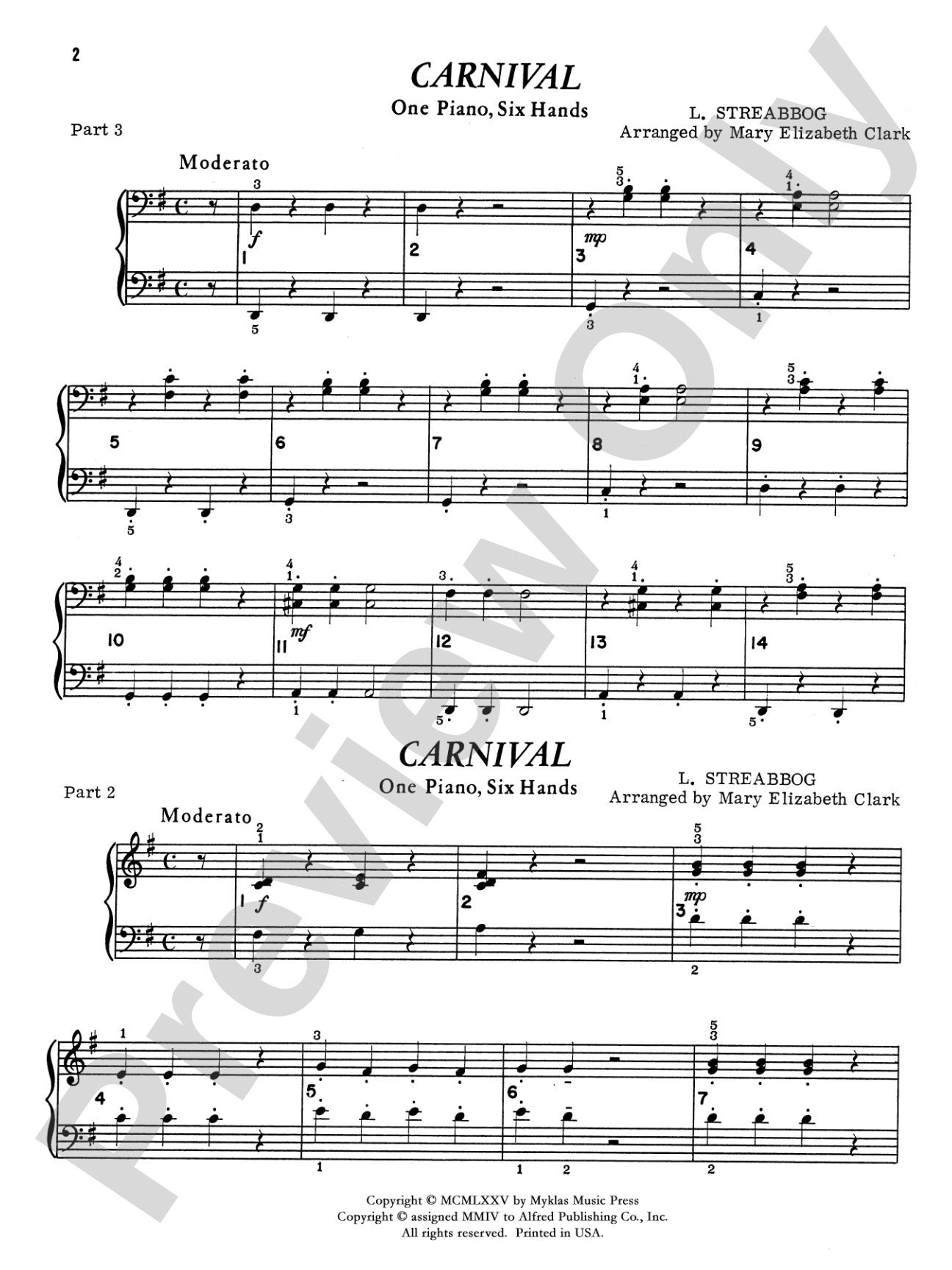
Carnival - Piano Trio (1 Piano, 6 Hands) Sheet Music Preview

Carnival - Piano Trio (1 Piano, 6 Hands): Piano

By Louis Streabbog / arr. Mary Elizabeth Clark

Level: Early Intermediate

Item: 00-PB-0000657

Digital Download
$5.50
Description
Get in a festive mood with this early intermediate piano trio for one piano, six hands! In the key of G major and common time, Part 1 carries the melody throughout while Parts 2 and 3 keep the steady accompaniment. A Federation Festivals 2024-2028 selection.

Carnival - Piano Trio (1 Piano, 6 Hands): Piano isn't in MakeMusic Cloud just yet...but it could be. Let us know you'd like to see it, and you'll help shape what comes next. In the meantime, start a free trial and dive into thousands of interactive titles your students can play along with today.

Sample Audio
No sample audio found.
Sample Video
Additional Details
Publisher: Alfred Music
Page Count: 12
SKU: 00-PB-0000657

More about this title

About the Composer: Louis Streabbog

Louis Streabbog was a French pianist and composer of the Romantic era who built his reputation on accessible yet musically engaging works for amateur musicians. His output included numerous pieces for piano and small ensembles that balanced technical growth with genuine musical interest, making him a staple of 19th-century music education.

Streabbog's compositional style reflects the character pieces and salon music of his time, emphasizing clarity of form and melody-driven writing that performers could immediately grasp. His works remain valuable in today's teaching studios for their ability to bridge early intermediate and intermediate levels without sacrificing musical substance.

Why we love this

The six-hands format removes the logistical challenges of traditional trio rehearsal while keeping ensemble playing genuinely collaborative. Clark's arrangement preserves the festive character of the original while giving each part meaningful musical work; Part 1 carries the narrative while Parts 2 and 3 develop real textural depth rather than serving as mere rhythmic filler. Recognition as a Federation Festivals selection confirms its quality and gives students a legitimate performance goal.

What to expect

Streabbog's Carnival crackles with the energy of a festive gathering. The steady pulse underneath creates forward momentum while the melody dances playfully above, evoking the spontaneous joy of celebration without veering into sentimentality.

Who it's for

Early intermediate pianists ready to experience ensemble playing without the complexity of coordinating separate instruments. Three players of similar ability level work best here, making it ideal for studio groups, class settings, or motivated young musicians exploring collaborative performance.

How to get the most out of it

  • Establish the pulse in Part 3 first during rehearsals. Once that steady foundation locks, Parts 1 and 2 will sit naturally on top of it.
  • Balance the melody in Part 1 so it sings clearly without overshadowing the harmonic movement beneath it. Early intermediate students often play melody too aggressively.
  • Bring out the festive character through articulation rather than tempo fluctuation. Light staccatos and clear phrasing create buoyancy without rushing.
  • Record the ensemble and listen back as a group. Three players experiencing their own balanced sound together builds ownership faster than feedback alone.

How to use it

Position this at the heart of a spring concert celebrating chamber music and collaborative learning. It pairs naturally with other ensemble pieces at similar levels and gives younger students a chance to step into a legitimate performance context with Federation Festivals recognition.

Skills your students will build

  • maintaining an independent part while listening to two others simultaneously
  • understanding harmonic function from the accompaniment voice perspective
  • balancing melody with supportive textures at the keyboard
  • counting and phrasing across longer musical sentences in G major
  • adapting touch and dynamics to serve the ensemble rather than individual display

You May Also Like