
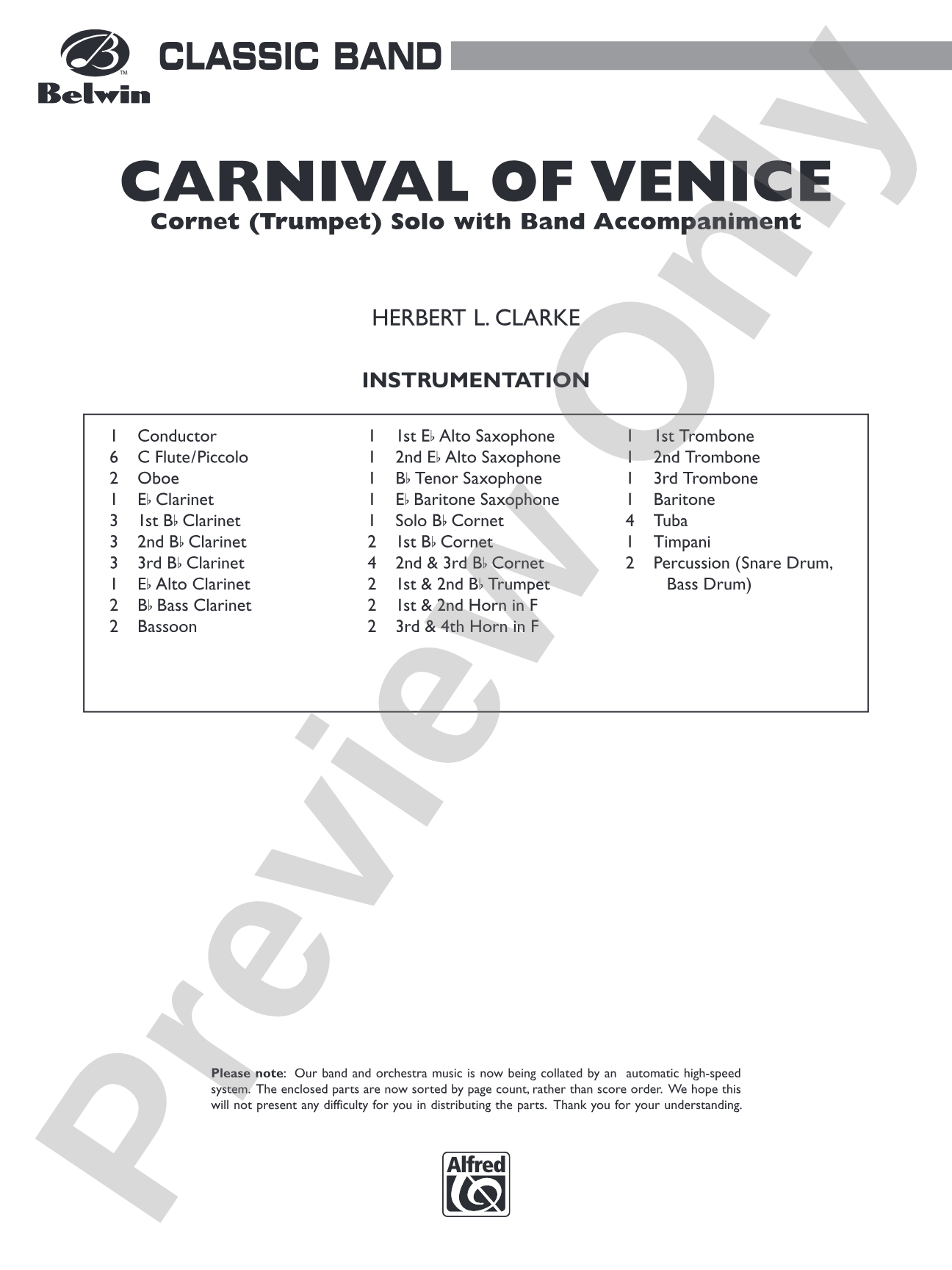

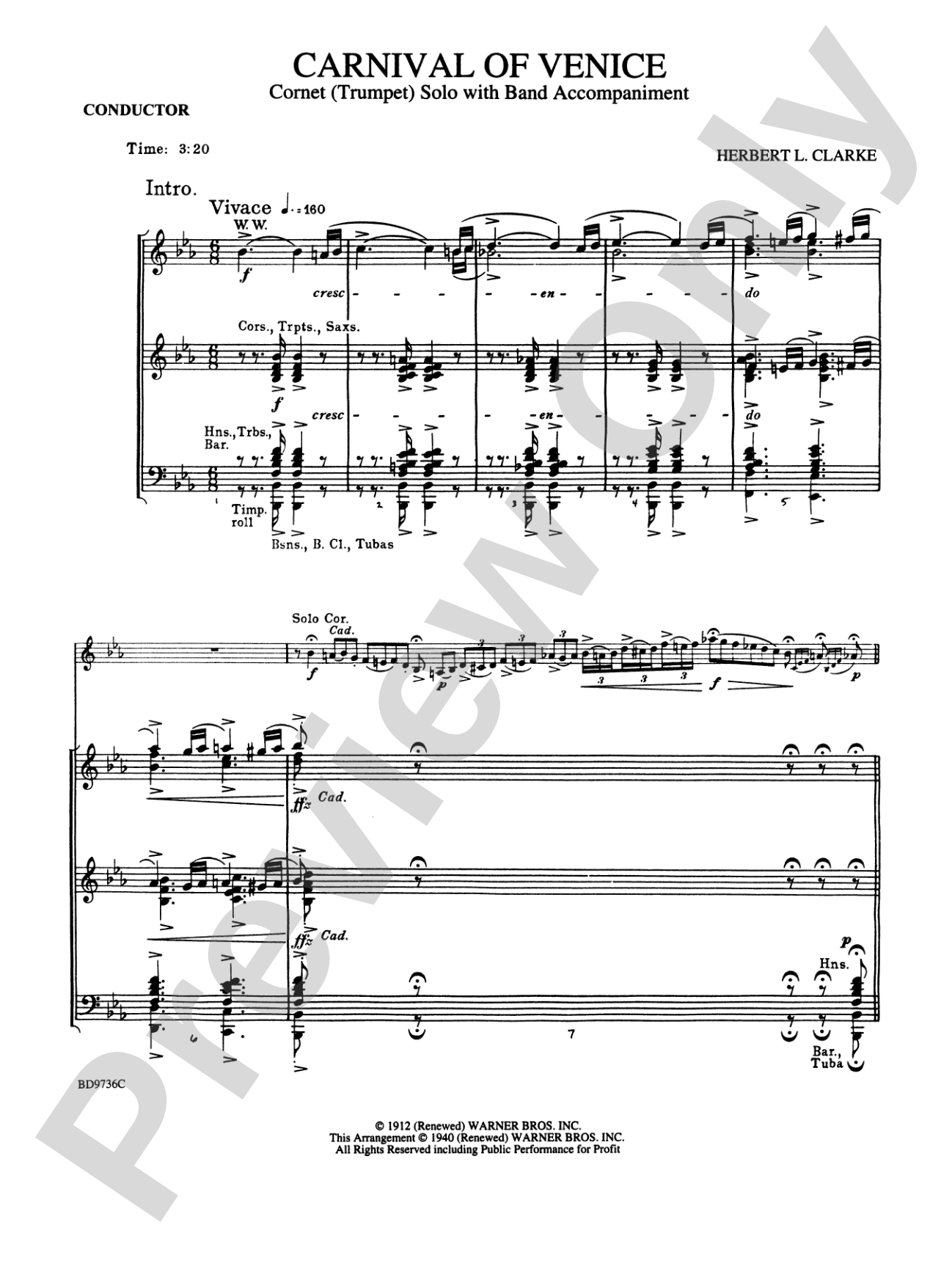
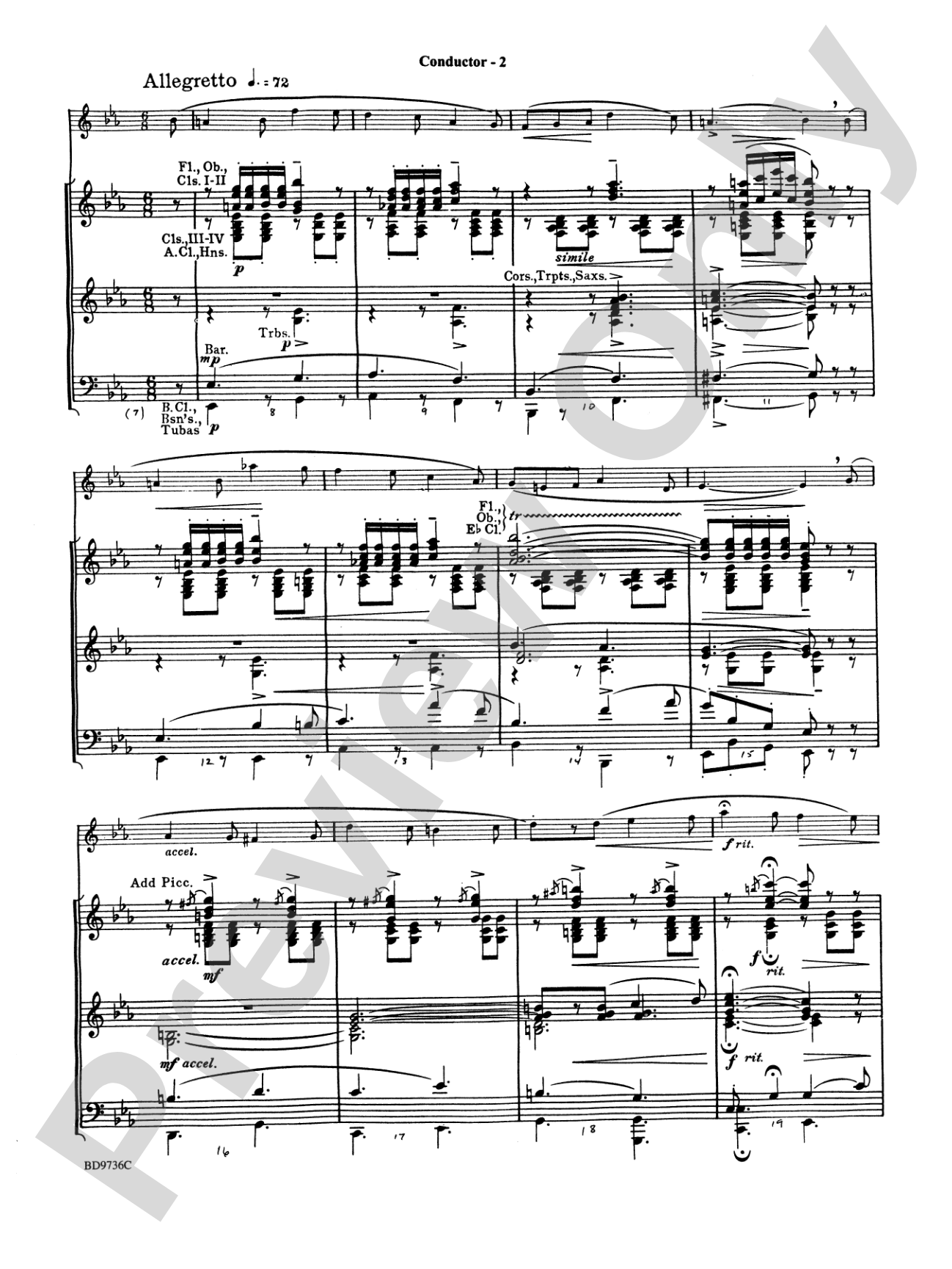
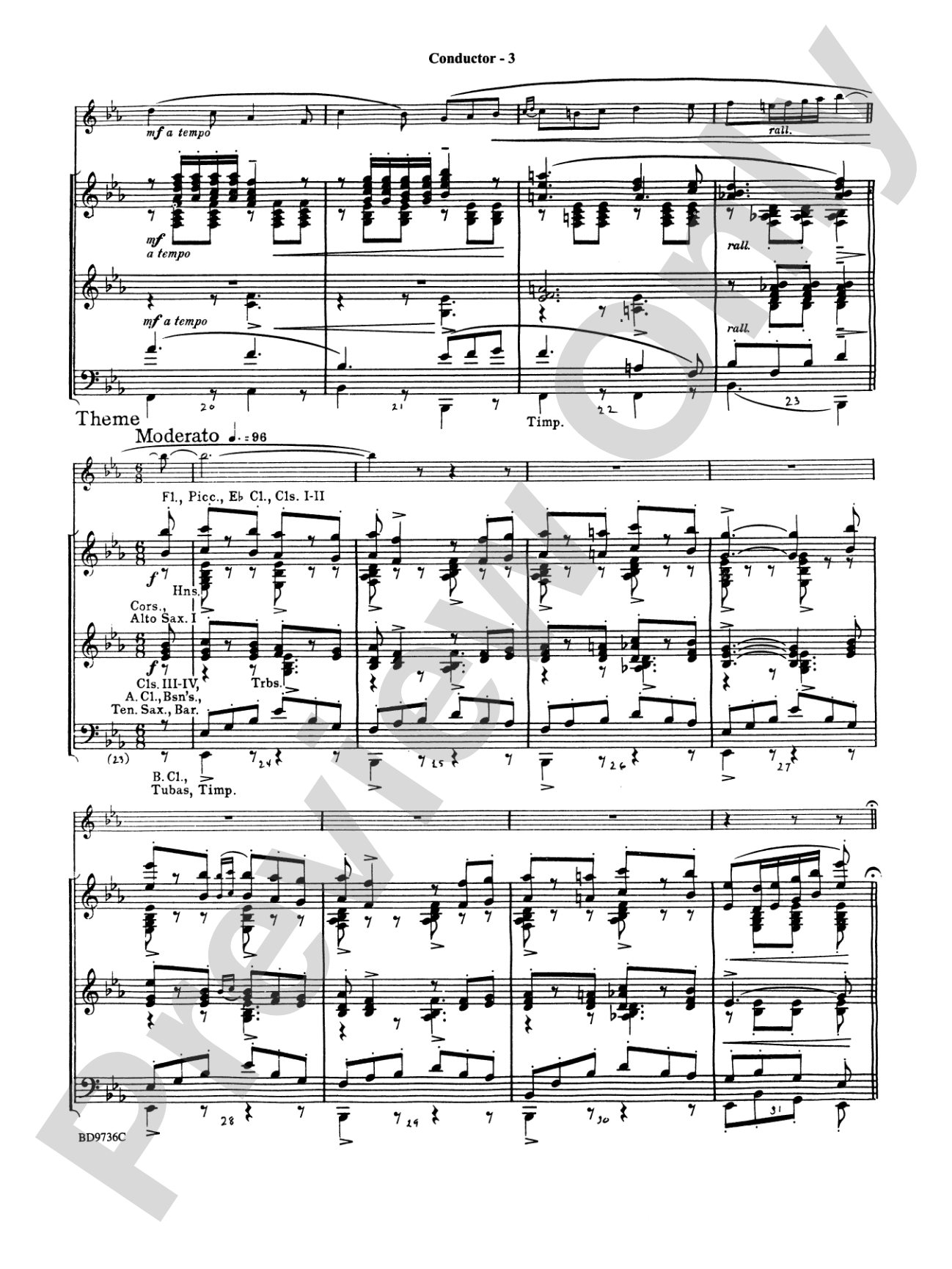
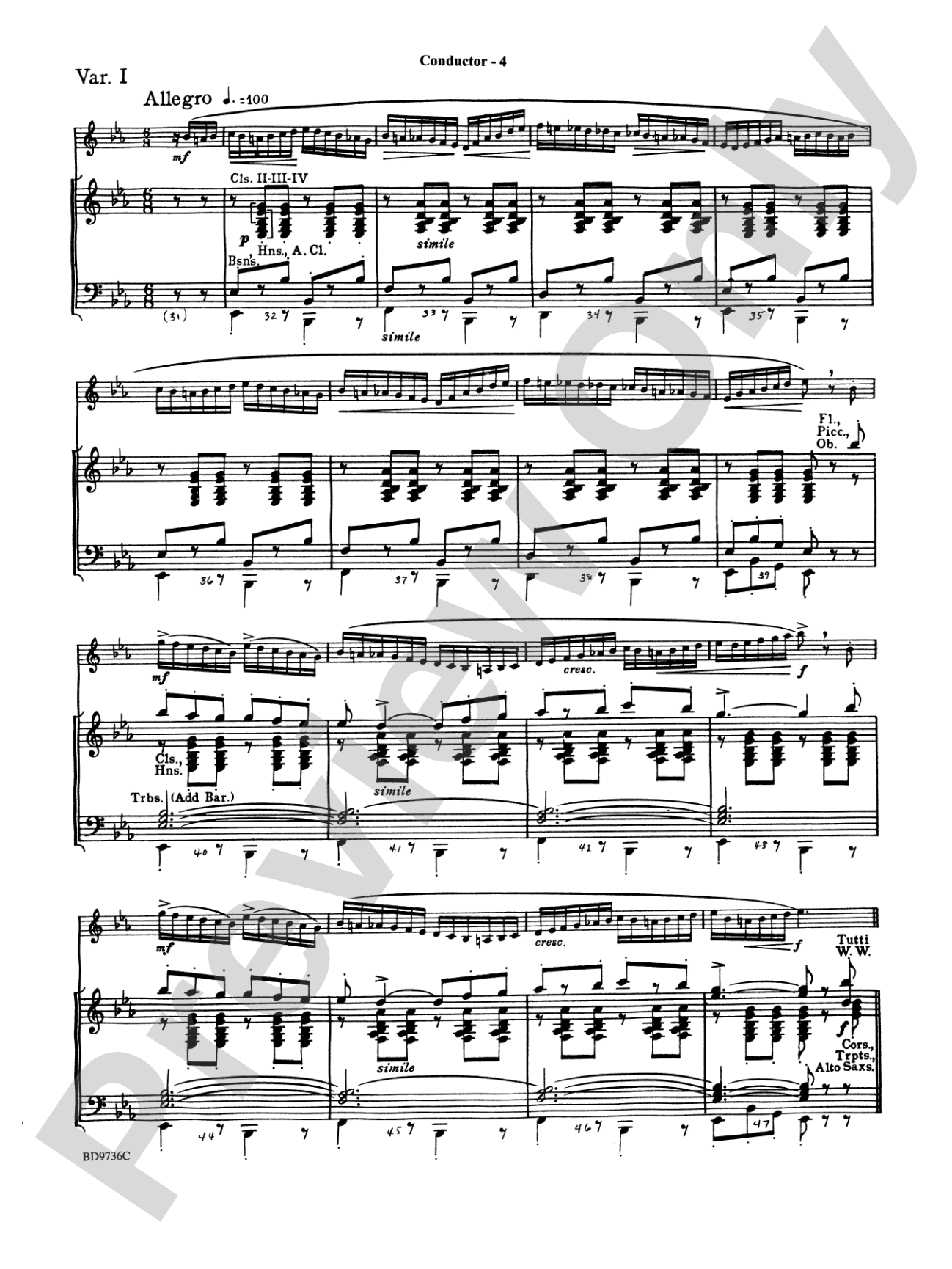
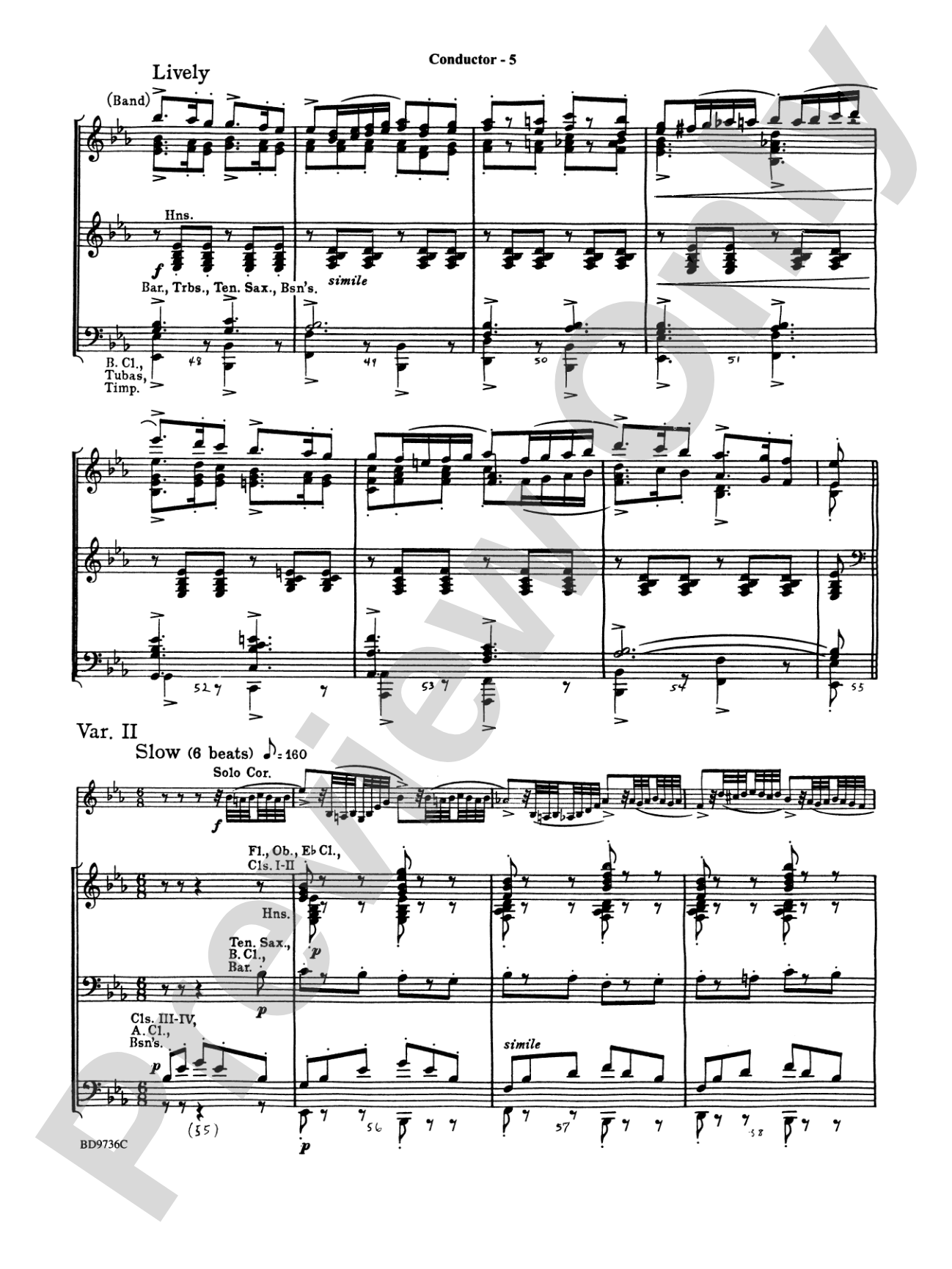
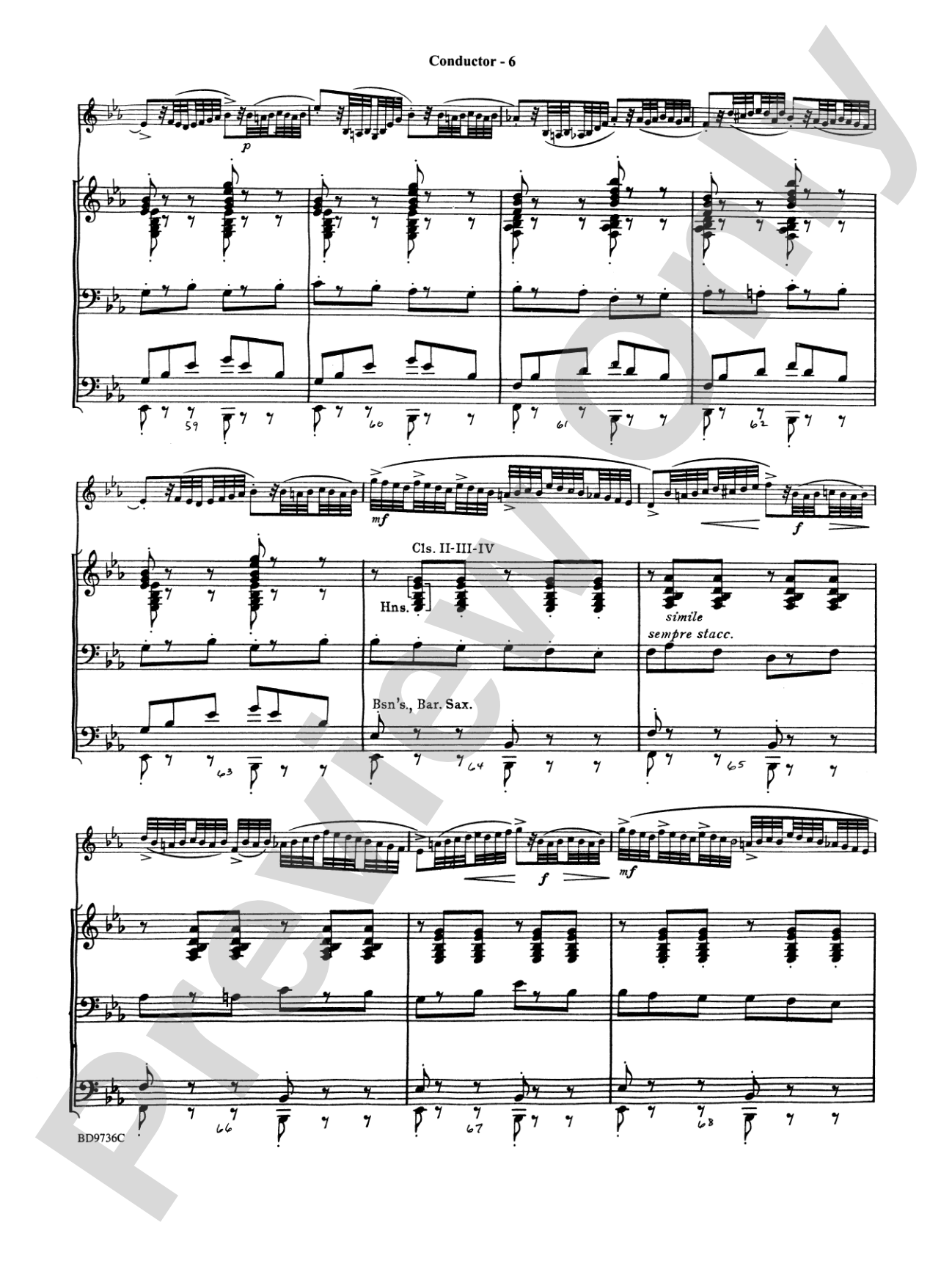
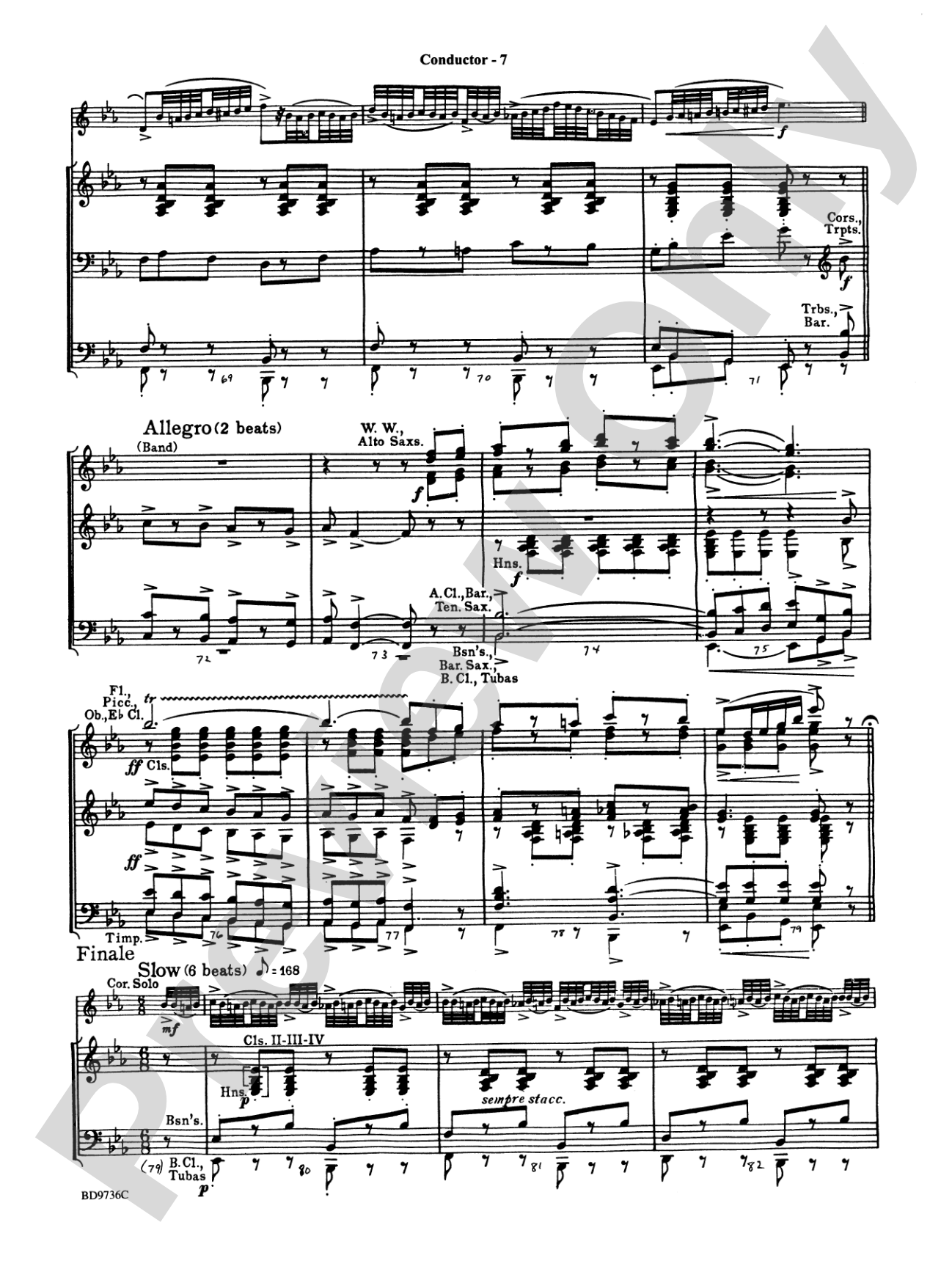
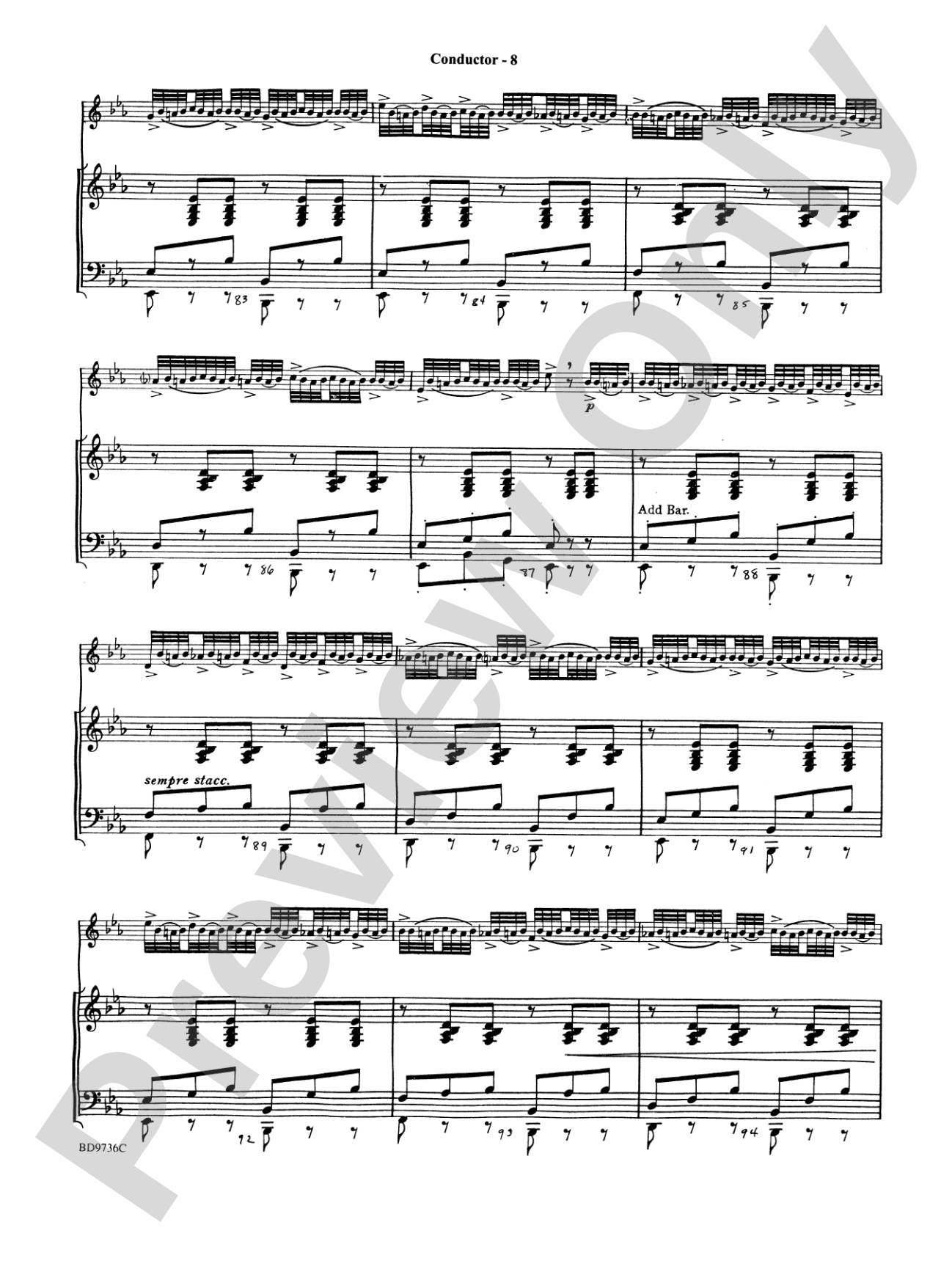
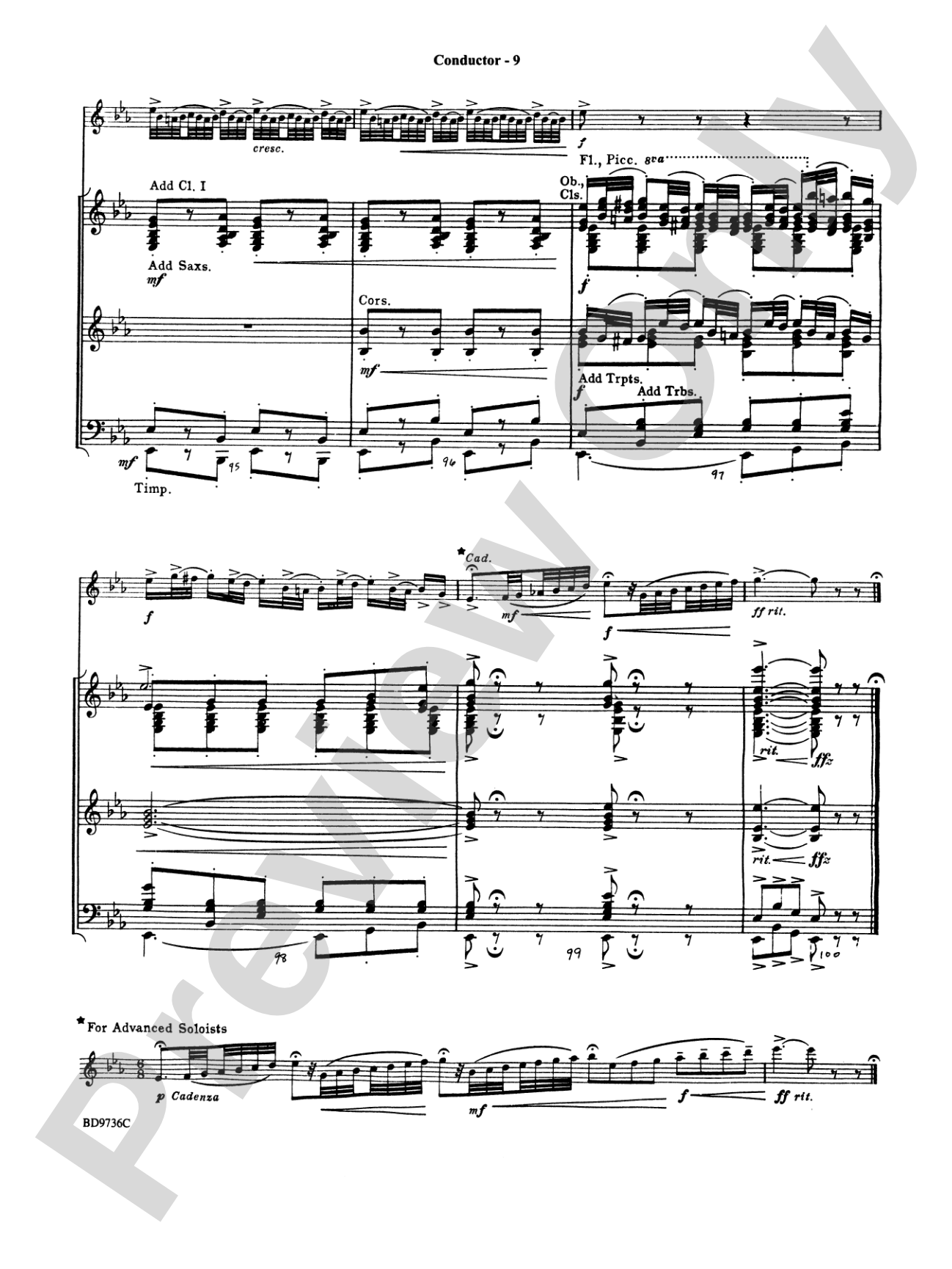


Carnival of Venice (Cornet (Trumpet) Solo with Band Accompaniment): Concert Band Conductor Score & Parts
Cornet (Trumpet) Solo with Band Accompaniment
By Herbert L. Clarke
Grade: 3 (Medium Easy)
Item: 00-PK-0002068

$77.00
One moment…
Description
This dazzling cornet/trumpet virtuoso piece was based on an air by Niccolo Paganini, and was originally composed for violin. Herbert L. Clarke was called the greatest cornetist of all time, and at the urging of another famous cornet soloist, Walter Rogers, Clarke was encouraged to write his own solos. His composition legacy includes over fifty solos, duets, and trios, as well as marches and works for concert band. Carnival of Venice may well be his best-known piece, and generations of brass players have worked to conquer and perform this masterwork.


Don't just read it, hear it, play along with it, and watch your students grow with it. In MakeMusic Cloud, Carnival of Venice (Cornet (Trumpet) Solo with Band Accompaniment): Concert Band Conductor Score & Parts comes alive with professional accompaniment, adjustable tempo, and built-in practice tools that turn solo practice into real progress.
Open in the Player
Jump straight in and assign it today.
Start Your Free Trial
Open this title and explore the full library in minutes.
Sample Audio
1
Audio File
--:--
0:00
0:00
Sample Video
No sample videos found.
Additional Details
Series:
Belwin Classic Band
Publisher:
Alfred Music
Page Count:
170
SKU:
00-PK-0002068
More about this title
About the Composer: Herbert L. Clarke
Herbert L. Clarke (1867-1945) revolutionized cornet performance and literature during the late 19th and early 20th centuries. A virtuoso instrumentalist and prolific composer, Clarke earned his reputation as perhaps the finest cornetist of his era, performing across North America and Europe with military bands and concert ensembles. His prolific output spans over fifty solos, duets, and trios alongside marches and concert band works that remain central to brass pedagogy and performance.
Clarke's compositions emerged from his deep understanding of the cornet's capabilities and his commitment to advancing serious artistic literature for the instrument. When fellow cornetist Walter Rogers encouraged him to document his own musical ideas, Clarke produced works that balanced virtuosic technical display with genuine musical substance. Carnival of Venice stands as his most enduring contribution, demonstrating his gift for crafting solos that challenge performers while remaining musically coherent and dramatically rewarding.
Why we love this
This piece carries the weight of generations of cornet tradition while remaining genuinely thrilling to program. Clarke's variations build momentum and character arc in ways that keep audiences engaged, and the band accompaniment allows you to feature a strong soloist without sacrificing ensemble investment. A concert that includes Carnival of Venice signals that your ensemble values virtuosity rooted in legitimate musical substance, not empty flash.
What to expect
The piece sparkles with the energy of a 19th-century Italian carnival, translating Paganini's violin showpiece into the bright, piercing voice of the cornet. Running passages shimmer like confetti, while the variations shift between playful agility and moments of genuine lyricism, creating a sense of celebration that's both authentic and theatrical.
Who it's for
Directors seeking a crowd-pleasing concert or contest piece that showcases a technically accomplished cornet or trumpet soloist while keeping the band engaged and challenged. This work suits ensembles with strong woodwind and brass sections capable of accompanying intricate solo passagework, and it's ideal for students who've moved beyond elementary repertoire but aren't yet tackling the most demanding Grade 4-5 literature.
How to get the most out of it
- Establish a clear tempo that allows the soloist to articulate running passages cleanly without rushing; the accompaniment should sit just slightly behind the beat to give the solo room to breathe and display the technical writing.
- Balance the band texture around the solo line; brass and woodwind accompaniment should recede enough that audiences hear every note of the cornet/trumpet part, especially in the rapid scale work.
- Mark rehearsal numbers and section changes clearly for the band so the rhythm section can lock into the soloist's phrasing rather than forcing mechanical precision.
- Shape the variations as a narrative arc, building intensity through the middle variations before settling into a reflective passage, then returning to brilliant display; discuss this structure with your soloist early in rehearsals.
How to use it
Program this as a centerpiece pops concert or as a highlight of a contest showcase where you want to spotlight individual achievement. It pairs well with march repertoire and other Clarke works, or place it alongside Classical-era solo literature to frame the piece within the broader tradition of virtuosic display. The 170 pages of materials suggest this is a substantive concert moment, not filler, so give it comparable rehearsal time and concert positioning.
Skills your students will build
- Rapid scalar passage articulation and single-tonguing endurance
- Phrasing and breathing in extended solo passages
- Managing dynamic contrast across multiple variations
- Intonation control across the full range of the instrument
- Ensemble cohesion between soloist and accompaniment (for band members)
- Reading and executing ornaments and embellishments characteristic of Romantic-era cornet writing