
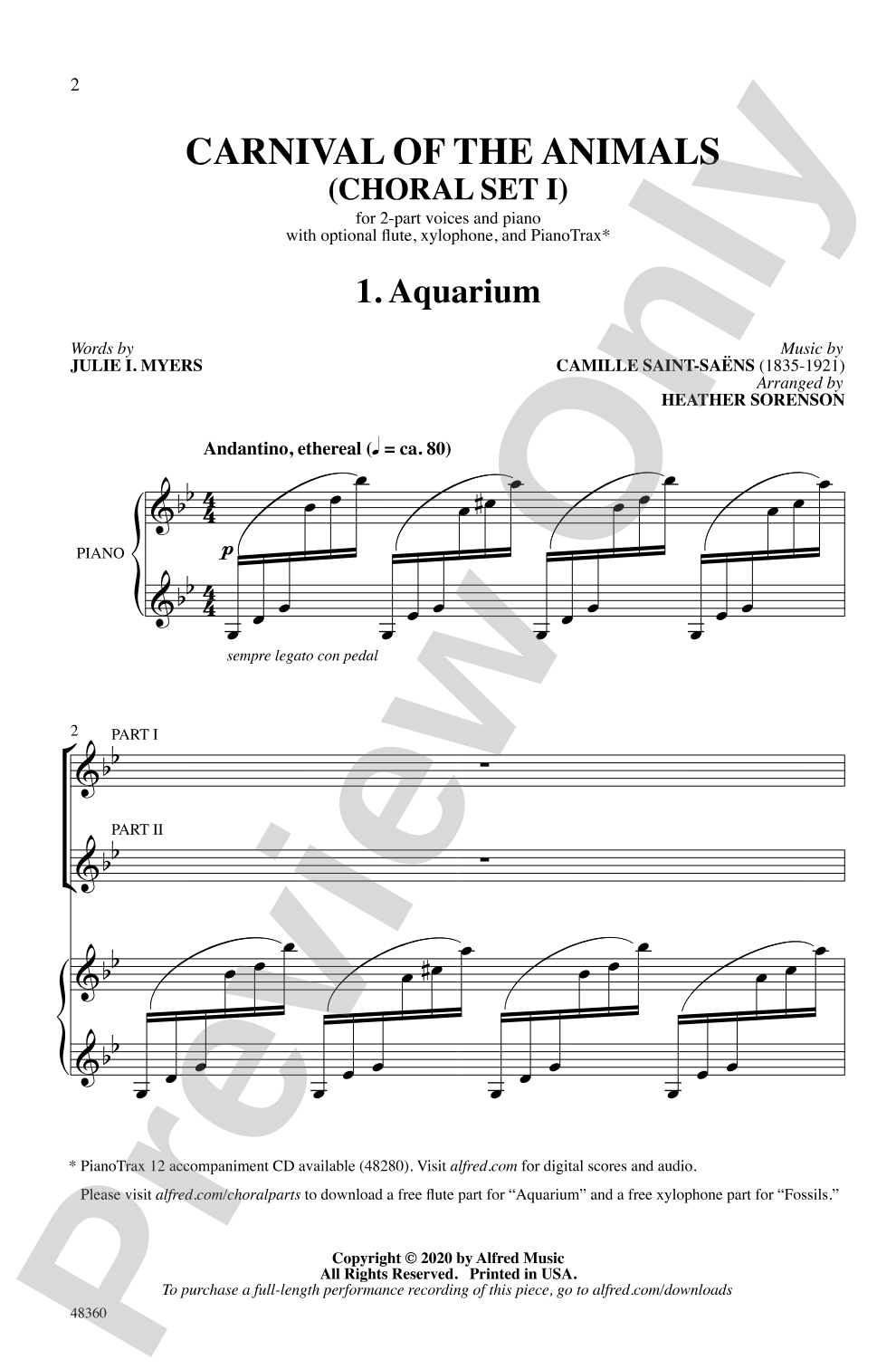
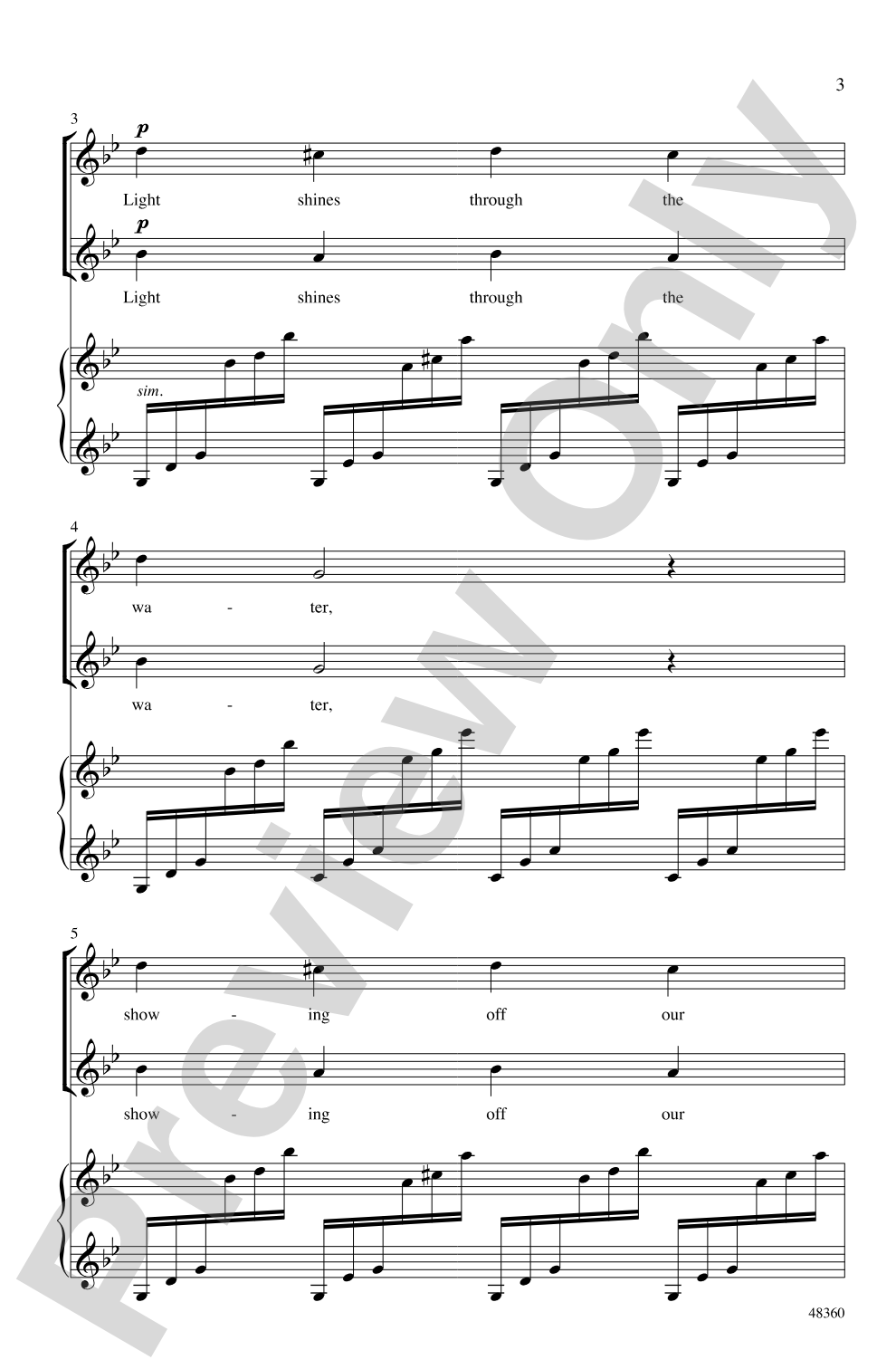
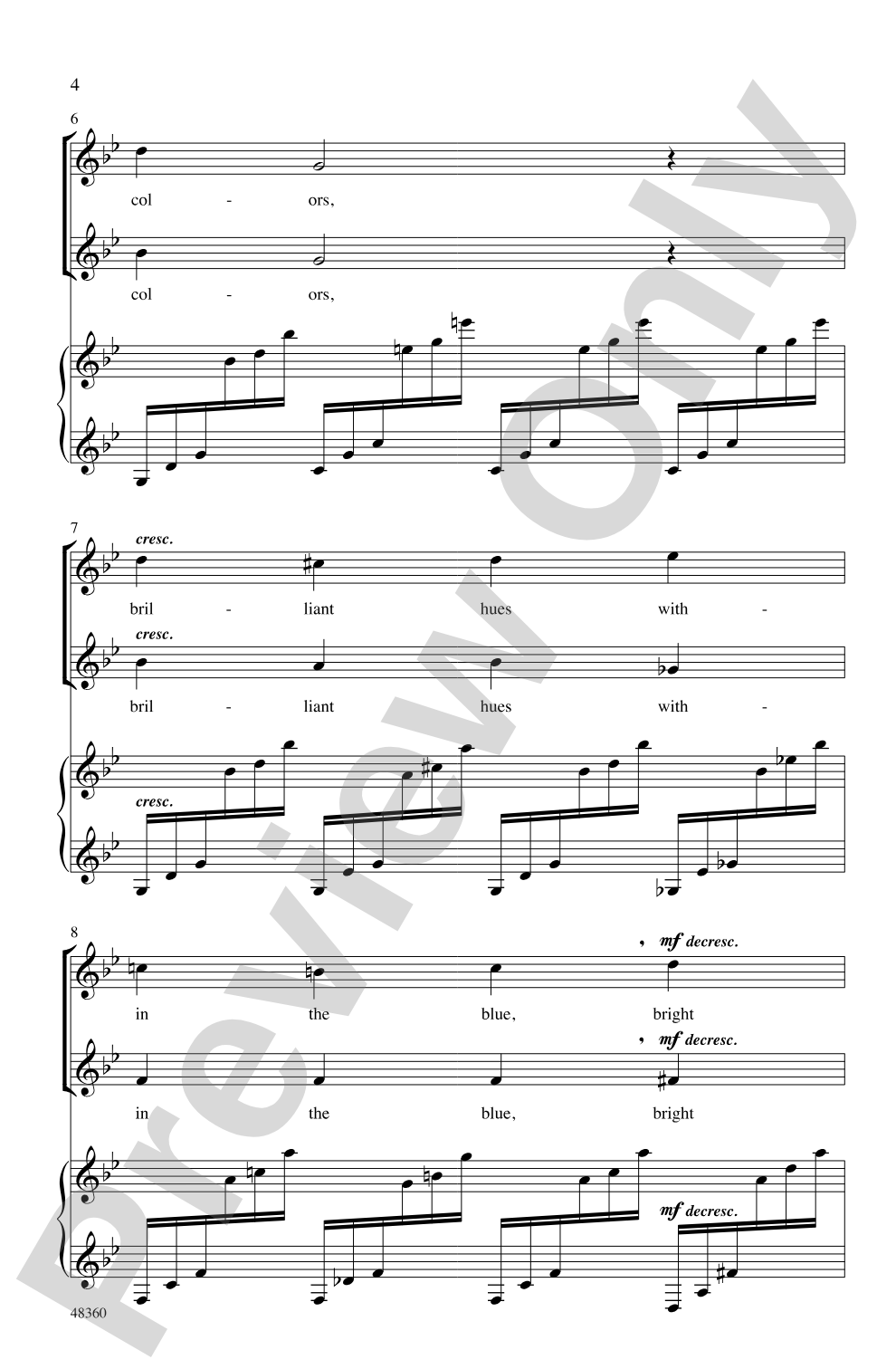
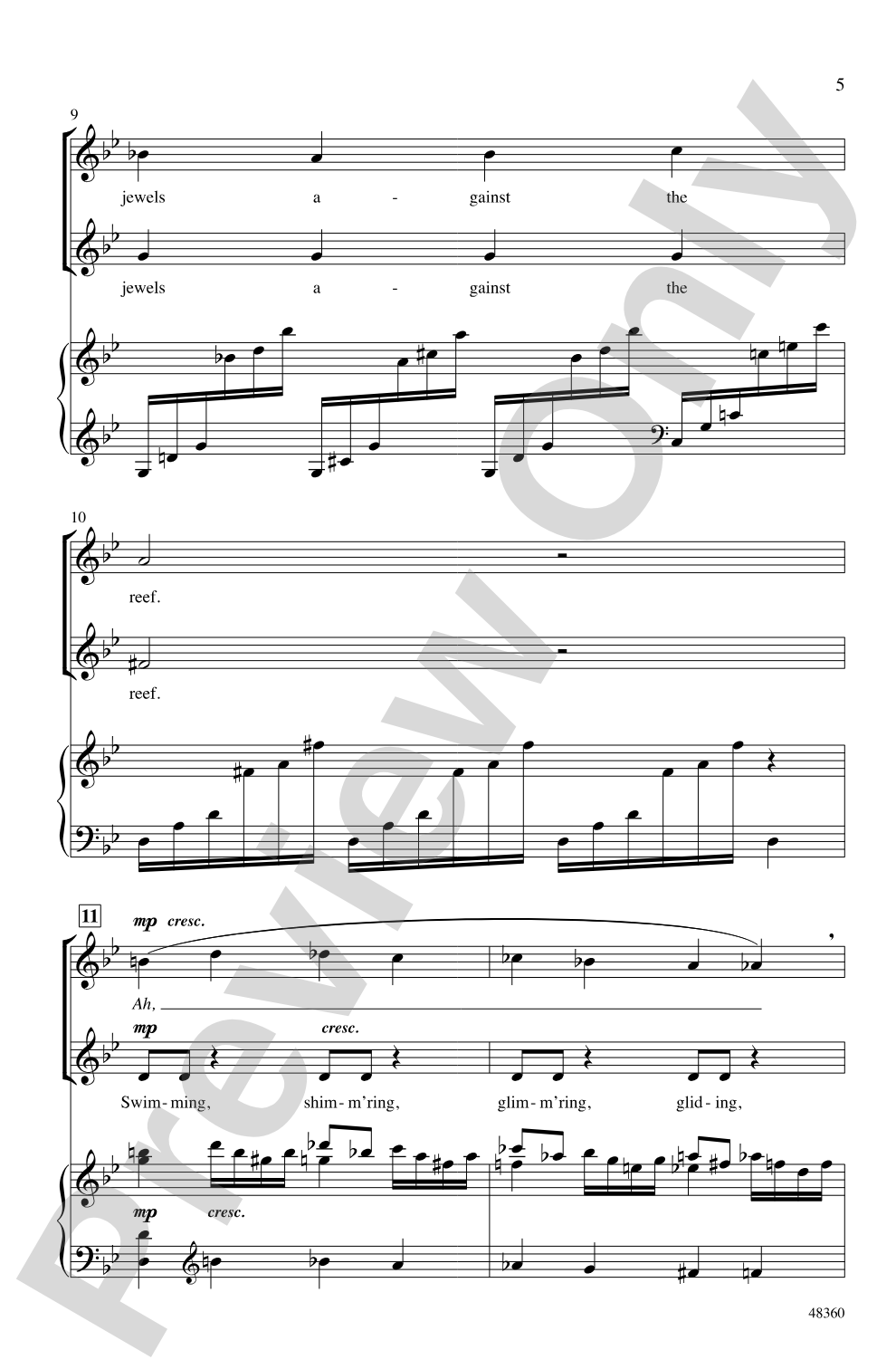

Carnival of the Animals: Choral Set I: 2-Part Choral Octavo
1. Aquarium 2. Fossils
Words by Julie I. Myers, music by Camille Saint-Saëns / arr. Heather Sorenson
Item: 00-PO-0006341
$2.30
Minimum order quantity: 20 copies
Pickup currently not available
Description
Introduce Saint-Saën's beloved instrumental chamber work in a highly creative way! Playful original lyrics accompany strong two-part writing and an enchanting piano accompaniment. To get the full effect, consider adding the optional flute part for "Aquarium," and/or the optional xylophone part for "Fossils." May be performed separately or as a four-minute concert set.


Carnival of the Animals: Choral Set I: 2-Part Choral Octavo isn't in MakeMusic Cloud just yet...but it could be. Let us know you'd like to see it, and you'll help shape what comes next. In the meantime, start a free trial and dive into thousands of interactive titles your students can play along with today.
Request This Title
Tell us you want it.
Start Your Free Trial
Explore everything that's ready to play right now.
Sample Audio
1
Audio File
--:--
0:00
0:00
Sample Video
Additional Details
Series:
Alfred Choral Designs
Publisher:
Alfred Music
Page Count:
20
SKU:
00-PO-0006341
More about this title
About the Composer: Camille Saint Saëns
Camille Saint-Saëns (1835-1921) was a French composer of remarkable versatility and technical mastery. His output ranged across symphonies, concertos, chamber music, and opera, establishing him as one of the nineteenth century's most prolific and performed composers. Carnival of the Animals, composed in 1886, stands as his most playful work—a witty zoological suite that showcases his gift for musical characterization and orchestral color.
Why we love this
Heather Sorenson's choral arrangement transforms an instrumental classic into something entirely fresh without losing the elegance of Saint-Saëns' original writing. The addition of witty, singable lyrics gives young choristers immediate entry into a masterwork they might otherwise experience only as listeners. The optional instrumental parts create natural opportunities for instrumental-choral collaboration while keeping the core arrangement accessible to singers alone.
What to expect
Moving from the spirited march of 'The Royals' to the serene beauty of 'The Swan,' this set captures the charm and wit that made Carnival of the Animals endure for over a century. The original lyrics honor Saint-Saëns' musical characterization while inviting singers to inhabit each animal with personality and playfulness.
Who it's for
This arrangement serves 2-part choirs seeking repertoire that builds ensemble technique while introducing a recognized masterwork. It works equally well for middle school, high school, or community choirs looking for accessible yet sophisticated material that engages singers through humor and character work.
How to get the most out of it
- Lean into the character of each animal movement through intentional tempo and articulation choices. The difference between the feline grace of 'The Swan' and the clumsy stomping of 'Elephants' lives in how precisely singers shape the phrasing.
- If adding the optional flute part for 'Aquarium,' rehearse the choir and flutist together early so singers internalize how their part sits against the instrumental line rather than doubling it.
- Use the recorded accompaniment to establish steady tempos and to help singers hear the full harmonic picture, especially in movements with less active piano writing.
- Pay attention to text clarity in the playful opening movements. Audiences need to hear the humor in Sorenson's lyrics to fully engage with the animals being portrayed.
How to use it
Program this as a four-minute suite to anchor a concert around orchestral masterworks reimagined for voices, or extract individual movements as breathers between heavier choral selections. The optional instrumentation makes it particularly effective on concerts that already feature small ensemble or instrumental chamber music, creating natural pairings that showcase the work's orchestral origins.
Skills your students will build
- Two-part voice independence and blend
- Character and expression through text and music
- Coordination with optional instrumental parts
- Quick musical style shifts within a single work
- Interpretation of a major composer's orchestration in vocal terms