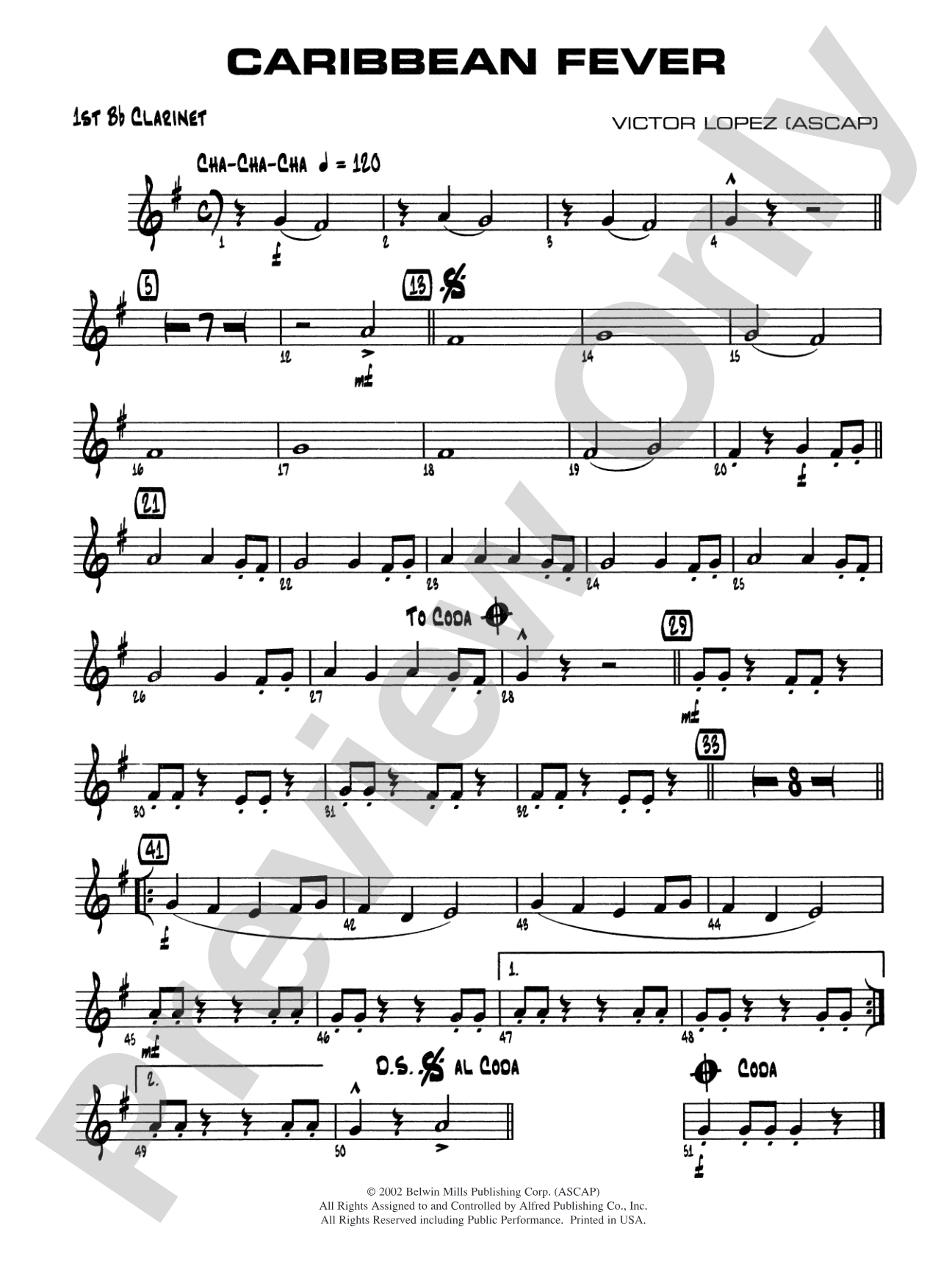
Caribbean Fever: 1st B-flat Clarinet Sheet Music Preview

Caribbean Fever: 1st B-flat Clarinet

By Victor López

Grade: 0.5 (Very Easy)

Item: 00-PC-0002447_C1

Digital Download
$3.00
Description
Warner Bros. Jazz presents the Jazz Beginnings Series.This is a new series designed for very basic jazz ensemble playing using limited ranges, rhythms and flexible instrumentation and it parallels beginning method books. Victor López has created a superb chart with Caribbean Fever that's easy to learn and play while teaching the basic Latin style. Rhythm section parts are clearly written along with a written solo for trumet. Jazz wil spark the imagination and interest of the young players and this chart will get them started on the right track. (2:28)

Don't just read it, hear it, play along with it, and watch your students grow with it. In MakeMusic Cloud, Caribbean Fever: 1st B-flat Clarinet comes alive with professional accompaniment, adjustable tempo, and built-in practice tools that turn solo practice into real progress.

Sample Audio
0:00
0:00
Sample Video
Additional Details
Series: Jazz Beginnings Series
Publisher: Alfred Music
Page Count: 46
SKU: 00-PC-0002447_C1

More about this title

About the Composer: Victor Lopez

Victor López is a prolific composer and arranger whose work spans orchestral, band, and jazz idioms. He has long focused on creating accessible yet musically substantial pieces for young musicians, understanding that early jazz experience requires clarity of conception and playable writing.

Why we love this

López writes jazz that respects young ears and young chops. The Latin grooves and straightforward rhythm section parts make this feel like real jazz playing, not a simplified approximation, which means your ensemble gets genuine rhythmic and harmonic experience from day one. The written trumpet solo removes sight-reading anxiety and lets students focus on style, phrasing, and the feel of swinging behind a Latin beat.

What to expect

Caribbean Fever pulses with sun-soaked Latin groove and infectious energy. The straightforward chart and accessible ranges let young musicians experience the genuine joy of swinging as a section rather than struggling through overly complex charts.

Who it's for

Beginning jazz ensembles with limited range experience and flexible instrumentation needs. This series parallels entry-level method books, so it works well for young players in their first year of jazz study or middle school jazz programs just starting out.

How to get the most out of it

  • Shape the rhythm section as a unit. The written bass and drum parts are the heartbeat; have them lock in together before adding horns, so the groove sits firm underneath.
  • Lighten the articulation in the ensemble hits. Jazz ensemble charts live or die by whether the attacks snap cleanly without sounding heavy or forced.
  • Let the trumpet soloist breathe naturally between phrases. Even written solos benefit from space and a conversational quality rather than relentless execution.
  • Balance the front line so neither saxophones nor trumpet dominates. At this level, blending matters more than projection.

How to use it

Open a jazz concert or spring assembly with this piece to establish that young jazz students can deliver real musicianship and style. It also works as a morale builder early in the rehearsal season, building confidence before tackling more challenging material.

Skills your students will build

  • Latin jazz rhythmic feel and groove orientation
  • Ensemble balance and blend in a jazz setting
  • Reading and playing written solo sections with stylistic awareness
  • Rhythm section coordination (bass, drums, and harmonic instruments)
  • Jazz articulation and phrasing conventions

You May Also Like