Cariba: Baritone T.C. Sheet Music Preview

Cariba: Baritone T.C.

By John L. "Wes" Montgomery / arr. Victor López

Grade: 1

Item: 00-PC-0019748_BTC1

Digital Download
$3.00
Description
An easy bossa-rock chart with a catchy melody, no individual solos, and easy brass ranges. Played around 142 BPM, this chart performs well with reduced instrumentation plus many optional parts, including two flutes, two clarinets, and vibraphone. Great choice! (2:00)

Cariba: Baritone T.C. isn't in MakeMusic Cloud just yet...but it could be. Let us know you'd like to see it, and you'll help shape what comes next. In the meantime, start a free trial and dive into thousands of interactive titles your students can play along with today.

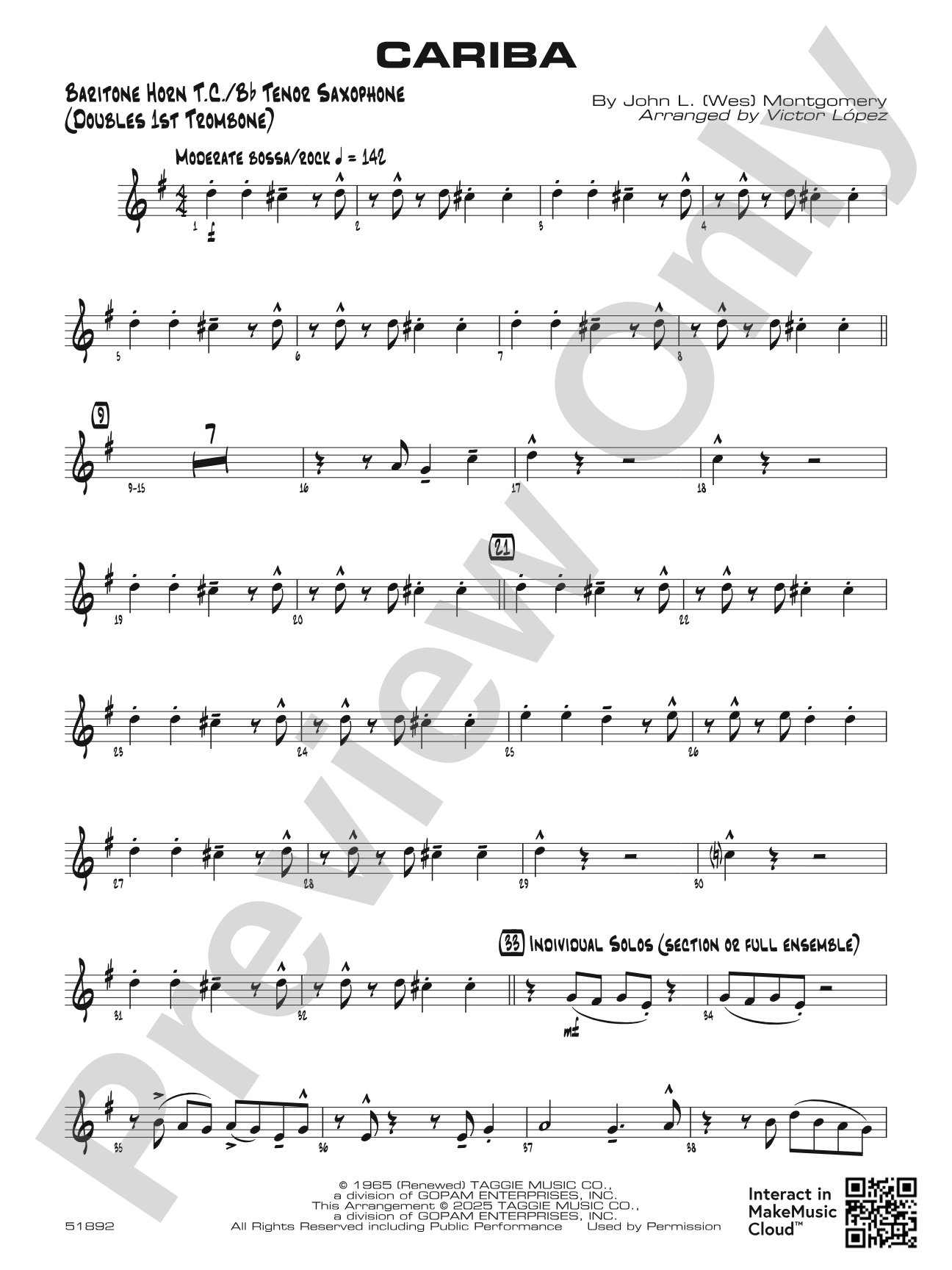
Sample Audio
0:00
0:00
Sample Video
Additional Details
Series: Jazz Beginnings Series
Publisher: Alfred Music
SKU: 00-PC-0019748_BTC1

More about this title

About the Composer: John L. "Wes" Montgomery

Wes Montgomery (1923-1968) was a guitarist and composer who became one of jazz's most influential voices. His distinctive thumb-playing technique and warm, soulful improvisations shaped the sound of soul jazz and jazz fusion throughout the 1950s and 1960s. Though Montgomery is best known as a performer, his compositions have become standards in jazz repertoire and continue to be arranged for educational ensembles.

Montgomery's melodies carry the accessibility and groove that made his recordings so popular; they work equally well in a concert hall or a relaxed performance setting. His legacy in music education extends through arrangements like this one, which introduce student musicians to the language of jazz through his compositional voice.

Why we love this

Victor López's arrangement strips away complexity without sacrificing the chart's rhythmic energy and harmonic interest. A Grade 1 bossa-rock piece that actually sounds like music (not an exercise) is rare, and this one delivers an undeniable groove that keeps students engaged while keeping the technical demands manageable. The optional instrumentation means you can perform it with exactly the ensemble you have on any given day.

What to expect

Cariba bounces with an infectious Latin-rock swagger. The melody is memorable and immediately singable, the groove is contagious, and the harmonic movement gives enough color to keep listeners attentive without demanding intellectual effort from players. It feels like a piece built for joy.

Who it's for

This chart works for jazz ensembles at the beginning of their journey: those still building foundational rhythm section skills and players who benefit from straightforward, idiomatic writing. It's equally suited for mixed-level groups where you want everyone engaged without singling out advanced players for complex solos.

How to get the most out of it

  • Lock the kick drum and bass line together first; the pocket of this chart rides entirely on their synchronization at 142 BPM.
  • Shape the melody phrase by phrase rather than playing it straight through. Even though there are no individual solos, the lead voice needs breathing room and dynamic contour.
  • Use the optional vibraphone or expanded woodwind parts to add color and texture without increasing difficulty; they fill space naturally and reward students who are ready for more responsibility.
  • Keep the tempo steady but relaxed. Bossa-rock thrives on a groove that feels effortless, not rushed.

How to use it

Program this early in a jazz concert to establish energy and set a friendly tone. It also serves as an excellent opener for a jazz clinic or rehearsal when you want to build confidence quickly or introduce students to ensemble arranging that respects their current ability. The 2-minute length makes it ideal for festival performances or community events where time is limited.

Skills your students will build

  • Reading and playing syncopated rhythms in a bossa-rock feel
  • Responding to jazz ensemble style and groove
  • Playing with precise rhythmic placement in a section
  • Understanding optional parts and flexible instrumentation
  • Balancing melody and accompaniment voices

You May Also Like