
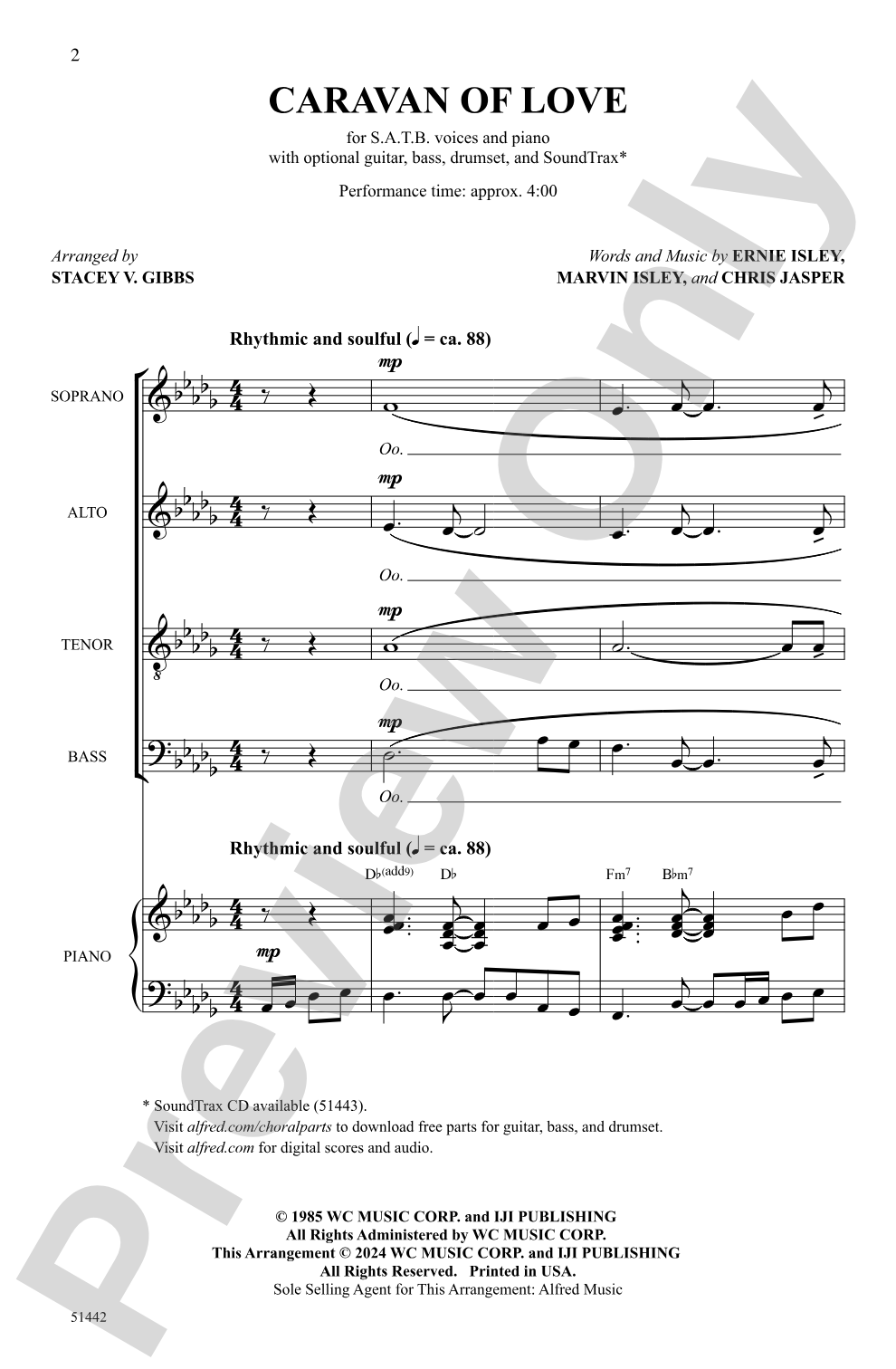
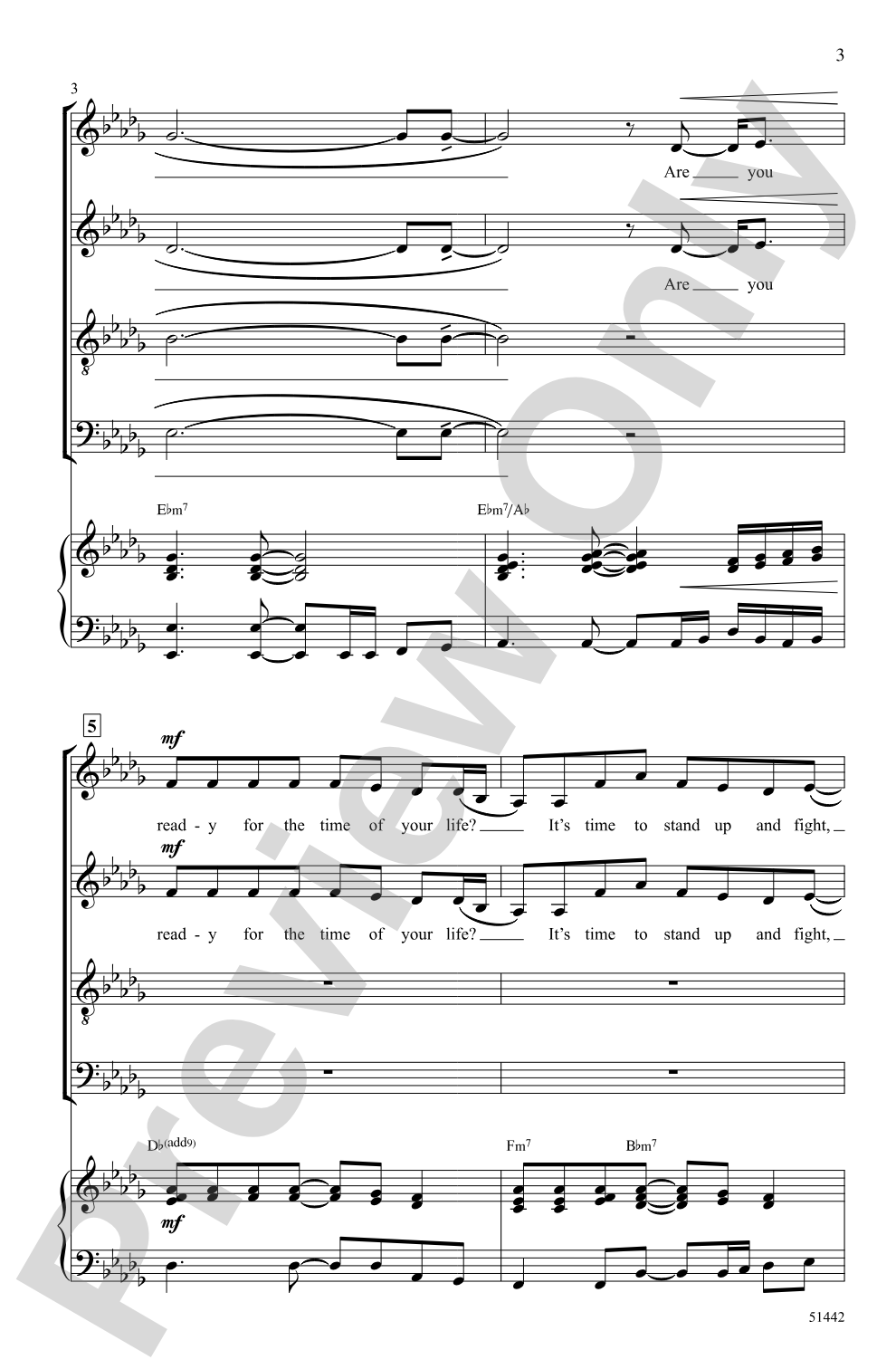
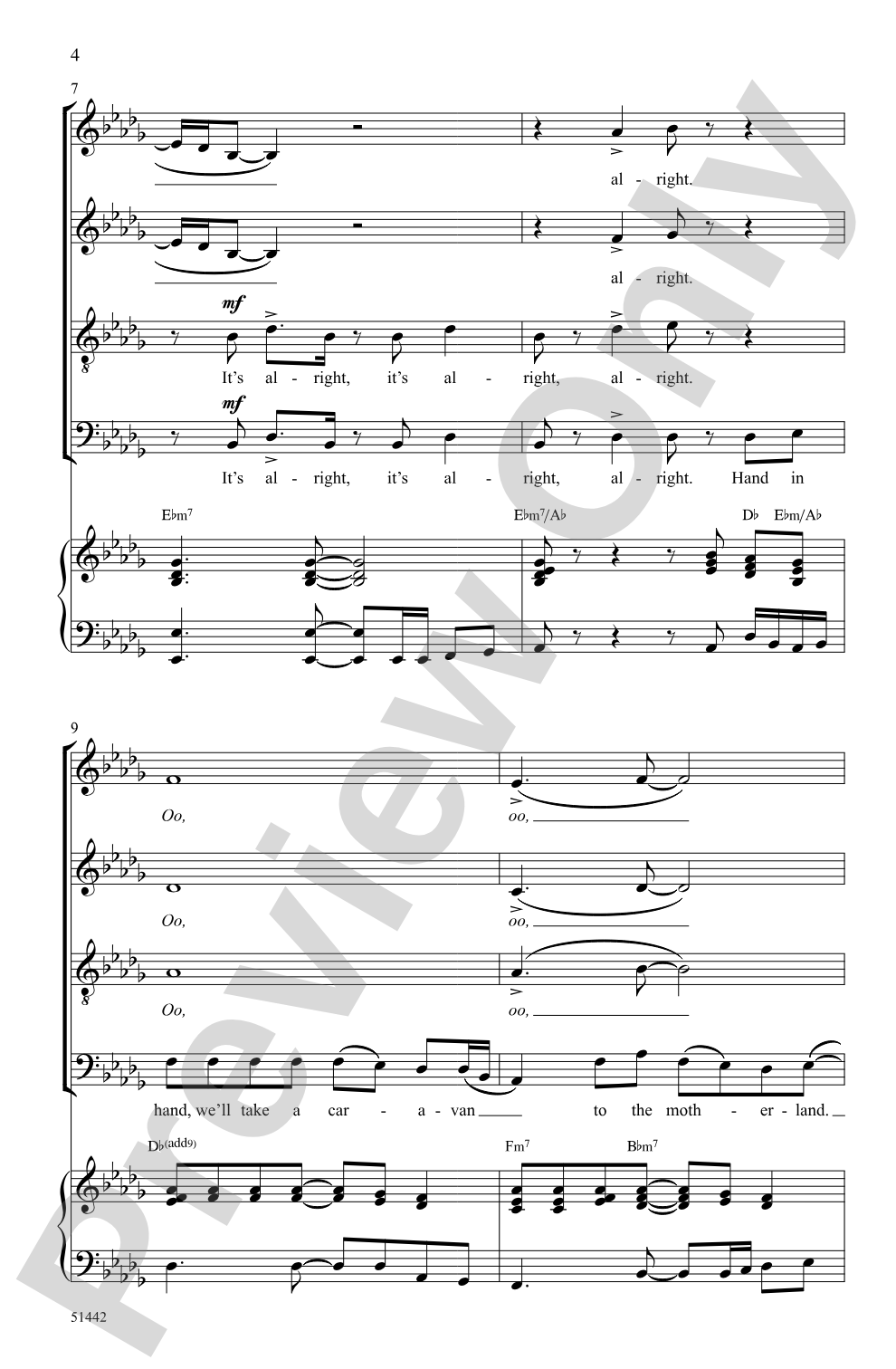
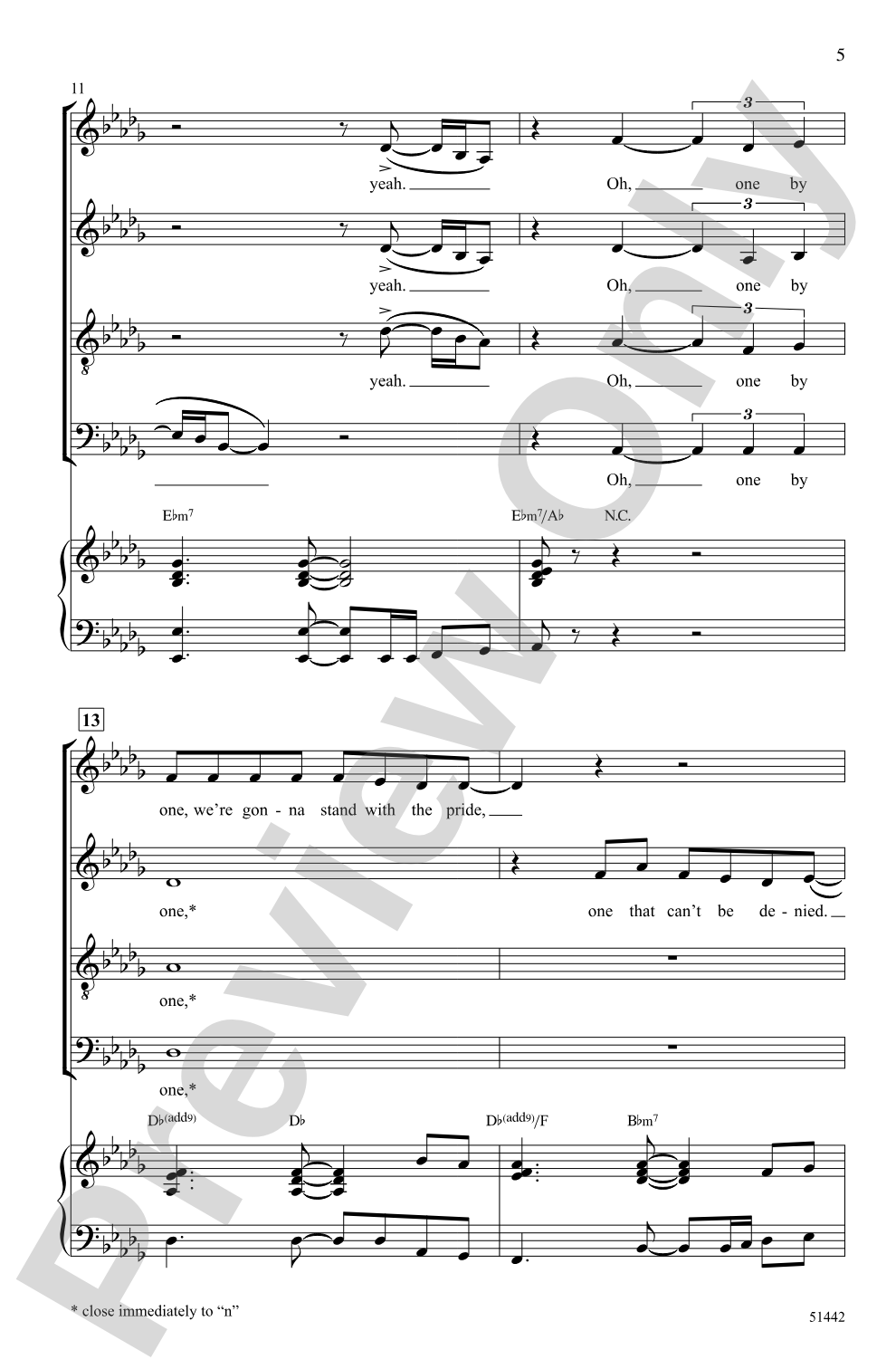

Caravan of Love: SATB Choral Octavo
Words and music by Ernie Isley, Marvin Isley, and Chris Jasper / arr. Stacey V. Gibbs
Item: 00-PO-0007329
$2.55
Minimum order quantity: 20 copies
One moment…
Description
Here's a soulful R&B hit with a smooth melody and a solid rhythmic groove. Featuring an inspiring, gospel-like chorus and powerful lyrics, this uplifting song is both emotionally resonant and musically engaging. Stacey's inspired arrangement adds more and more gospel flair in each section, leading to a stirring conclusion that delivers a message needed in today's world. "Everybody take a stand, join the caravan of love."


Caravan of Love: SATB Choral Octavo isn't in MakeMusic Cloud just yet...but it could be. Let us know you'd like to see it, and you'll help shape what comes next. In the meantime, start a free trial and dive into thousands of interactive titles your students can play along with today.
Request This Title
Tell us you want it.
Start Your Free Trial
Explore everything that's ready to play right now.
Sample Audio
1
Audio File
--:--
0:00
0:00
Sample Video
Additional Details
Series:
Alfred Pop Choral Series
Publisher:
Alfred Music
Page Count:
20
SKU:
00-PO-0007329
More about this title
About the Composer: Ernie Isley
Ernie Isley is best known as a founding member of The Isley Brothers, one of the most influential soul and R&B groups in American music history. His work spans decades and genres, from early Motown recordings through funk and rock experimentation, making him a vital figure in the evolution of popular music. As a multi-instrumentalist and songwriter, Isley brought both technical sophistication and emotional depth to his compositions.
With "Caravan of Love," Isley co-wrote a song that became an anthem of unity and social consciousness. The track showcases his gift for crafting memorable melodies that sit comfortably in vocal ranges while maintaining the rhythmic and harmonic complexity that defines his musicianship. For choral programs, his work offers an entry point into authentic soul and gospel traditions.
Why we love this
Stacey V. Gibbs' arrangement respects the original's soulful bones while building genuine gospel texture as it unfolds. The piece doesn't rely on gimmicks or oversimplification; instead, it trusts your singers to find the groove and the heart in music that feels contemporary and spiritually grounded. Programming this alongside spirituals or contemporary sacred work creates a powerful conversation about how message and musicality intersect across American traditions.
What to expect
The piece opens with intimate, soulful melody and gradually swells into something larger and communal. Gospel harmonies layer in, the rhythm section locks tighter, and what began as a smooth groove transforms into an urgent call for unity. There's joy in the musicmaking alongside genuine conviction in the message.
Who it's for
Any SATB ensemble with moderate vocal maturity and at least basic comfort with R&B and gospel idioms. High school choirs, college non-majors, community and church choirs will all find accessible entry points here, though the arrangement rewards ensembles with solid intonation and rhythmic independence.
How to get the most out of it
- Lock into the rhythmic groove early by having rhythm section and any students on body percussion anchor the pulse before full ensemble rehearsals begin; this piece lives or dies by internal pocket rather than strict metronomic precision.
- Approach the gospel-inflected sections with stylistic awareness by listening to both the original recording and other contemporary gospel arrangements; notice how the phrasing sits slightly behind the beat and how sustained notes often carry subtle rhythmic motion.
- Use the recorded accompaniment strategically during early learning phases to establish harmonic context, then gradually shift to live piano or rhythm section so singers develop independence.
- Balance the building intensity across sections by resisting the urge to sing louder; instead, add textural layers, increase rhythmic articulation, and sharpen harmonic focus as the arrangement develops.
How to use it
This works beautifully as the emotional centerpiece of a concert exploring social justice, brotherhood, or peace. It also serves as a bridge piece if you're programming classical or traditional repertoire alongside contemporary work; placed strategically, it can help audiences hear the continuity between musical traditions. Consider programming it where you want your audience to leave the concert thinking, not just applauding.
Skills your students will build
- Singing swing rhythms and syncopated figures characteristic of soul and R&B styles
- Balancing harmonic independence (especially in the inner voices during gospel sections) while maintaining ensemble blend
- Phrasing language influenced by gospel tradition, including rhythmic elasticity and sustained note ornamentation
- Reading and responding to dynamic and textural cues that build intensity across formal sections
- Understanding groove-based music and how to sing with intentional rhythmic pocket rather than metronomic regularity