
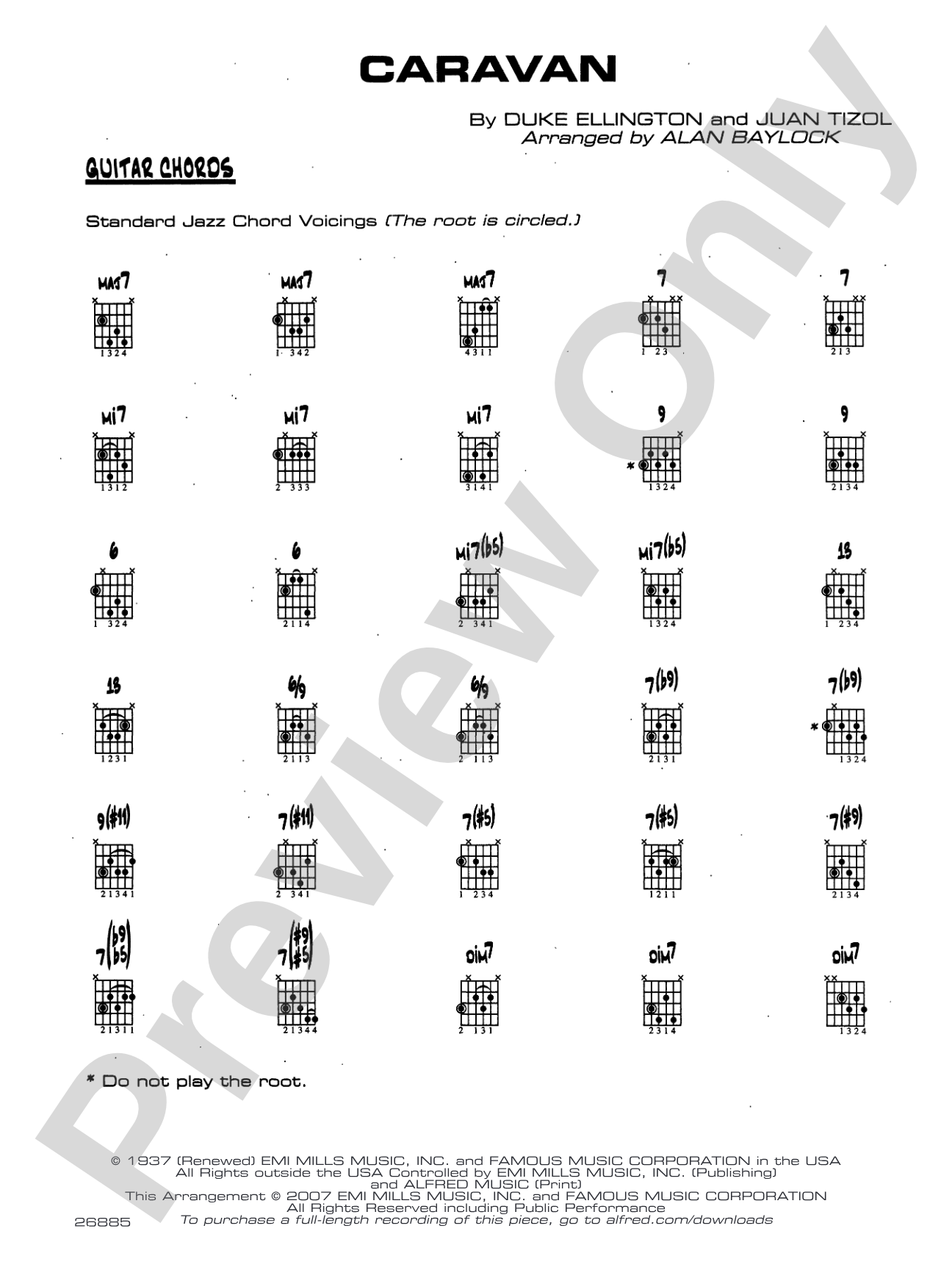

Caravan: Guitar Chords
By Duke Ellington and Juan Tizol / arr. Alan Baylock
Grade: 4 (Medium Advanced / Difficult)
Item: 00-PC-0016674_GC
$5.99
Pickup currently not available
Description
Wow! This is a show-stopping chart by arranger Alan Baylock of the Ellington/Tizol classic. The groove moves logically between an up-tempo swing, a "Maiden Voyage" feel, a double time swing and a 12/8 Afro-Cuban feel. Features include plenty of solo space for tenor saxophone, brief written melody lines for various instruments, and lots of moving lines and sax solis. Lead trumpet range is to written D above the staff. Caravan is nothing short of spectacular. This title is available in MakeMusic Cloud.


Don't just read it, hear it, play along with it, and watch your students grow with it. In MakeMusic Cloud, Caravan: Guitar Chords comes alive with professional accompaniment, adjustable tempo, and built-in practice tools that turn solo practice into real progress.
Open in the Player
Jump straight in and assign it today.
Start Your Free Trial
Open this title and explore the full library in minutes.
Sample Audio
1
Audio File
--:--
0:00
0:00
Sample Video
No sample videos found.
Additional Details
Series:
Premier Jazz Series
Publisher:
Alfred Music
Page Count:
78
SKU:
00-PC-0016674_GC
More about this title
About the Arranger: Duke Ellington
Duke Ellington (1899-1974) stands as one of the most influential composers in American music history. His works span classical, popular, and jazz idioms, and his compositions remain central to the jazz repertoire. Ellington's sophisticated harmonic language and masterful orchestration set the standard for big band writing and continue to challenge and inspire musicians across all levels.
Juan Tizol (1893-1984) was a Puerto Rican valve trombonist and composer who contributed several enduring standards to the jazz canon, most notably "Caravan." His work reflected the Latin influences central to his musical identity and helped establish the foundation for Latin jazz as a distinct tradition.
Why we love this
Alan Baylock's arrangement transforms this classic into a vehicle for ensemble cohesion and individual artistry in equal measure. The shifting grooves (swing, modal, double-time, and Afro-Cuban) demand genuine ensemble listening and flexibility while the tenor solo space and sax soli lines give your section players moments to shine. This is the kind of chart that energizes a contest entry and leaves audiences genuinely excited.
What to expect
Caravan pulses with sophistication and forward momentum. The arrangement glides between moods without losing its infectious groove, moving from the swagger of classic swing through the floating serenity of modal feel, then surging into a propulsive double-time section before settling into the sensual sway of Afro-Cuban rhythm. Throughout, the interplay between written orchestration and open solo space creates a conversational quality that keeps both players and listeners engaged.
Who it's for
Advanced high school and college jazz ensembles with strong section cohesion and soloists ready to carry meaningful solo passages. Directors seeking a contest-caliber arrangement that showcases both ensemble precision and individual musicianship will find this rewarding.
How to get the most out of it
- Establish the groove pocket in each section before layering the moving lines. The transition from up-tempo swing to the "Maiden Voyage" feel requires the rhythm section to lock in first; horns can then articulate their lines with confidence.
- Shape the tenor saxophone solo space with clear harmonic signposts in the comping parts. Brief written melody lines scattered through the chart function as landing points for soloist and ensemble alike; make sure those moments register.
- Balance the sax soli sections by having those players mark dynamics carefully in rehearsal. The doubling and passing of lines between saxes will blur together if everyone plays at full volume; reserve full intensity for the hits.
- Address the lead trumpet range (written D above the staff) early in rehearsals. Confirm your lead player can execute those notes consistently at tempo, especially during the double-time section where the line sits high.
How to use it
Program this as a concert closer or festival feature where its multiple grooves and extended solo space can breathe. The grade 4 difficulty and showstopping arrangement make it ideal for spring jazz concerts or as a highlight of a jazz festival appearance, where the shifting textures and instrumental dialogues showcase your ensemble's range and adaptability.
Skills your students will build
- Executing multiple jazz feels (swing, Latin, modal, and double-time) within a single arrangement
- Comping and maintaining groove pocket while horn lines move independently
- Solo development and articulation with clear ensemble support
- Reading and executing written passing lines and sax soli at tempo
- Balancing written sections with improvisational space