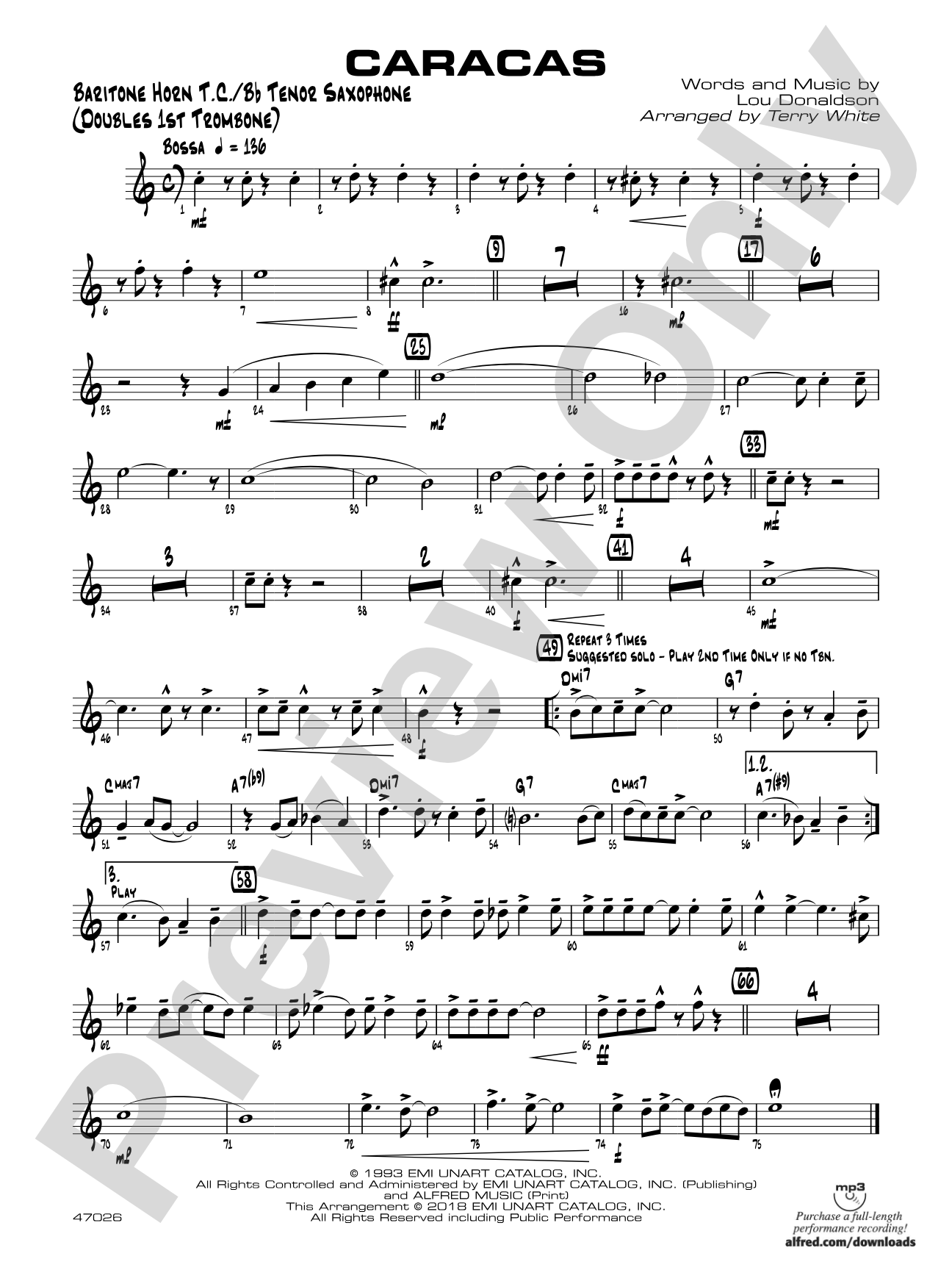
Caracas: Baritone T.C. Sheet Music Preview

Caracas: Baritone T.C.

Words and music by Lou Donaldson / arr. Terry White

Grade: 1 (Easy)

Item: 00-PC-0017865_BTC1

Digital Download
$3.00
Description
Caracas arranged by Terry White is a bossa that is just right for the young band. Played around 136 BPM, it has a catchy melody with great harmonies; easy brass ranges; and optional parts for flute, clarinet, and vibraphone. (2:43)

Don't just read it, hear it, play along with it, and watch your students grow with it. In MakeMusic Cloud, Caracas: Baritone T.C. comes alive with professional accompaniment, adjustable tempo, and built-in practice tools that turn solo practice into real progress.

Sample Audio
0:00
0:00
Sample Video
Additional Details
Series: First Year Charts for Jazz Ensemble
Publisher: Alfred Music
Page Count: 66
SKU: 00-PC-0017865_BTC1

More about this title

About the Composer: Lou Donaldson

Lou Donaldson is an alto saxophonist and composer whose career spanned bebop, hard bop, and soul jazz. Born in 1926, he became known for his soulful tone and accessible melodic writing that appealed to both serious jazz listeners and casual audiences. His compositions have become standards in jazz education, prized for their singable melodies and harmonic clarity.

Donaldson's work as both a player and composer made him a natural fit for the jazz curriculum. His tunes balance musical substance with approachability, making them ideal for students encountering jazz repertoire for the first time.

Why we love this

Caracas lands in that sweet spot where every section sounds good without burning technical chops. The bossa feel is instantly recognizable, the melody sits naturally in young brass ranges, and the optional parts mean your ensemble feels full whether you have twelve players or twenty. It's the kind of chart that builds confidence because students can play it accurately from day one and still discover musical nuance in rehearsals to come.

What to expect

Caracas has an unhurried coolness that feels sophisticated without being demanding. The bossa rhythm creates forward motion and sophistication, while the catchy melody invites you in immediately. It evokes a warm, slightly tropical atmosphere that sounds both stylistically accurate and genuinely fun to play.

Who it's for

Jazz ensembles reading at Grade 1 level, particularly groups in their first or second year of jazz study. The accessible voicings and straightforward form make it ideal for students who are still building jazz fundamentals while wanting to play genuine, publishable repertoire.

How to get the most out of it

  • Let the rhythm section set a relaxed, propulsive groove before bringing in the melody. The bossa pocket at 136 BPM works best when the drums and bass lock in first.
  • Shape the main melody with gentle dynamic contours rather than playing it straight. Donaldson's phrase lengths reward small rises and falls that give the tune breathing room.
  • Balance the optional parts carefully if you use them. The flute and vibraphone additions should color the harmony without overshadowing the core ensemble sound.
  • Listen to the original recording to absorb the idiomatic phrasing and articulation. Young ensembles who hear how the tune sits in real time play it with far more authenticity.

How to use it

Pair this with other accessible Latin or bossa pieces if you're building a jazz-focused concert, or use it as a statement piece in a mixed jazz and concert band program to show how well your young ensemble handles groove-based repertoire. Its three-minute length also makes it ideal as an opener that establishes energy without exhausting the group early.

Skills your students will build

  • Bossa nova comping and rhythmic feel
  • Navigating jazz chord changes and substitutions
  • Balancing blend in a jazz ensemble texture
  • Reading and executing jazz articulation and phrasing
  • Listening for and maintaining groove-based pocket

You May Also Like