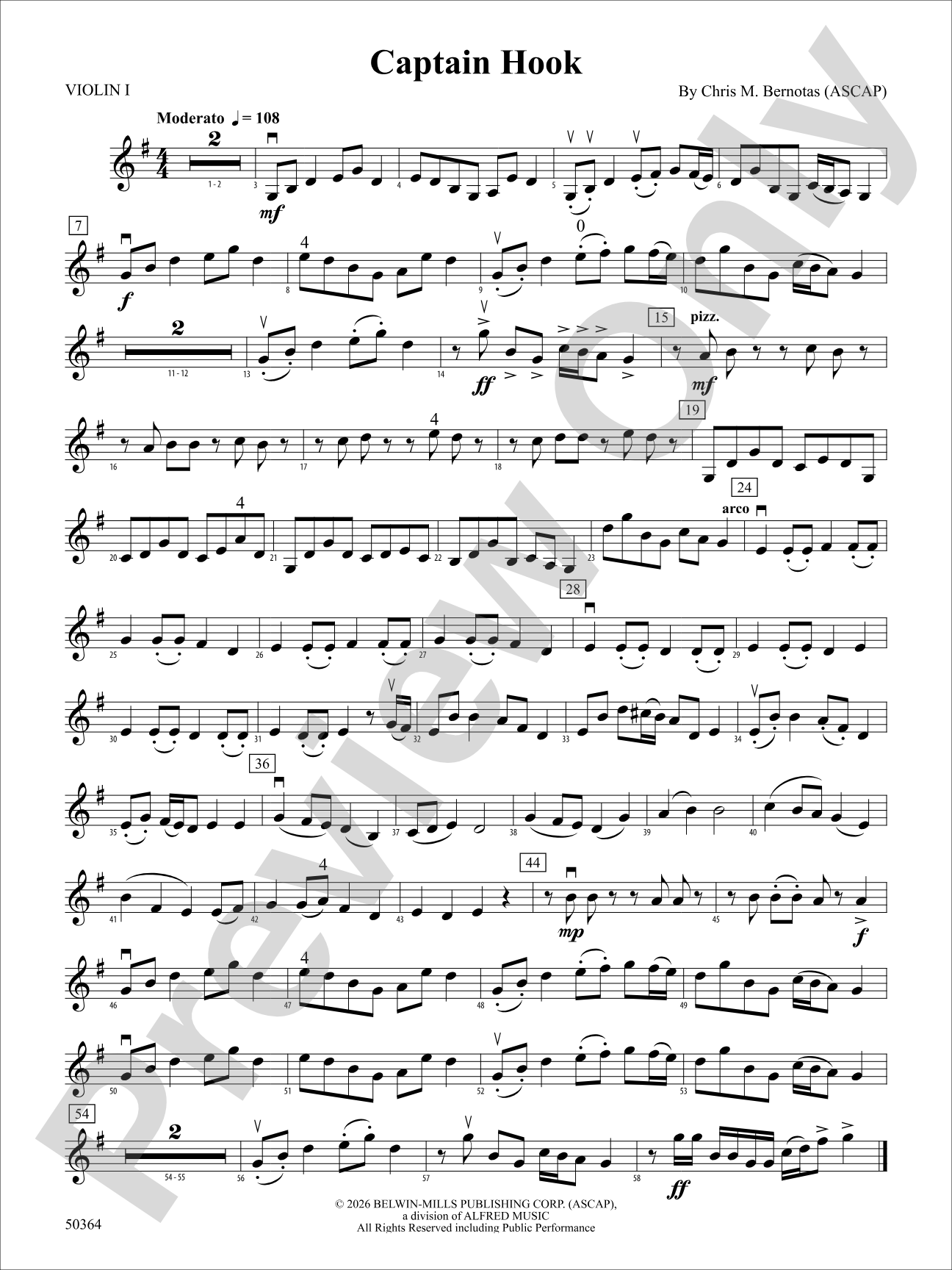
Captain Hook: 1st Violin Sheet Music Preview

Captain Hook: 1st Violin

By Chris M. Bernotas

Grade: 2

Item: 00-PC-0019707_VN1

Digital Download
$3.00
Description
Captain Hook, by Chris M. Bernotas, delivers the perfect blend of skill-building and swashbuckling fun! It is the ideal piece for reinforcing hooked bowing in a context your students will love. With its infectious nautical melody and driving rhythm, this piece is a certified ear worm that gives every section a chance to shine. All upper strings remain in 1st position, making it perfectly accessible for your orchestra. This piece isn't just a great teaching tool---it's a powerful concert piece your students will ask for by name.

Don't just read it, hear it, play along with it, and watch your students grow with it. In MakeMusic Cloud, Captain Hook: 1st Violin comes alive with professional accompaniment, adjustable tempo, and built-in practice tools that turn solo practice into real progress.

Sample Audio
0:00
0:00
Sample Video
Additional Details
Series: Sound Innovations Series for Strings
Publisher: Alfred Music
SKU: 00-PC-0019707_VN1

More about this title

About the Composer: Chris M. Bernotas

Chris M. Bernotas

Chris M. Bernotas brings over 25 years of music education experience to his work as a composer, conductor, and educator. As Director of Instrumental Publications at Alfred Music, he shapes pedagogical resources used by school programs worldwide, drawing on deep classroom insight to create music that teaches and inspires simultaneously.

Bernotas's compositions balance accessibility with genuine musicality, performed by ensembles ranging from beginning students to advanced groups. He regularly conducts honor orchestras and clinics, co-authored several foundational pedagogical texts including the Sound Innovations series, and remains an active presenter on conducting and composition. His commitment to supporting music teachers shows in every piece he writes: music that develops skills while keeping students engaged.

Why we love this

Bernotas understands exactly what Grade 2 orchestras need: a piece that targets a specific technical skill without sacrificing musical authenticity. The hooked bowing work embedded in a melody students actually want to play creates the ideal teaching scenario. Pair this with a theme your students will remember, and you have something they'll genuinely ask to perform again.

What to expect

Salty, rhythmic, and undeniably fun. The nautical melody sits solidly in the ear while infectious rhythms drive the piece forward, creating a swashbuckling energy that feels substantial despite its accessible skill level. This is music that makes students excited to come to orchestra.

Who it's for

Grade 2 string orchestras seeking engaging repertoire that builds hooked bowing technique in a genuine musical context. Directors will appreciate the accessibility (all upper strings in first position) alongside the concert-quality payoff that keeps students invested in rehearsal.

How to get the most out of it

  • Isolate the hooked bowing passages in sectional rehearsals before running the full piece; clarify the bow direction changes and ensure consistent articulation across all upper strings
  • Lock the rhythmic foundation by anchoring your lower strings to a steady, driving pulse; this piece thrives on rhythmic clarity, so establish that baseline early
  • Shape the nautical melody with intentional phrasing rather than playing it straight through; even at Grade 2, small dynamic swells and breath points make the ear worm actually stick

How to use it

Slot this into a concert celebrating technique in action, or pair it with other pieces that highlight different string skills your orchestra is building this year. The Grade 2 accessibility and contest/festival designation make it equally valuable for festival preparation or as a morale-boosting encore that doesn't require months of rehearsal to sound polished.

Skills your students will build

  • Hooked bowing technique (bow direction changes within slurred passages)
  • Melodic phrasing and dynamic shaping at Grade 2 level
  • Rhythmic precision in ensemble contexts
  • First position comfort across all upper string parts

You May Also Like