Capricorn Moon: Bassoon Sheet Music Preview

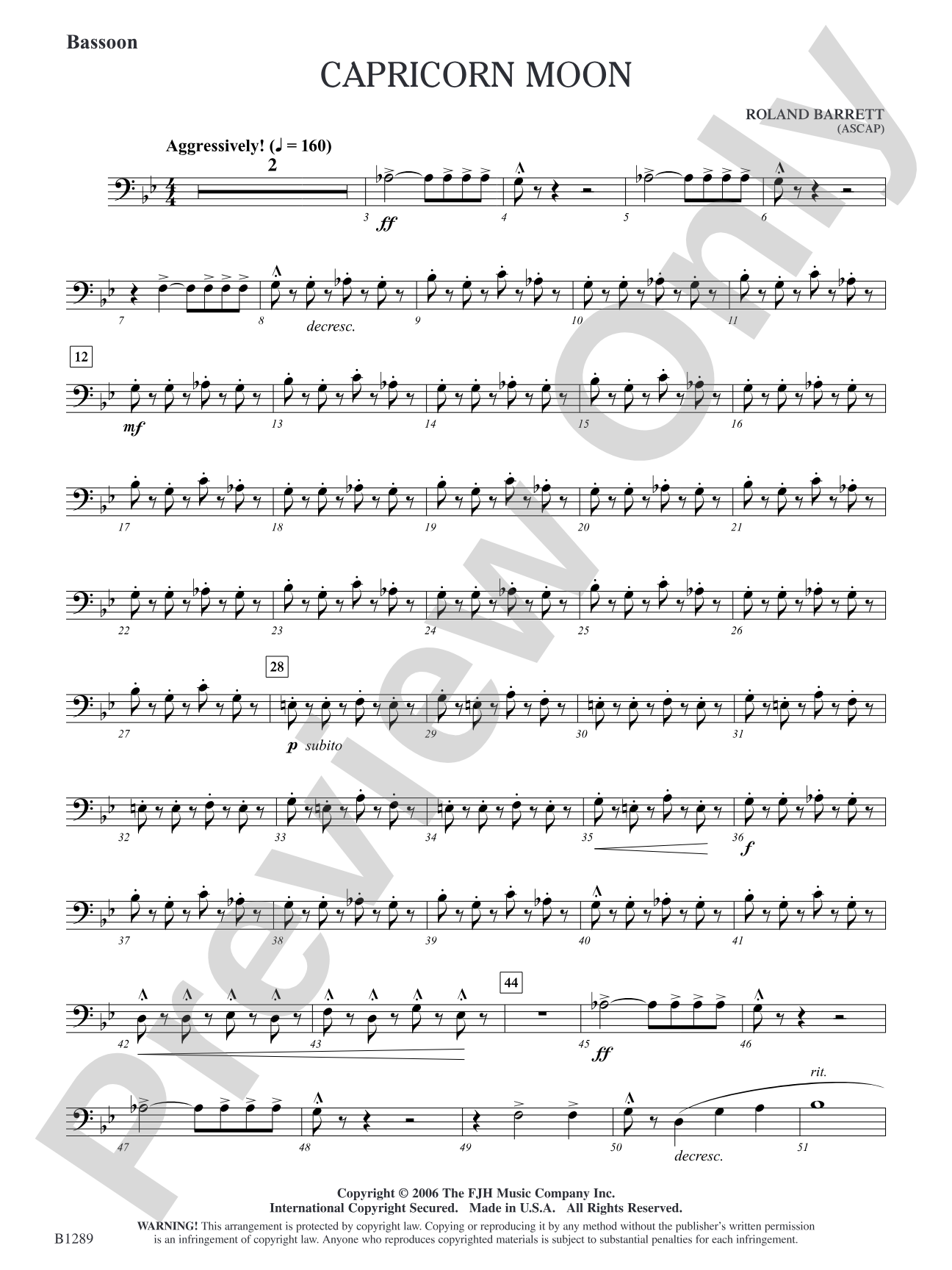
Capricorn Moon: Bassoon

By Roland Barrett

Grade: 2.5

Item: 98-PC-DB1289_B1

Digital Download
$7.00
Description
Opening with furious trills in the woodwinds and fanfares in the brass, this aggressive, driving overture is based on the constellation Capricornus. The sensitive lyrical section provides wonderful music without overextending your group technically. The ending section begins softly but with the energy of the opening. As motives continue to develop and build, the piece suddenly encompasses the full ensemble, bringing the work to a dramatic conclusion!

Capricorn Moon: Bassoon isn't in MakeMusic Cloud just yet...but it could be. Let us know you'd like to see it, and you'll help shape what comes next. In the meantime, start a free trial and dive into thousands of interactive titles your students can play along with today.

Sample Audio
0:00
0:00
Sample Video
Additional Details
Series: FJH Young Band
Publisher: The FJH Music Company, Inc.
SKU: 98-PC-DB1289_B1

More about this title

About the Composer: Roland Barrett

Roland Barrett

Roland Barrett has been composing and arranging for concert and marching ensembles for decades. His work in music theory and composition at the University of Oklahoma, where he joined the faculty in 2001, reflects his deep commitment to 20th century compositional practice. Barrett's catalog exceeds two hundred published pieces and arrangements, performed by ensembles ranging from All-State Honor Bands to the Dallas Wind Symphony, with recognition on NPR and at major national conventions.

Beyond the concert hall, Barrett serves as the musical arranger for Oklahoma's Pride of Oklahoma marching band. His contributions to the field have earned him multiple ASCAP Plus awards and the Michael Hennagin memorial scholarship in composition.

Why we love this

Capricorn Moon shows sophisticated compositional economy. Barrett gives you contrast without complexity—the aggressive opening and the introspective middle section each serve a clear expressive purpose, and neither demands technical virtuosity your ensemble can't deliver. The dramatic arc works as a complete concert statement, making it a natural fit for festivals and competitions where you want your band to sound both polished and ambitious.

What to expect

This overture grabs attention immediately with percussive woodwind energy and bright brass calls before drawing inward into quiet reflection. The journey feels purposeful rather than sectional, building gradually from contemplation back toward the assertive character that opened the piece, culminating in full ensemble brightness.

Who it's for

Concert bands at the intermediate level will find the Grade 2.5 difficulty accessible without feeling patronizing. Repertoire managers looking for a substantial single-movement overture suitable for both contest adjudication and concert performance will value its efficient use of rehearsal time and clear dramatic structure.

How to get the most out of it

  • Shape the opening woodwind trills as deliberate attacks rather than shimmering ornament; this ensemble aggression sets the tone for the fanfares that follow.
  • Let the lyrical section breathe by keeping pulse steady but allowing the ensemble to settle into a more legato, supported sound; this contrast strengthens the overall architecture.
  • In the final section, resist the temptation to rush as dynamics swell. The building energy should come from textural accumulation and harmonic development, not tempo creep.
  • Balance the brass fanfares against woodwind trills in the opening; both layers need clarity or the intended fierceness collapses into mud.

How to use it

Program this as an opening number to set an energetic tone for a concert, or use it to open a contest entry where you want judges to hear command and musicality right away. It also pairs effectively with a slower second piece, since its dramatic gestures and lyrical passage give audiences a complete emotional arc without overshadowing subsequent selections.

Skills your students will build

  • Balancing multiple articulation styles within the same texture (trills against sustained fanfares)
  • Shaping long lyrical phrases with appropriate support and direction
  • Managing dynamic transitions across full ensemble without sacrificing rhythmic clarity
  • Responding to subtle motivic development in the closing section

You May Also Like