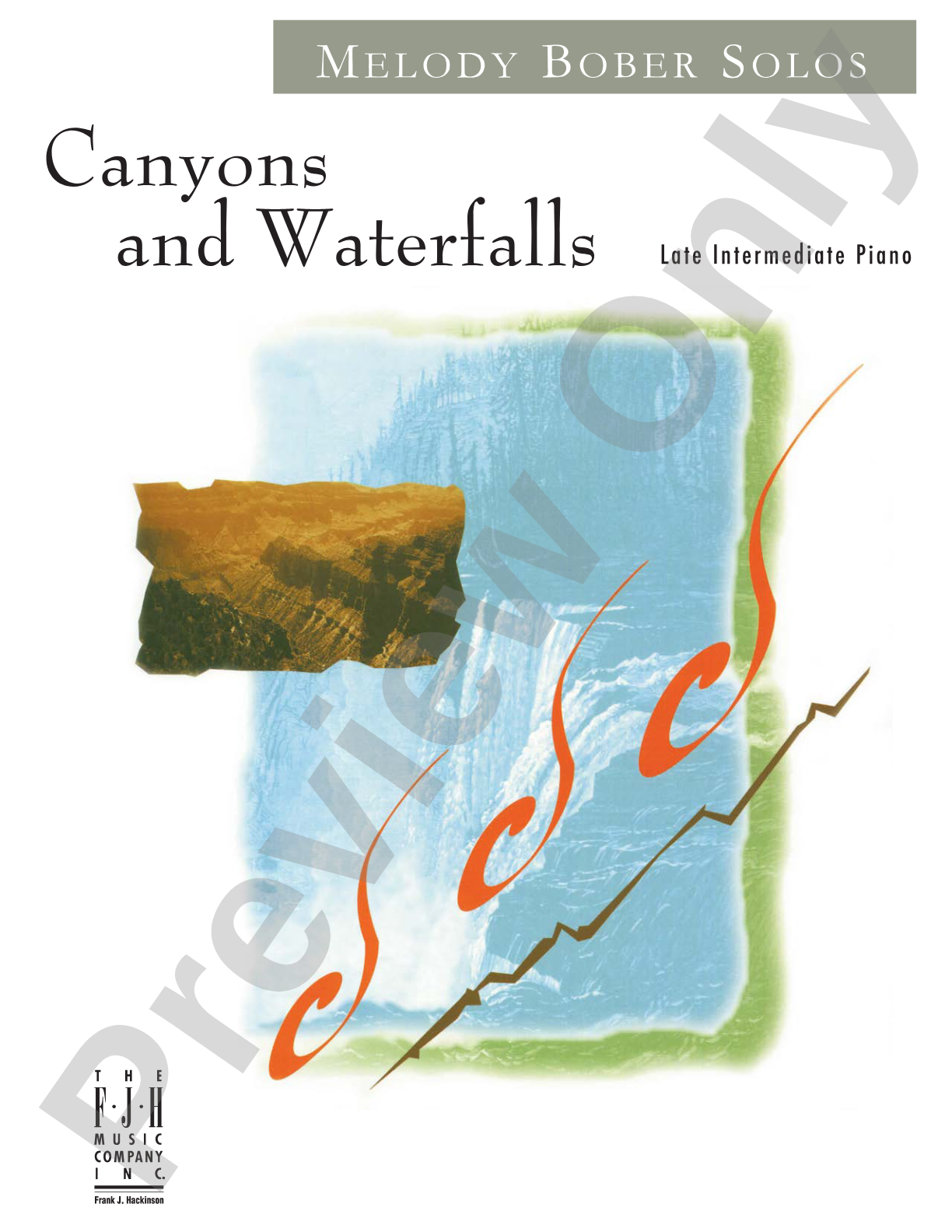
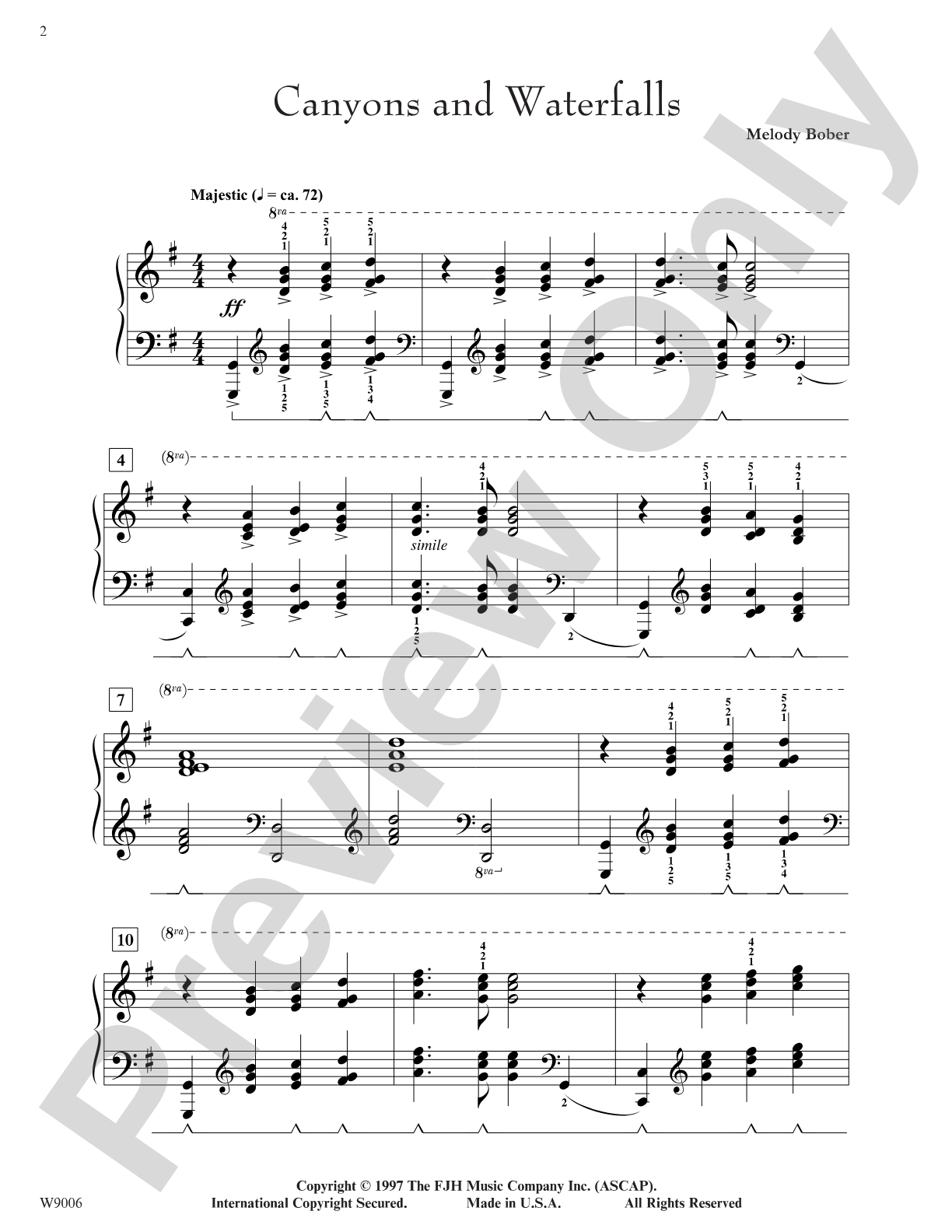
The variety of musical textures in this recital piece - booming thick chords, lyrical melody, splashing arpeggiated figures, and resonant octaves - is sure to make it a classic.
Discover MakeMusic Cloud: thousands of interactive titles your students can play along with today.
Melody Bober holds degrees in music education from the University of Illinois at Champaign-Urbana and in piano performance from Minnesota State University, Moorhead. Her teaching spans two decades in public schools, university instruction, church music direction, and a thriving private piano studio in Minnesota. She studies with renowned pedagogues including Joel Shapiro and Andrew Froelich for piano, Mary Hoffman for music education, and Tony Caramia for jazz.
Bober's reputation as both a clinician and composer draws her to conventions and workshops throughout North America. Her teaching background informs her compositional voice: she writes pieces that deepen students' musicianship while igniting genuine engagement with the instrument. Beyond her studio and church work as pianist and accompanist, Bober continues to create repertoire grounded in what students actually need to grow.
Why we love this
Bober's ear for texture transforms what could be a straightforward recital piece into something genuinely memorable. The contrast between thick, resonant chords and delicate arpeggiated figuration keeps listeners engaged, while the writing remains accessible enough that students won't feel overwhelmed by technical demands. You'll find this piece lands well on recital programs because it sounds far more substantial than its difficulty level suggests.
What to expect
The piece evokes the grandeur and movement of natural landscapes through sound. You'll experience sweeping gestures, moments of quiet reflection, and passages where the piano becomes almost orchestral in scope, capturing both the power of falling water and the stillness of canyon walls.
Who it's for
Pianists at the intermediate level will find satisfying technical and musical challenges here without facing unnecessary barriers. This piece works well for students who enjoy descriptive, programmatic music and respond to imagery. Recitalists preparing a solo performance will appreciate repertoire that sounds polished and purposeful.
How to get the most out of it
Shape the booming chords with intention; resist playing them as mere blocks of sound. Think of them as anchors that ground the piece's narrative.
Let the lyrical melody sing through, especially when it emerges from the textural variety. A clear melodic line will give listeners an emotional throughline to follow.
Distinguish between the splashing arpeggios and the octaves by varying your touch. Arpeggios can shimmer lightly while octaves remain grounded and powerful.
Use the sustain pedal strategically to blend textures without muddying them. Listen carefully as harmonies change to know when to release and refresh.
How to use it
Place this as a showcase piece in a student recital where it can anchor a program of lighter fare around it. Its evocative title and varied textures also make it effective as an opening or closing number when you want to set a strong tonal mood for the entire event.
Skills your students will build
Controlling dynamic contrast between thick chords and delicate figuration
Pedal management across changing harmonies
Sustaining melodic line while navigating complex texture
Creating resonance and projection in octave passages
Voicing and balancing multi-textural writing
You May Also Like
Scan to Complete Your Purchase
Use your phone's camera to scan the code below
You'll log in on your phone and the order will be added to your account