Cantique de Jean Racine: String Bass Sheet Music Preview

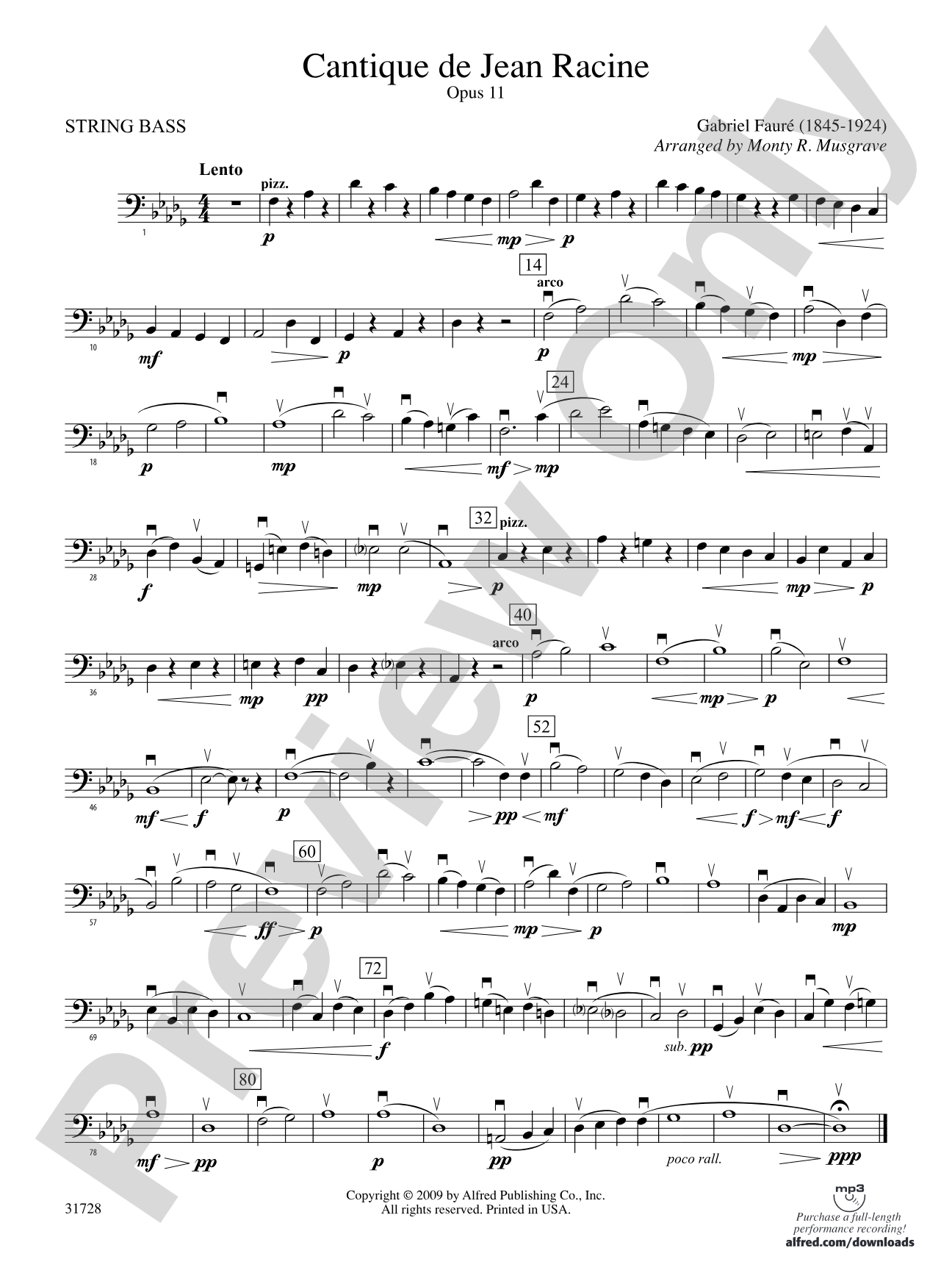
Cantique de Jean Racine: String Bass

By Gabriel Fauré / arr. Monty R. Musgrave

Grade: 4 (Medium Difficult)

Item: 00-PC-0001817_SB

Digital Download
$3.00
Description
Cantique de Jean Racine was composed by Fauré in 1865. This magnificent setting for winds retains all the glory and color of the full chorus and orchestra version, complete with harp and string bass.

Don't just read it, hear it, play along with it, and watch your students grow with it. In MakeMusic Cloud, Cantique de Jean Racine: String Bass comes alive with professional accompaniment, adjustable tempo, and built-in practice tools that turn solo practice into real progress.

Sample Audio
0:00
0:00
Sample Video
Additional Details
Series: Alfred Concert Band
Publisher: Alfred Music
Page Count: 160
SKU: 00-PC-0001817_SB

More about this title

About the Composer: Gabriel Fauré

Gabriel Fauré (1845-1924) stands as one of France's most refined composers, known for his gift for intimate melodic expression and subtle harmonic innovation. His works span genres from chamber music and songs to large choral works, but he maintained a consistent artistic vision: elegance without ostentation, emotional depth without excess. Fauré's influence on 20th-century music proved immense, shaping how composers thought about harmony, form, and the expressive possibilities of restraint.

Why we love this

Musgrave's arrangement captures the luminous quality of Fauré's original while giving concert band the full harmonic palette and architectural scope of this sacred masterpiece. Conductors consistently report that students respond to the inherent elegance and clarity of the writing; there's no filler, only essential voices working in service of a single melodic line. This sits perfectly at Grade 4, challenging without requiring virtuoso technique, making it ideal for ensembles seeking repertoire that sounds mature and sounds accomplished.

What to expect

The Cantique unfolds with quiet reverence, each phrase shaped like a prayer spoken rather than sung. Luminous harmonies shift beneath a soaring melodic line, creating an atmosphere of stillness and grace that feels timeless yet distinctly French in its refinement.

Who it's for

This arrangement serves conductors leading Grade 4 concert bands who want substantive sacred repertoire without excessive technical demands. Ensembles preparing for festival or contest programming will find a piece that earns genuine respect from adjudicators while remaining achievable in a typical rehearsal schedule.

How to get the most out of it

  • Shape the primary melody with unrelenting focus on the long, singing line; secondary voices should recede into the harmonic fabric rather than compete for attention. Test your blend by listening from the audience area to ensure the tune projects without strain.
  • Balance the harp and string bass parts carefully during rehearsal. These colors are essential to Fauré's original conception, and even light touches register when the band sits back and listens for them.
  • Approach dynamics as gentle swells rather than sudden shifts. The piece's spiritual character emerges through subtle gradations of intensity, not dramatic contrasts.
  • Establish a warm, legato articulation as your ensemble baseline. Wind players should imagine singing the lines rather than playing them, which naturally creates the sustained quality this work demands.

How to use it

This work opens concert programs beautifully, establishing an elevated tone and drawing the audience into focused listening. It pairs naturally with other Romantic or early 20th-century wind works, and its spiritual character makes it an excellent choice for concerts featuring sacred or contemplative themes.

Skills your students will build

  • Balancing primary and secondary voices while maintaining harmonic cohesion
  • Shaping long melodic lines with subtle dynamic control
  • Sustaining legato articulation across phrase boundaries
  • Listening for and supporting orchestral colors (harp, bass) within a wind ensemble
  • Reading and interpreting impressionistic harmonic language

You May Also Like