

Canticum Novum: 3-Part Mixed Choral Octavo
Words and music by Andy Beck
Item: 00-PO-0006006
$2.20
Minimum order quantity: 20 copies
Pickup currently not available
Description
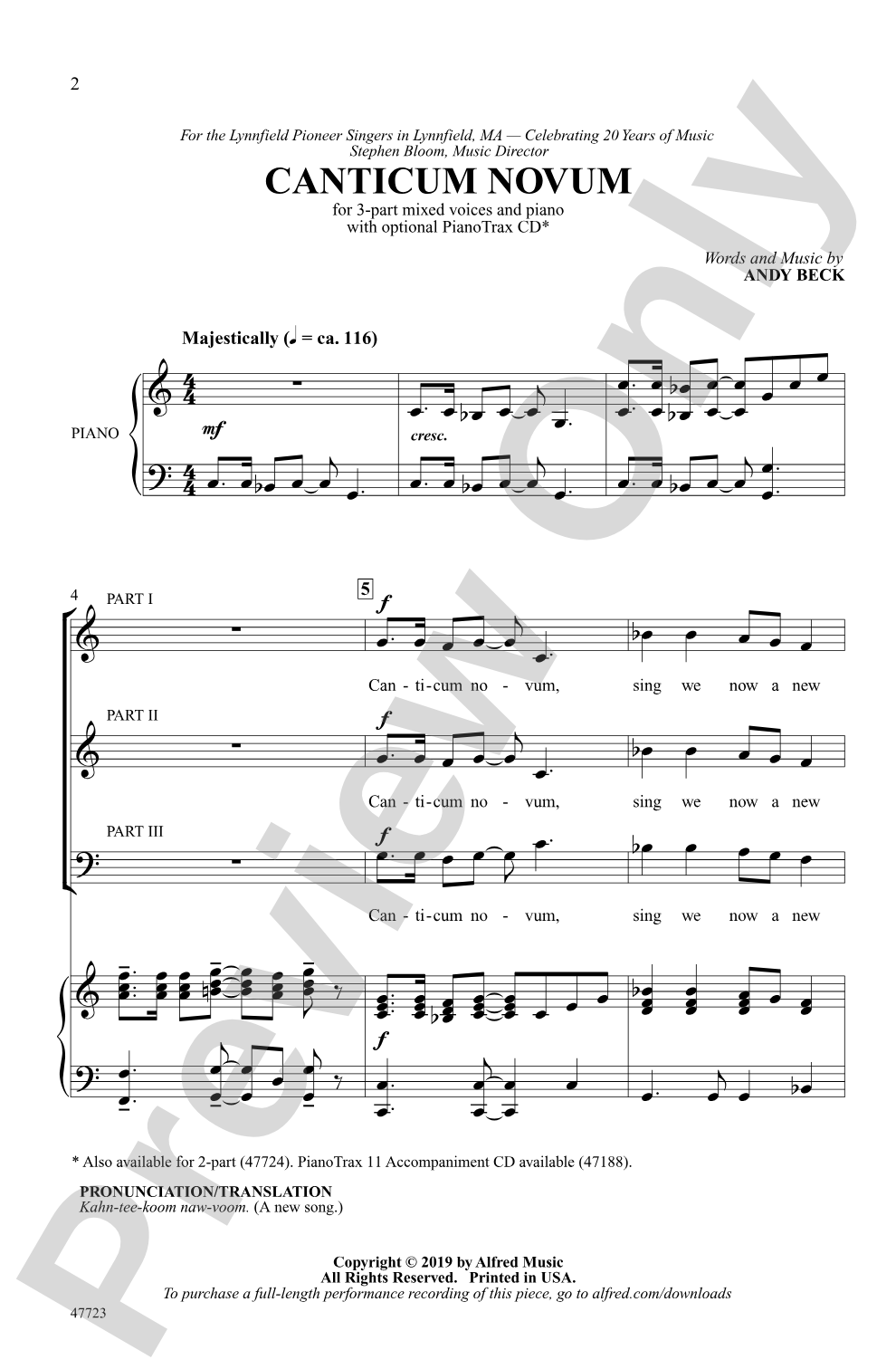
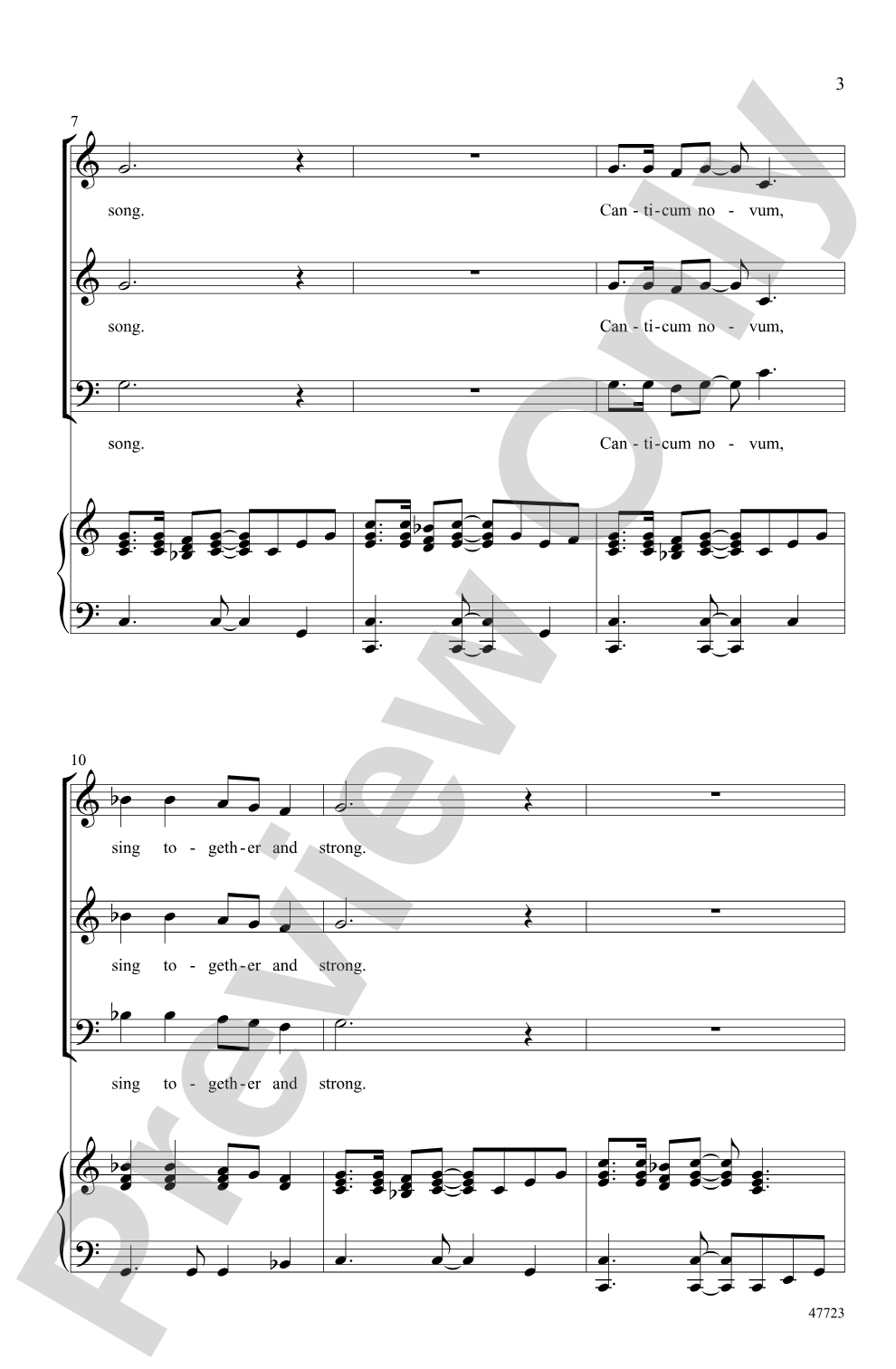
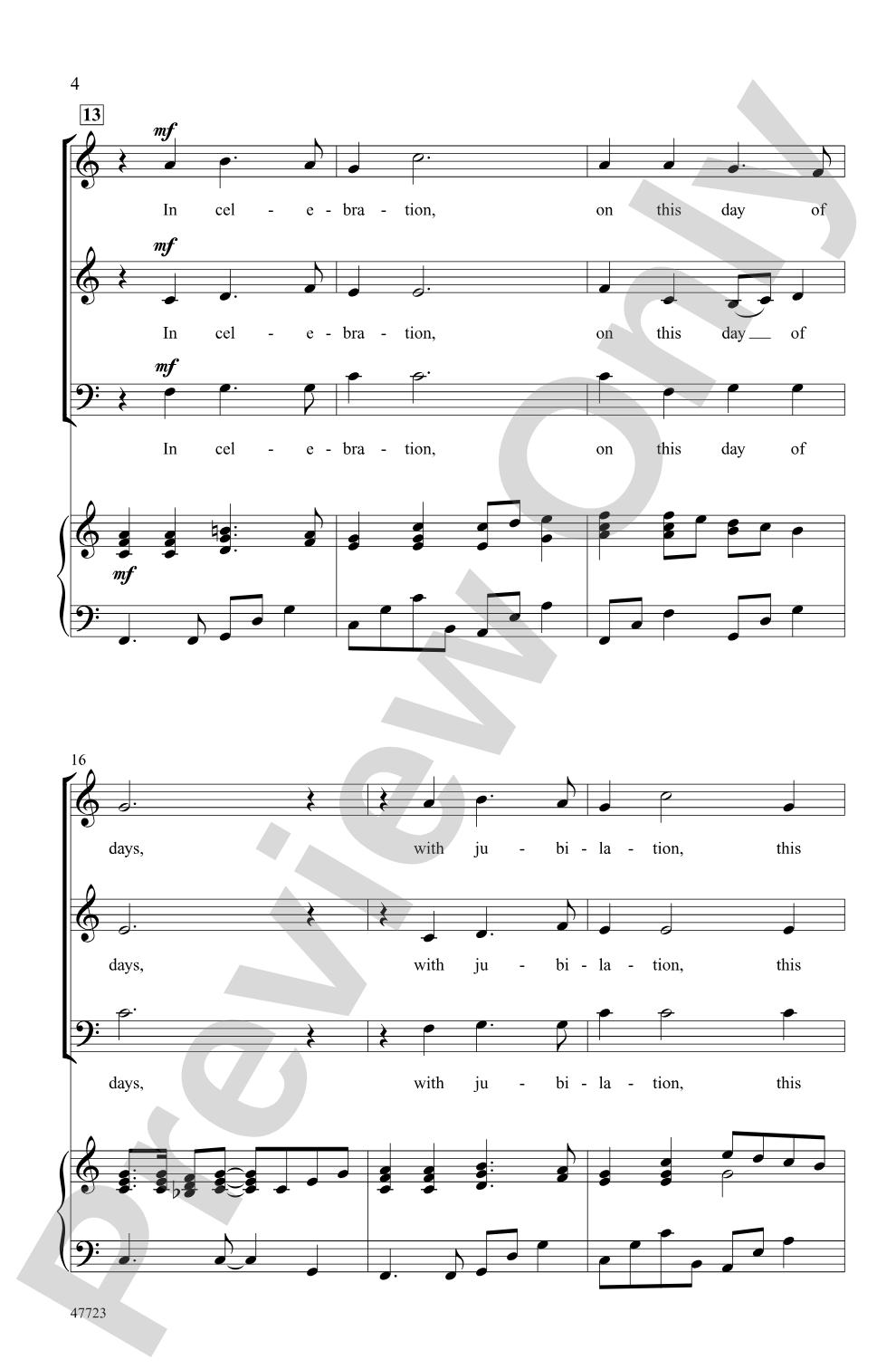
Designed for impact in performance without stress in rehearsal, this strong concert/contest opener (or closer) features an accessible Latin text that alternates with English lyrics. A bold unison, sung in sweet-spot vocal ranges, leads to an antiphonal treatment of the marcato theme. A softer section, in three-part counterpoint, provides contrast before returning to the original melody. This celebratory piece works on any program, at any time of year, and provides wonderful lessons for developing choral singers.


Canticum Novum: 3-Part Mixed Choral Octavo isn't in MakeMusic Cloud just yet...but it could be. Let us know you'd like to see it, and you'll help shape what comes next. In the meantime, start a free trial and dive into thousands of interactive titles your students can play along with today.
Request This Title
Tell us you want it.
Start Your Free Trial
Explore everything that's ready to play right now.
Sample Audio
1
Audio File
--:--
0:00
0:00
Sample Video
Additional Details
Series:
Alfred Choral Designs
Publisher:
Alfred Music
Page Count:
16
SKU:
00-PO-0006006
More about this title
About the Composer: Andy Beck

Andy Beck leads the choral publications division at Alfred Music, where he has shaped the landscape of accessible choral writing for decades. His catalog includes more than 450 published works spanning octavos, musicals, and foundational vocal resources. Beck's pedagogical materials, including Sing at First Sight and Vocalize! 45 Vocal Warm-Ups That Teach Technique, have become staples in choirs across North America and beyond.
As a tenor, conductor, and adjudicator, Beck brings practical classroom and concert hall experience to every piece he writes. He has served as guest conductor for state honor choirs and all-state ensembles, and his arrangements and compositions are performed regularly by student and professional singers worldwide. Beck holds degrees in music education from Ithaca College and Northwest Missouri State University, and his work at Alfred reflects his steadfast commitment to choral literacy and artistry.
Why we love this
This piece proves that rehearsal efficiency and concert impact are not mutually exclusive. The unison opening sits comfortably in young singers' ranges, the antiphonal theme locks in quickly, and the three-part counterpoint section teaches voice independence without demanding complicated rhythms. Beck has written a work that sounds polished in performance while building real choral skills in the rehearsal room.
What to expect
Celebratory and bright, with a liturgical dignity that comes from the Latin text and unison opening. The piece shifts from bold declaration to intricate weaving as the three-part section unfolds, creating a sense of both power and refinement that feels satisfying to singers and audiences alike.
Who it's for
Developing choral programs and festival-bound ensembles at the middle school and early high school level will find this accessible and musically rewarding. Directors seeking a piece that sounds mature and accomplished without requiring extended rehearsal time will appreciate Beck's craftsmanship.
How to get the most out of it
- Bring out the marcato articulation in the antiphonal section; clean staccato attacks give the theme its momentum and make the contrast with the softer middle section more dramatic.
- Shape the unison melody with subtle dynamic breathing to create forward motion without forcing the tone or pushing the singers out of their sweet spot.
- Use the three-part counterpoint as an opportunity to develop ear independence; have each voice part sing alone during one rehearsal cycle so singers hear their individual line before blending.
How to use it
Position this as a concert opener to establish energy and engagement, or close a program with it to leave audiences with a sense of accomplishment and joy. The bilingual text and versatile emotional arc make it suitable for sacred or secular contexts, fall festival competitions, or spring concerts.
Skills your students will build
- Unison singing with sustained tone quality and control
- Marcato articulation and rhythmic precision in antiphonal passages
- Three-part voice independence and harmonic balance
- Latin pronunciation and text expression
- Dynamic contrast and phrasing across sectional changes