Canticulum: E-flat Alto Saxophone Sheet Music Preview

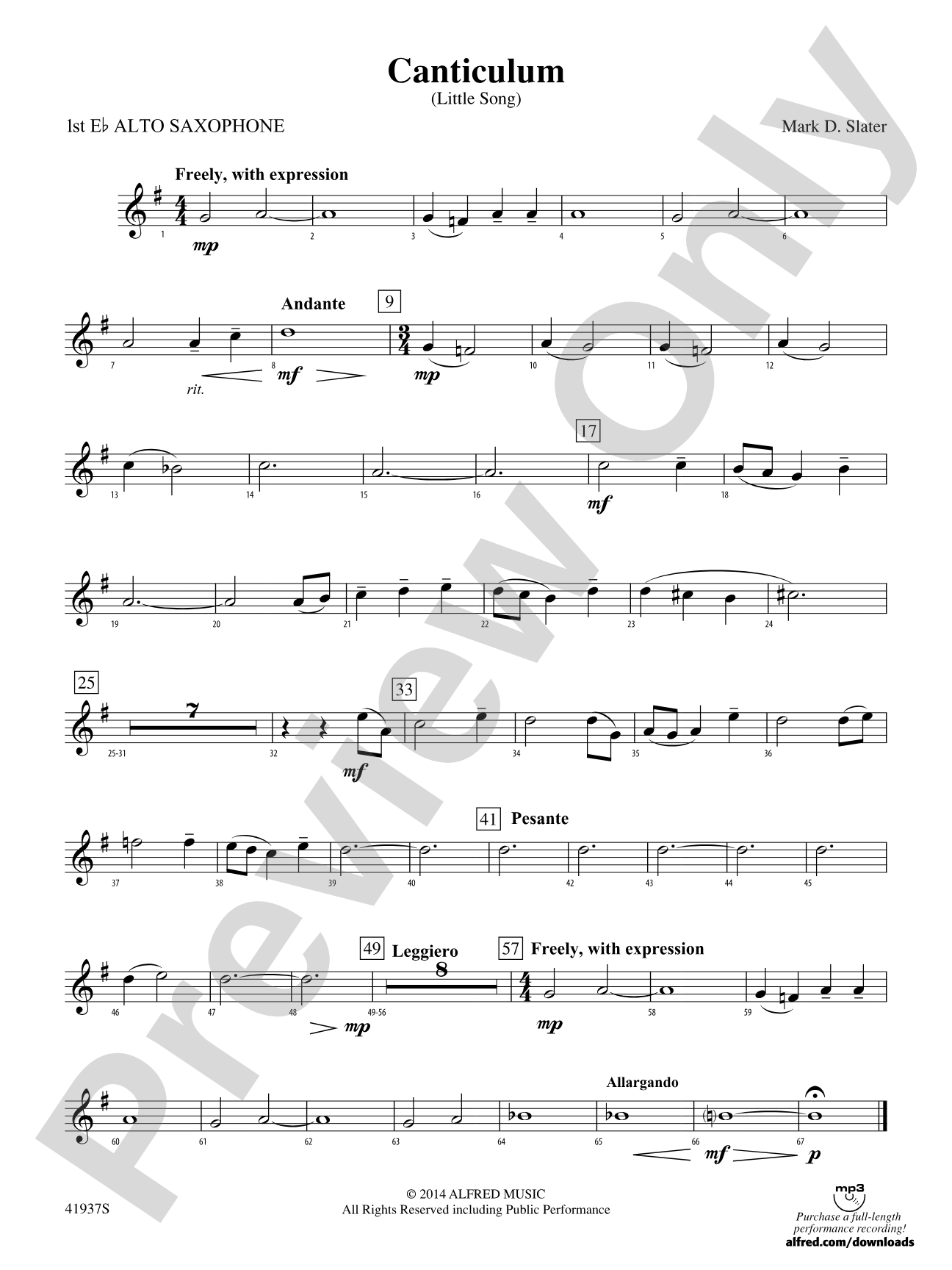
Canticulum: E-flat Alto Saxophone

Little Song

By Mark D. Slater

Grade: 1 (Very Easy)

Item: 00-PC-0016419_AX1

Digital Download
$3.00
Description
"Canticulum" (Latin for "Little Song") is a lovely and well-crafted lyrical piece for young bands. Numerous opportunities present themselves for teaching musicianship through phrase shaping and rubato playing, as well as tension and release points. A beautiful addition to any concert for first- or second-year bands. (3:10)

Don't just read it, hear it, play along with it, and watch your students grow with it. In MakeMusic Cloud, Canticulum: E-flat Alto Saxophone comes alive with professional accompaniment, adjustable tempo, and built-in practice tools that turn solo practice into real progress.

Sample Audio
0:00
0:00
Sample Video
Additional Details
Series: Alfred Debut Series
Publisher: Alfred Music
Page Count: 124
SKU: 00-PC-0016419_AX1

More about this title

Why we love this

Slater understands what young bands need: music that sounds mature without overwhelming developing musicians. The rubato and phrasing work here teaches genuine musicianship rather than just note-reading, and conductors will find genuine pedagogical moments built into the architecture rather than tacked on as an afterthought.

What to expect

Unhurried and song-like, with the gentle introspection suggested by its Latin title. The piece breathes rather than rushes, inviting listeners into a moment of quiet beauty while giving young musicians room to discover what lyrical playing actually means.

Who it's for

First and second year concert bands ready to explore lyrical playing without tackling advanced harmonic or rhythmic complexity. Conductors looking to program a piece that sounds polished on a mixed concert will find this appropriate for both audience and ensemble.

How to get the most out of it

  • Shape each phrase as a small arc rather than pushing through to the bar line; young players often need permission to breathe and shape rather than sustain.
  • Highlight the tension and release points in rehearsal explicitly; mark where the line wants to grow and where it should recede, then have students identify what harmony or counterpoint creates that effect.
  • Approach the rubato marking with restraint at first; introduce subtle tempo flexibility only after the piece sits in the ensemble's body, not from note one.
  • Balance the accompaniment voices carefully so the lyrical line floats above rather than fights for attention.

How to use it

Open a concert with this to set a reflective tone, or pair it with more energetic selections to showcase the full range of your band's artistry. It works equally well as a contest piece where musicianship and control matter as much as technical display.

Skills your students will build

  • Controlling dynamic and tonal shaping within a sustained lyrical line
  • Responding to conducting gestures that indicate rubato and phrase breathing
  • Balancing within a section to support rather than compete with a melody
  • Understanding tension and release as compositional tools
  • Playing with musical intention rather than mechanical accuracy

You May Also Like