
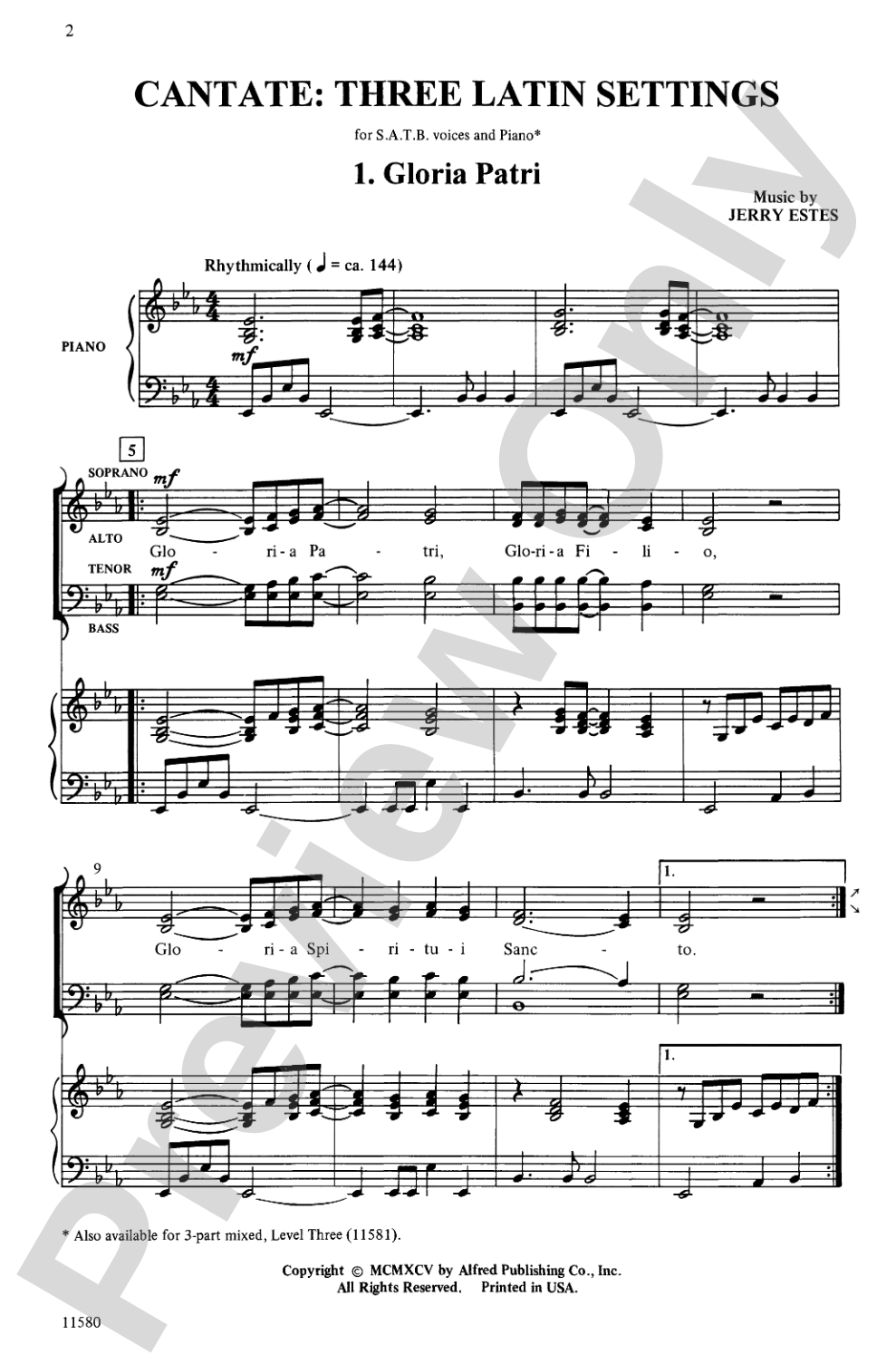
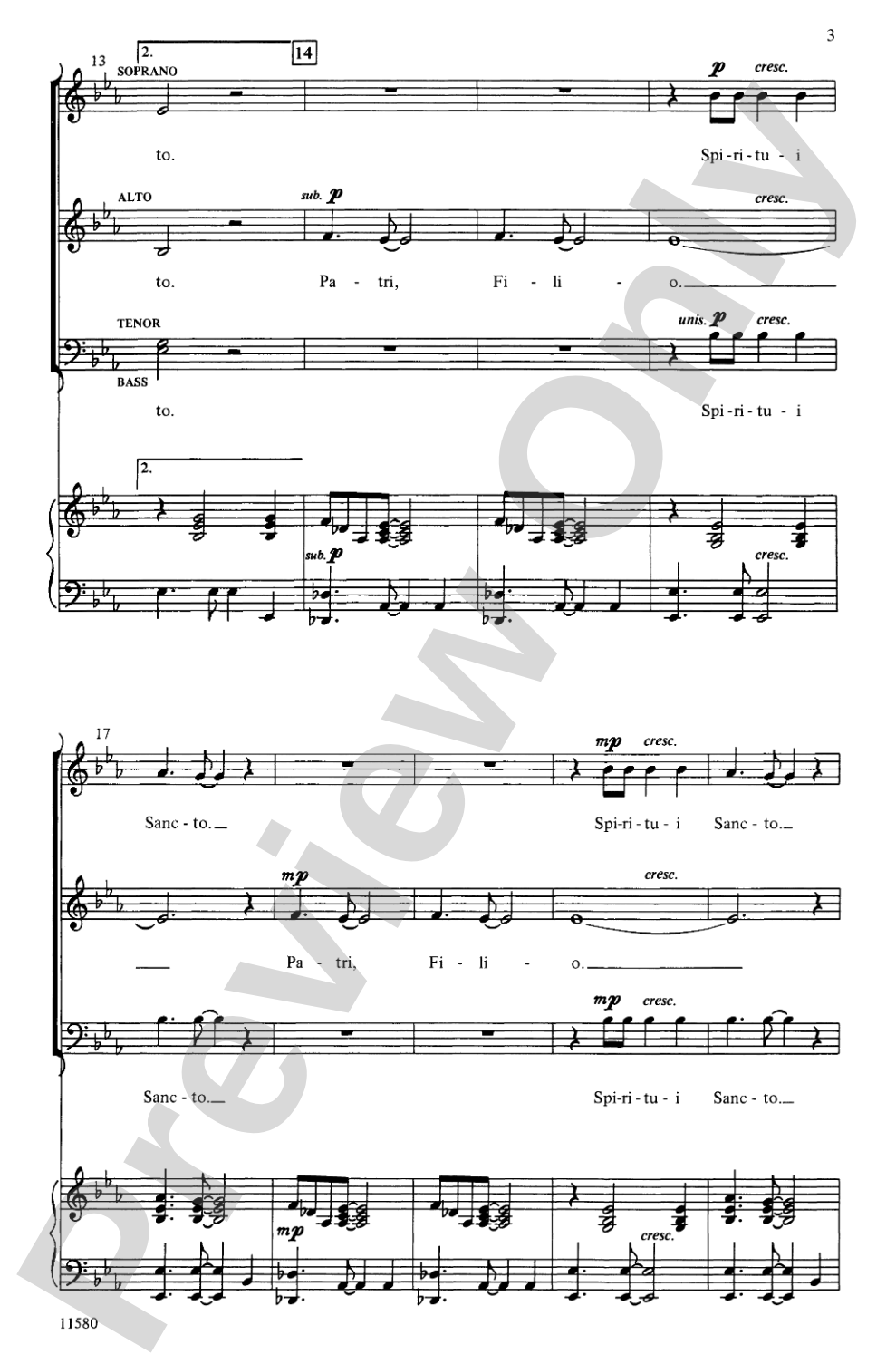
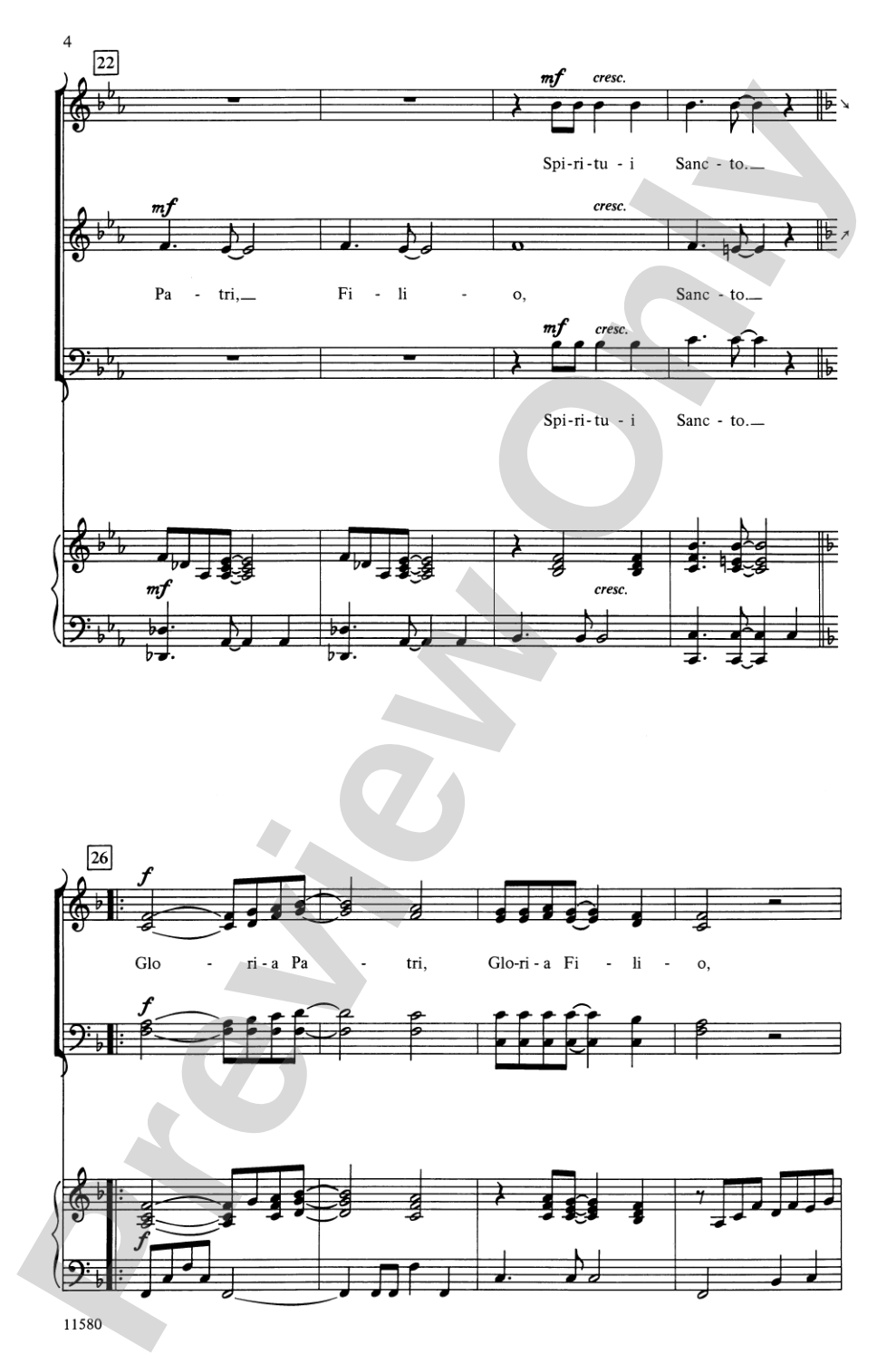

Cantate: Three Latin Settings: SATB Choral Octavo
1. Gloria Patri / 2. Ubi Caritas et Amor / 3. Cantate Domino
Music by Jerry Estes
Item: 00-PO-0003865
$2.95
Minimum order quantity: 20 copies
Pickup currently not available
Description
A dynamic trio of familiar Latin texts composed expressly for school choirs by Jerry Estes. It's intended to be performed as a group, but each piece can be performed alone, so it's an economical choice for choirs on a tight budget. The 3-Part Mixed edition has a limited men's range and is ideal for middle school and junior high choirs.


Cantate: Three Latin Settings: SATB Choral Octavo isn't in MakeMusic Cloud just yet...but it could be. Let us know you'd like to see it, and you'll help shape what comes next. In the meantime, start a free trial and dive into thousands of interactive titles your students can play along with today.
Request This Title
Tell us you want it.
Start Your Free Trial
Explore everything that's ready to play right now.
Sample Audio
No sample audio found.
Sample Video
No sample videos found.
Additional Details
Series:
Alfred Archive Edition: Alfred Choral Designs
Publisher:
Alfred Music
Page Count:
16
SKU:
00-PO-0003865
More about this title
About the Composer: Jerry Estes

Jerry Estes brings classroom experience directly into his compositional work. A vocal music educator at Wydown Middle School, where he teaches grades 6-8, Estes holds a B.M.E. in vocal emphasis from Southwest Baptist University and an M.M. from Southern Illinois University. His engagement with MENC and ASCAP reflects his commitment to the choral music teaching community.
Estes understands the real constraints and possibilities of school choirs. His settings of Latin texts are written with middle school voices in mind, balancing musical substance with practical accessibility. This combination of pedagogical insight and compositional skill makes his work particularly valuable for directors seeking repertoire that challenges students without overwhelming them.
Why we love this
Estes has crafted three substantial Latin works that work equally well as a thematic set or as individual pieces, giving you programming flexibility without forcing you to purchase three separate octavos. The writing is direct and idiomatic for school voices; it sounds composed for your singers, not adapted for them. These pieces hold their own at festival and contest while remaining genuinely singable for middle school and junior high ranges.
What to expect
These settings strike a balance between reverence and accessibility. The Latin texts carry liturgical weight, yet Estes's approach is never archaic or overly elaborate. The result is music that feels substantive and purposeful without demanding virtuosity, allowing singers to experience the dignity of Latin sacred music in their own voices.
Who it's for
Middle school and junior high choirs with SATB or 3-Part Mixed voicing, especially those preparing for festival or contest. Directors seeking economical Latin repertoire that allows singers to engage with sacred texts at an appropriate developmental level will find these settings both musically and practically valuable.
How to get the most out of it
- Work the text rhythmically before adding pitch. Latin pronunciation and text clarity matter in sacred settings, so isolate challenging consonant clusters and vowel sounds in rhythm first.
- Balance the harmonic movement by listening across parts rather than within them. Estes's writing often features inner-part independence that can muddy if any voice dominates.
- Approach dynamics as shaping tools for text meaning rather than surface effects. Each piece responds well to dynamic choices that follow the Latin phrase rather than arbitrary swells.
- Secure the ensemble's tuning on sustained vowels before layering complexity. These pieces reward careful vowel unification on longer notes.
How to use it
Program these either as a unified thematic concert block exploring Latin sacred texts, or select individual pieces to anchor different concerts throughout the season. Their contest and festival appropriateness makes them excellent choices for competitive programming, while their musical integrity also serves well in spring concerts or school liturgical events.
Skills your students will build
- Latin diction and text clarity in sacred music
- Part independence and inner-voice listening
- Reading SATB choral score with harmonic awareness
- Sustaining vowel consistency across the choir
- Dynamic phrasing that follows textual meaning rather than arbitrary markings