
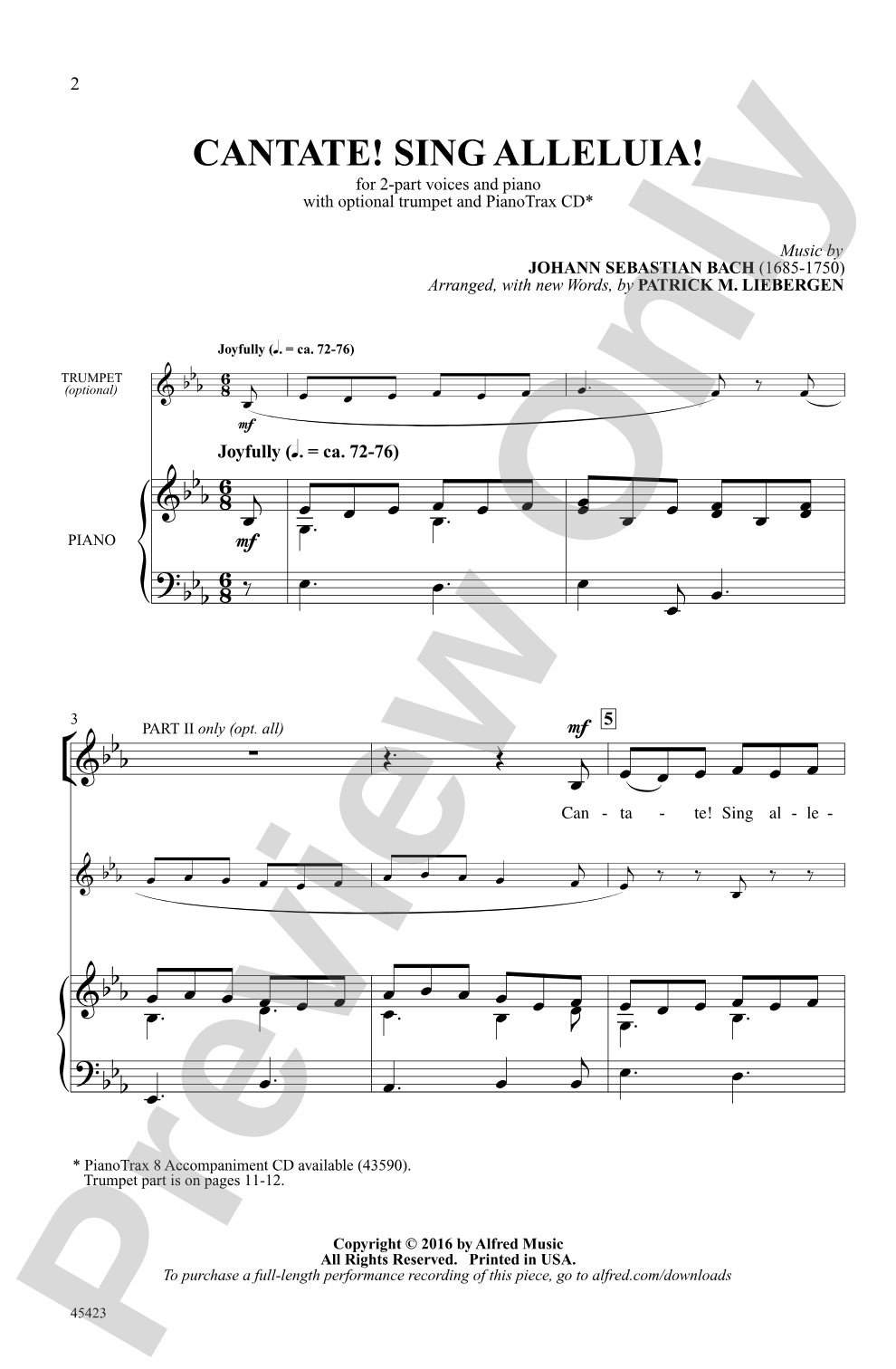

Cantate! Sing Alleluia!: 2-Part Choral Octavo
Music by Johann Sebastian Bach / arr., with new words, by Patrick M. Liebergen
Item: 00-PO-0003665
$1.90
Minimum order quantity: 20 copies
Pickup currently not available
Description
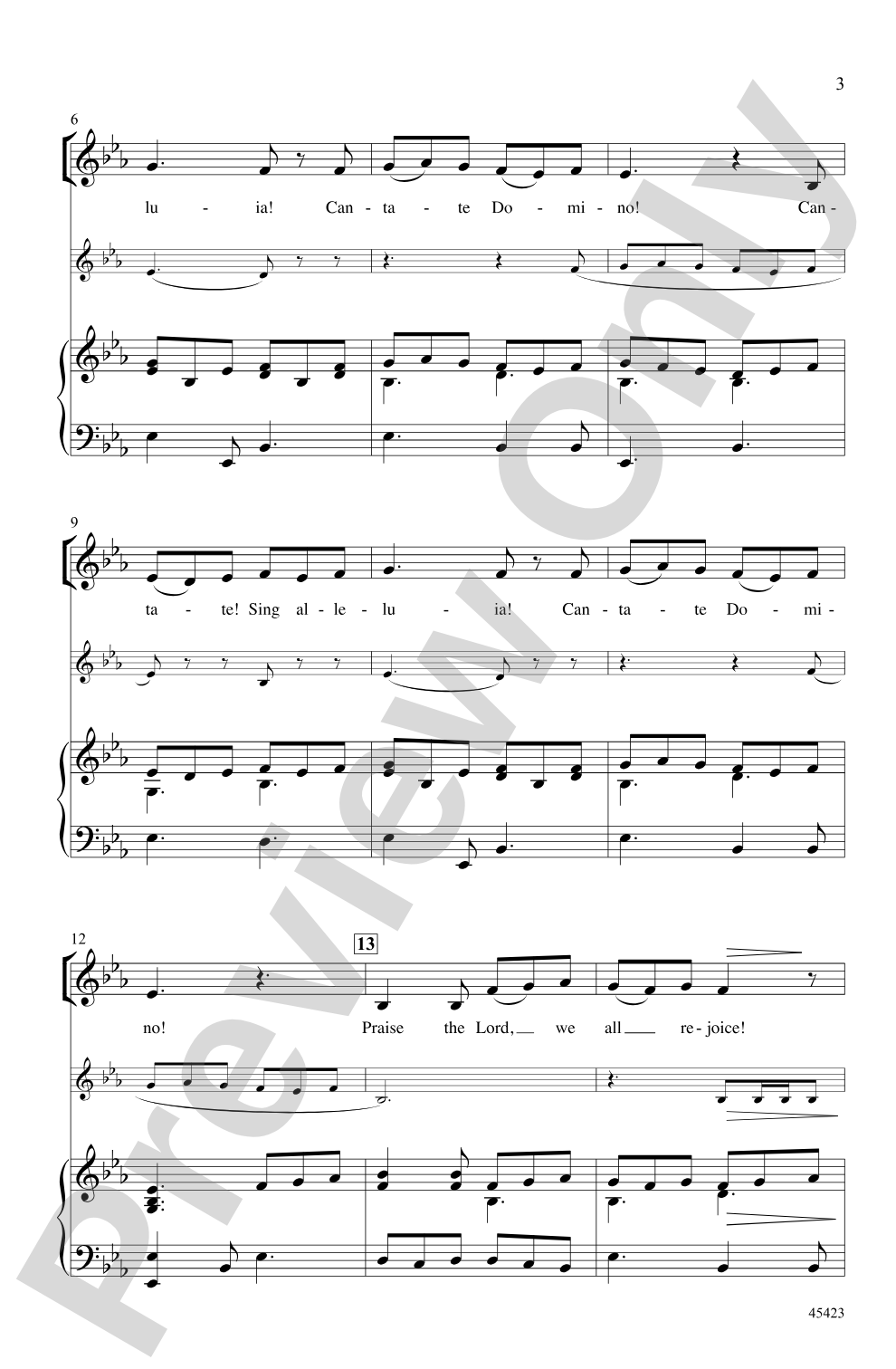
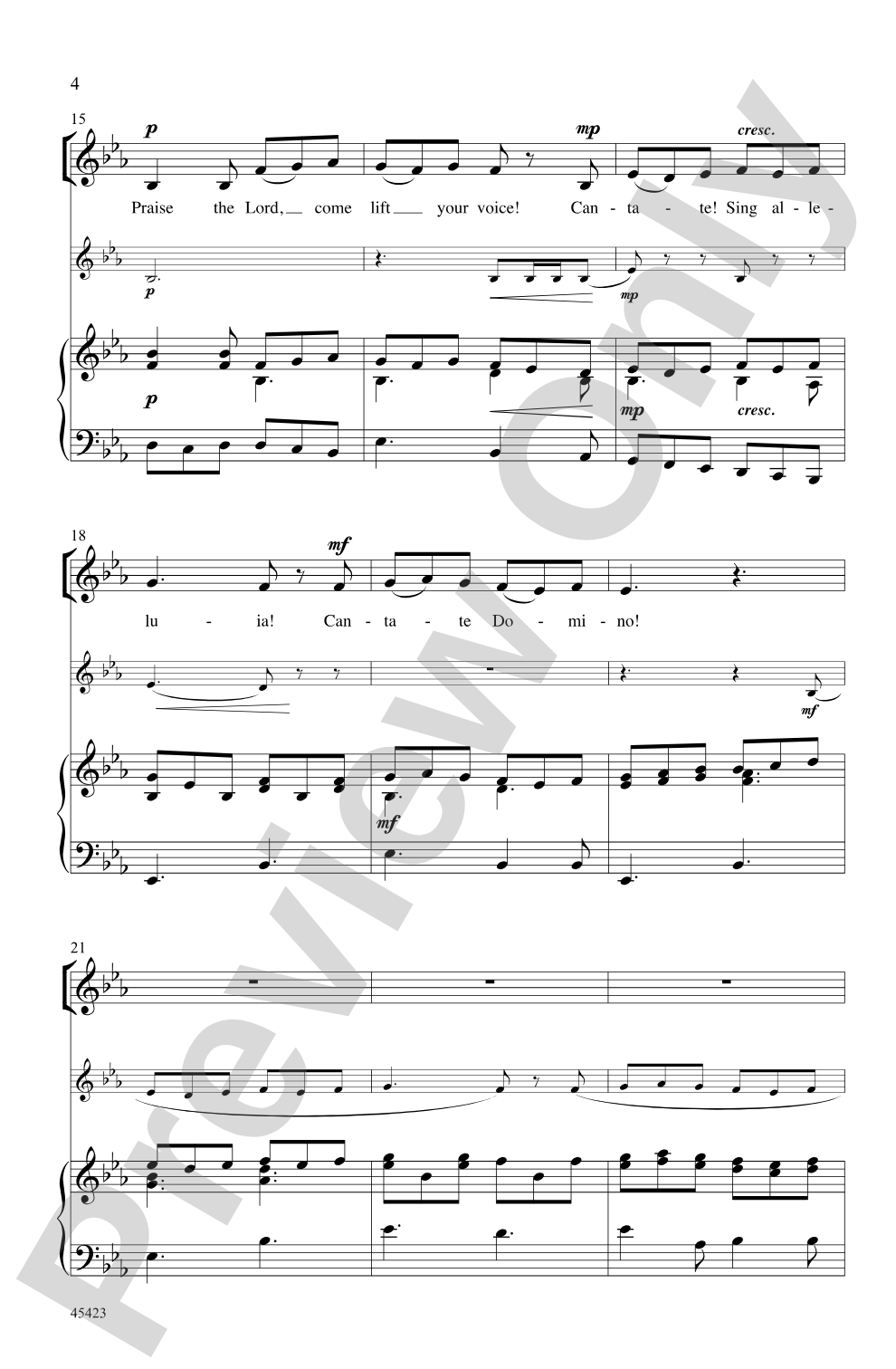
Tuneful legato lines, an original text featuring both Latin and English words, and music from master composer J. S. Bach combine to form a lovely piece for treble choirs. Contrasting melodies pair at the end to form a partner song. Add the optional trumpet part for a joyful concert or festival feature!


Cantate! Sing Alleluia!: 2-Part Choral Octavo isn't in MakeMusic Cloud just yet...but it could be. Let us know you'd like to see it, and you'll help shape what comes next. In the meantime, start a free trial and dive into thousands of interactive titles your students can play along with today.
Request This Title
Tell us you want it.
Start Your Free Trial
Explore everything that's ready to play right now.
Sample Audio
1
Audio File
--:--
0:00
0:00
Sample Video
Additional Details
Series:
Alfred Choral Designs
Publisher:
Alfred Music
Page Count:
12
SKU:
00-PO-0003665
Instrumentation:
with Opt. Trumpet
More about this title
About the Composer: Johann Sebastian Bach
Johann Sebastian Bach (1685-1750) shaped the trajectory of Western music through his systematic exploration of compositional technique and harmonic language. Working across all major Baroque forms, he synthesized German, Italian, and French styles into a unified, deeply expressive musical voice that continues to anchor music education curricula worldwide.
Bach's sacred works formed the backbone of his output. His cantatas, passions, and chorales demonstrate how liturgical music could achieve both spiritual depth and intellectual rigor. For educators, his music offers unmatched opportunities to teach voice leading, harmonic function, and the expressive power of counterpoint.
Why we love this
Patrick M. Liebergen's arrangement preserves Bach's harmonic sophistication while making it genuinely singable for young treble choirs. The addition of a contrasting melody that forms a partner song in the final section gives singers an immediate sense of compositional craft, and the optional trumpet part provides flexibility for concert contexts ranging from church services to festival competitions without compromising the piece's integrity.
What to expect
This piece radiates joy tempered by reverence. The legato lines unfold with the steady elegance of a Bach chorale, while the partner song finale introduces a playful dialogue that feels like a musical celebration. The optional trumpet brightens the texture further, turning the piece into something that lingers warmly rather than fades quietly.
Who it's for
Treble choirs at the middle school through early high school level will find this piece accessible without feeling condescended to. Directors preparing for spring festivals, sacred concerts, or graduation ceremonies benefit from music that carries both liturgical weight and immediate musical appeal.
How to get the most out of it
- Shape the legato lines with subtle dynamic contours that follow the natural arc of the text rather than treating each phrase as uniform; this brings out the warmth of Bach's harmony without losing clarity.
- Balance the two parts so that neither dominates when melodies move in different rhythmic directions; think of them as equal conversational partners.
- If including trumpet, rehearse the optional part separately first so singers aren't distracted by the instrumental melody, then blend it in only after the choral parts feel secure.
- Emphasize the contrast between the main section and the partner song finale; a slight tempo lift or textural thinning beforehand prepares listeners for the change and makes the layering effect land with impact.
How to use it
Program this as the centerpiece of a sacred music set, where it can anchor a concert while lighter contemporary pieces frame it on either side. Its modest length and optional instrumentation also make it ideal for festivals where you need a flexible piece that works equally well in chapel settings or concert halls, or as the opening or closing work when programming Bach alongside works from other eras.
Skills your students will build
- Sustaining legato phrasing across harmonic changes
- Balancing two independent melodic lines
- Singing English and Latin text with clarity and appropriate weight
- Responding to partner song textures and harmonic relationships