
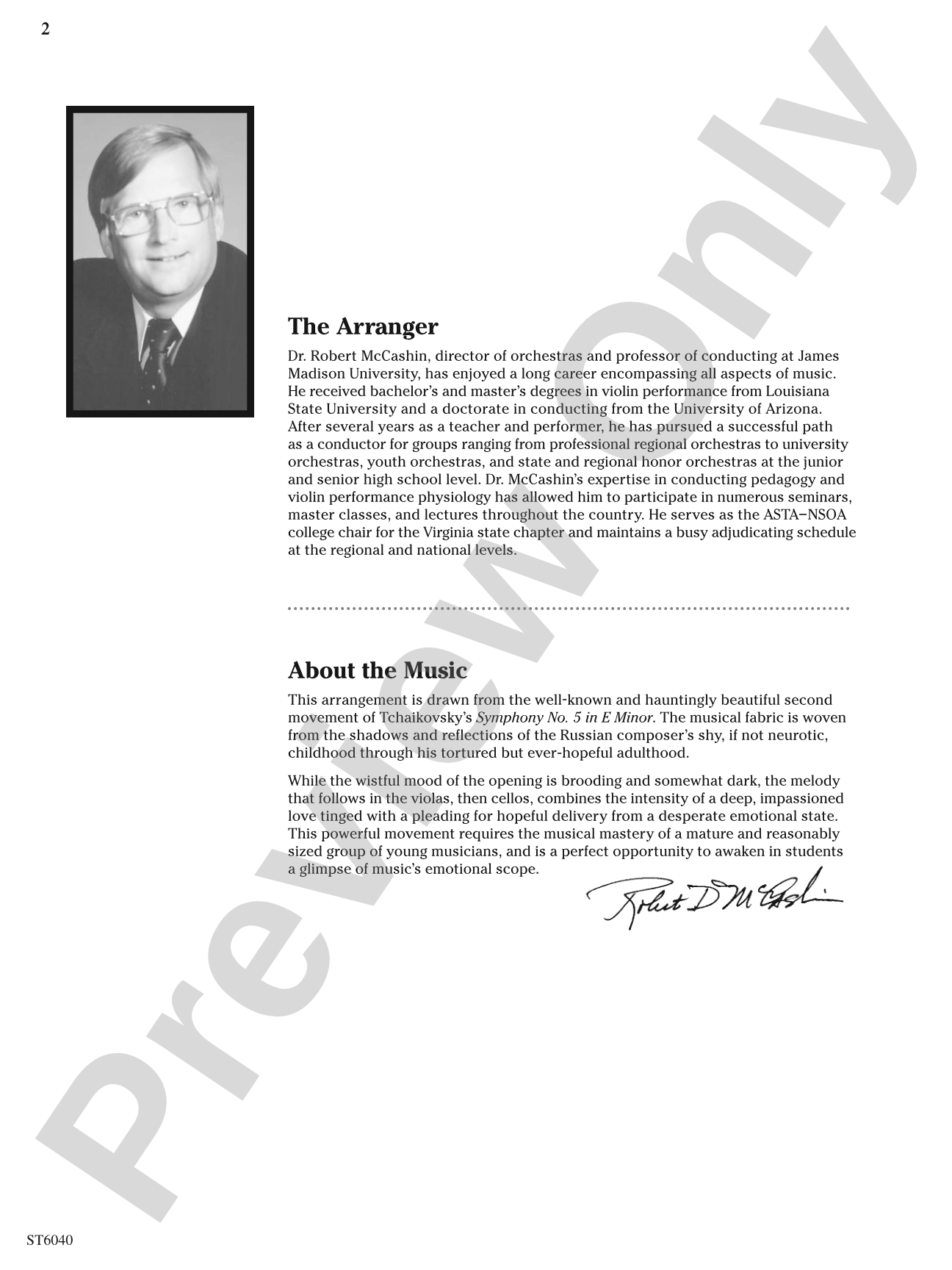
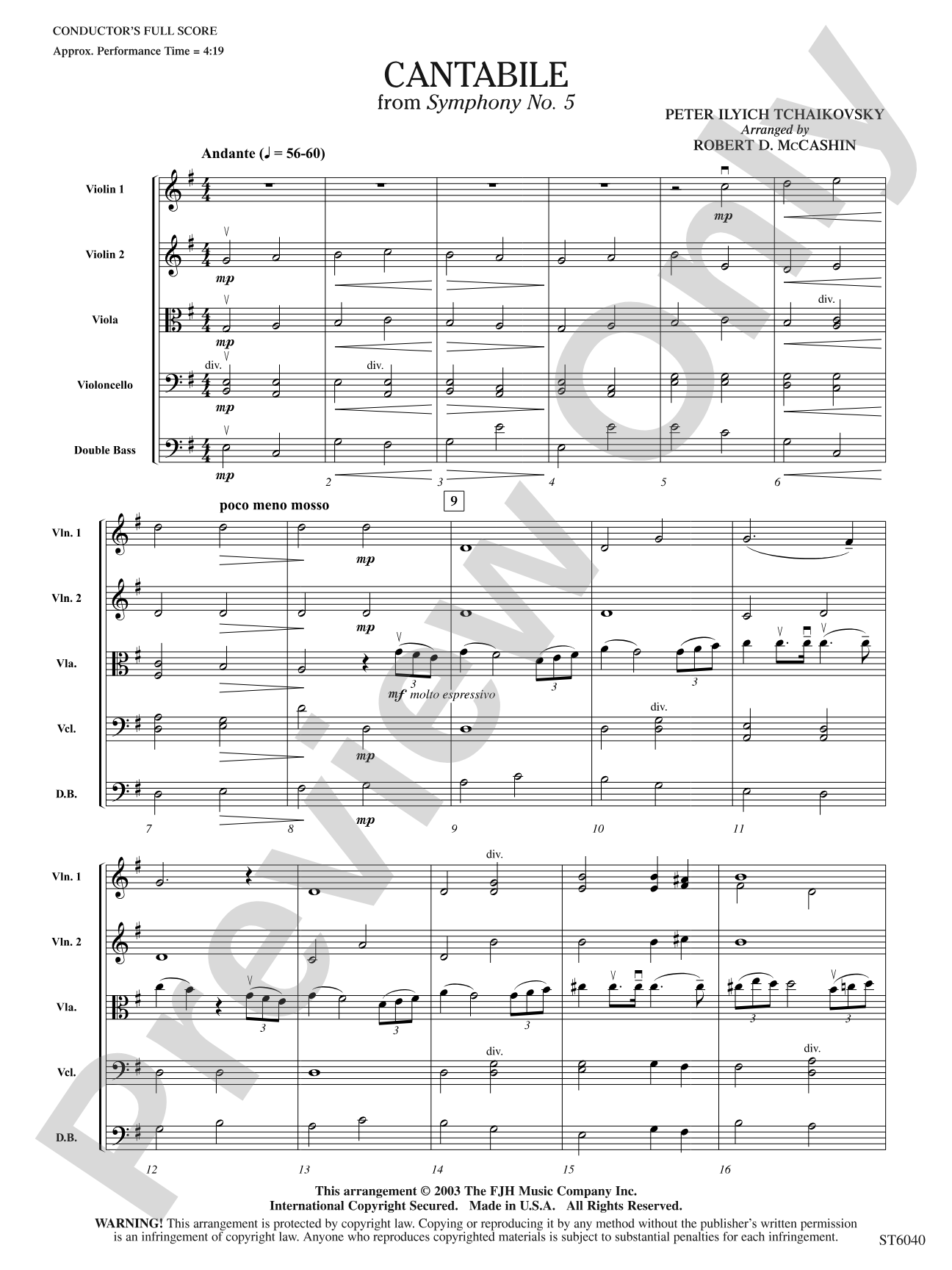
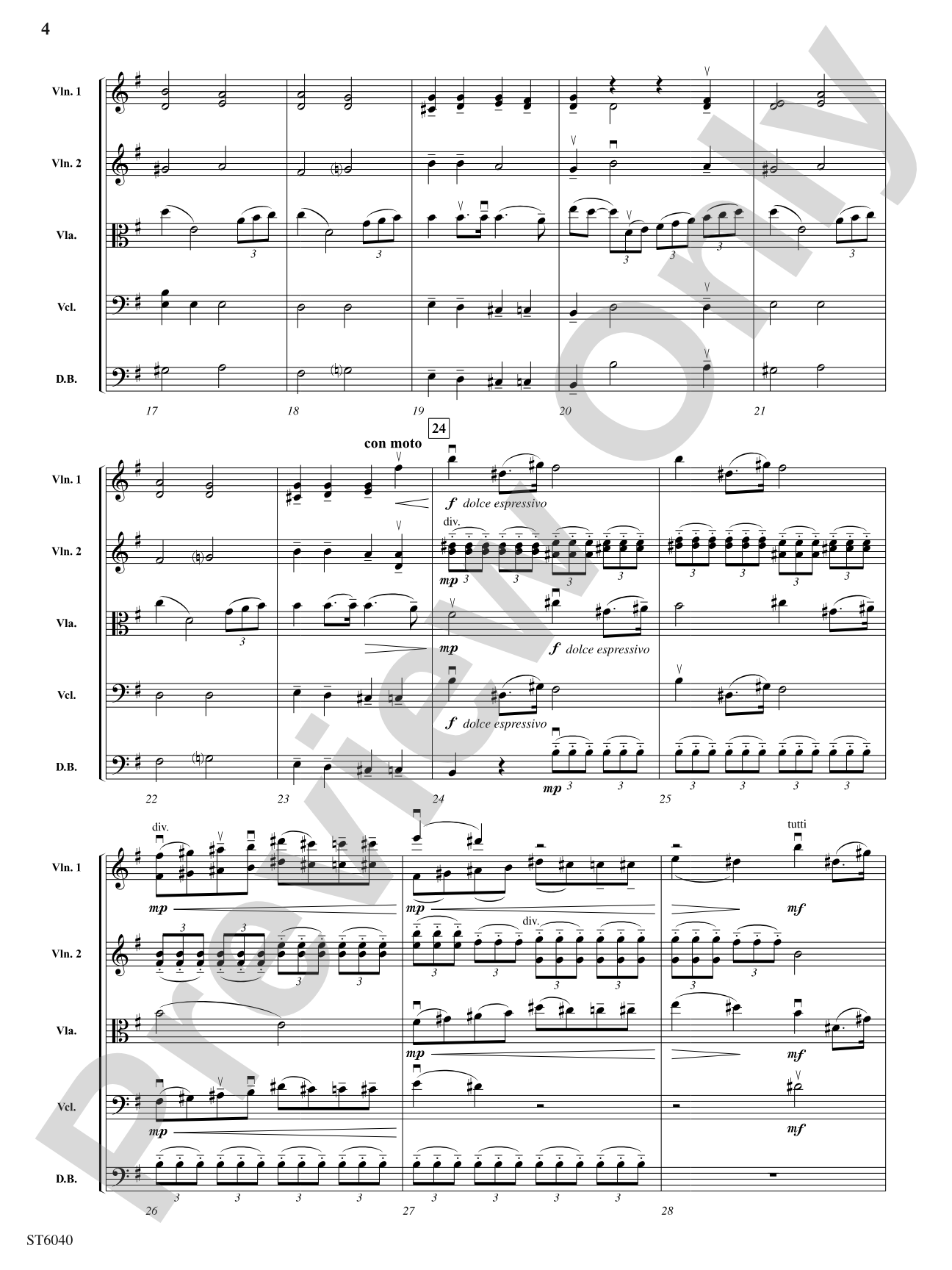
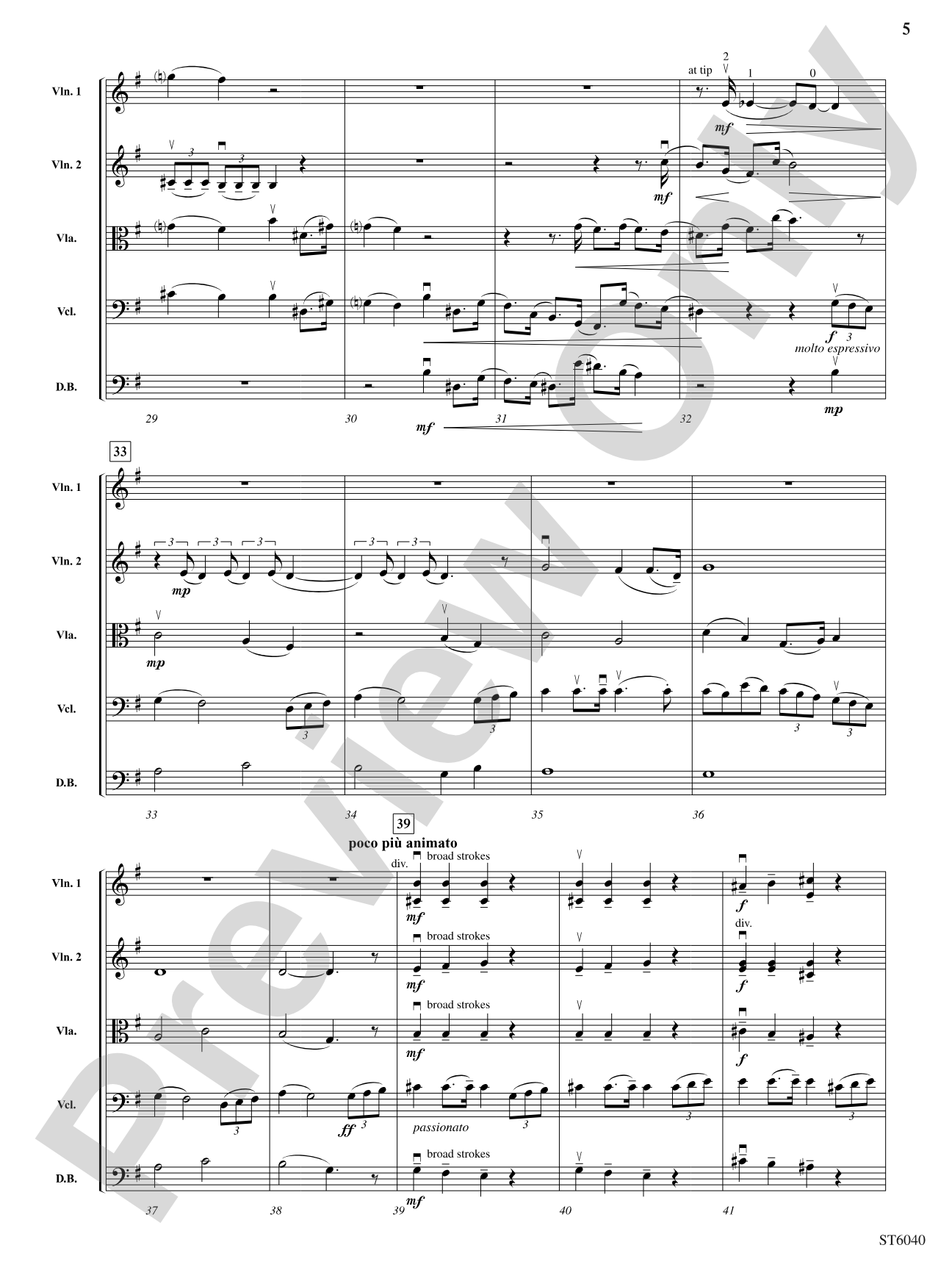
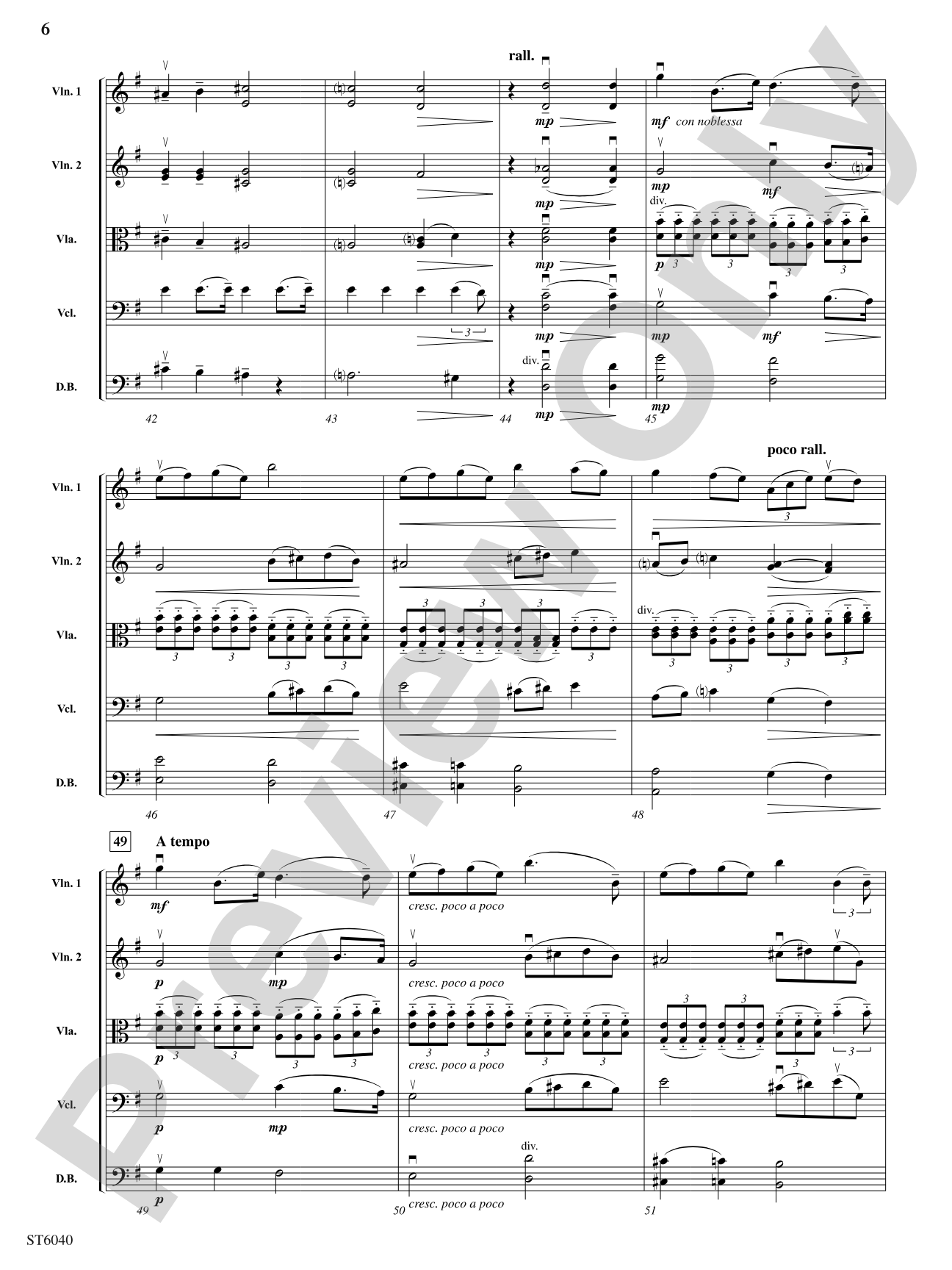
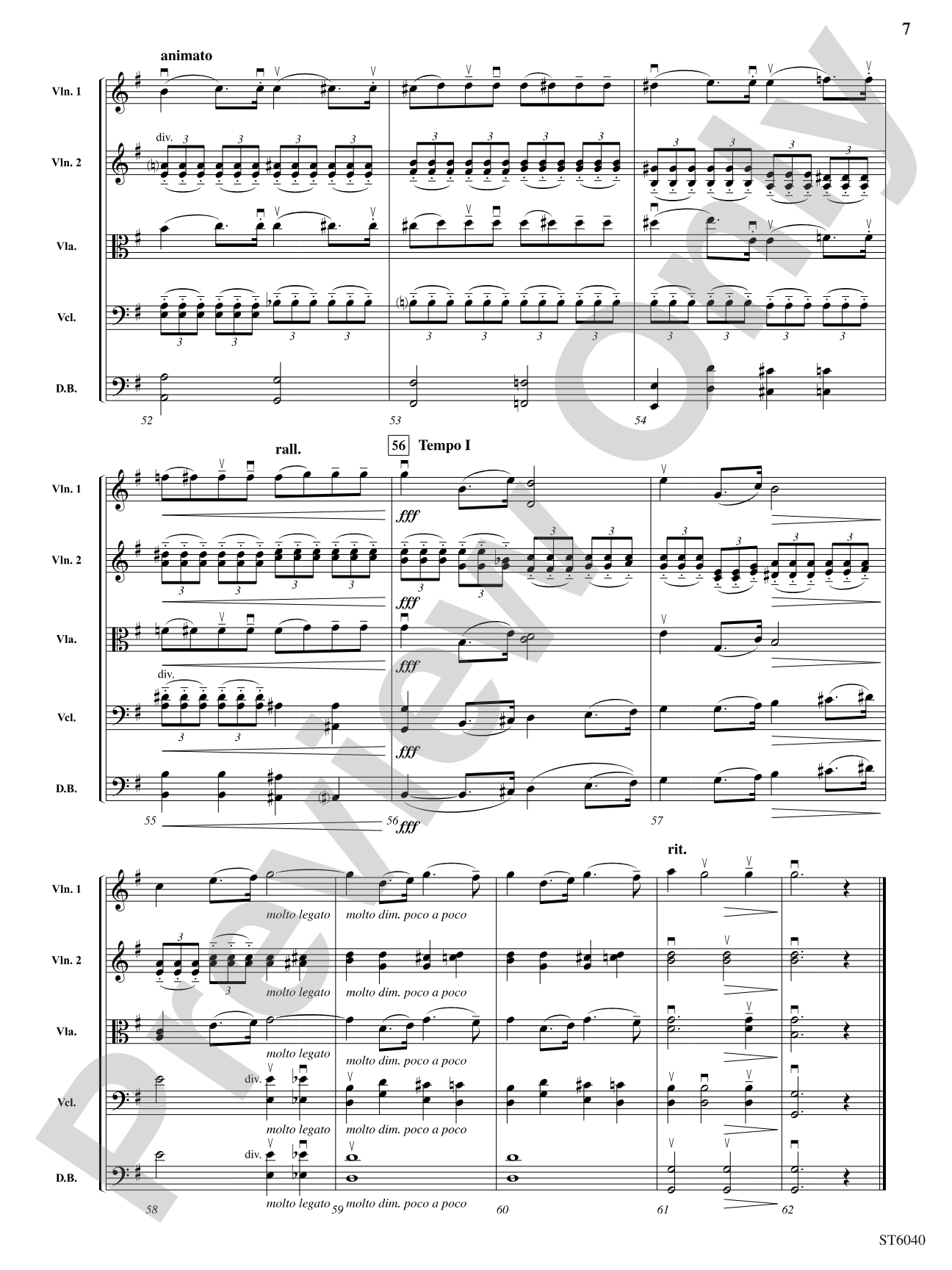

Cantabile (from Tchaikovsky's Symphony No. 5): String Orchestra Conductor Score & Parts
from Tchaikovsky's Symphony No. 5
By Peter Ilyich Tchaikovsky / arr. Robert D. McCashin
Grade: 3.5
Item: 98-DST6040

$40.00
Pickup currently not available
Buy Extra Parts (Digital PDF Download)
Parts Added to Cart!
Description
Arguably one of the most famous themes in classical literature, the cantabile theme from Tchaikovsky's fifth symphony is presented here in a lush arrangement. Robert McCashin has taken full advantage of the textures and sonorities available from the string orchestra. Violas are featured as the melody first occurs. A wonderful arrangement worthy of your utmost consideration.


Don't just read it, hear it, play along with it, and watch your students grow with it. In MakeMusic Cloud, Cantabile (from Tchaikovsky's Symphony No. 5): String Orchestra Conductor Score & Parts comes alive with professional accompaniment, adjustable tempo, and built-in practice tools that turn solo practice into real progress.
Open in the Player
Jump straight in and assign it today.
Start Your Free Trial
Open this title and explore the full library in minutes.
Sample Audio
1
Audio File
--:--
0:00
0:00
Sample Video
No sample videos found.
Additional Details
Series:
FJH String Orchestra
Publisher:
The FJH Music Company, Inc.
SKU:
98-DST6040
More about this title
About the Composer: Peter Ilyich Tchaikovsky
Peter Ilyich Tchaikovsky (1840-1893) stands as one of the most performed composers in the orchestral repertoire. His gift for memorable melody and emotional directness made his music accessible to concert audiences worldwide, even as he grappled with the technical demands of large-scale orchestral writing. The Fifth Symphony, premiered in 1888, showcases his mature compositional voice and remains a staple of orchestras everywhere.
Tchaikovsky's influence on string writing is particularly profound. His symphonies, concertos, and ballets reveal a deep understanding of what strings can achieve, from intimate chamber-like textures to overwhelming grandeur. For music educators, his work demonstrates how structural clarity and tuneful invention can coexist with sophisticated harmonic language.
Why we love this
McCashin's arrangement captures the essence of one of classical music's most instantly recognizable themes while keeping the orchestration within reach of an intermediate ensemble. The decision to feature violas as the primary voice in the initial statement adds color and depth; it's the kind of specific orchestrational choice that gives students something genuinely interesting to execute rather than settling for a generic reduction.
What to expect
Lush, nostalgic, and deeply romantic. The Cantabile unfolds with an unhurried elegance; its gentle forward motion invites listeners into an intimate emotional world. There's both vulnerability and strength in this theme, a quality Tchaikovsky commanded throughout his symphonic writing.
Who it's for
Directors of intermediate-level string orchestras looking to program a work with genuine concert appeal and immediate audience recognition. This arrangement suits ensembles with capable section leaders but developing overall technical sophistication; the Grade 3.5 level allows for musical nuance without extreme technical demands.
How to get the most out of it
- Shape the opening viola statement with a long, unhurried phrase arc. This theme thrives on sustained, singing tone rather than rhythmic precision; let the violas breathe and shape the melody as a vocalist would.
- Balance the accompanying voices carefully when the theme moves among sections. Secondary voices should never compete with whoever holds the cantabile line at any given moment.
- Attend closely to dynamic gradations within phrases. Tchaikovsky's writing relies on small shifts in color and intensity to maintain forward motion; avoid playing entire sections at one level.
- Consider the harmonic context beneath the melody. Sustained chords need stability and warmth from the lower strings; support them with focused vibrato and even bow pressure.
How to use it
Program this as a centerpiece on a concert where it can breathe and showcase your ensemble's ability to sustain tone and shape phrases. It works equally well as a spring recital offering or a festival selection, and its fame means audiences arrive already connected to the music.
Skills your students will build
- Sustaining long phrases without loss of tone quality
- Playing a singing, vocal-like melodic line on instruments
- Balancing melody against accompaniment within an orchestral texture
- Responding to conductor interpretation of dynamic and tempo nuance
- Ensemble balance when themes shift between sections