Claude Debussy (1862-1918) revolutionized piano writing by treating the instrument as an orchestral resource rather than a vehicle for virtuosic display. His harmonic innovations and impressionistic textures shaped twentieth-century music fundamentally, making him essential study for pianists who want to understand modern sound worlds. Debussy's piano works remain central to advanced repertoire because they demand both technical control and interpretive maturity from performers.
Why we love this
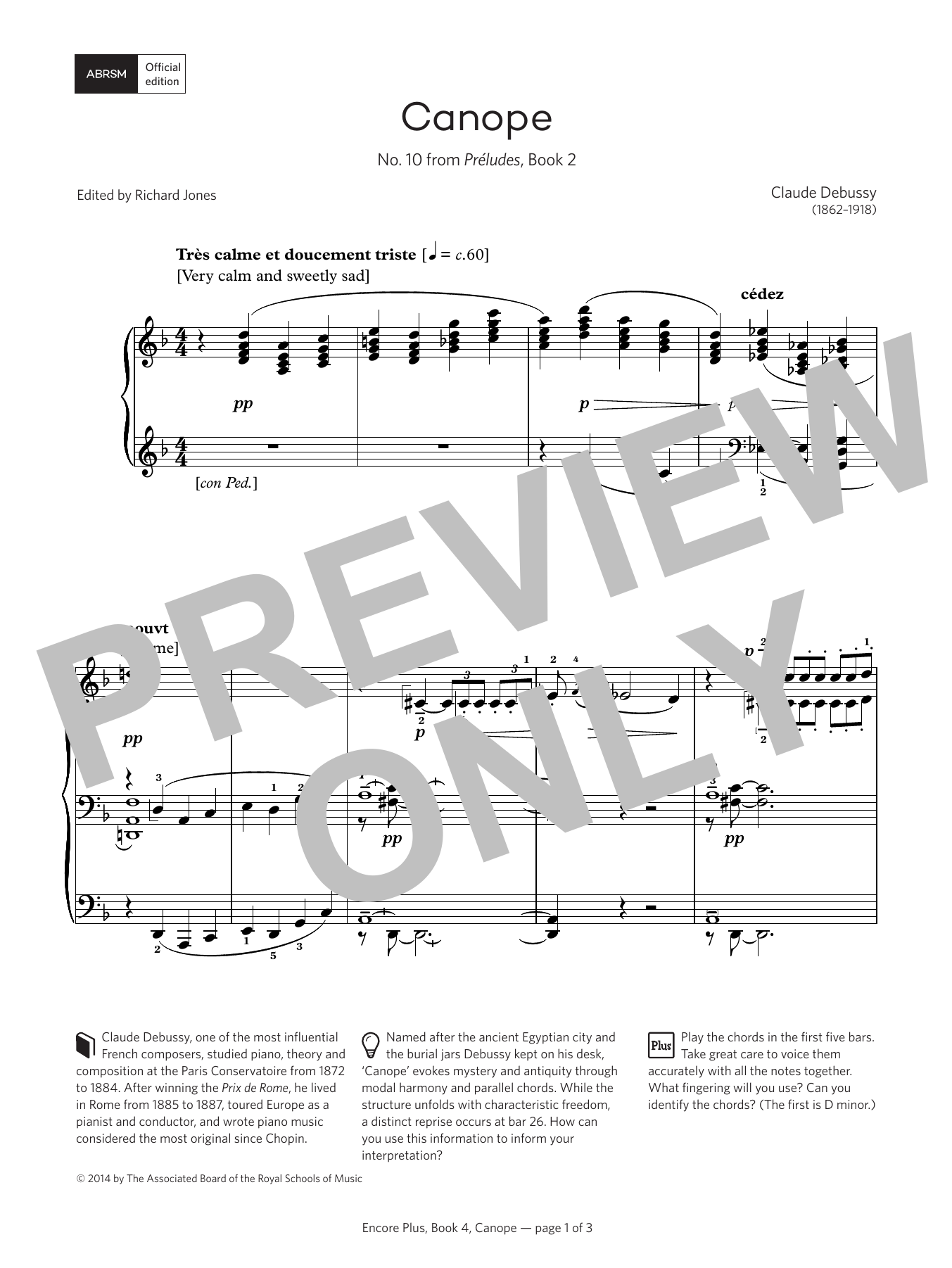
Canope distills Debussy's harmonic language into a manageable but genuinely sophisticated package for grade 7 students. The piece rewards careful listening to timbre and pedal work, teaching pianists that expression lives in color and texture, not just melodic shaping. It opens doors to twentieth-century aesthetics without overwhelming developing technique.
What to expect
Canope evokes quiet contemplation; the piece seems to hover and shimmer rather than propel forward. Delicate harmonic washes and subtle motivic fragments create an intimate, almost dreamlike atmosphere. The writing feels spacious and modern, with silences as important as the notes themselves.
Who it's for
Grade 7 pianists ready to engage with impressionistic harmony and unconventional structures. Students pursuing music study beyond band or orchestra will find this essential for understanding piano literature beyond classical-romantic traditions. Teachers building programs that showcase twentieth-century works at achievable levels.
How to get the most out of it
Approach the pedal as a compositional element rather than an effect; change it precisely where Debussy indicates to preserve clarity within the atmospheric harmony.
Listen constantly to the balance between voices; what seems like background texture often contains motivic material that deserves subtle projection.
Resist adding tempo flexibility; let the piece breathe through dynamic shaping and rubato within a steady pulse instead.
How to use it
This works beautifully as a short recital piece pairing with romantic or baroque repertoire to demonstrate stylistic range. Include it in concert programs highlighting twentieth-century piano literature, or feature it in student recitals where individuality and interpretive choice matter. The three-page length makes it perfect for filling specific program slots without requiring excessive rehearsal time.
Skills your students will build
Pedal technique for harmonic blending and color
Reading and interpreting impressionistic harmony
Shaping phrases without traditional melodic anchors
Balance and texture awareness across the keyboard
Tempo control and subtle rubato within steady pulse
You May Also Like
Scan to Complete Your Purchase
Use your phone's camera to scan the code below
You'll log in on your phone and the order will be added to your account