
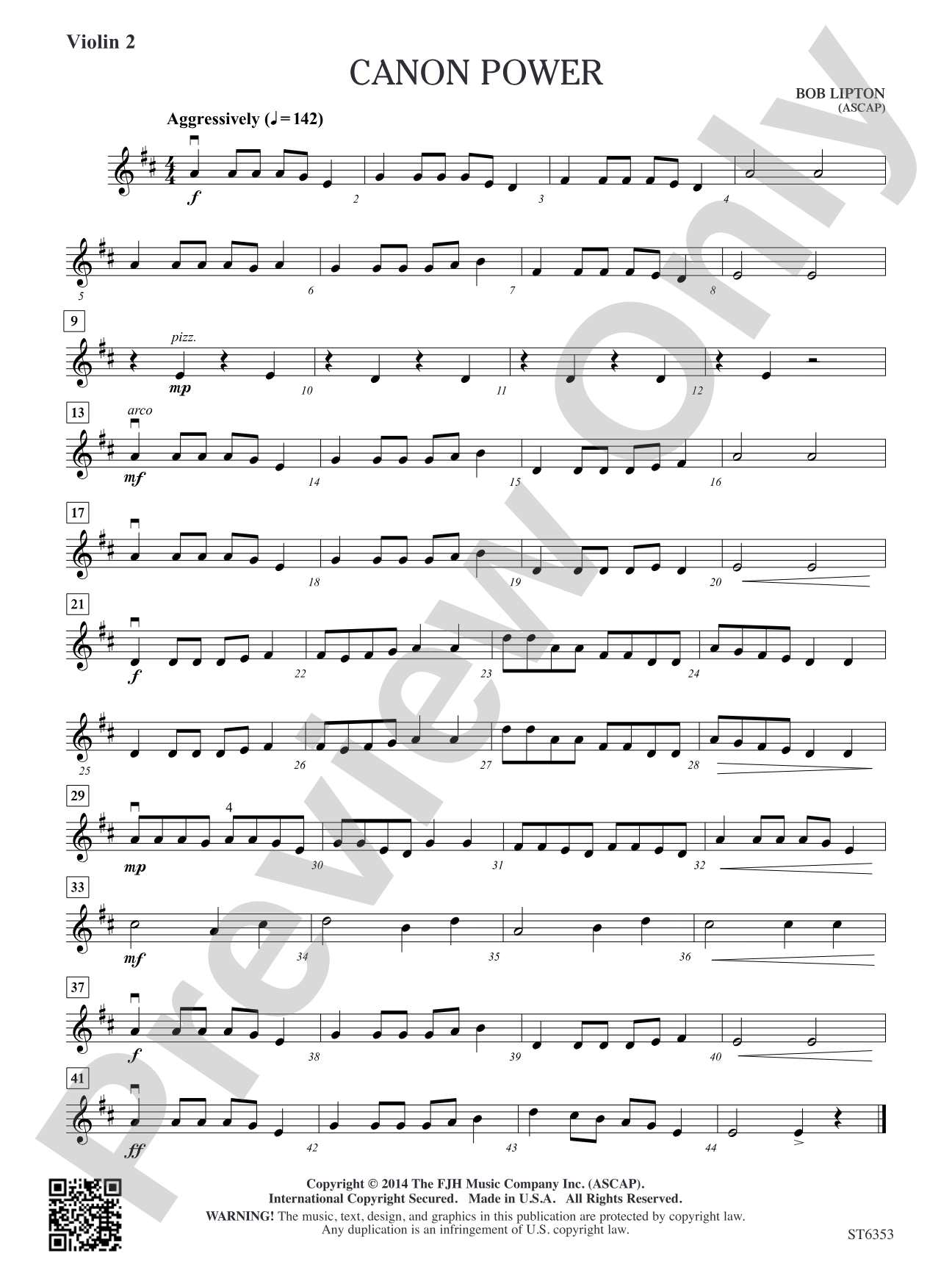

Canon Power: Violin 2 (Viola T.C.)
By Bob Lipton
Grade: 1
Item: 98-PC-DST6353_VN2
$7.00
Pickup currently not available
Description
Powerful, energetic and fun, this piece is a great vehicle to introduce students to independent playing in a simple way. Bolster confidence in each section as they each take a turn at several different melodies presented in true canon fashion while a few twists and turns are thrown in for good measure. Fantastic!


Don't just read it, hear it, play along with it, and watch your students grow with it. In MakeMusic Cloud, Canon Power: Violin 2 (Viola T.C.) comes alive with professional accompaniment, adjustable tempo, and built-in practice tools that turn solo practice into real progress.
Open in the Player
Jump straight in and assign it today.
Start Your Free Trial
Open this title and explore the full library in minutes.
Sample Audio
1
Audio File
--:--
0:00
0:00
Sample Video
No sample videos found.
Additional Details
Series:
FJH Beginning Strings
Publisher:
The FJH Music Company, Inc.
SKU:
98-PC-DST6353_VN2
More about this title
About the Composer: Bob Lipton

Bob Lipton holds a B.M. in music education from San Francisco State University and has spent nearly two decades teaching middle school orchestra and band in Silicon Valley, California. His performance credentials span multiple ensembles and genres: he has played tuba with regional symphonies including San Jose, Oakland, Napa, Monterey, and Berkeley; performed with the San Francisco 49ers band; toured internationally as a member of the Colombia Artists Bel Canto Brass; and appeared at the San Francisco and Frankfurt Jazz festivals as well as the Filmfare Awards in Mumbai.
Lipton's dual life as performer and educator informs his arrangements and compositions for school ensembles. Beyond his work writing for beginning and intermediate string orchestras and bands, he continues to perform and arrange for brass quintet, bringing a versatile understanding of instrumental writing across genres.
Why we love this
Canon Power balances pedagogical purpose with genuine musicality. Each section gets repeated opportunities to lead the melodic line, which builds ownership and confidence without requiring advanced technical facility. The writing is crafted to keep every player engaged while the canonic structure naturally creates harmonic richness that sounds more sophisticated than Grade 1 typically allows.
What to expect
Energy and lightness drive this piece. The repeating melodic fragments feel almost playful as they pass from section to section, building momentum through overlap. When rehearsed well, the layered canonic texture creates a satisfying sense of forward motion and collective achievement.
Who it's for
This piece serves Grade 1 string orchestras ready to move beyond unison playing but still building foundational independence. It works well for programs introducing students to the concept of individual responsibility within a group texture.
How to get the most out of it
- Isolate each section's entry before rehearsing full score. Have violins learn their opening melody thoroughly; then violas enter; then cellos, basses. This prevents rhythmic confusion and helps each group hear their role clearly.
- Mark conductor beats clearly during canon entries so sections stay synchronized when overlapping lines begin. Without visual precision, younger players lose track of their own part.
- Balance the texture by reminding lower strings they are foundation, not background. In Grade 1 orchestras, cellists and bassists often play timidly; encourage them to sustain their notes with confidence.
- Allow time in rehearsal for students to hear how their melody appears in different registers. Play through a section with just violins, then again with violas taking the lead melody. This deepens their understanding of the canonic form.
How to use it
Program this early in a concert when you want to showcase student growth and engagement. Its festival-ready appeal also makes it a smart choice for competition settings where you need a piece that demonstrates fundamental skills without requiring advanced technical demands.
Skills your students will build
- Playing independent melodic lines while listening to different material in other sections
- Understanding canonic form and how voices interact
- Maintaining rhythmic precision during staggered entries
- Sustaining consistent tone as an individual voice within the ensemble
- Building confidence through repeated opportunities to lead the melodic line