Canon In D Sheet Music Preview

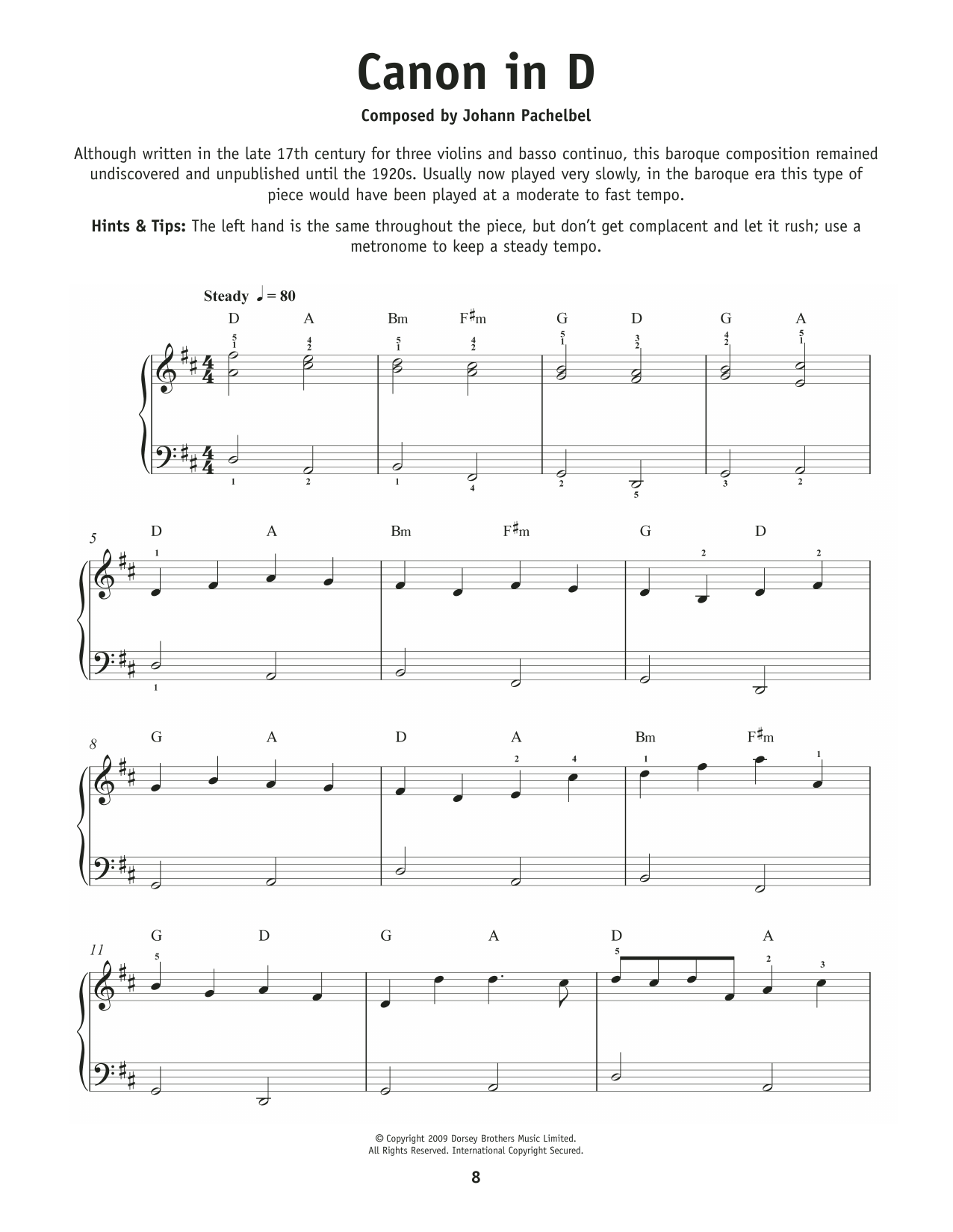
Canon In D: Really Easy Piano

As performed by Johann Pachelbel

Item: 35-DS01587917

Digital Download
$4.99
Description

Discover MakeMusic Cloud: thousands of interactive titles your students can play along with today.

Sample Audio
No sample audio found.
Sample Video
Additional Details
Publisher: Hal Leonard
Page Count: 2
SKU: 35-DS01587917

More about this title

About the Artist: Johann Pachelbel

Johann Pachelbel (1653-1706) was a German Baroque composer whose influence on keyboard music and harmonic practice extended far beyond his lifetime. Working primarily in Nuremberg and Stuttgart, he developed a distinctive compositional voice that balanced Italian melodic sensibility with German contrapuntal rigor, earning him recognition as one of the most important organists of his era.

Today, Pachelbel is known to millions through Canon in D, yet his output included over 500 compositions spanning sacred vocal music, keyboard works, and chamber pieces. His pedagogical approach to composition and his clear, elegant harmonic language have made his work invaluable to music education.

Why we love this

Canon in D remains one of the most recognizable and elegant pieces in Western music, and this REP edition provides a clean, accessible arrangement for rehearsal and performance. The piece rewards careful attention to balance and phrasing, offering students a genuine encounter with Baroque harmonic sophistication without overwhelming technical demands. Programming it creates immediate resonance with audiences while establishing a foundation for understanding how a simple harmonic progression can sustain an entire musical experience.

What to expect

Canon in D unfolds with the quiet inevitability of a familiar ritual; each phrase settles into the next like pieces of a puzzle assembled long ago. There is no drama here, only deep satisfaction in watching a handful of musical ideas create something larger and more beautiful than any single moment could promise. The piece asks for patience and attentiveness, rewarding both with a sense of order and grace.

Who it's for

This arrangement serves soloists, chamber ensembles, and student performers seeking an introduction to Baroque phrasing and harmonic awareness. It works equally well for pianists building repertoire, instrumentalists preparing for wedding or recital settings, and music teachers looking for a piece that engages students emotionally while teaching disciplined musical fundamentals.

How to get the most out of it

  • Maintain a steady, unhurried tempo; rushing the piece undermines the meditative quality that makes Canon in D so compelling. A tempo around 60 beats per minute allows the harmonic progression to breathe.
  • Shape each phrase with gentle dynamic contours rather than playing at a uniform level. The canon's beauty depends on the listener following the dialogue between voices, which clear articulation and subtle dynamic shaping will enhance.
  • Balance the melodic line against the accompaniment so that the familiar tune emerges naturally. Avoid the tendency to let supporting voices disappear entirely, as the interplay between all parts creates the piece's harmonic richness.
  • Listen across the ensemble for tuning in the sustained chords. Intonation challenges often arise in the slower harmonic movement, so coordinate with stands to check voicing and adjust as needed.

How to use it

Include this as a centerpiece for a chamber or recital concert, where its elegance provides a natural focal point without requiring extended programming around it. Consider pairing it with contrasting Baroque works to build context for period style, or use it as a powerful opener or closer for a program featuring music spanning multiple genres. Its universal familiarity also makes it effective as a bridge piece connecting classical and contemporary programming.

Skills your students will build

  • Sustaining consistent tempo in slow harmonic movement
  • Balancing multiple voices within a harmonic progression
  • Shaping Baroque phrasing with period-appropriate articulation
  • Listening and adjusting intonation across sustained chords
  • Understanding how a single harmonic pattern can sustain musical interest

You May Also Like