Canon in D: Piano Digital Sheet Music

Canon in D: Piano Digital Sheet Music

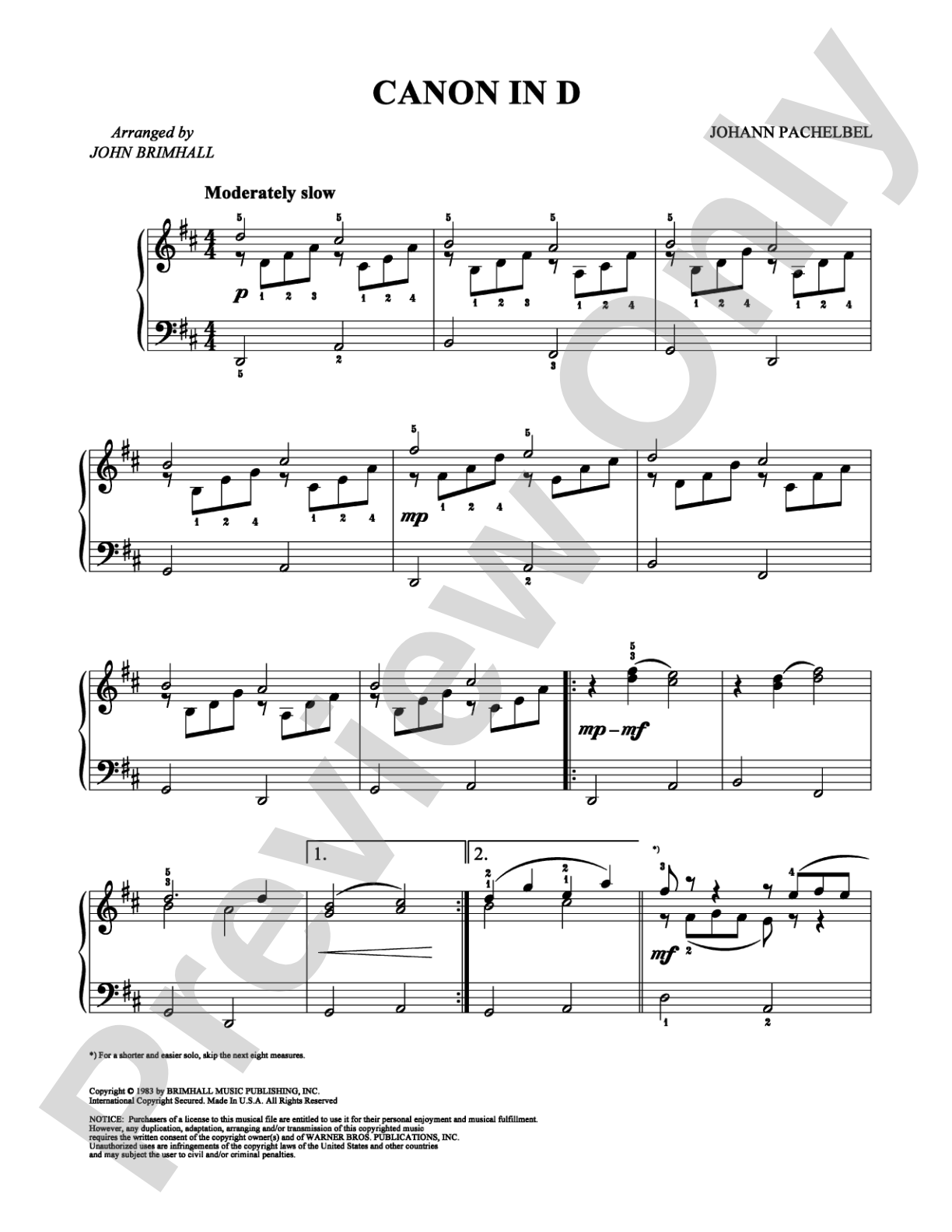
Johann Pachelbel, John Brimhall

Item: 00-PS-0007429

Digital Download
$3.99
Description

Canon in D: Piano Digital Sheet Music isn't in MakeMusic Cloud just yet...but it could be. Let us know you'd like to see it, and you'll help shape what comes next. In the meantime, start a free trial and dive into thousands of interactive titles your students can play along with today.

Sample Audio
No sample audio found.
Sample Video
Additional Details
SKU: 00-PS-0007429

More about this title

About the Arranger: John Brimhall

John Brimhall is an arranger and composer whose work spans multiple skill levels, from beginning pianists to intermediate players. Known for making standard classical repertoire accessible without sacrificing musical integrity, Brimhall has long served music teachers seeking quality arrangements that respect both the original work and the student's current abilities.

Why we love this

Brimhall's arrangement of this Baroque masterpiece balances authenticity with playability, making it ideal for pianists ready to tackle a recognizable classic without wrestling through overly complex voicing. Students get to claim ownership of a piece they actually want to play, and the arrangement's clarity serves both recital performance and the confidence boost that comes with learning repertoire people know.

What to expect

Graceful and orderly, with the gentle inevitability of a well-constructed canon unfolding beneath a singing melody. The piece feels both introspective and luminous, offering the meditative quality that has made the original endure across centuries.

Who it's for

This arrangement suits intermediate pianists who want to explore Baroque counterpoint and harmonic language through a piece they recognize and enjoy. It works equally well for students building their classical recital repertoire and for adult returners seeking familiar repertoire at a comfortable technical level.

How to get the most out of it

  • Shape the opening theme with gentle phrase arcs; let each statement breathe before the next entrance arrives rather than pressing through mechanically.
  • Maintain steady harmonic rhythm in the accompaniment figures so the primary melody line stands in relief without you having to force it.
  • Allow rubato in the cadential passages, but return to strict tempo when the theme reenters; this interplay between freedom and structure defines the piece.
  • Voice the inner parts clearly enough that listeners hear the harmonic foundation even when the main tune dominates.

How to use it

Program this as a recital centerpiece for intermediate students or pair it with other Baroque keyboard works to build thematic coherence. It also serves well as a bridge piece between beginner and advanced repertoire, giving students tangible proof of what becomes possible with continued study.

Skills your students will build

  • Voice independence and hearing multiple melodic lines simultaneously
  • Baroque phrasing and articulation conventions
  • Harmonic progression and functional harmony in a tonal context
  • Pedal control to sustain harmonic color without blurring texture
  • Left-hand independence and rhythmic stability in accompaniment figures

You May Also Like