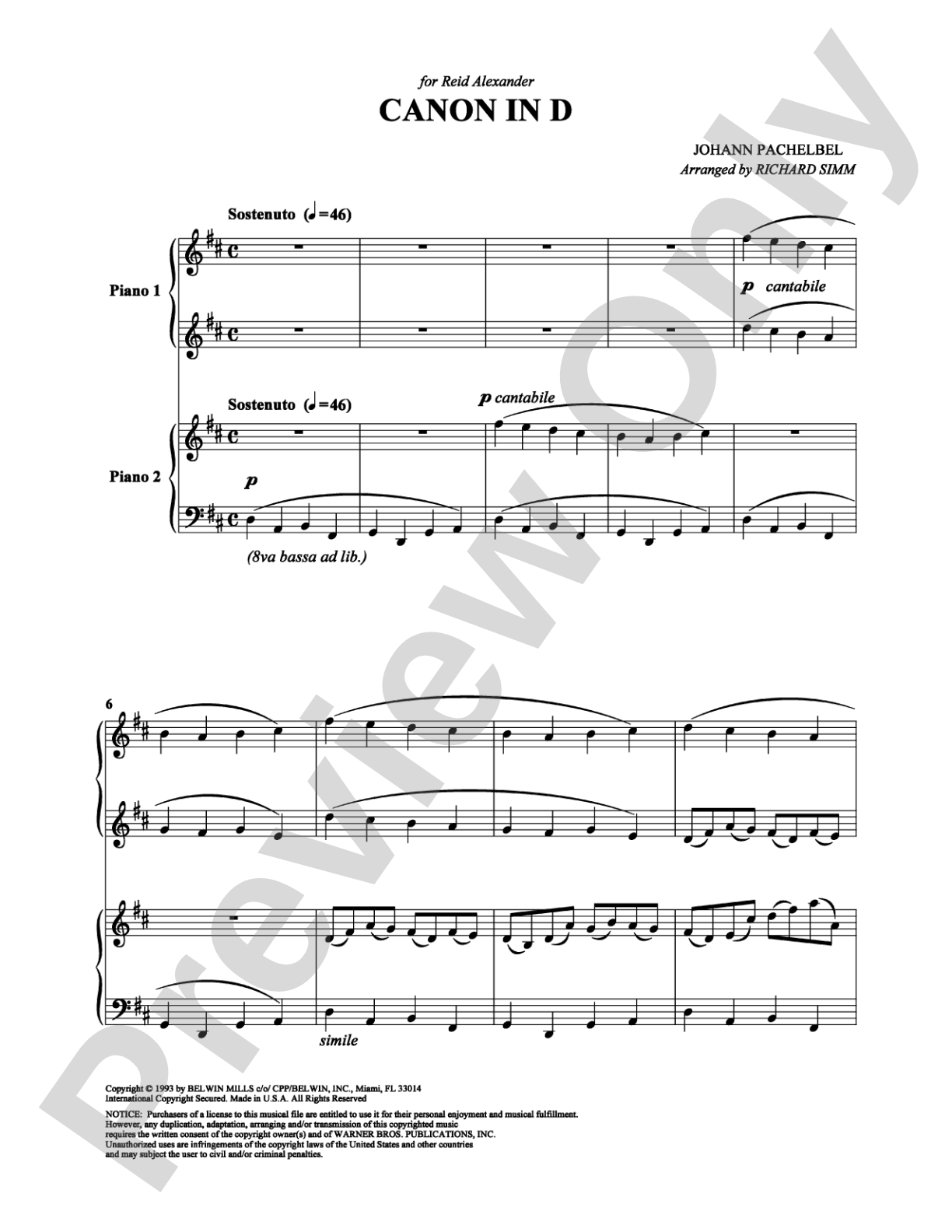
Canon in D: Piano Duets & Four Hands Digital Sheet Music

Canon in D: Piano Duets & Four Hands Digital Sheet Music

Johann Pachelbel, Richard Simm

Item: 00-PS-0002561

Digital Download
$3.99
Description

Canon in D: Piano Duets & Four Hands Digital Sheet Music isn't in MakeMusic Cloud just yet...but it could be. Let us know you'd like to see it, and you'll help shape what comes next. In the meantime, start a free trial and dive into thousands of interactive titles your students can play along with today.

Sample Audio
No sample audio found.
Sample Video
Additional Details
SKU: 00-PS-0002561

More about this title

About the Arranger: Richard Simm

Richard Simm is a pianist and arranger known for making canonical keyboard works accessible to students at intermediate levels. His arrangements prioritize clarity of voice leading while maintaining the integrity of the original composition, making him a trusted voice in music education publishing.

Why we love this

Pachelbel's Canon is a repertoire staple that every piano student encounters, yet finding an arrangement that serves both players equally—without relegating one to mindless accompaniment—is rare. Simm's four-hands setting respects the original's architectural beauty while creating genuine dialogue between the parts, making it rewarding for intermediate pianists at similar levels.

What to expect

Calm and meditative, yet architecturally satisfying. The repeating bass progression creates a sense of forward motion without urgency, while the melody floats over it with baroque grace. The piece settles into your hands like a familiar ritual, deeply recognizable yet fresh when two voices interweave.

Who it's for

Intermediate pianists at the late elementary through early advanced level who play duets regularly or prepare for recitals with a partner. This arrangement works equally well for studio teachers programming performance opportunities and school music teachers seeking literature that builds ensemble awareness at the piano.

How to get the most out of it

  • Balance the voices so the ground bass pattern remains audible beneath the melodic line; the accompanist's part drives the harmonic foundation and deserves clarity, not submersion.
  • Establish a steady tempo in the first phrase and hold it throughout; the progression's cumulative power depends on rhythmic inevitability rather than expressive fluctuation.
  • Listen across the keyboard to ensure smooth voice leading where parts overlap; since both players span multiple octaves, awareness of the full harmonic picture prevents the arrangement from sounding fragmented.
  • Shape the melodic phrases in the primo part with gentle arching rather than dramatic gestures; this piece's appeal lies in elegant simplicity, not virtuosity.

How to use it

Program this as a recital opener or closer where its composed serenity frames other selections. It pairs naturally with baroque-period literature or can stand alone as a palate-cleansing moment between more dramatic works.

Skills your students will build

  • Playing melodic and accompaniment roles with equal musicianship
  • Maintaining tempo and rhythmic independence while listening to a partner
  • Tracking harmonic progression and voice leading across a two-player texture
  • Interpreting a canonical form in collaborative performance

You May Also Like