Canon in D: Easy Piano Digital Sheet Music

Canon in D: Easy Piano Digital Sheet Music

Johann Pachelbel, Robert Schultz

Item: 00-PS-0000759

Digital Download
$3.99
Description

Canon in D: Easy Piano Digital Sheet Music isn't in MakeMusic Cloud just yet...but it could be. Let us know you'd like to see it, and you'll help shape what comes next. In the meantime, start a free trial and dive into thousands of interactive titles your students can play along with today.

Sample Audio
No sample audio found.
Sample Video
Additional Details
SKU: 00-PS-0000759

More about this title

Why we love this

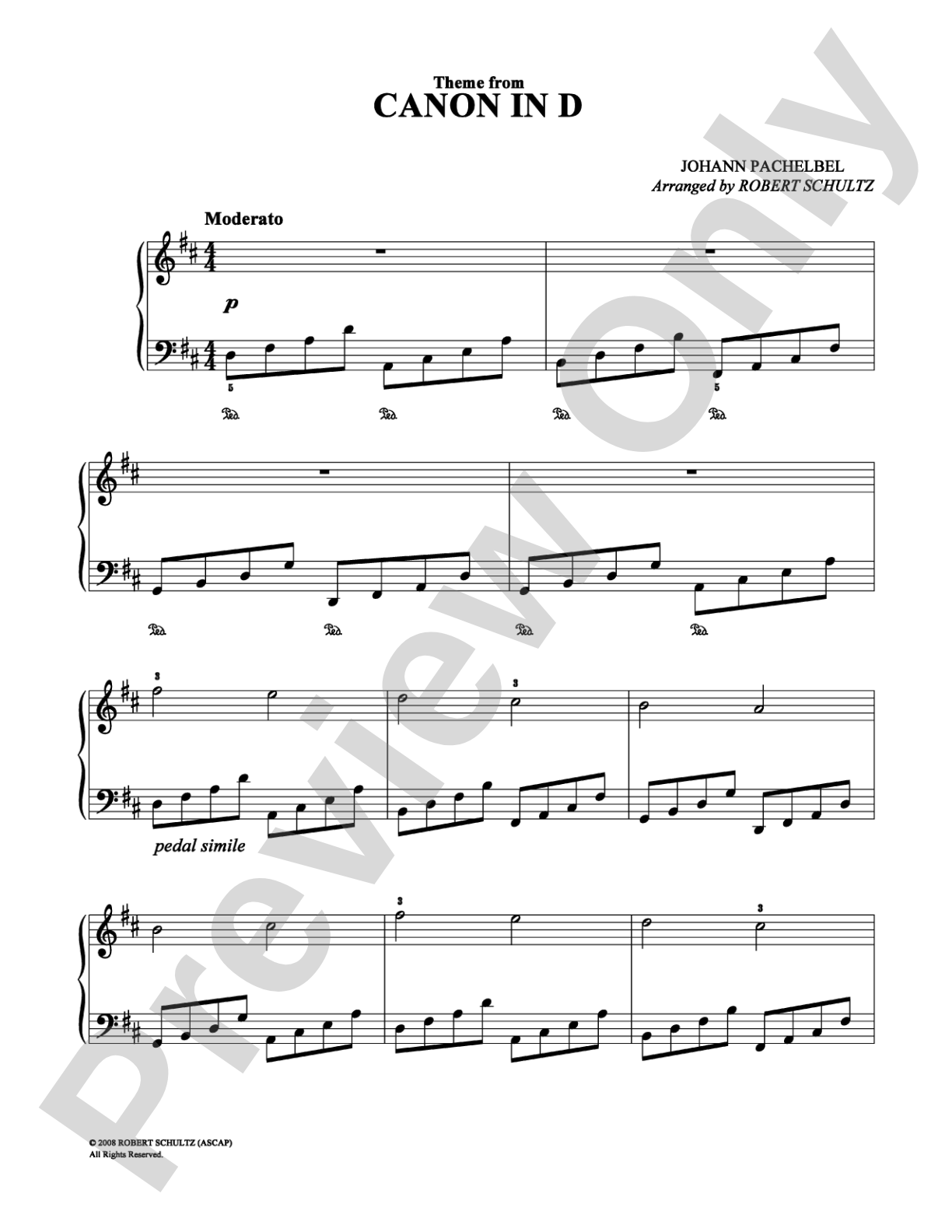
Robert Schultz's arrangement strips away the complexity without sacrificing the essential character of Pachelbel's masterwork. Students encounter one of classical music's most recognizable harmonic progressions in a form they can actually play, making this an ideal entry point to Baroque counterpoint and foundational voice leading.

What to expect

Stately and meditative. The cascading melody floats above a predictable but satisfying harmonic foundation, creating the sense of gentle forward motion without urgency. There's a timeless quality that appeals to both student pianists and audiences.

Who it's for

Early intermediate pianists ready to move beyond simple folk songs and etudes into Baroque literature. This arrangement works for students preparing recital repertoire or exploring the foundations of Western harmony.

How to get the most out of it

  • Establish the steady pulse of the ground bass before adding the melody. This repetitive foundation anchors the entire piece and allows your hands to develop independence.
  • Practice hands separately until the right-hand melody feels secure. The flowing eighth-note passages benefit from steady tempo work before combining parts.
  • Shape the melody with gentle dynamic peaks around phrase midpoints rather than playing it mechanically. This transforms the piece from an exercise into something expressive.
  • Maintain consistent voicing across repeated harmonic cycles. The power of Canon in D comes from the predictability and pattern recognition listeners develop.

How to use it

Pair this with other accessible Baroque keyboard works to build a recital set on period style and harmonic progression. It also serves as a bridge between simplified teaching pieces and full-score arrangements, helping students understand how a single work can be reimagined for different skill levels.

Skills your students will build

  • Voice independence between treble and bass lines
  • Recognition and reinforcement of repeated harmonic patterns
  • Shaping melody within a consistent accompaniment texture
  • Baroque stylistic conventions including ornamentation and phrase structure
  • Sight-reading of steady-state bass figures with flowing right-hand passages

You May Also Like