Canon in D: Piano Digital Sheet Music

Canon in D: Piano Digital Sheet Music

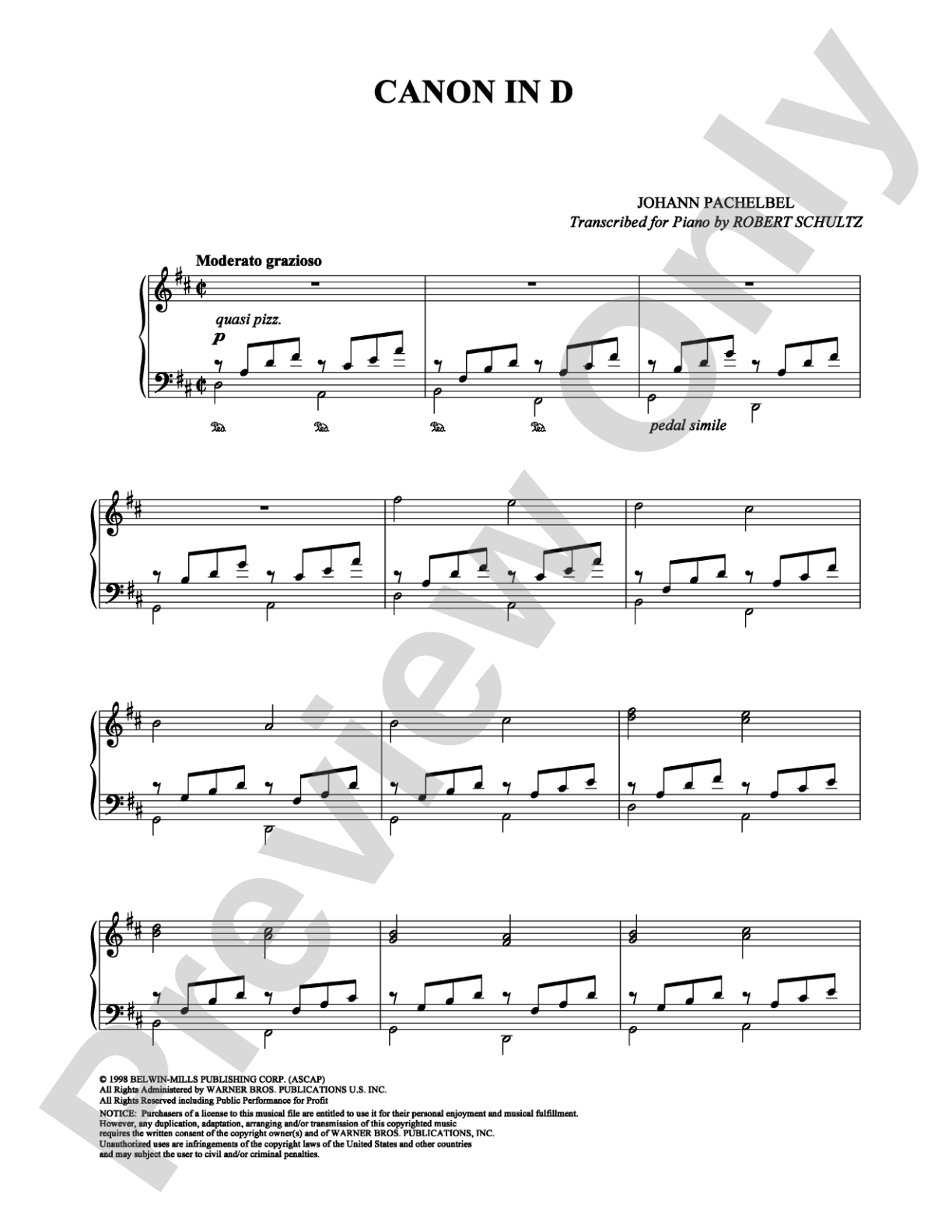
Johann Pachelbel, Robert Schultz

Item: 00-PS-0000758

Digital Download
$3.99
Description

Canon in D: Piano Digital Sheet Music isn't in MakeMusic Cloud just yet...but it could be. Let us know you'd like to see it, and you'll help shape what comes next. In the meantime, start a free trial and dive into thousands of interactive titles your students can play along with today.

Sample Audio
No sample audio found.
Sample Video
Additional Details
SKU: 00-PS-0000758

More about this title

Why we love this

Schultz's arrangement opens Pachelbel's timeless progression to pianists who want to explore baroque harmony without wrestling with period instrument idioms. The digital format means students can start learning immediately, and the arrangement itself preserves what makes this piece so musically satisfying: the elegant voice leading and the predictable-yet-beautiful harmonic motion that never stops rewarding careful listening.

What to expect

The piece unfolds with a sense of inevitability; the harmonic progression feels like it was always meant to happen in just this order. There's a meditative quality underneath the elegant melodic work, creating space for both technical demonstration and genuine musical introspection.

Who it's for

Pianists working through early intermediate to intermediate repertoire who want to engage with a well-known classical structure in a manageable arrangement. Students preparing for recitals often choose this piece for its immediate appeal to audiences and the satisfaction of learning a recognizable work with historical weight.

How to get the most out of it

  • Shape the melodic line with subtle dynamic swells rather than aggressive accents; the arrangement's strength lies in its transparency, not percussion.
  • Allow the ground bass pattern to establish a gentle, consistent pulse from the opening bars; rhythmic steadiness across both hands matters more than tempo flexibility here.
  • Listen for moments where the inner voices carry harmonic color; resist the urge to let those voices disappear into the background accompaniment.
  • Experiment with voicing the repeated figures slightly differently on repetitions to maintain the listener's interest across the piece's longer passages.

How to use it

This arrangement works well as a bridge piece in recitals, fitting comfortably between more modern solo works and heavier classical or romantic repertoire. It also serves as an effective closing number when you want to end a program with something familiar that audiences recognize and enjoy hearing in fresh arrangements.

Skills your students will build

  • Voice independence and balance between right and left hand figures
  • Harmonic analysis and recognition of Pachelbel's foundational progression
  • Maintaining rhythmic consistency within a repeating structural pattern
  • Baroque ornamentation and articulation in a modern piano context
  • Expressive shaping without metric instability

You May Also Like