Canon in D: Easy Piano Digital Sheet Music

Canon in D: Easy Piano Digital Sheet Music

Johann Pachelbel, Richard Bradley

Item: 00-PS-0000513

Digital Download
$3.99
Description

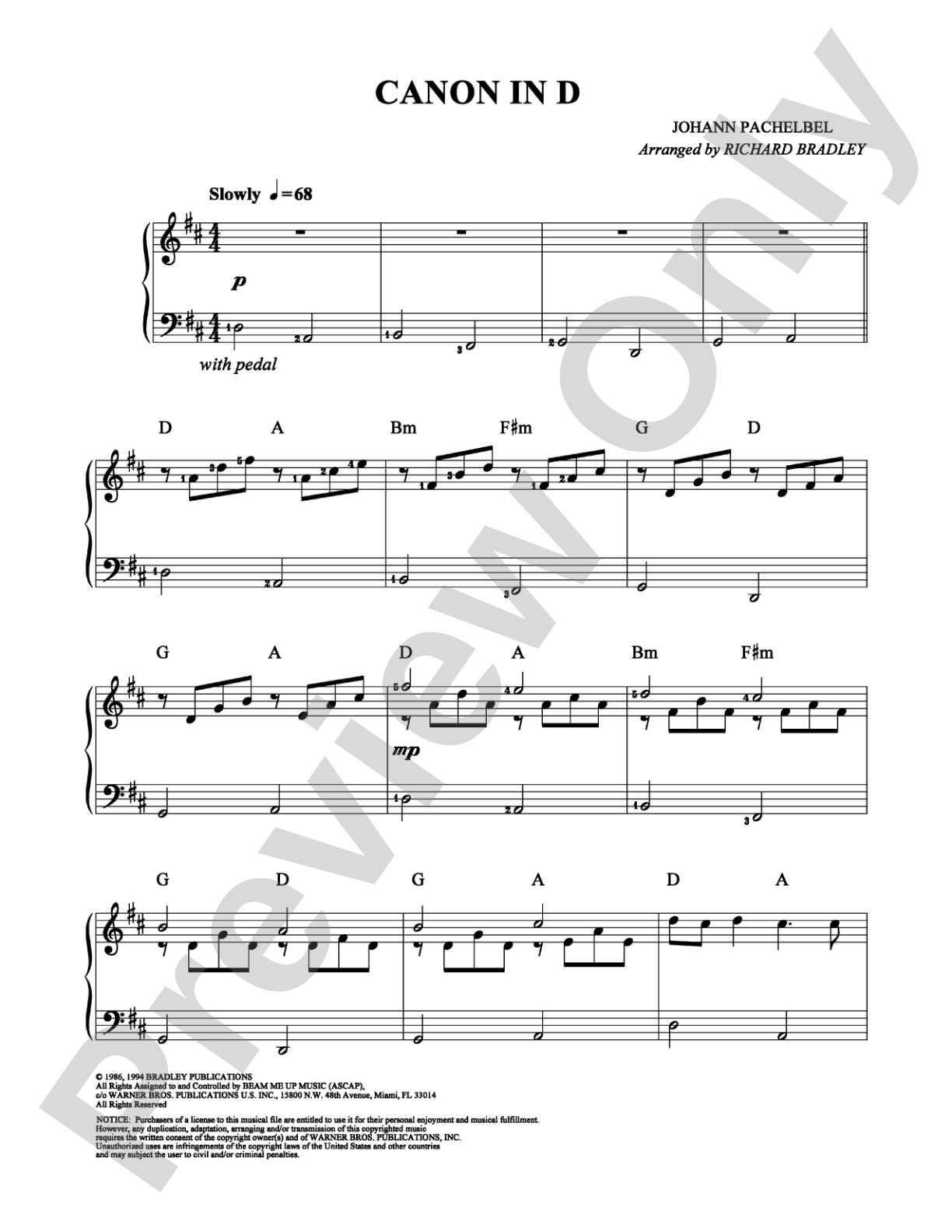
Canon in D: Easy Piano Digital Sheet Music isn't in MakeMusic Cloud just yet...but it could be. Let us know you'd like to see it, and you'll help shape what comes next. In the meantime, start a free trial and dive into thousands of interactive titles your students can play along with today.

Sample Audio
No sample audio found.
Sample Video
Additional Details
SKU: 00-PS-0000513

More about this title

About the Arranger: Richard Bradley

Richard Bradley is an arranger and pianist specializing in keyboard arrangements of classical and popular music for students at early intermediate levels. His work focuses on making well-known compositions accessible without sacrificing musical integrity or the recognizable character of the original.

Why we love this

Bradley's arrangement strips away the complexity of the original violin concerto while preserving the piece's serene, flowing melodic line. Students hear and play the music they recognize, building confidence and motivation through a genuinely satisfying musical experience.

What to expect

Calm and meditative, with an unhurried sense of forward motion. The arrangement invites the player into a peaceful musical space, allowing plenty of room to focus on tone, phrasing, and the pleasure of recognizing a beloved melody.

Who it's for

Early intermediate piano students who are ready to play recognizable classical music but benefit from simplified textures and hand positions. Teachers seeking a confidence-building piece that connects students to canonical repertoire without overwhelming technical demands.

How to get the most out of it

  • Shape the melody through subtle dynamic shifts rather than mechanical phrasing; let the long lines breathe naturally across the easy harmonic accompaniment.
  • Maintain steady eighth-note pulse in the accompaniment without rushing; the simplicity of the left hand makes this a good opportunity to develop rhythmic consistency.
  • Balance melody and harmony so the right-hand tune remains the clear voice; avoid letting broken chord patterns in the left hand overshadow what listeners expect to hear.
  • Use the sustain pedal sparingly in passages with arpeggiated patterns to prevent harmonic muddiness while still supporting the gentle atmosphere.

How to use it

Open a student recital or family concert with this piece to set a serene mood, or program it as an interlude between works with more dramatic energy. It also serves well in informal settings like studio classes where early intermediate students benefit from hearing each other perform the same cherished melody.

Skills your students will build

  • Reading and executing broken chord accompaniment patterns in the left hand
  • Balancing melody and harmonic support across two hands
  • Sustaining a singing tone over simple harmonic progressions
  • Managing pedal use in music with arpeggiated textures
  • Phrasing longer melodic lines with minimal technical interruption

You May Also Like