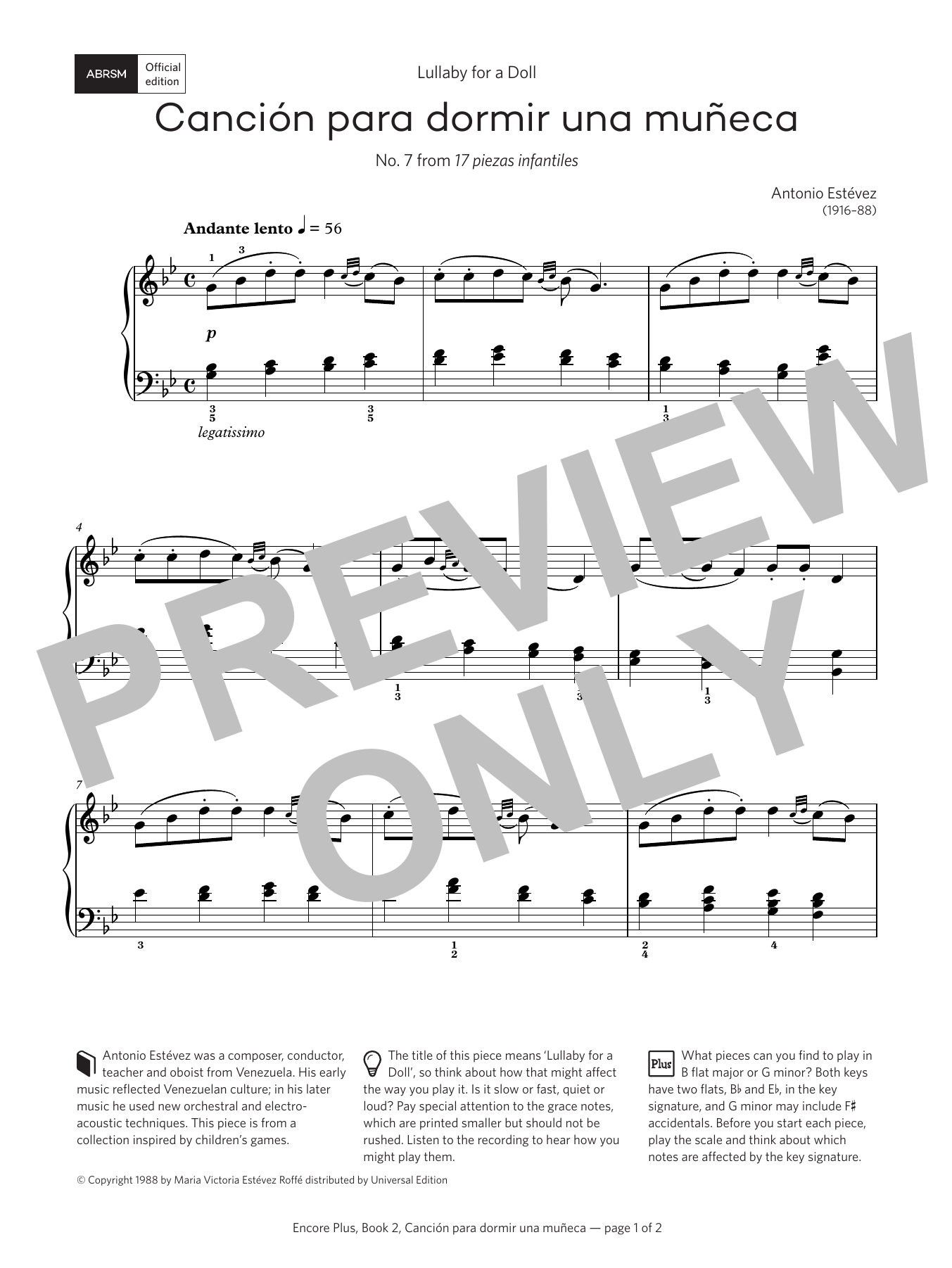
Antonio Estévez (1916–1988) was a Venezuelan composer and pianist whose work bridged European classical traditions with Latin American musical idioms. His compositions for keyboard, particularly those written for pedagogical purposes, demonstrate a gift for crafting accessible yet musically coherent pieces that engage young performers without sacrificing artistic integrity.
Why we love this
This lullaby captures something genuinely tender without slipping into sentimentality. The writing feels intimate and conversational, making it an ideal choice when you need a piece that gives students permission to play softly and expressively without technical fireworks getting in the way.
What to expect
A hushed moment in a room where someone is singing a child to sleep. The music breathes slowly, moves without hurry, and finds depth in simplicity. There is tenderness here, but also dignity.
Who it's for
This piece fits intermediate pianists ready to explore lyrical, non-virtuosic repertoire from Latin America. It works equally well for students building confidence in expressing character through restrained playing or for performers seeking material that values musicality over technical display.
How to get the most out of it
Establish a gentle, rocking pulse from the first measure; think of the accompaniment as a rhythmic cradle rather than a strict metronome.
Shape the melody with quiet intensity. Softness is not the same as lack of direction; each phrase should have clear direction even at low dynamics.
Listen closely to how the left hand and melody interact. The accompaniment should provide support without overwhelming the singing voice.
How to use it
Position this as an opening piece on a recital or studio class performance where it can establish an intimate atmosphere and set a reflective tone for what follows. It also serves beautifully as a foil to more rhythmically energetic repertoire on the same program.
Skills your students will build
Sustained soft dynamics and tone control
Phrasing and legato singing at the keyboard
Balance between melody and accompaniment
Interpretive choices in tempo and rubato within a simple framework
You May Also Like
Scan to Complete Your Purchase
Use your phone's camera to scan the code below
You'll log in on your phone and the order will be added to your account