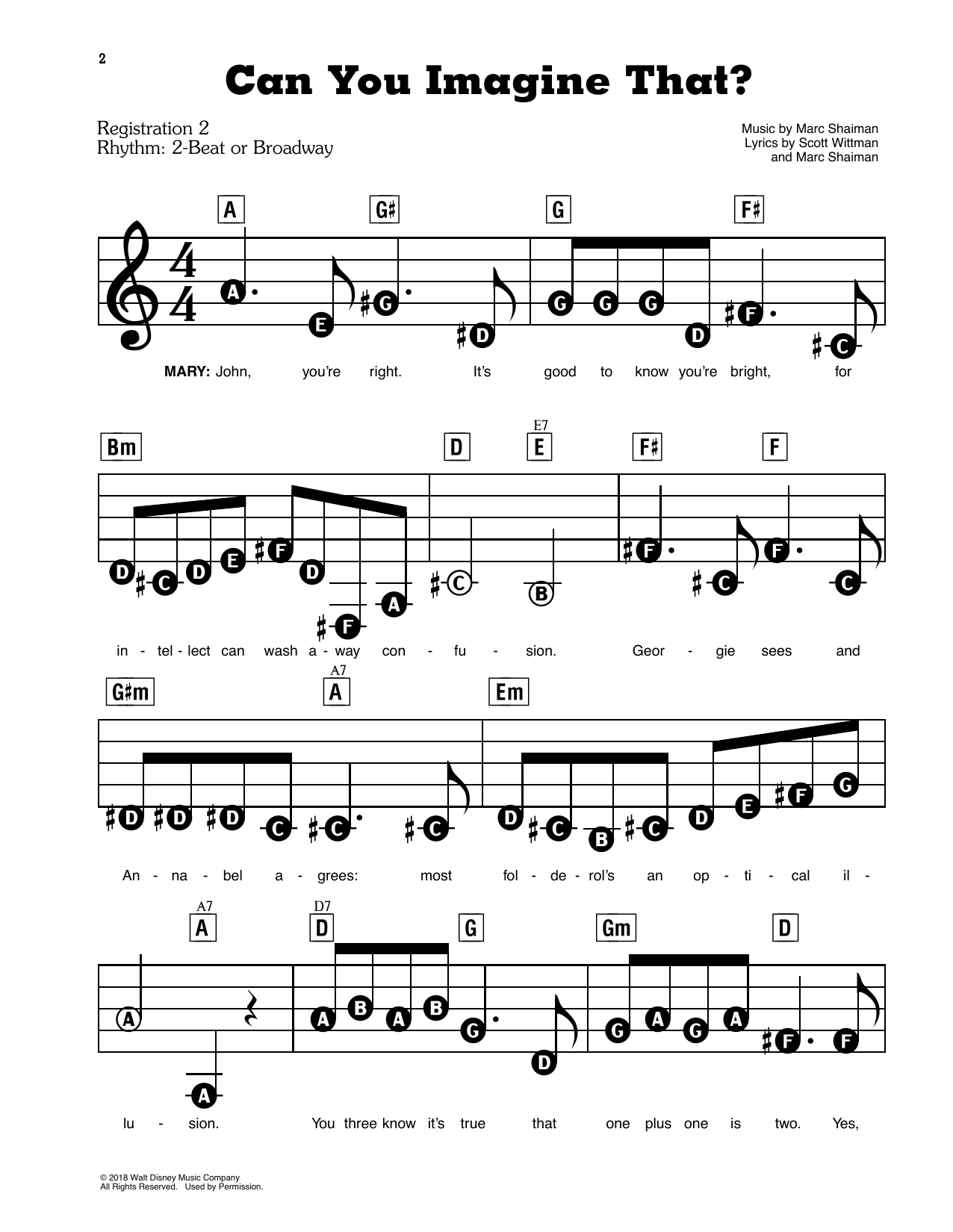
Can You Imagine That? (from Mary Poppins Returns) Sheet Music Preview

Can You Imagine That? (from Mary Poppins Returns): E-Z Play Today

As performed by Emily Blunt & Company

Item: 35-DS00447088

Digital Download
$4.99
Description

Can You Imagine That? (from Mary Poppins Returns): E-Z Play Today isn't in MakeMusic Cloud just yet...but it could be. Let us know you'd like to see it, and you'll help shape what comes next. In the meantime, start a free trial and dive into thousands of interactive titles your students can play along with today.

Sample Audio
No sample audio found.
Sample Video
Additional Details
Publisher: Hal Leonard
Page Count: 7
SKU: 35-DS00447088

More about this title

About the Artist: Emily Blunt & Company

Emily Blunt is a British-American actress and singer who has built a remarkable career spanning film, television, and stage. Her work in Mary Poppins Returns (2018) showcased her ability to blend acting and musical performance, bringing fresh energy to Stephen Sondheim's score alongside a stellar ensemble cast.

The ensemble cast of Mary Poppins Returns represents a generation of performers trained in both classical acting and musical theatre traditions. Their collective interpretation of Marc Shaiman's music brings contemporary musicality to stories rooted in timeless themes.

Why we love this

This arrangement captures the charm and accessibility that made Mary Poppins Returns resonate with audiences across age groups. Piano students get a genuine film moment they recognize and care about, not a pasteurized simplified version, which dramatically increases their investment in practicing and performing the piece.

What to expect

Whimsical and encouraging, with moments of genuine warmth. The piece maintains an optimistic tone throughout while allowing room for subtle emotional nuance in how you voice the harmonies and shape the phrasing.

Who it's for

Piano students at early intermediate levels who are ready for music beyond classical method books but still need support through clear notation and manageable technical demands. Teachers programming concerts with contemporary themes or seeking repertoire that bridges student interests with genuine musicianship.

How to get the most out of it

  • Balance the melodic line with accompaniment textures that support rather than overwhelm; the tune should shine without requiring dramatic dynamic shifts
  • Notice where the harmonic rhythm changes and let those shifts breathe naturally rather than pushing forward mechanically
  • Explore the recorded version to hear how the ensemble cast phrases the melody, then adapt those choices to your own interpretive voice

How to use it

Pair this with other contemporary film or musical theatre selections to create a cohesive set that appeals to younger performers and their families. It works equally well as a solo feature or as part of a larger showcase of music students encountered through their own listening.

Skills your students will build

  • Reading and executing rhythmic patterns that reflect conversational vocal phrasing
  • Balancing melody and accompaniment across both hands
  • Interpreting dynamics and tempo markings in the context of narrative underscoring
  • Connecting recorded performances to score interpretation

You May Also Like