Can The Circle Be Unbroken (Will The Circle Be Unbroken) (arr. Jim Schustedt) Sheet Music Preview

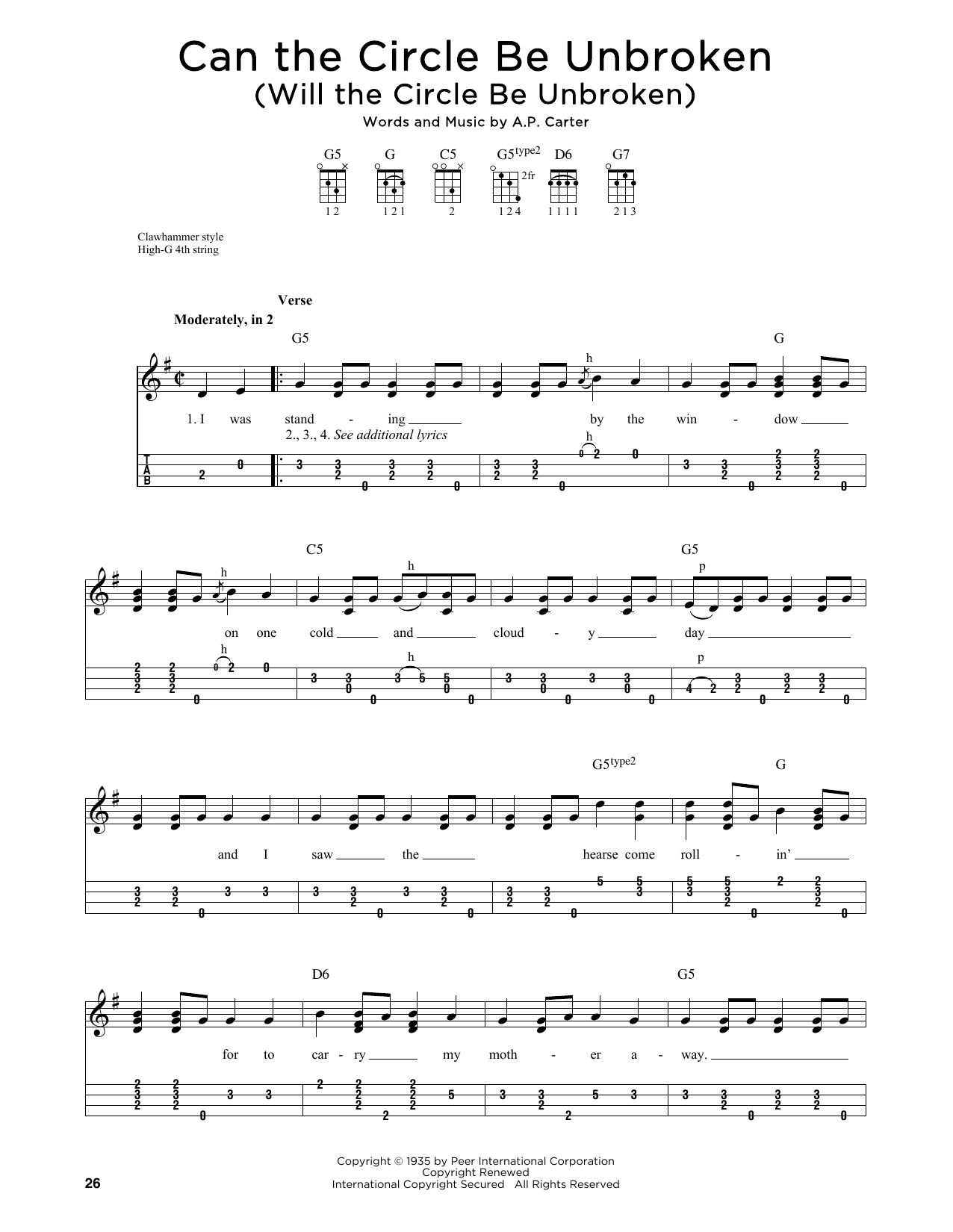
Can The Circle Be Unbroken (Will The Circle Be Unbroken) (arr. Jim Schustedt): Ukulele

As performed by The Nitty Gritty Dirt Band / Arranged by Jim Schustedt

Item: 35-DS01626933

Digital Download
$3.99
Description

Can The Circle Be Unbroken (Will The Circle Be Unbroken) (arr. Jim Schustedt): Ukulele isn't in MakeMusic Cloud just yet...but it could be. Let us know you'd like to see it, and you'll help shape what comes next. In the meantime, start a free trial and dive into thousands of interactive titles your students can play along with today.

Sample Audio
No sample audio found.
Sample Video
Additional Details
Publisher: Hal Leonard
Page Count: 2
SKU: 35-DS01626933

More about this title

About the Artist: The Nitty Gritty Dirt Band

The Nitty Gritty Dirt Band emerged from Los Angeles in the late 1960s as pioneers of country rock, blending bluegrass traditions with contemporary songwriting and electric instrumentation. Their 1970 album "Uncle Charlie & His Dog Theodor" became a watershed moment for the genre, introducing folk and country standards to rock audiences while earning respect from traditional musicians. The band's willingness to honor roots music while pushing its boundaries has made them enduring figures in American popular music.

Their most famous recording, a collaboration with bluegrass legends on "Will the Circle Be Unbroken," became an iconic bridge between generations and musical communities. This track exemplifies their core strength: arranging familiar songs in ways that feel both fresh and reverent, creating entry points for new listeners while satisfying longtime fans.

Why we love this

Schustedt's ukulele arrangement captures the warmth and accessibility that made this song a crossover hit, stripping the tune to its emotional core without losing any character. The voicings sit naturally under the fingers while maintaining harmonic interest, making it equally suitable for a student exploring fingerstyle technique and a seasoned player seeking repertoire with real substance. Programming this opens conversations about how arrangement serves both tradition and new audiences.

What to expect

There is a gentle, reflective quality to this arrangement that invites performers and listeners into intimate musical space. The melody unfolds like a familiar conversation, rooted in spiritual tradition yet entirely present in the moment. Every chord carries intention rather than decoration.

Who it's for

Ukulele students with solid chord changes and basic fingerstyle who are ready for repertoire with real emotional weight. This works equally well for ensemble programs seeking accessible instrumentation that doesn't compromise on substance.

How to get the most out of it

  • Map out your finger positions for the chord transitions before performing; this tune rewards smooth, unhurried changes that let the melody breathe.
  • Use the space between phrases to let the instrument's resonance speak. Ukulele cuts through ensemble textures best when you're selective about volume rather than constant.
  • Pay attention to the arc of the narrative in the lyrics. The spiritual gravity of the text demands reverence in your tone, even at moderate tempos.
  • If accompanying singers, anchor the harmonic foundation without overshadowing the vocal line; restraint often serves this repertoire better than flourish.

How to use it

This pairs naturally with other folk standards in a concert program dedicated to American roots music, or stands alone as a thoughtful opening piece that sets a reflective tone. Consider it for memorial services, community events, or classroom moments when you need music that bridges generations and asks listeners to think about continuity and connection.

Skills your students will build

  • Smooth chord transitions in folk progressions (I, IV, V movement)
  • Fingerstyle pattern consistency over longer song forms
  • Harmonic awareness through arrangement variations
  • Interpretive choice making: how restraint serves emotional content
  • Leading melody work while managing accompaniment texture

You May Also Like