Simon Mulligan is an arranger with a gift for reimagining Broadway standards in ways that serve musicians at all levels. His work balances respect for the original material with practical consideration for the ensemble or soloist performing it, making classic songs accessible without sacrificing their character.
Why we love this
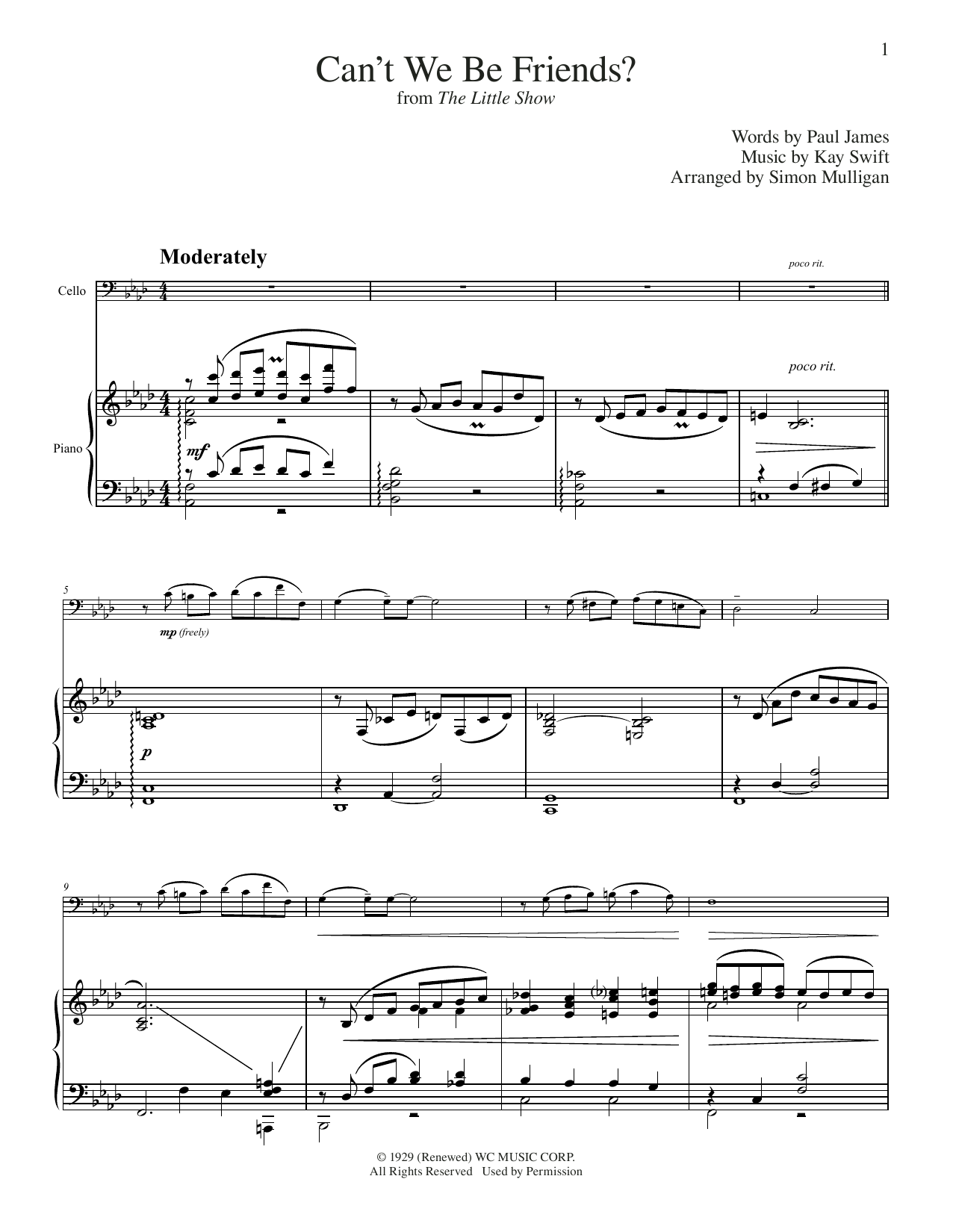
This arrangement respects the gentle charm of a 1929 standard while creating a vehicle that lets a cellist shine with piano support. The eight-page length gives you substance without demanding an entire rehearsal block, making it ideal for recital programming or chamber concert slots where you need something both familiar and slightly unexpected.
What to expect
Warm and intimate, like a conversation between two old friends. The melody carries a wistful hopefulness that the arrangement preserves completely, allowing the cello to sing with genuine tenderness while the piano provides both support and personality beneath.
Who it's for
Solo cellists preparing for student recitals, chamber ensembles looking for accessible but sophisticated Broadway repertoire, and piano teachers seeking duet material that works across multiple performance contexts. Performers comfortable with straightforward melody and traditional harmonic vocabulary will find this arrangement clear and rewarding.
How to get the most out of it
Balance the cello melody so it projects over the piano without forcing it; this song lives in conversational dynamics rather than dramatic gestures.
Find the lyrical phrasing inherent in the tune by singing it through first, even on an instrument, so the accompaniment can follow your rubato naturally.
Keep the piano part transparent enough that listeners can hear both lines equally; resist the impulse to make it lush or overstuffed.
Coordinate with your pianist on how much of the original song's character lives in their harmonic choices; let that partnership shape the overall color.
How to use it
Pair this with other classic standards for a throwback-style recital, or program it as a lighter moment between more demanding contemporary works. It works equally well in a chamber concert setting or as a special feature that showcases your soloist's lyrical playing without taxing everyone's rehearsal time.
Skills your students will build
Sustaining a singing tone across longer phrase arcs
Collaborating dynamically with a piano partner
Interpreting song-form melody with authentic stylistic phrasing
Balancing simplicity with expressive depth
You May Also Like
Scan to Complete Your Purchase
Use your phone's camera to scan the code below
You'll log in on your phone and the order will be added to your account