Can't We Be Friends Sheet Music Preview

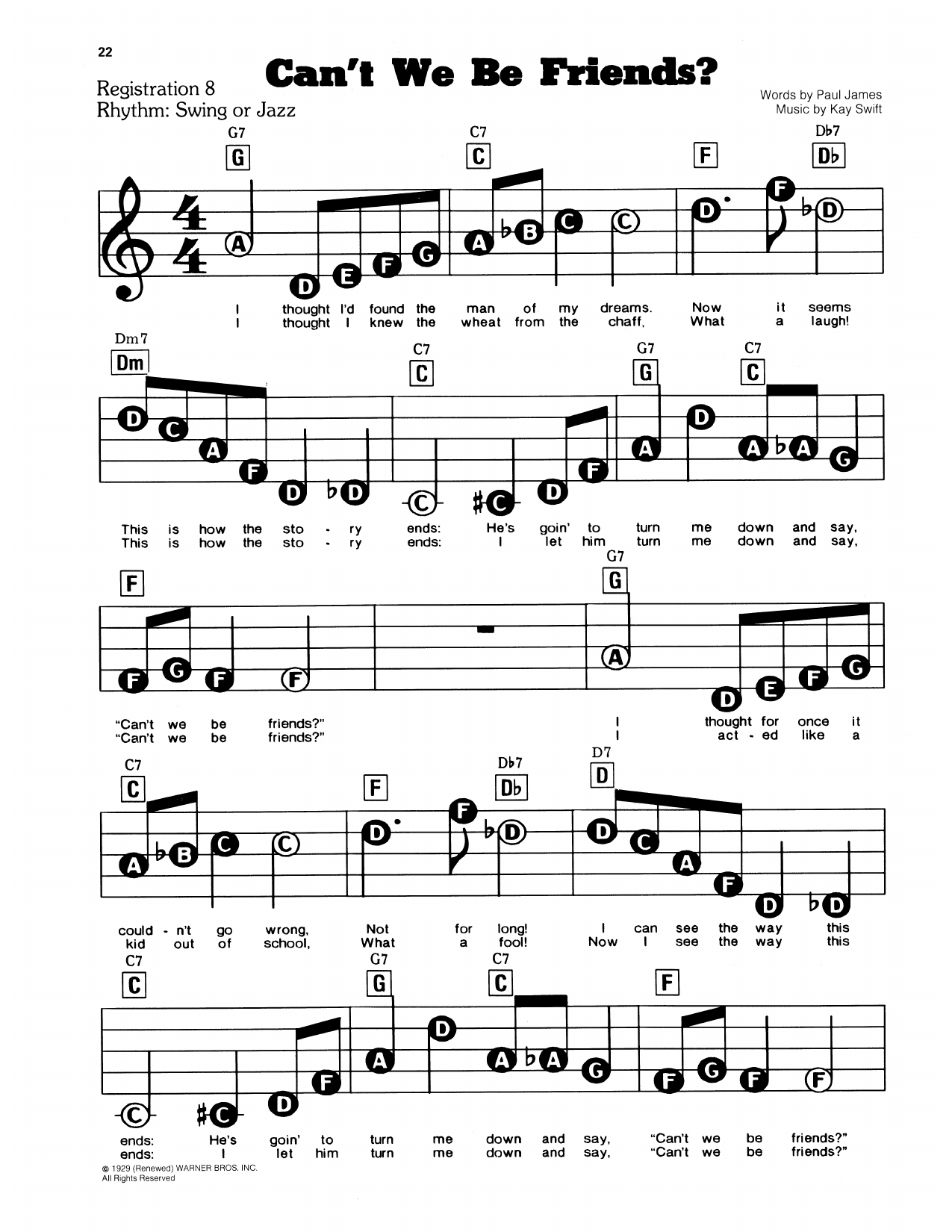
Can't We Be Friends: E-Z Play Today

As performed by Frank Sinatra

Item: 35-DS01914483

Digital Download
$4.99
Description

Can't We Be Friends: E-Z Play Today isn't in MakeMusic Cloud just yet...but it could be. Let us know you'd like to see it, and you'll help shape what comes next. In the meantime, start a free trial and dive into thousands of interactive titles your students can play along with today.

Sample Audio
No sample audio found.
Sample Video
Additional Details
Publisher: Hal Leonard
Page Count: 2
SKU: 35-DS01914483

More about this title

About the Artist: Frank Sinatra

Frank Sinatra redefined popular song interpretation through his mastery of phrasing, dynamic control, and emotional nuance. His influence on jazz piano repertoire and vocal standards remains foundational to music education, particularly for students exploring the intersection of jazz idiom and theatrical music.

Sinatra's approach to melody and timing offers pianists concrete lessons in rubato, harmonic sophistication, and the art of accompanying a vocalist or leading an ensemble with conversational ease.

Why we love this

This standard sits at the sweet spot between accessibility and genuine jazz vocabulary. The melody is singable and memorable, but the harmonic movement rewards players who dig into the changes, making it ideal for students ready to move beyond lead sheet thinking into real voice leading.

What to expect

Conversational and intimate. The melody floats over harmonies that shift with genuine jazz sophistication, creating a sense of elegant forward motion. There's warmth in the changes and a reflective quality that rewards sensitive playing.

Who it's for

Pianists exploring standard repertoire with harmonic substance beyond beginner lead sheets. Jazz students building fluency in common changes and upper structure voicings. Any player seeking authentic material for vocal accompaniment or small ensemble work.

How to get the most out of it

  • Let the rhythm section pocket drive the tempo rather than pushing ahead. The swing feel depends on space as much as swing eighth notes.
  • Voice the left hand to support the harmonic motion without doubling the melody. This creates clarity and teaches accompaniment texture naturally.
  • Negotiate the bridge's harmonic rhythm with a slight ease in tempo. The changes move quickly here, and breathing room gives listeners time to follow the modulation.
  • Listen for the vocal phrasing if accompanying a singer. Lay back slightly at phrase endings to give space for breath and emotion.

How to use it

Pair this with other Sinatra standards or Great American Songbook selections for a jazz appreciation or vocal performance unit. It works equally well as a solo showcase, chamber music selection, or accompaniment foundation for singers preparing audition material.

Skills your students will build

  • Reading and interpreting jazz chord changes with upper extensions and alterations
  • Comping and accompaniment texture in swing idiom
  • Phrasing control and rubato within a rhythmic framework
  • Left hand voicing independence from the melody
  • Harmonic analysis of ii-V-I progressions and bridge modulation

You May Also Like