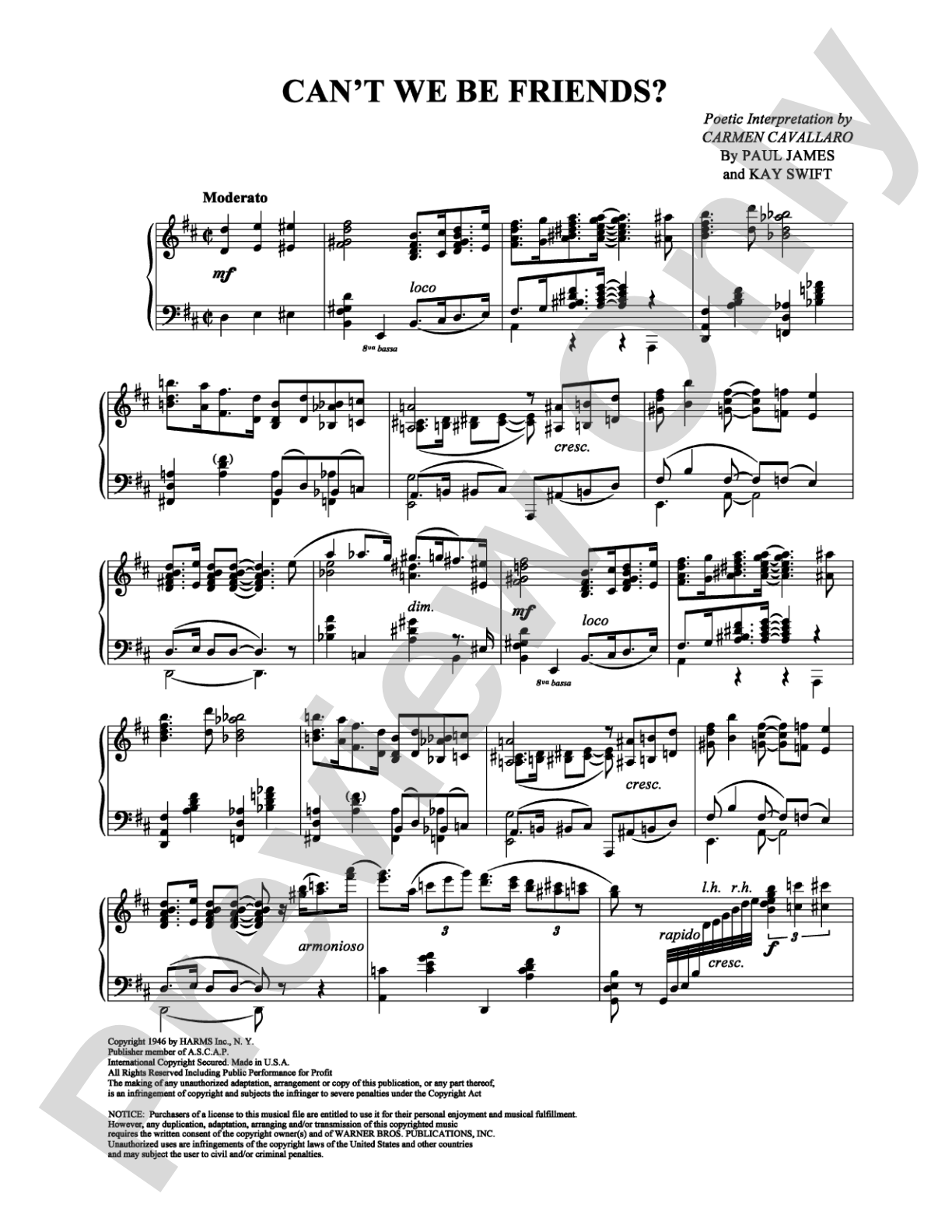
Can't We Be Friends?: Piano Digital Sheet Music

Can't We Be Friends?: Piano Digital Sheet Music

Carmen Cavallaro, Kay Swift, Paul James

Item: 00-PS-0001904

Digital Download
$3.99
Description

Can't We Be Friends?: Piano Digital Sheet Music isn't in MakeMusic Cloud just yet...but it could be. Let us know you'd like to see it, and you'll help shape what comes next. In the meantime, start a free trial and dive into thousands of interactive titles your students can play along with today.

Sample Audio
No sample audio found.
Sample Video
Additional Details
SKU: 00-PS-0001904

More about this title

About the Artist: Carmen Cavallaro

Carmen Cavallaro (1913-1989) was an American pianist and composer known for his virtuosic interpretations of jazz standards and popular songs. His sophisticated approach to the keyboard combined classical training with jazz idioms, making him a bridge between concert music and the jazz vernacular. Cavallaro recorded extensively throughout the mid-twentieth century and became celebrated for his ability to inhabit the American songbook with both technical brilliance and musical sensitivity.

Why we love this

Cavallaro's interpretation of this standard showcases the kind of sophisticated piano jazz that rewards close listening and careful study. His touch, phrasing, and harmonic sophistication model how a classical pianist can inhabit jazz repertoire with integrity and without sacrificing musicality.

What to expect

The piece breathes with conversational warmth. Cavallaro's touch on the melody is intimate and unhurried, allowing the harmony to shimmer beneath without overtaking the song's essential directness. There's a sense of reflection here, almost as if the pianist is thinking through the song's emotional content while playing.

Who it's for

This recording appeals to jazz pianists seeking a model of elegant, song-centered interpretation, as well as classical pianists exploring the crossover between concert music and jazz standards. Advanced students benefit from observing how Cavallaro balances technical facility with lyrical restraint.

How to get the most out of it

  • Study the recorded interpretation first to internalize Cavallaro's approach to phrasing and rubato; this version treats the melody as a singing line rather than a rhythmic groove.
  • Pay attention to his pedal work, which creates harmonic depth without muddying the clarity of individual voices.
  • Notice how Cavallaro shapes the bridge differently from the A sections; use dynamic and textural variety to create architectural interest across the form.

How to use it

Include this in a jazz standards recital or as a study piece for a student preparing a solo jazz evening. It pairs well with other swing-era standards and offers a clear contrast to more contemporary or uptempo interpretations of the same tune.

Skills your students will build

  • Voicing and reharmonization in jazz contexts
  • Controlling tempo flexibility and rubato within a song form
  • Balancing melody with accompaniment texture
  • Pedal technique for harmonic clarity in jazz ballads

You May Also Like