Can't Buy Me Love Sheet Music Preview

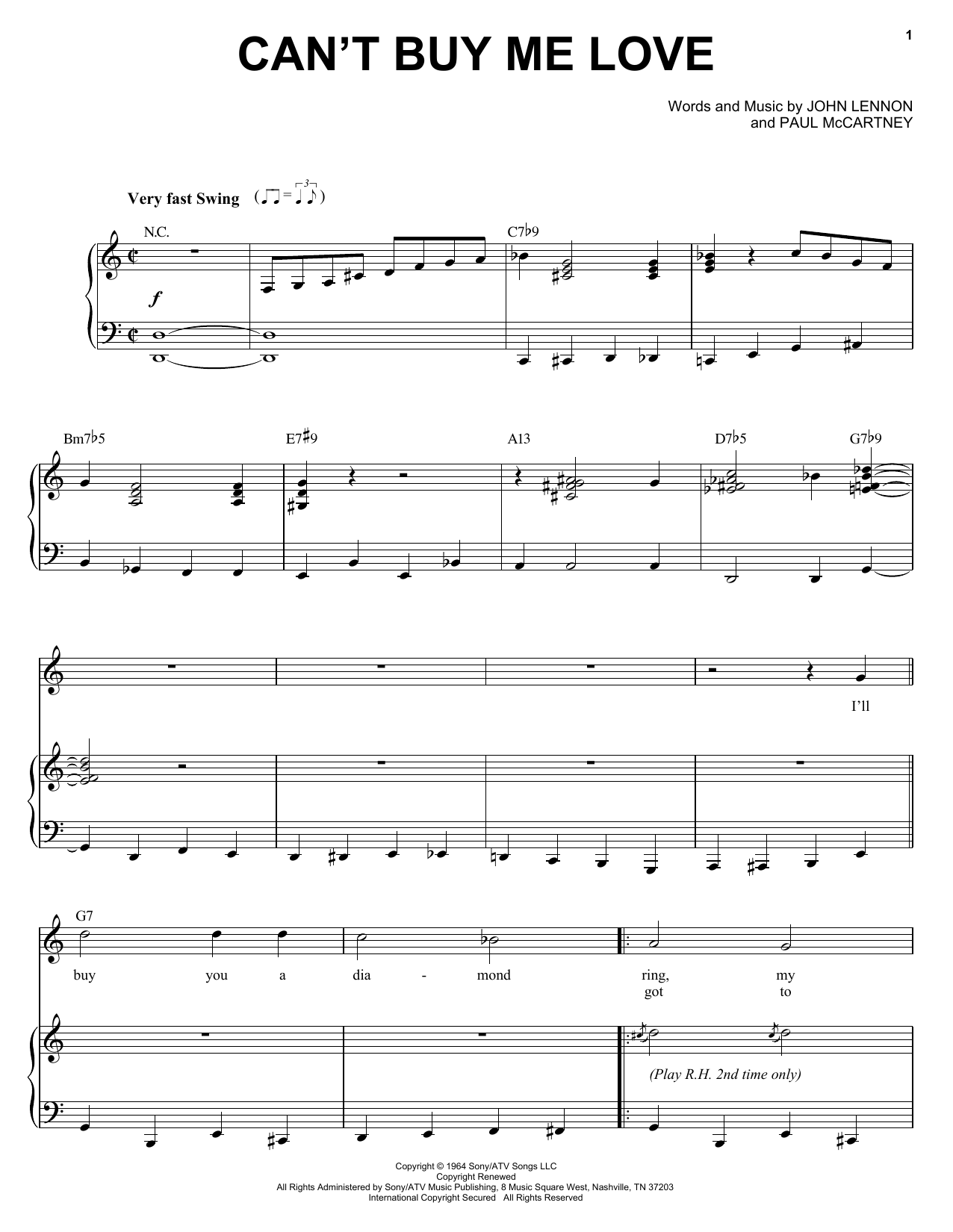
Can't Buy Me Love: Piano Vocal

As performed by Michael Buble / As performed by The Beatles

Item: 35-DS00020707

Digital Download
$5.99
Description

Can't Buy Me Love: Piano Vocal isn't in MakeMusic Cloud just yet...but it could be. Let us know you'd like to see it, and you'll help shape what comes next. In the meantime, start a free trial and dive into thousands of interactive titles your students can play along with today.

Sample Audio
No sample audio found.
Sample Video
Additional Details
Publisher: Hal Leonard
Page Count: 13
SKU: 35-DS00020707

More about this title

About the Artist: Michael Buble

Michael Bublé is a Canadian crooner who has spent his career revitalizing mid-century jazz and pop standards for contemporary audiences. His smooth baritone and sophisticated interpretive choices have made him one of the most commercially successful artists of the 21st century, with particular appeal to singers seeking accessible entry points into stylized vocal performance.

Bublé's recordings of classic material demonstrate how traditional songs can retain their elegance while reaching modern listeners. For educators, his versions offer vocal models that prioritize musicality, phrasing control, and emotional restraint over technical fireworks.

Why we love this

The Beatles' timeless melody gets a treatment that honors both the original's infectious charm and Bublé's sophisticated sensibility. This arrangement sits at exactly the intersection where student singers can explore swing-influenced phrasing and accompaniment work without drowning in complexity, making it an excellent choice for jazz or contemporary vocal ensembles who want material with genuine commercial appeal.

What to expect

Warm, conversational, and subtly swinging. The arrangement glides rather than drives, inviting the singer to settle into each phrase with unhurried confidence. There's an understated elegance here that rewards restraint over virtuosic display.

Who it's for

Solo vocalists and vocal jazz students seeking approachable material that demands genuine musicianship. It's equally suited to piano teachers introducing their accompaniment students to stylized interpretation of familiar songs.

How to get the most out of it

  • Balance the vocal line against the piano accompaniment so the melody breathes naturally rather than being driven purely by rhythmic momentum. This is where Bublé's interpretation shines most.
  • Attend carefully to the harmonic rhythm in the piano part; it often moves faster than the melody, creating opportunities for tasteful syncopation if the vocalist slightly delays or anticipates the beat.
  • Experiment with interpretive breath placement. The song's structure allows for varied phrasing between verse and chorus; use this freedom to shape emotional peaks rather than singing it with metronomic consistency.
  • Study how the piano intro and interludes frame the vocal entrance and subsequent sections. These moments establish the interpretive tone and should feel intentional rather than merely functional.

How to use it

Include this in a concert exploring how standards bridge generations, pairing it with other Beatles interpretations or mid-century pop material. It works particularly well as a first-half closer, offering the audience a moment of genuine musical sophistication without the weight of heavier classical or contemporary art song repertoire.

Skills your students will build

  • Legit voice production with relaxed but supported tone
  • Swing and jazz phrasing applied to popular material
  • Interpretation of rhythmic flexibility within a melodic framework
  • Collaborative listening between soloist and accompanist
  • Managing dynamic control across a range of tessituras

You May Also Like