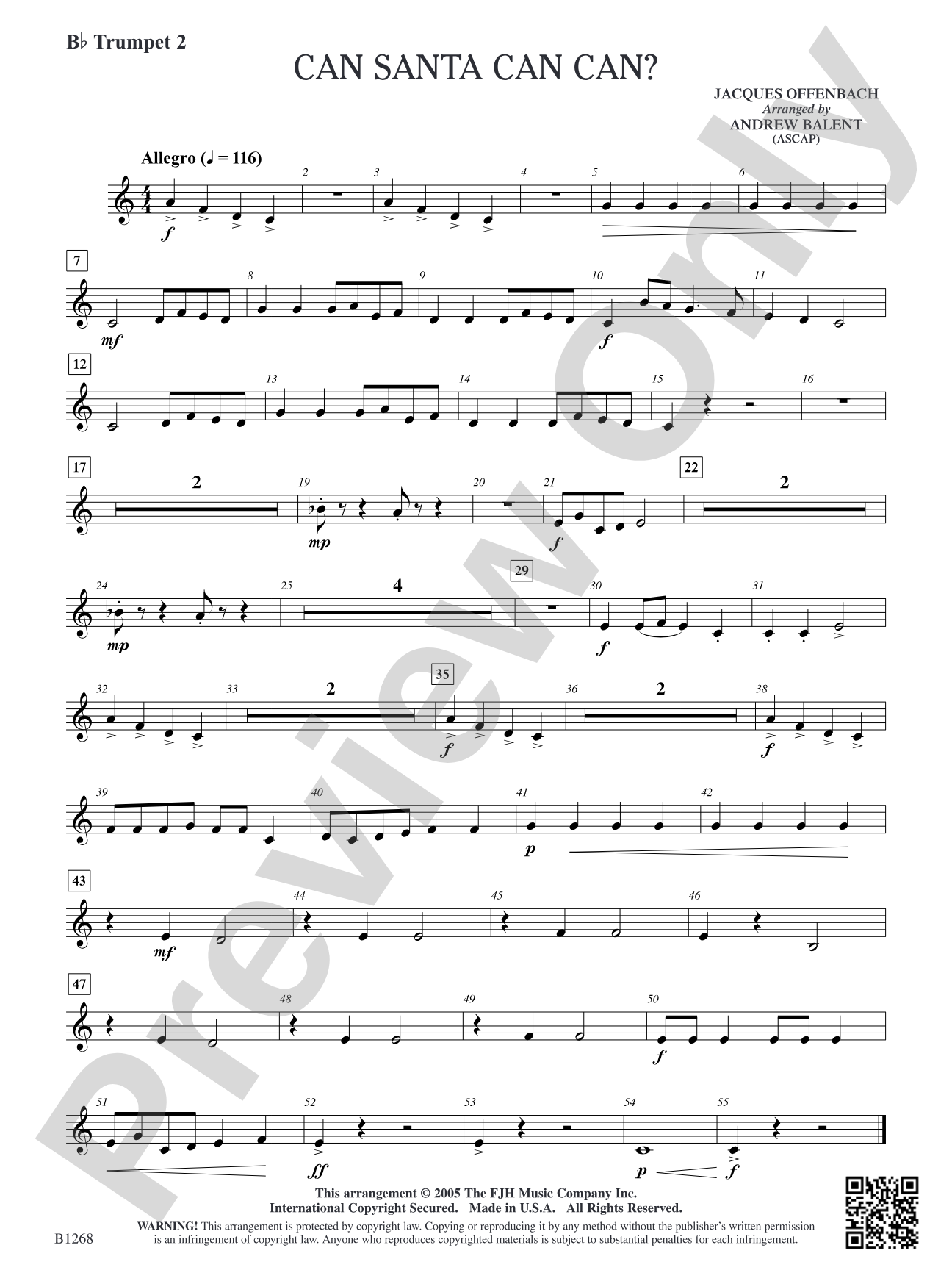
Can Santa Can Can?: B-flat Trumpet 2 Sheet Music Preview

Can Santa Can Can?: B-flat Trumpet 2

By Jacques Offenbach / arr. Andrew Balent

Grade: 1.5

Item: 98-PC-DB1268_T2

Digital Download
$7.00
Description
Santa's elves are finished with their seasonal duties and are dancing in celebration. The reindeer join in and so does Mrs. Claus. They decide to invite Santa to join them, but the question is, "Can Santa Can Can?" This novel holiday work combines the famous Offenbach Can Can with humorous snippets of various carols. Sure to bring a smile to everyone's face this holiday season!

Can Santa Can Can?: B-flat Trumpet 2 isn't in MakeMusic Cloud just yet...but it could be. Let us know you'd like to see it, and you'll help shape what comes next. In the meantime, start a free trial and dive into thousands of interactive titles your students can play along with today.

Sample Audio
0:00
0:00
Sample Video
Additional Details
Series: FJH Developing Band
Publisher: The FJH Music Company, Inc.
SKU: 98-PC-DB1268_T2

More about this title

About the Composer: Jacques Offenbach

Jacques Offenbach (1819-1880) was a German-born French composer who revolutionized operetta as a musical form. His gift for melody and comedic timing made operetta accessible and wildly popular across Europe, and his influence on musical theater remains enormous today. The Can Can, from his operetta Orphée aux enfers (Orpheus in the Underworld), stands as one of the most recognizable melodies in Western music and captures his genius for infectious rhythms and theatrical flair.

For educators and students, Offenbach's music offers direct entry into 19th-century harmonic language and orchestration. His pieces are built on clarity and momentum, making them ideal teaching tools for developing ensemble balance, rhythmic precision, and the joy of playing together.

Why we love this

This arrangement keeps the Can Can's unstoppable energy while layering in recognizable holiday fragments, giving your band a piece that lands instantly with audiences. At Grade 1.5, it's accessible enough for developing ensembles yet sophisticated enough to stay engaging for stronger students, and the humor built into the arrangement means your musicians actually enjoy rehearsing it.

What to expect

Dancing in a workshop filled with laughter and celebration. The Can Can's infectious, swaying rhythm anchors the piece, while glimpses of carols give it seasonal warmth without sentimentality. There's mischief in every measure, and the orchestration makes that mischief sparkle.

Who it's for

This piece works beautifully for developing concert bands that want a crowd-pleaser with substance. It's equally valuable for holiday pops concerts, end-of-semester celebrations, or programs seeking energy and approachability without sacrificing musicianship.

How to get the most out of it

  • Keep the Can Can melody crisp and forward; this piece thrives on rhythmic clarity and bounce, so resist the urge to drag the tempo even when blend feels comfortable.
  • Balance the humorous carol snippets so they read as intentional winks rather than distractions. They're short enough that slight dynamic peaks will make them land without disrupting the main character.
  • Articulate the characteristic syncopations of the Can Can style consistently across sections. Uniform tonguing and attack choices between woodwinds and brass will sharpen the comedic timing.
  • Give yourself space in rehearsal to let the ensemble hear how the arrangement plays with expectation. The humor is built into the music, not imposed on top of it.

How to use it

Program this as your holiday concert opener or closer, depending on whether you want to build energy or send audiences out smiling. It pairs well alongside more traditional holiday selections, providing textural and emotional contrast that keeps your concert dynamic and memorable.

Skills your students will build

  • Rhythmic clarity and articulation in syncopated figures
  • Ensemble balance when multiple melodic lines compete
  • Stylistic awareness of operetta orchestration
  • Responding to comedic intent through musical execution
  • Sectional coordination at faster tempos

You May Also Like