
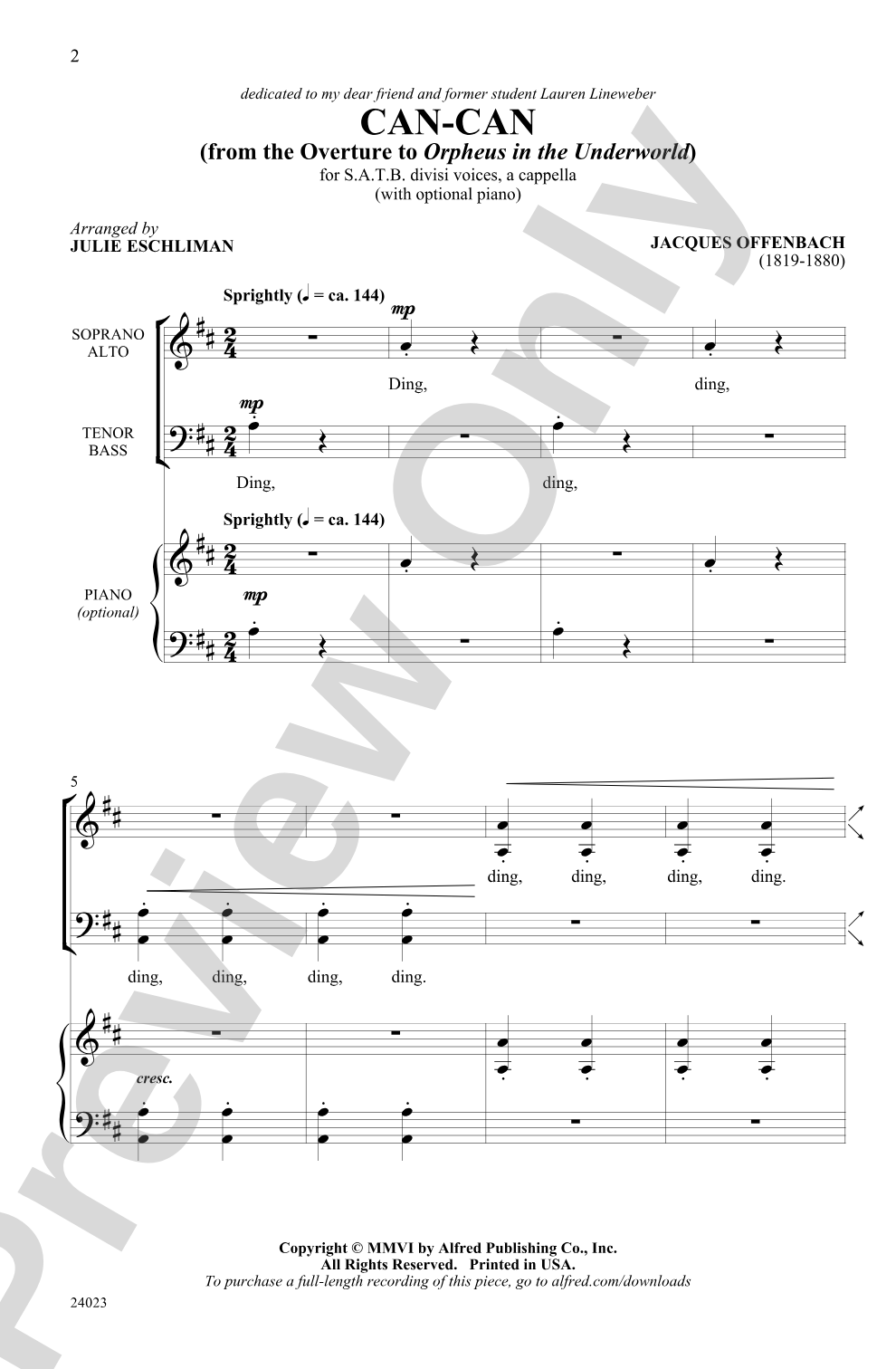

Can-Can (from the Overture to Orpheus in the Underworld): SATB divisi, a cappella Choral Octavo
By Jacques Offenbach / arr. Julie Eschliman
Item: 00-PO-0000072
$1.95
Minimum order quantity: 20 copies
Pickup currently not available
Related Items
Can-Can (from the Overture to Orpheus in the Underworld): SATB divisi, a cappella Choral Octavo |
$1.95
|
View |
Description
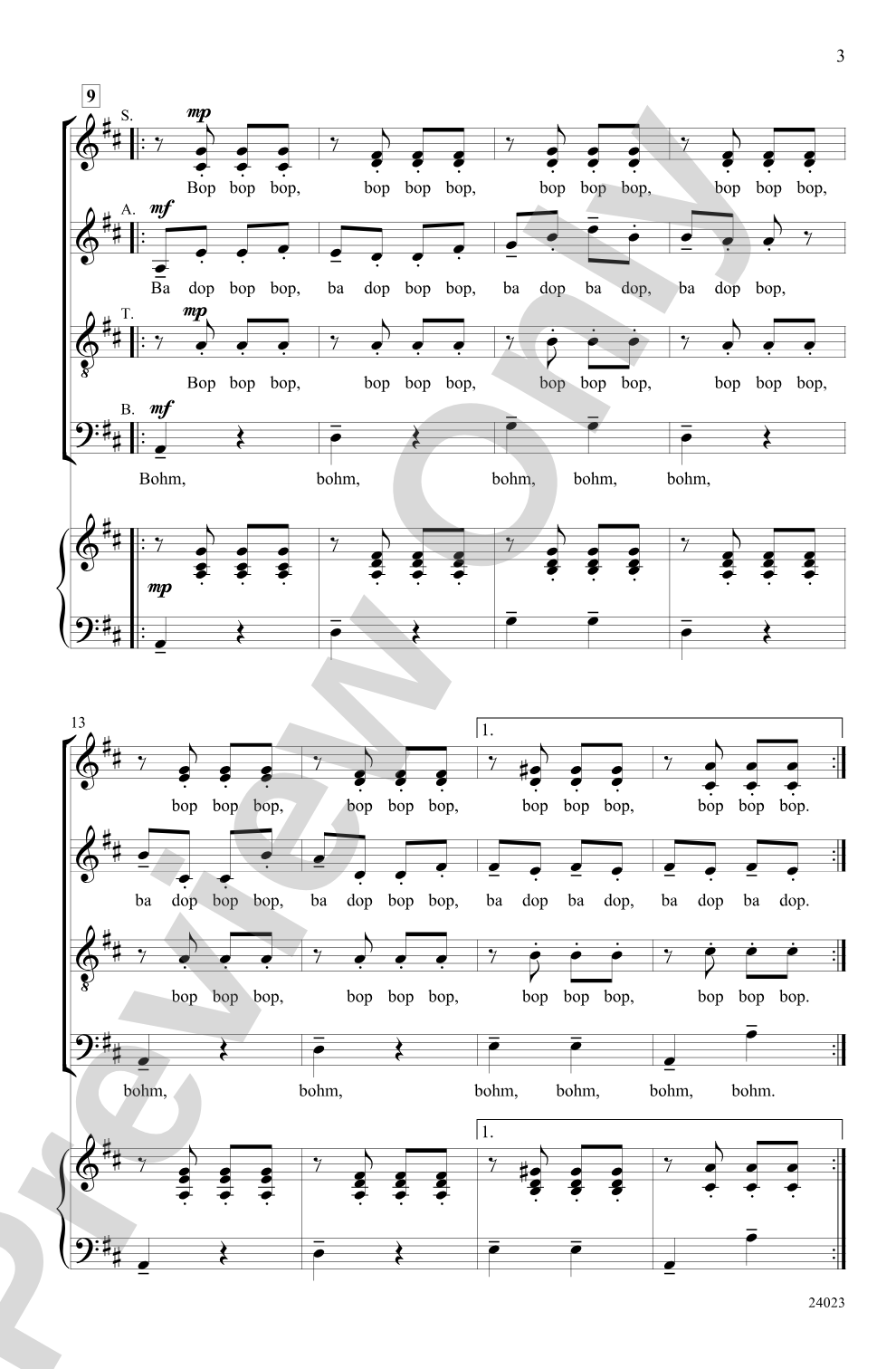
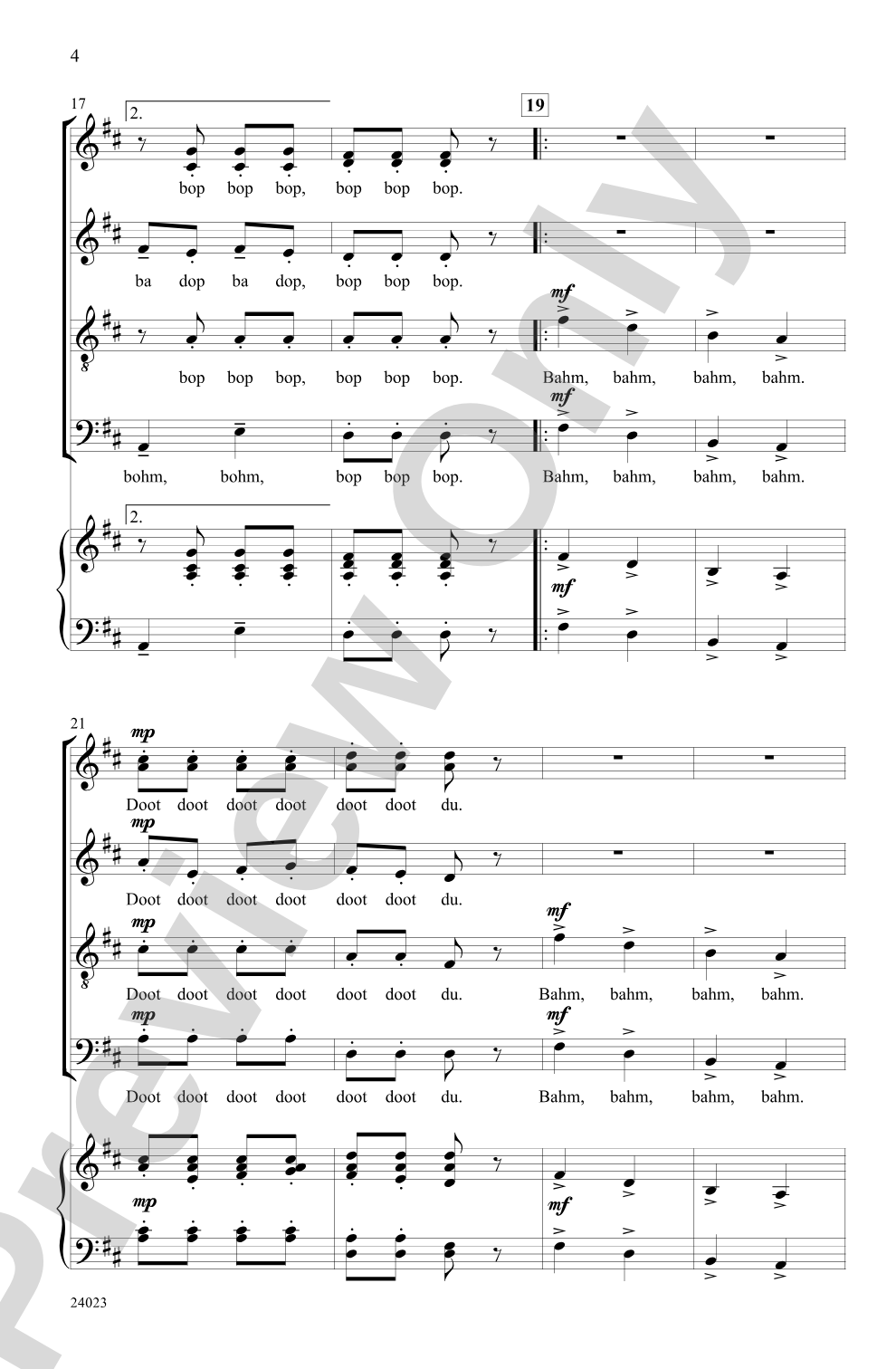
A must-have novelty number for choirs with a sense of humor! Offenbach's most famous overture has been skillfully arranged with familiar melodic themes that pass between sections of the choir, while remaining singers provide a rhythmic choral accompaniment. Achievable a cappella that your choir "can-can" master.


Can-Can (from the Overture to Orpheus in the Underworld): SATB divisi, a cappella Choral Octavo isn't in MakeMusic Cloud just yet...but it could be. Let us know you'd like to see it, and you'll help shape what comes next. In the meantime, start a free trial and dive into thousands of interactive titles your students can play along with today.
Request This Title
Tell us you want it.
Start Your Free Trial
Explore everything that's ready to play right now.
Sample Audio
1
Audio File
--:--
0:00
0:00
Sample Video
No sample videos found.
Additional Details
Series:
Alfred Choral Designs
Publisher:
Alfred Music
Page Count:
16
SKU:
00-PO-0000072
More about this title
About the Composer: Jacques Offenbach
Jacques Offenbach (1819-1880) was a German-born French composer who revolutionized operetta during the Second Empire. His gift for melody and comedic timing made him the defining voice of French theatrical music in the nineteenth century, and his works remain central to choral and operatic repertoires worldwide.
Offenbach's *Orpheus in the Underworld* premiered in 1858 and became an instant sensation. The overture, anchored by the Can-Can theme, remains his most recognizable music. Beyond its theatrical brilliance, the piece demonstrates how a composer can layer melody and rhythmic vitality to create something instantly joyful and enduringly popular.
Why we love this
Julie Eschliman's arrangement keeps Offenbach's infectious energy intact while solving the real challenge of an a cappella setting: she threads the famous melodic material through different voice sections without drowning any part in filler. The rhythmic accompaniment parts stay engaging and playable, and the piece naturally builds momentum toward a finish that audiences genuinely enjoy.
What to expect
Effervescent and lighthearted. The Can-Can melody sparkles as it travels between sections while the accompanying voices create a rhythmic pulse that feels almost like a dance. There's a theatrical charm to the writing that invites both singers and listeners to smile.
Who it's for
Choirs that can balance four-part divisi writing and enjoy connecting with audiences through program variety. The piece works well for groups at the intermediate level or above who have secure sightreading skills and can manage the quick metric clarity the arrangement requires.
How to get the most out of it
- Keep the rhythmic accompaniment sections (typically sustained chords or ostinatos) crisp and light; they should lilt rather than plod. These parts are easy to oversing, which kills the buoyancy Offenbach built in.
- Pass melody lines between sections with clear handoffs. Mark breath points in parts so singers know when the baton passes to sopranos or altos. Smooth transitions here make the arrangement feel like one continuous musical thought.
- Lean into the humor without mugging it. The Can-Can's absurdity is built into the music itself; resist the urge to add exaggerated phrasing on top of what Eschliman has already written.
- Establish a brisk tempo early in rehearsal and maintain it through performance. This piece thrives at energy; a sluggish tempo makes it feel labored instead of playful.
How to use it
Program this as a palate cleanser between serious works, or use it to open a second half and reset the room's energy. It works especially well on pops concerts, spring programs, or any concert where you want to showcase your choir's musicality while reminding the audience that choral music can be genuinely fun.
Skills your students will build
- Passing melodic material between voice sections with rhythmic precision
- Sustaining rhythmic ostinatos at moderate volume without sacrificing intonation
- Navigating divisi writing while maintaining ensemble cohesion
- Balancing lyrical melody with supportive accompaniment textures in a cappella settings
- Maintaining rhythmic independence while responding to ensemble tempo