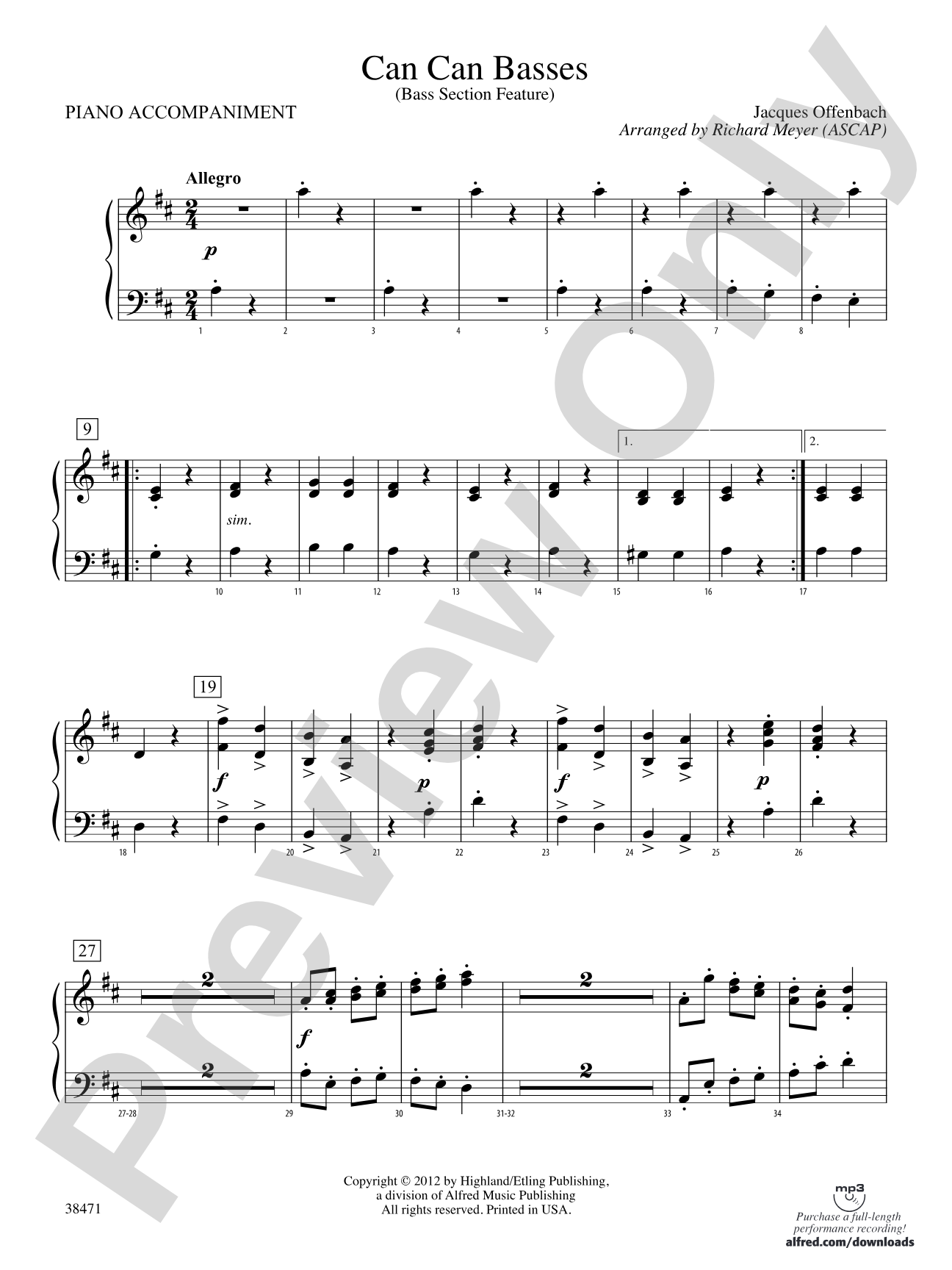
Can Can Basses: Piano Accompaniment Sheet Music Preview

Can Can Basses: Piano Accompaniment

Bass Section Feature

By Jacques Offenbach / arr. Richard Meyer

Grade: 1.5

Item: 00-PC-0015519_K

Digital Download
$5.99
Description
Give your hard-working basses the recognition they deserve in this great section feature based on Offenbach's nimble and energetic dance tune. There are fun parts for everyone, but the tune (and the spotlight) belongs to the basses! How fast can they do the "Can-Can"? A terrific challenge for your entire orchestra! This title is available in MakeMusic Cloud.

Don't just read it, hear it, play along with it, and watch your students grow with it. In MakeMusic Cloud, Can Can Basses: Piano Accompaniment comes alive with professional accompaniment, adjustable tempo, and built-in practice tools that turn solo practice into real progress.

Sample Audio
0:00
0:00
Sample Video
Additional Details
Series: Highland/Etling String Explorer
Publisher: Alfred Music
Page Count: 72
SKU: 00-PC-0015519_K

More about this title

About the Composer: Jacques Offenbach

Jacques Offenbach (1819-1880) was a German-born French composer who dominated the operetta stage in 19th-century Paris. His gift for crafting melodies that lodge instantly in the ear, paired with his instinct for theatrical timing and comedy, made him one of the most performed composers of his era. The "Infernal Galop" from Orphée aux enfers (Orpheus in the Underworld) became the musical embodiment of the can-can itself, and that energy still powers dance floors and concert halls today.

For music educators, Offenbach's works offer an ideal entry point to the Romantic operetta tradition. His melodies are memorable without being simplistic, his harmonies are sophisticated yet transparent, and his sense of fun is genuine. Students recognize his music instantly, which creates immediate engagement and motivation to play well.

Why we love this

This arrangement solves the perpetual challenge of keeping bass players genuinely invested during rehearsals. Instead of relegating them to the foundation, Richard Meyer gives them the melody outright, complete with a tempo that demands precision and stamina. The result is a piece that energizes your entire section while reminding orchestras why basses matter so much to orchestral sound.

What to expect

Pure theatrical energy. The "Can-Can" is built on rhythmic drive and forward motion, and this arrangement keeps that momentum alive while giving every player something meaningful to do. There's humor here too, in the audacity of asking basses to carry a tune this nimble and fast.

Who it's for

String orchestra conductors seeking a repertoire piece that honors bass players and celebrates what they bring to the ensemble. This works equally well in groups at the middle school or early high school level, where bass confidence and enthusiasm directly affect section cohesion.

How to get the most out of it

  • Build the tempo gradually over the first few run-throughs. Young bass players often rush this energetic material from sheer enthusiasm; establishing a clear pulse in sectionals before full orchestra rehearsal pays dividends.
  • Clarify articulation in the bass line early. Consistent tonguing or bowing style across the section will make the "Can-Can" rhythm dance rather than lumber.
  • Balance the supporting parts carefully so they don't overwhelm the bass melody. Use sectional rehearsals to establish which instruments play softly when the basses are featured.
  • Let the basses hear the recording (if available through MakeMusic Cloud) before their first run-through. Knowing how the tune moves and breathes builds confidence.

How to use it

Perfect as a mid-concert palate cleanser that lands with genuine laughs and applause. It also works beautifully as an opener to build ensemble confidence and goodwill before tackling more demanding repertoire later in the season. Include it in any concert celebrating orchestral sections or highlighting student achievement.

Skills your students will build

  • Executing fast, articulate passages in the lower register
  • Maintaining rhythmic precision in syncopated figures
  • Balancing technical demands with musical phrasing
  • Listening to and supporting harmonic structures from a foundation perspective
  • Building stamina for sustained passages at tempo

You May Also Like