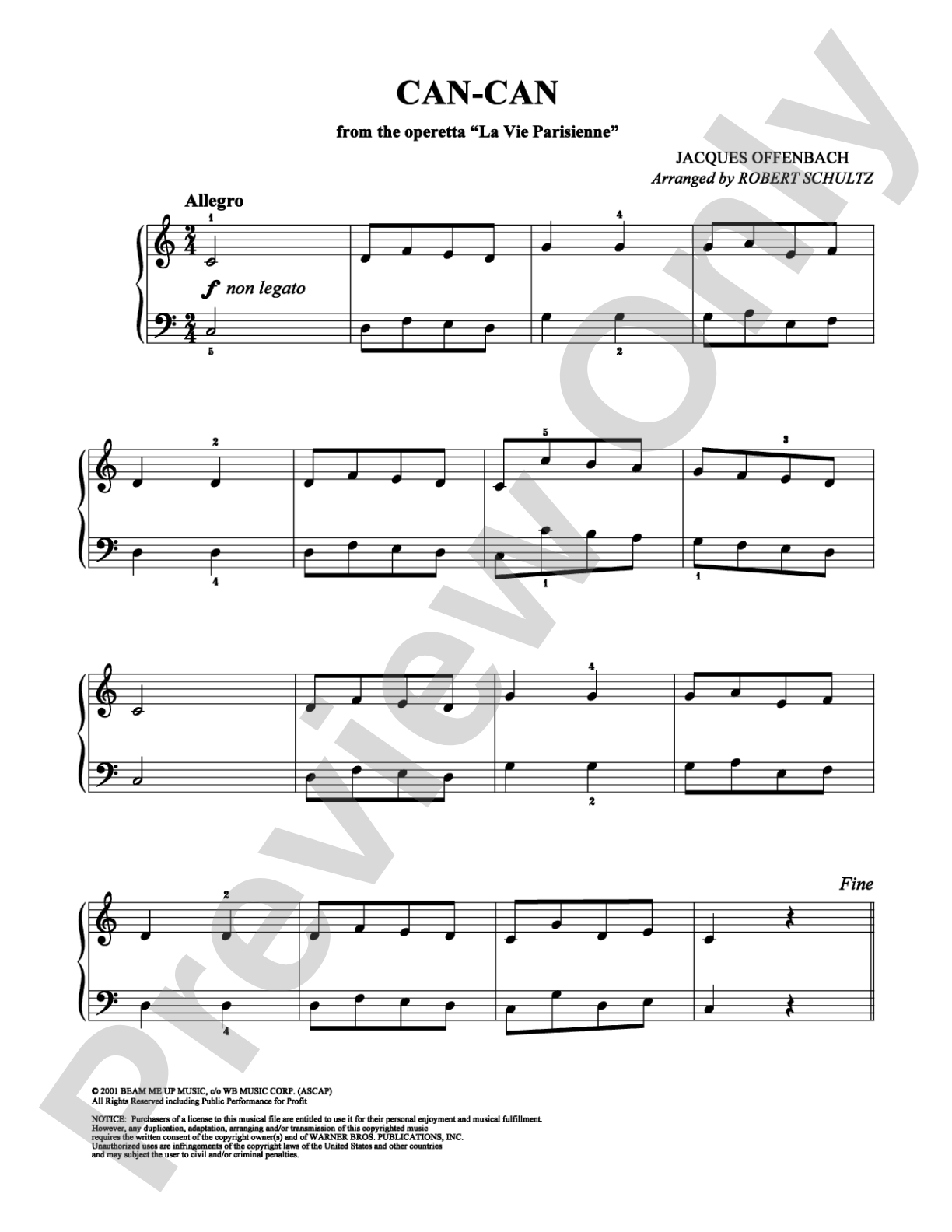
Can-Can: Easy Piano Digital Sheet Music

Can-Can: Easy Piano Digital Sheet Music

Jacques Offenbach

Item: 00-PS-0009990

Digital Download
$3.99
Description

Can-Can: Easy Piano Digital Sheet Music isn't in MakeMusic Cloud just yet...but it could be. Let us know you'd like to see it, and you'll help shape what comes next. In the meantime, start a free trial and dive into thousands of interactive titles your students can play along with today.

Sample Audio
No sample audio found.
Sample Video
Additional Details
SKU: 00-PS-0009990

More about this title

About the Creator: Jacques Offenbach

Jacques Offenbach (1819, 1880) was a German-born French composer who essentially invented the operetta genre. His theatrical instinct and gift for melody made him the most performed composer of his era, and his influence on light music and musical theater remains unmatched. Can-Can comes from his 1858 operetta Orphée aux enfers and represents everything Offenbach did best: infectious rhythm, clear melodic lines, and an irresistible invitation to movement.

Why we love this

Can-Can arrives as pure energy on the page. Even at an easy level, the piece retains its infectious character and rhythmic drive, making it genuinely fun to perform rather than a watered-down version. Students experience what makes this music work: propulsive rhythm, clear melodic hooks, and the satisfaction of playing something instantly recognizable.

What to expect

Spirited and buoyant. The piece captures the sparkle and rhythmic vitality of a classic cancan without overwhelming the player. Expect bright moments, clear rhythmic patterns, and the kind of music that makes listeners smile.

Who it's for

Elementary and middle school pianists building confidence with repertoire they recognize and enjoy. This arrangement works well for students who benefit from playing music that engages their ears and keeps their interest while developing technique.

How to get the most out of it

  • Keep the rhythm section tight and even. The piece depends on a steady pulse, so lock in the left-hand accompaniment before focusing on ornamental aspects of the melody.
  • Shape the melody with confidence but avoid dragging. This music thrives on momentum and forward motion.
  • Use the natural phrasing breaks to breathe and reset hand position rather than holding tension through entire sections.

How to use it

Feature this in a spring recital or casual performance where approachable, joyful music works well. It pairs nicely alongside other light classical favorites and serves as an excellent confidence builder when programming a mix of technical studies and music students actually want to play.

Skills your students will build

  • Maintaining rhythmic accuracy in syncopated patterns
  • Reading and playing repeated eighth-note figures
  • Balancing melodic clarity with steady accompaniment
  • Controlling tempo and building momentum across phrases

You May Also Like