
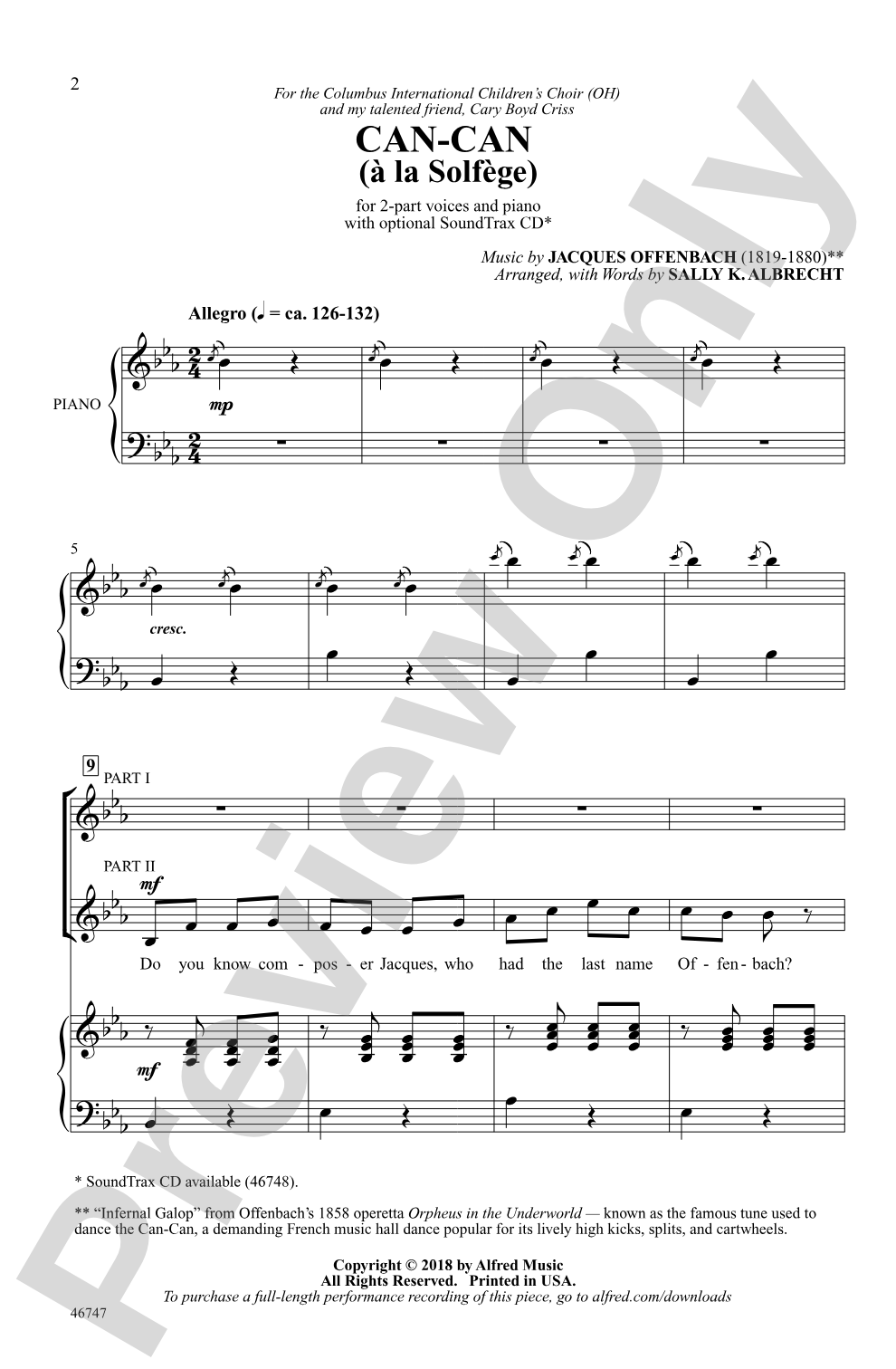
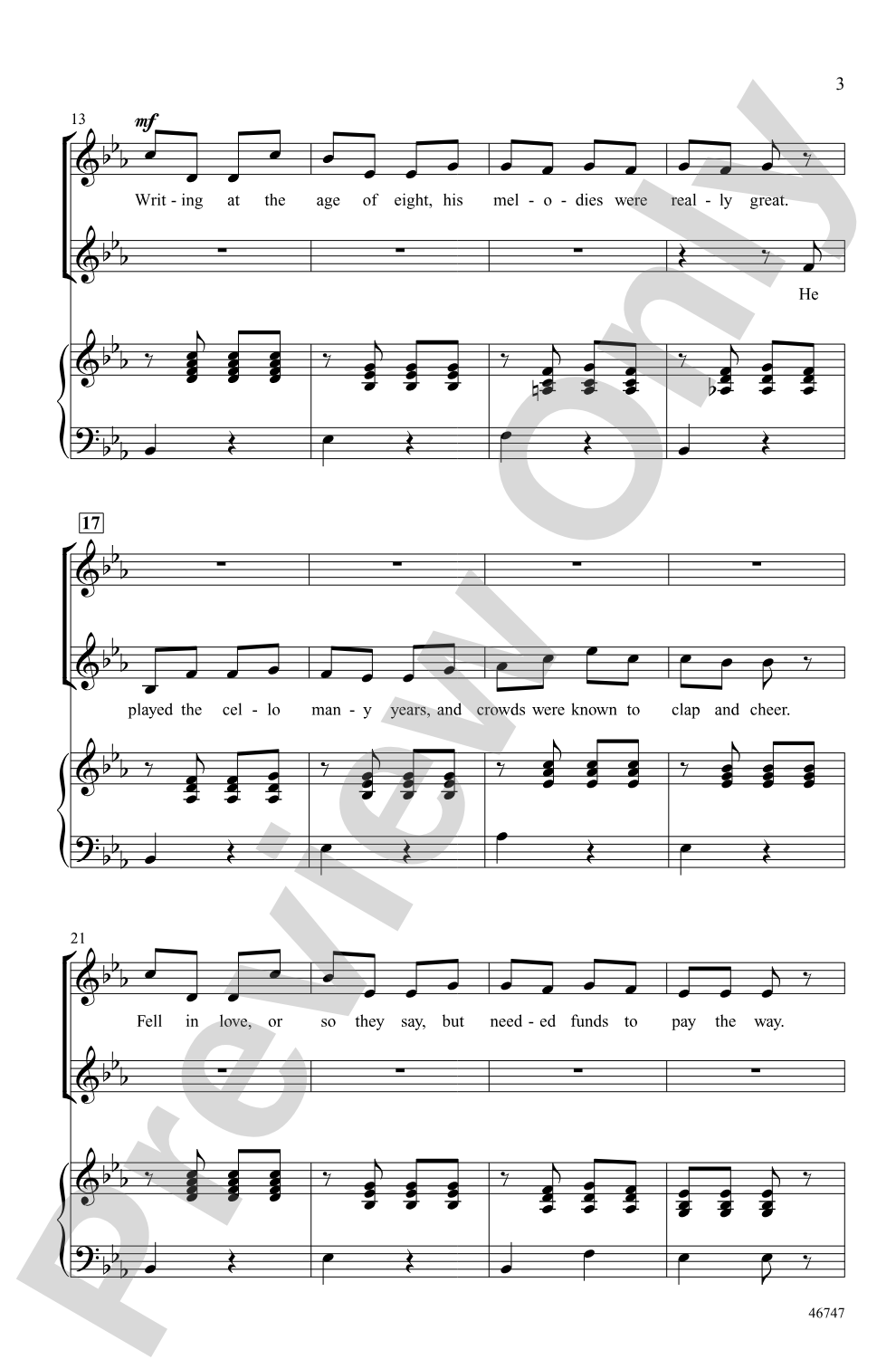

Can-Can: 2-Part Choral Octavo
(à la Solfège)
Music by Jacques Offenbach / arr., with words by Sally K. Albrecht
Item: 00-PO-0005783
$2.05
Minimum order quantity: 20 copies
Pickup currently not available
Description
The unforgettable melody from Offenbach's opera, The Tales of Hoffman, has been inventively adapted into a lesson on solfège and the life of the composer himself! Perfect for practicing fluency with major scale solfège syllables, vocal agility, and crisp diction. Try performing this creative gem with hand signs, or add Sally's clever staging from the Movin' DVD.


Can-Can: 2-Part Choral Octavo isn't in MakeMusic Cloud just yet...but it could be. Let us know you'd like to see it, and you'll help shape what comes next. In the meantime, start a free trial and dive into thousands of interactive titles your students can play along with today.
Request This Title
Tell us you want it.
Start Your Free Trial
Explore everything that's ready to play right now.
Sample Audio
1
Audio File
--:--
0:00
0:00
Sample Video
Additional Details
Series:
Alfred Choral Designs
Publisher:
Alfred Music
Page Count:
12
SKU:
00-PO-0005783
More about this title
About the Composer: Jacques Offenbach
Jacques Offenbach (1819-1880) was a German-born French composer who revolutionized operetta in the 19th century. His witty, melodically inventive works brought sophisticated musical satire to popular audiences, and his gift for creating instantly memorable tunes made him one of the most performed composers of his era.
Offenbach's operettas bridged concert halls and theaters, proving that orchestral craft and accessible melody were not mutually exclusive. The Tales of Hoffman, his final and most ambitious work, remains a cornerstone of the operatic repertoire, and its melodies continue to delight audiences and singers across all levels.
Why we love this
This arrangement transforms one of opera's most recognizable melodies into a focused pedagogical tool without sacrificing the joy of singing. Albrecht's adaptation celebrates the music itself while building solfège fluency and diction through an arrangement that feels like a discovery rather than a drill.
What to expect
Can-Can sparkles with infectious energy and charm. The melody leaps and dances across the register, demanding vocal agility while remaining singable; beneath that playfulness sits the sophistication of Offenbach's harmonic language, making this feel both accessible and rewarding to perform.
Who it's for
This octavo works best with treble or mixed ensembles in Grades 3-6 who have basic music reading skills and are ready to engage with solfège in a performance context. It appeals equally to music teachers seeking a piece that teaches while it entertains and to choral directors who want concert repertoire with built-in pedagogical depth.
How to get the most out of it
- Conduct the solfège syllables clearly; singers who see hand signs will internalize the major scale intervals more securely than those reading syllables alone.
- Shape the melody's natural arch in each phrase rather than treating the piece as a series of fast notes; rhythmic clarity serves the song, not the reverse.
- Layer the staging gradually in rehearsals. Start with the song itself, then add movement once ensemble blend and vowel consistency are secure.
How to use it
Program this as a bridge between a more serious choral work and a closing number, or use it as an engagement piece in a family concert where the staging and movement will delight audiences of all ages. It also serves beautifully as a festival or contest selection when ensembles need a piece that demonstrates both musicality and technical facility.
Skills your students will build
- Major scale solfège syllables and pitch matching
- Rapid note sequences and vocal agility
- Clear, crisp diction in a fast-moving melody
- Responding to non-verbal conducting cues (hand signs)
- Integration of choreography with vocal performance